
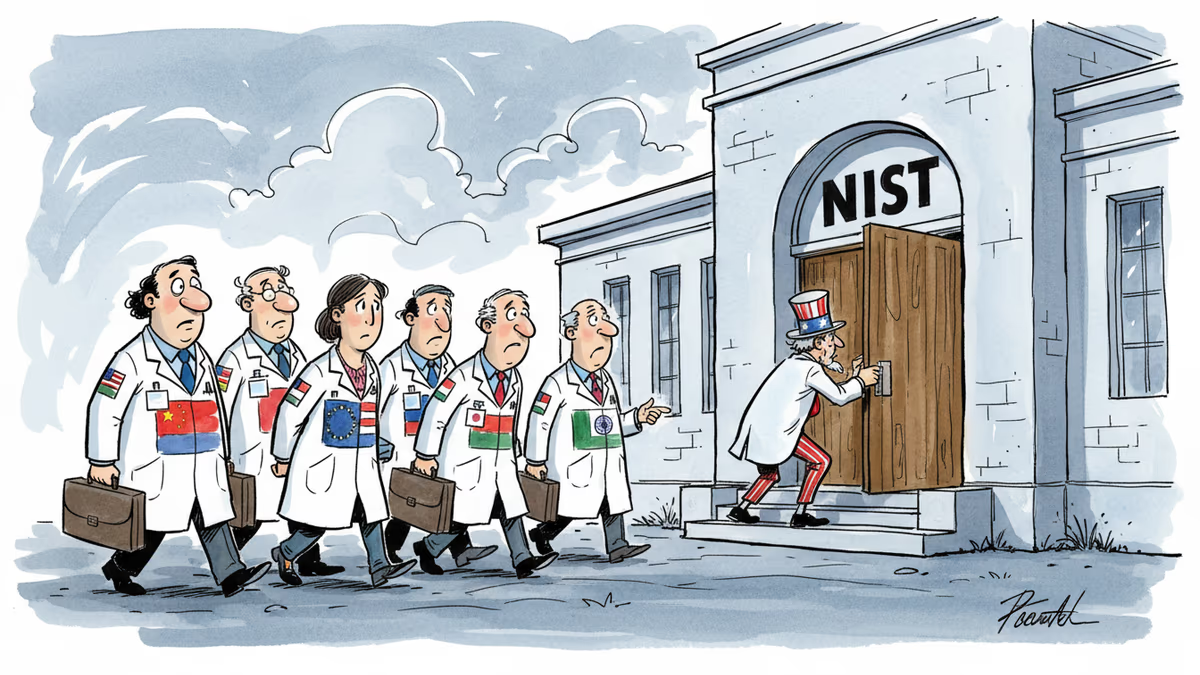
America's Top Science Lab Is Driving Away Foreign Talent
NIST's restrictions on foreign scientists could undermine US research leadership. Examining the tension between national security and scientific innovation.
Thousands of World-Class Scientists Face an Uncertain Future
The National Institute of Standards and Technology (NIST) is quietly implementing measures that could force out foreign researchers who've been crucial to America's scientific edge. This isn't just any government lab—NIST sets the technical standards that underpin everything from cybersecurity protocols to semiconductor manufacturing processes.
The agency's recent work includes establishing AI security guidelines and identifying health risks in everyday products like air purifiers and firefighting equipment. But here's what makes this consequential: many of NIST's thousands of employees, postdoctoral scientists, contractors, and guest researchers come from around the world, bringing specialized expertise that's often unavailable domestically.
The Quiet Shift Toward 'Science Nationalism'
This isn't happening in a vacuum. The trajectory began during the Trump administration's "China Initiative," which cast suspicion on Chinese researchers across American institutions. While that program was later disbanded due to concerns about racial profiling, the underlying wariness persisted into the Biden era.
What's different now is the scope. NIST's new approach isn't just targeting researchers from specific countries—it's implementing broader restrictions on foreign participation in sensitive projects. Congressional sources and agency insiders tell WIRED this shift could backfire, potentially weakening America's research capabilities rather than strengthening them.
The Innovation Paradox
Scientists' perspective: "Open science drives breakthrough discoveries. Close the doors, and we fall behind."
Security experts' view: "Critical technologies in the wrong hands pose existential risks."

Policymakers' dilemma: "We need balance, but safety comes first."
The tension cuts to the heart of how science actually works. The most transformative research often emerges from unexpected collaborations between minds from different cultures and backgrounds. The Manhattan Project succeeded partly because it brought together refugee scientists from Europe. The internet emerged from international academic networks.
Yet today's technologies—AI, quantum computing, biotechnology—blur the lines between civilian research and national security applications. A breakthrough in quantum algorithms could revolutionize both medical imaging and military encryption.
What This Means for Global Science
NIST's approach reflects a broader trend. The European Union is pursuing "technological sovereignty," limiting foreign access to sensitive research. China is accelerating development of indigenous standards to reduce dependence on Western frameworks.
This fragmentation could reshape how science progresses globally. Instead of unified international standards, we might see competing technical ecosystems—a "splinternet" for scientific research.
For American institutions, the immediate impact is already visible. Top universities report difficulty recruiting international talent. Tech companies worry about losing access to global expertise pools. And America's soft power—its ability to attract the world's best minds—faces new challenges.
The Credibility Question
Lawmakers and sources raise a crucial point: NIST's credibility depends partly on its international character. When the agency sets global standards, other countries accept them because they trust the underlying research process. If NIST becomes perceived as serving narrow national interests rather than scientific truth, its influence could wane.
This matters more than it might seem. Technical standards aren't just academic exercises—they determine which technologies succeed in global markets. Control over standards means influence over entire industries.
Authors
Related Articles
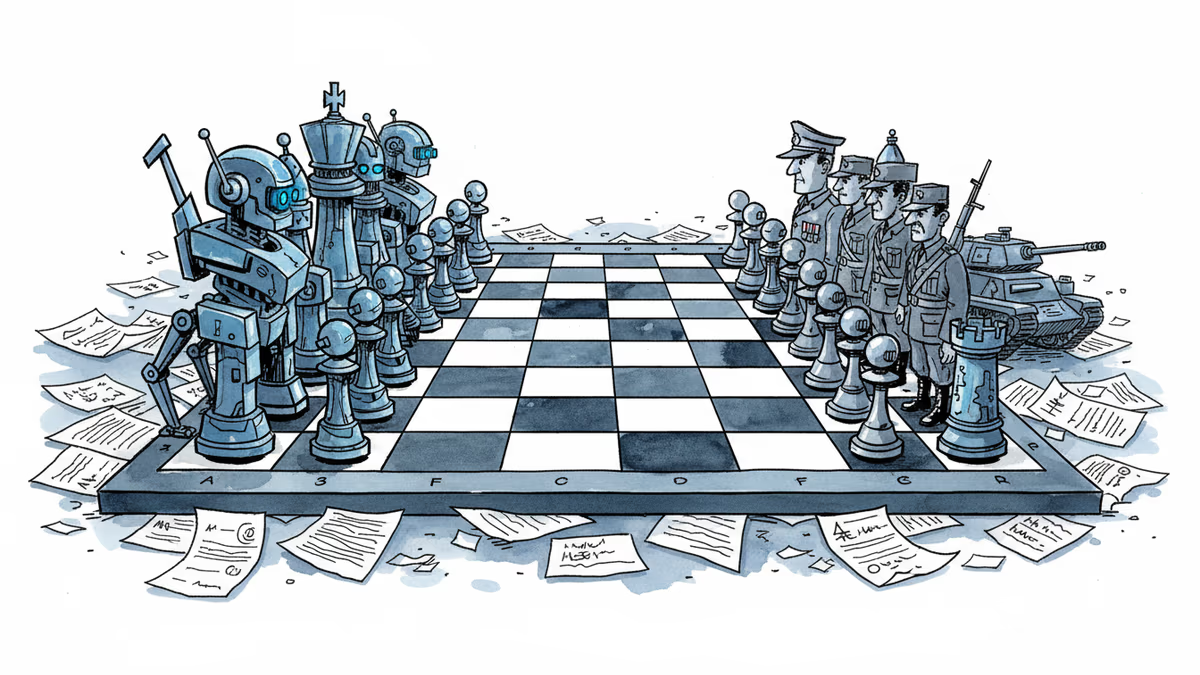
Anthropic CEO challenges Defense Department's supply chain risk designation in court. The clash reveals deeper tensions between AI ethics and national security imperatives.
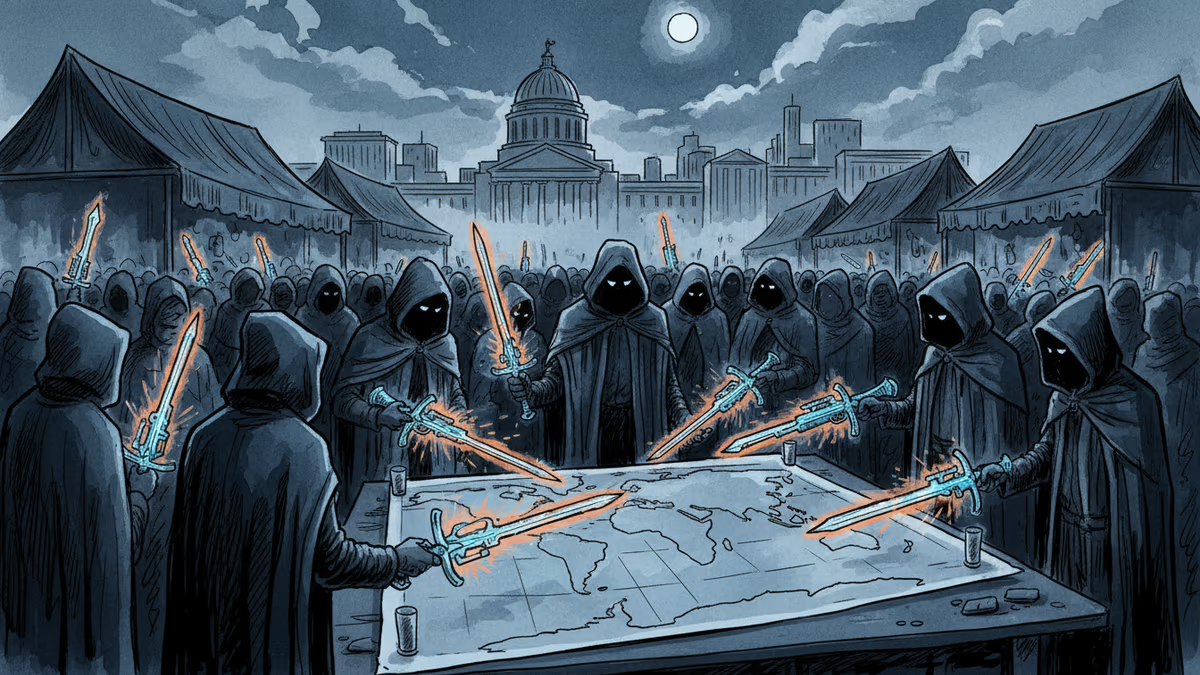
US Treasury sanctions Russian zero-day broker Operation Zero and UAE affiliates for stealing government cyber tools. Analysis of the underground market threatening national security.
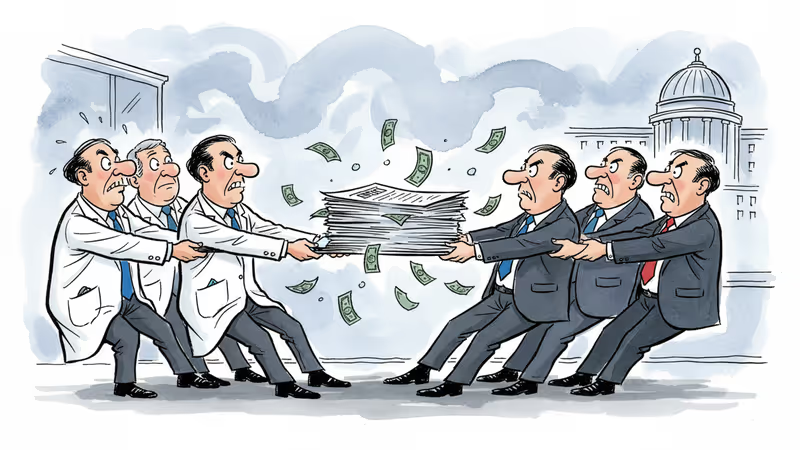
As Trump's administration fills federal positions, the tension between scientific independence and political accountability resurfaces. Who should control America's vast research apparatus?
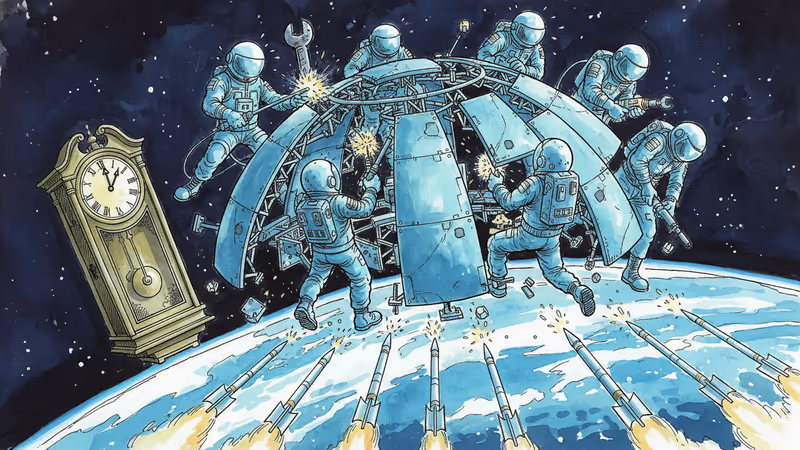
US military plans ambitious Golden Dome missile defense system by 2028, promising nationwide protection against ICBMs, hypersonics, and emerging aerial threats in space-based network.
Anthropic CEO challenges Defense Department's supply chain risk designation in court. The clash reveals deeper tensions between AI ethics and national security imperatives.
US Treasury sanctions Russian zero-day broker Operation Zero and UAE affiliates for stealing government cyber tools. Analysis of the underground market threatening national security.
As Trump's administration fills federal positions, the tension between scientific independence and political accountability resurfaces. Who should control America's vast research apparatus?
US military plans ambitious Golden Dome missile defense system by 2028, promising nationwide protection against ICBMs, hypersonics, and emerging aerial threats in space-based network.
Thoughts
Share your thoughts on this article
Sign in to join the conversation