
The Mac Was a Flop. So Why Is It a Legend?
The original Macintosh had too little memory, almost no software, and helped get Steve Jobs fired. Forty years later, it's considered one of the most important computers ever made. What gives?
It Bombed. Then It Changed Everything.
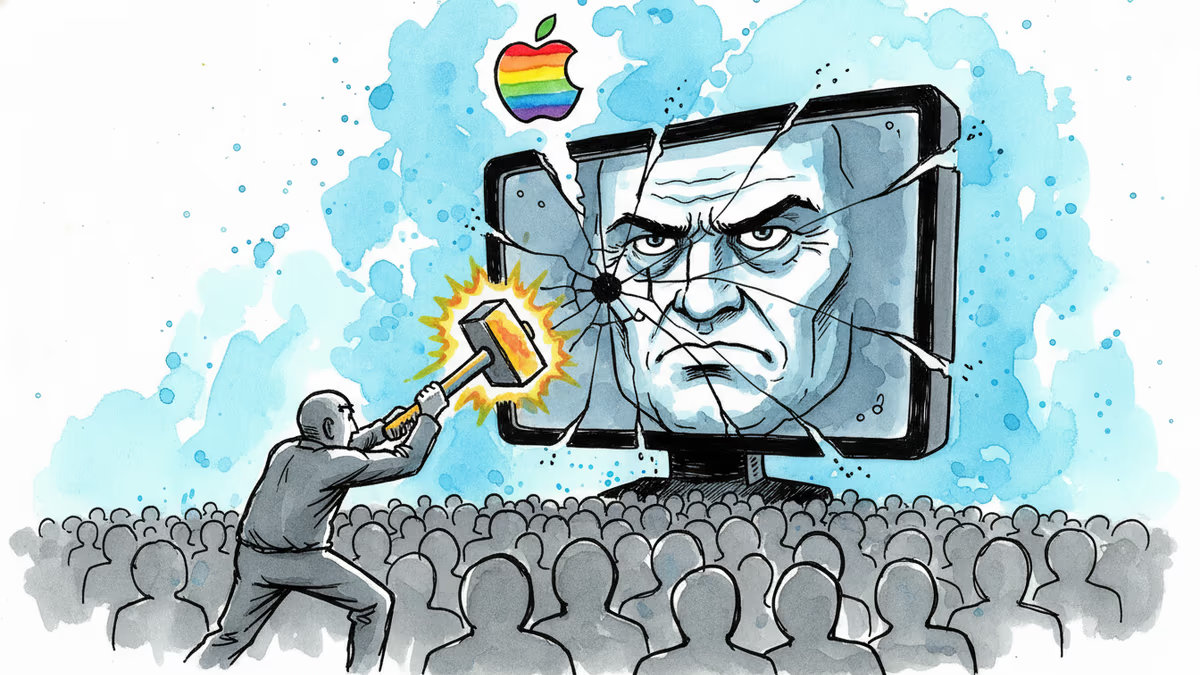
Two days before Steve Jobs walked onto a stage in Cupertino and unveiled the Macintosh, a 60-second TV spot aired exactly once during the Super Bowl. Directed by Ridley Scott, it showed a lone woman hurling a sledgehammer at a giant screen broadcasting an authoritarian figure to a crowd of gray, hollow-eyed drones. No product demo. No specs. Just a statement: something is about to break.
What actually broke, at least initially, was Apple's sales forecast.
A Great Vision in an Underpowered Box
The original Macintosh, launched on January 24, 1984, was priced at $2,495 — roughly $7,500 in today's money. For that, you got 128KB of RAM. That wasn't just modest; it was barely enough to run the machine's own graphical interface without constantly swapping data in and out of memory. There were no expansion slots. The software library was nearly empty. Power users and businesses, accustomed to the flexibility of IBM-compatible PCs, found it more novelty than tool.
Tech publications of the era weren't kind. The limitations were obvious and well-documented. Sales lagged badly enough that Jobs was stripped of his operational role and pushed out of Apple entirely by 1985 — a casualty, in part, of the Mac's commercial struggles.
By any conventional measure of product success at the time, the Macintosh was a disappointment.
So Why Does Everyone Call It a Masterpiece?
Because the Macintosh wasn't selling a computer. It was selling a new language for how humans interact with machines.

The graphical user interface — windows, icons, a mouse-driven cursor, the concept of dragging a file into a folder — wasn't invented at Apple. Xerox PARC had developed the core ideas years earlier. But Apple was the first to package them into something a non-engineer could actually buy and use. That shift, from command-line inputs to visual metaphors, is the foundation of every screen you've touched since.
Microsoft took note. Windows 1.0 arrived in 1985, and while Apple and Microsoft would spend years arguing in court about who owned what, the direction of the entire industry had been set. The Mac didn't win the market. It won the argument about what computing should feel like.
That's a different kind of victory — and a rarer one.
The Ad That Almost Didn't Air
The Super Bowl commercial deserves its own paragraph, because the story behind it is almost as interesting as the ad itself. When Apple's board first screened the spot, several members wanted to pull it. It was too strange, too abstract, too devoid of anything resembling a product pitch. The only reason it aired was that Apple had already paid for the slot and couldn't get a refund.
That accidental broadcast is now considered one of the most studied pieces of advertising in history. It introduced the idea that a tech company could sell an identity — a set of values, a worldview — rather than a feature list. Every Apple launch event since has operated on the same principle. And so, frankly, have most of Apple's major competitors.
The board that almost killed the ad helped create the template for modern tech marketing.
What the Mac's Legacy Actually Means Now
Forty years on, the Macintosh's relevance isn't just nostalgic. It raises a question that matters in 2026, when the tech industry is flooded with products that are simultaneously over-hyped and under-baked: how do you tell the difference between something that's ahead of its time and something that's simply not good enough?
The Mac was both, at once. It was technically insufficient and conceptually essential. The people who dismissed it based on the spec sheet weren't wrong — they just weren't asking the right question. The right question wasn't "does this work well today?" It was "does this point somewhere worth going?"
That distinction is harder to make in real time than in retrospect. Apple itself has launched products since then that promised to change everything and quietly disappeared. The Newton. The Cube. The HomePod's first iteration. Not every visionary product becomes a Macintosh.
Authors
Related Articles
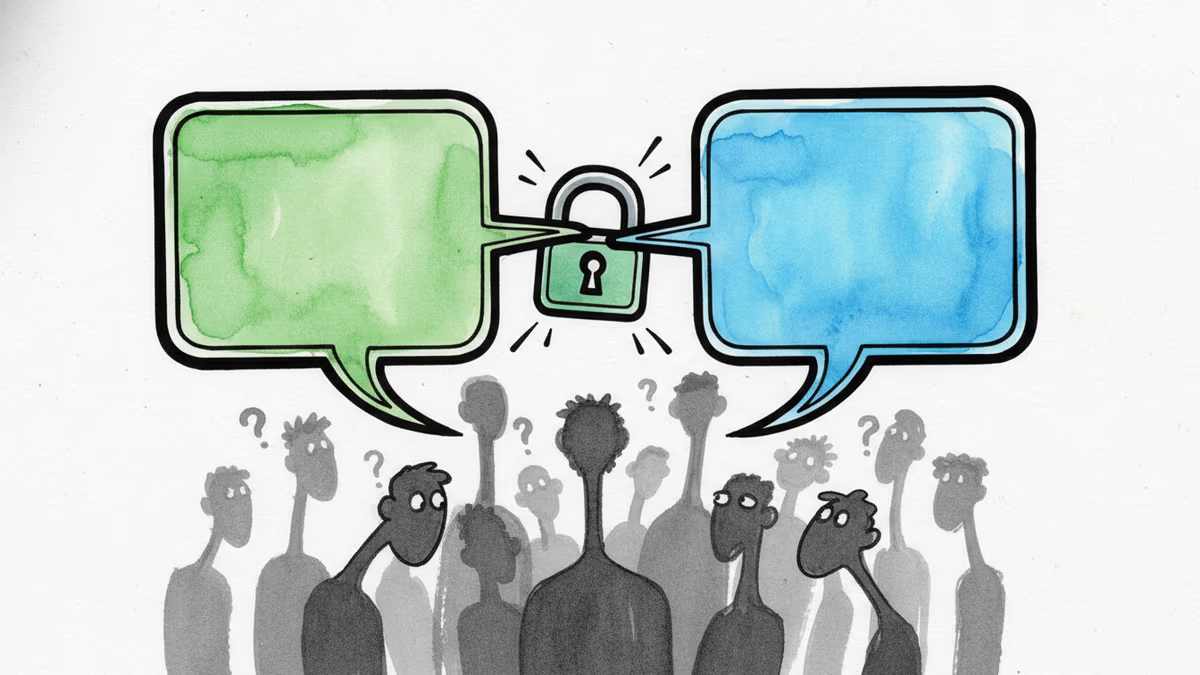
After 15 years of fragmented mobile messaging, Apple and Google are rolling out end-to-end encrypted RCS messaging between iPhones and Android devices. Here's what changed, why it took so long, and what it means for your privacy.
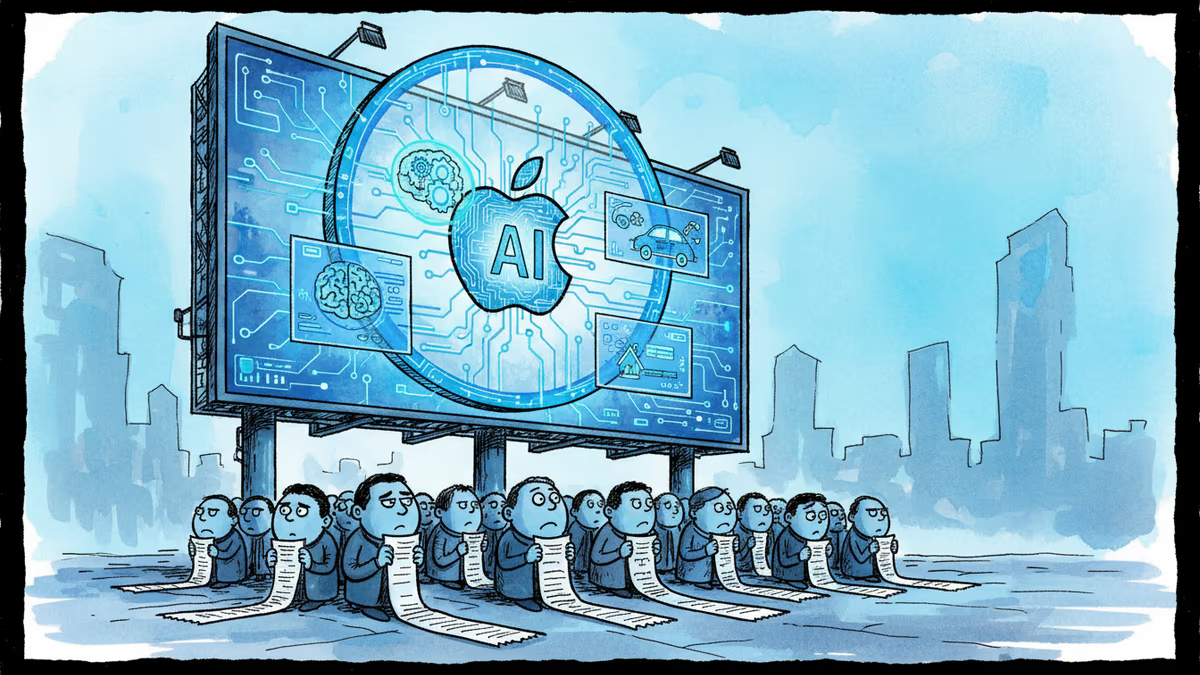
Apple agreed to pay $250 million to settle claims it misled iPhone 16 buyers about Apple Intelligence features. What this means for consumers, Big Tech marketing, and the AI industry.
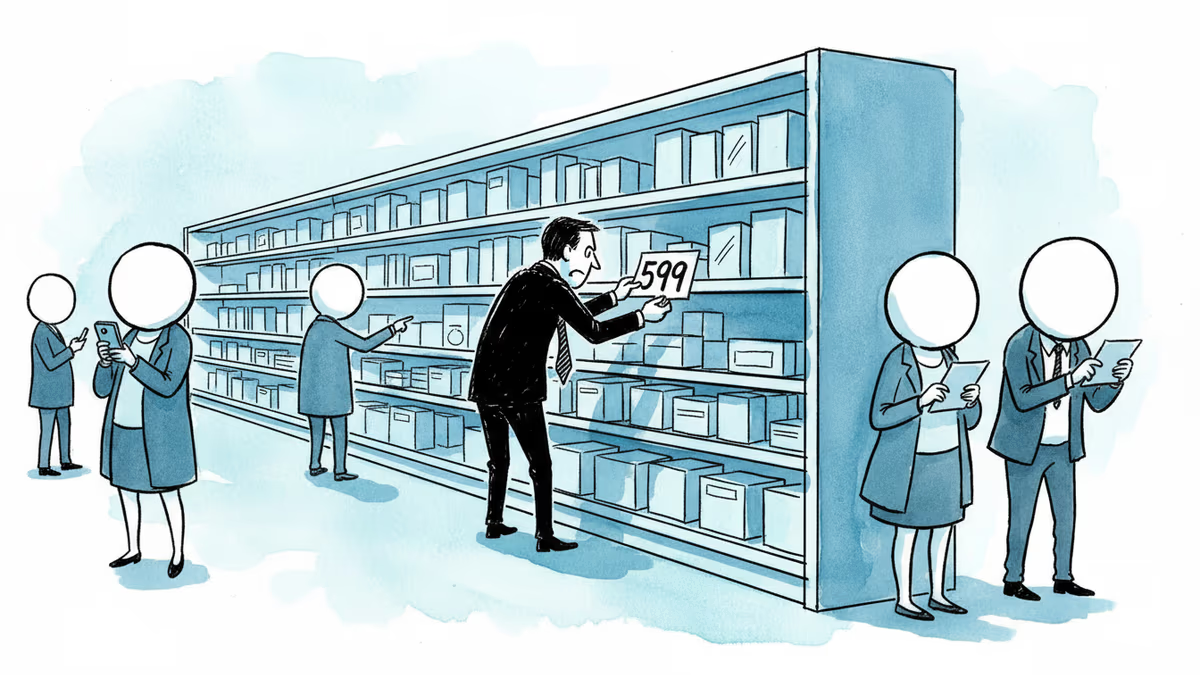
Apple quietly removed the entry-level $599 Mac Mini, raising the starting price to $799 — just one day after Tim Cook warned of chip supply constraints on the earnings call.
Apple names John Ternus, its hardware engineering chief, as the next CEO. The shift from operator to product person signals where Apple thinks its next decade of growth will come from — and raises real questions about what comes next.
After 15 years of fragmented mobile messaging, Apple and Google are rolling out end-to-end encrypted RCS messaging between iPhones and Android devices. Here's what changed, why it took so long, and what it means for your privacy.
Apple agreed to pay $250 million to settle claims it misled iPhone 16 buyers about Apple Intelligence features. What this means for consumers, Big Tech marketing, and the AI industry.
Apple quietly removed the entry-level $599 Mac Mini, raising the starting price to $799 — just one day after Tim Cook warned of chip supply constraints on the earnings call.
Apple names John Ternus, its hardware engineering chief, as the next CEO. The shift from operator to product person signals where Apple thinks its next decade of growth will come from — and raises real questions about what comes next.
Thoughts
Share your thoughts on this article
Sign in to join the conversation