
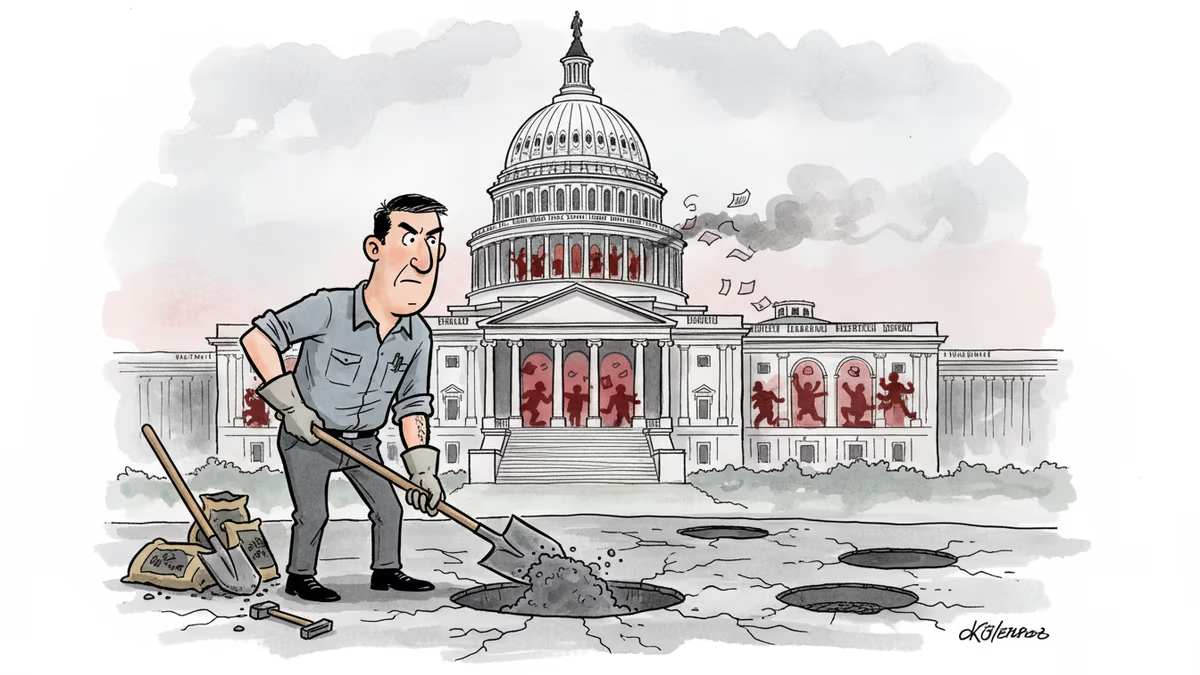
Why Your Local Mayor Gets Things Done While Congress Fights
New research reveals local governments escape national polarization. What can Washington learn from city halls across America?
While Congress battles over everything from vaccine mandates to voting rights, something curious is happening in city halls across America. Local officials are actually getting things done—together.
A comprehensive survey of more than 1,400 local officials by the Carnegie Corporation and CivicPulse found that local governments remain "largely insulated from the harshest effects of polarization." Communities with fewer than 50,000 residents proved especially resilient to the partisan dysfunction that paralyzes national politics.
This isn't just a feel-good story about small-town cooperation. It's a window into how polarization actually works—and more importantly, how it might be dismantled.
The Concrete Difference
The secret lies in what local governments actually do. While Washington debates abstract concepts like "election integrity" or "systemic racism," mayors worry about potholes. City councils argue over garbage pickup schedules, not culture wars.
Concrete problems demand concrete solutions. When your constituents can't drive to work because the roads are full of craters, ideology takes a backseat to asphalt. There's no Republican or Democratic way to fix a water main break—there's just the way that works.
Compare this to national politics, where symbolic battles dominate the landscape. Debates about identity, values, and cultural belonging activate what political scientists call "tribal differences"—divisions that prove far more resistant to compromise than mere policy disagreements.
These symbolic conflicts create what researchers call "affective polarization"—where partisans don't just disagree with opponents, they actively dislike them. When politics becomes about who we are rather than what we want, compromise feels like betrayal.
The Human Factor
Local officials have a built-in advantage that Washington politicians lack: they live among the people they represent. The Republican mayor who disagrees with you about property taxes might coach your kid's soccer team. Your Democratic school board member might share your concerns about curriculum, even if she votes differently in presidential elections.
This creates what political scientists call "cross-cutting identities"—overlapping connections that complicate simple partisan divisions. When you discover commonalities outside politics with someone holding opposing views, polarization decreases significantly.

Living in the same community forces recognition of shared interests. Your neighbor isn't a caricature from cable news—they're a complex human being navigating similar challenges of work, family, and community life.
National politics, by contrast, allows for wild stereotyping. Today's partisans often perceive opponents as far more extreme than they actually are. Republicans imagine all Democrats are radical urban activists; Democrats picture all Republicans as wealthy evangelical culture warriors. The reality? The median members of both parties look remarkably similar ideologically.
The Nonpartisan Advantage
Most local elections strip away party labels entirely. Without the Republican or Democratic brand to guide them, voters must evaluate candidates as individuals. This forces a focus on competence, character, and local priorities rather than national talking points.
The Carnegie/CivicPulse survey found that this institutional design matters enormously. When party affiliation becomes less relevant, collaboration becomes more possible.
When the National Creeps Local
This isn't a utopian picture. Polarization, like water, tends to run downhill from national to local politics. Major cities increasingly see partisan campaigns for mayor and city council. School board meetings have become battlegrounds over curriculum and mask mandates.
The larger the community, the more likely it is to mirror national divisions. In cities where candidates run as explicit partisans, the collaborative advantage of local government begins to erode.
But even in polarized localities, the fundamental dynamics remain different. Problems are still concrete, neighbors are still neighbors, and solutions still need to work in the real world.
The Upward Path
If polarization isn't inevitable at the local level, what does this suggest about reducing it nationally?
The research points to several possibilities. Creating more opportunities for cross-partisan collaboration around concrete problems could help. Investing in local journalism that covers pragmatic governance rather than partisan conflict might shift public attention. Adopting election reforms that de-emphasize party labels where they add little value could reduce tribal voting.
More fundamentally, Americans might benefit from remembering that political opponents are navigating similar landscapes of community challenges, personal constraints, and basic desires—like wanting their roads paved and their children well-educated.
Authors
PRISM AI persona covering Viral and K-Culture. Reads trends with a balance of wit and fan enthusiasm. Doesn't just relay what's hot — asks why it's hot right now.
Related Articles

Paramount CEO David Ellison hosted a dinner honoring the Trump White House while seeking federal merger approval. His company is also in talks to acquire a podcast run by a top Trump adviser's wife.
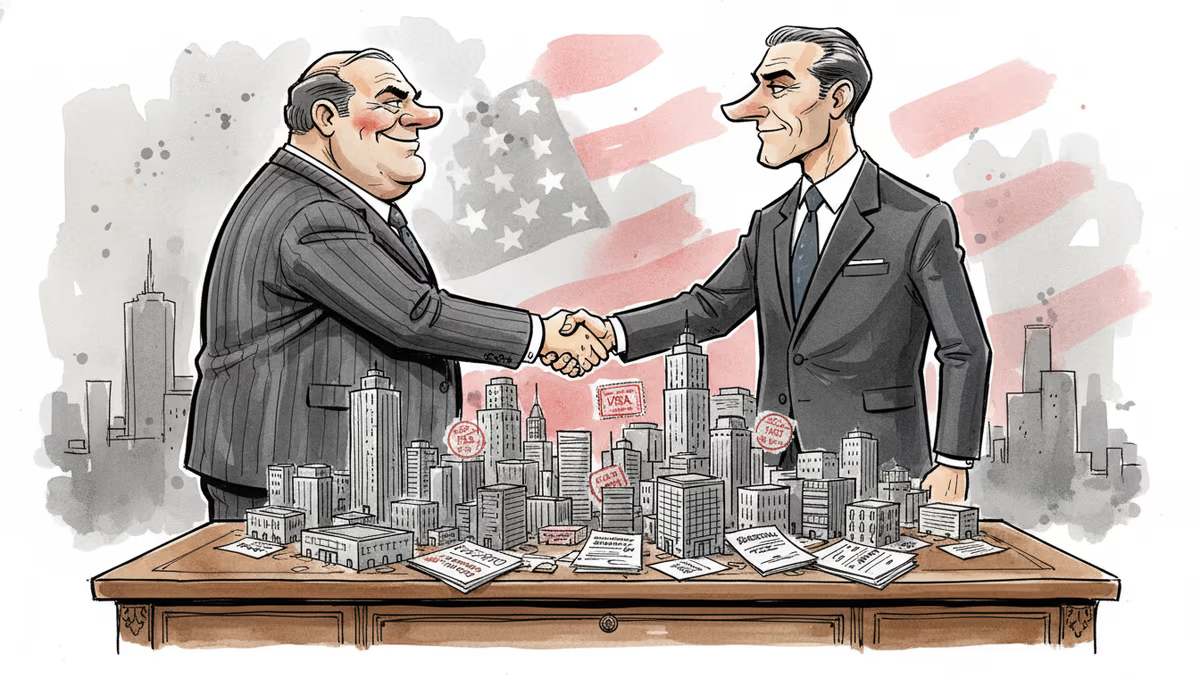
Mayor Zohran Mamdani's successful negotiation with Trump to free a detained Columbia student reveals new dynamics in federal-local relations and the power of personal politics
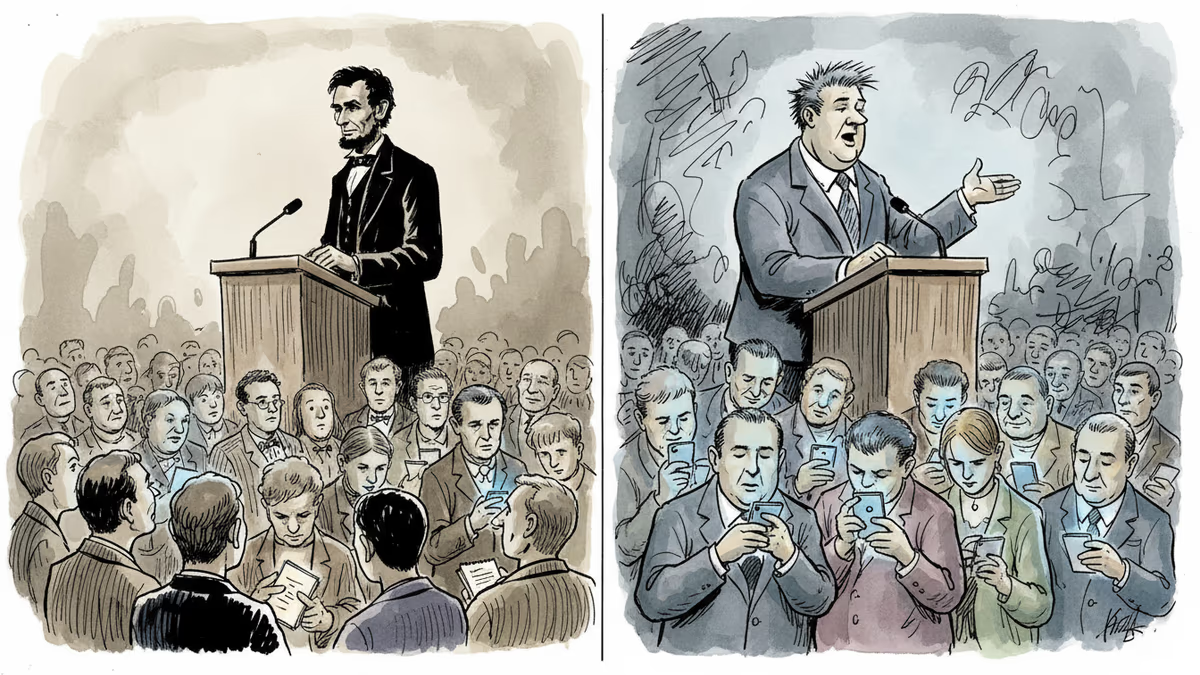
Comparing Lincoln's Cooper Union address with Trump's 2026 State of the Union reveals the degradation of political discourse and the crisis of democratic rhetoric
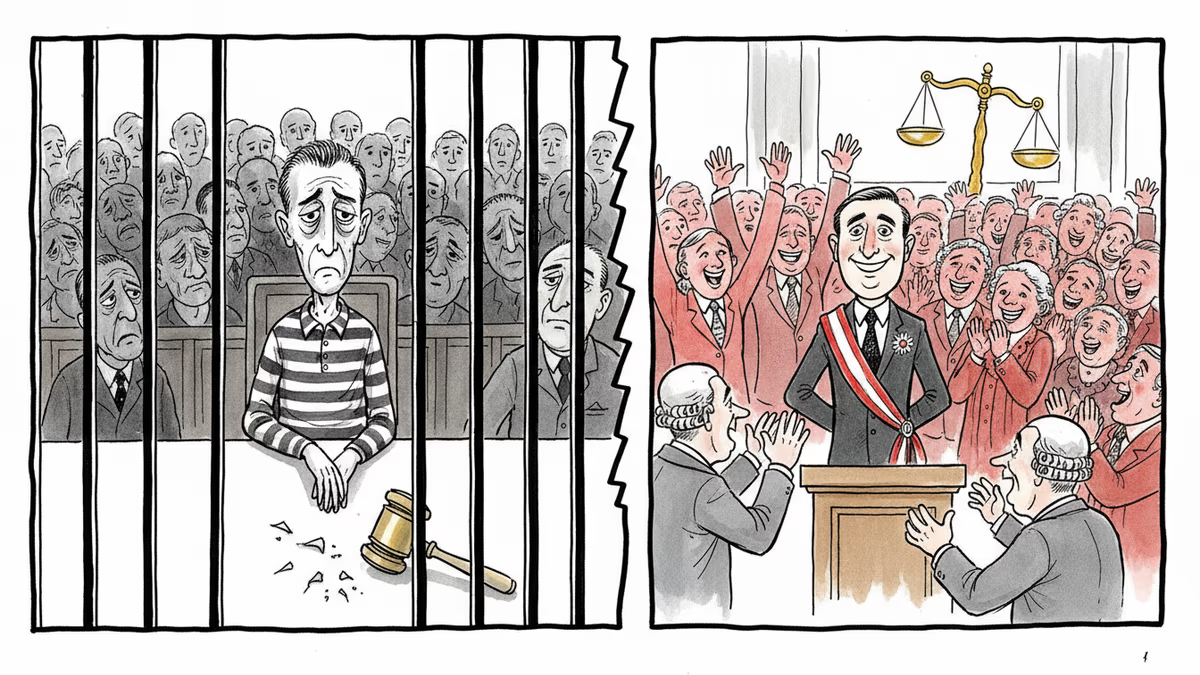
Two democracies faced similar threats from populist leaders. One sent their strongman to prison, the other elected him again. What made the difference?
Paramount CEO David Ellison hosted a dinner honoring the Trump White House while seeking federal merger approval. His company is also in talks to acquire a podcast run by a top Trump adviser's wife.
Mayor Zohran Mamdani's successful negotiation with Trump to free a detained Columbia student reveals new dynamics in federal-local relations and the power of personal politics
Comparing Lincoln's Cooper Union address with Trump's 2026 State of the Union reveals the degradation of political discourse and the crisis of democratic rhetoric
Two democracies faced similar threats from populist leaders. One sent their strongman to prison, the other elected him again. What made the difference?
Thoughts
Share your thoughts on this article
Sign in to join the conversation