
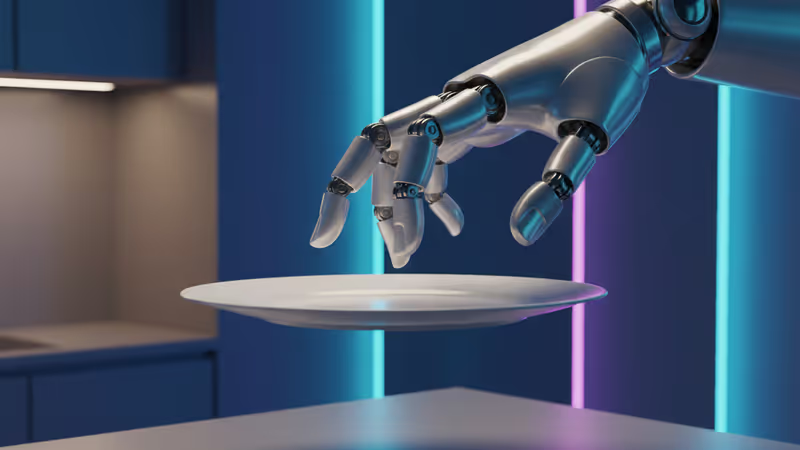
Can LG’s New Five-Fingered Robot Finally Do the Dishes? Meet the CLOiD
LG reveals the CLOiD robot for CES 2026, featuring two arms and five-fingered hands for household chores. Discover the future of home automation.
Household chores are about to get a lot easier. LG is gearing up to unveil a new robot that doesn't just roll around—it has hands. Set to debut at CES 2026 next month, this machine is designed to handle the heavy lifting and delicate tasks of daily life.
The Evolution of Dexterity: Beyond Wheels
According to The Verge, the new LG CLOiD marks a significant departure from last year's two-wheeled companion. Instead of a simple handle on its head, this upgraded version features two fully articulated arms. Each hand is equipped with five individually actuated fingers, powered by advanced motors to mimic human range of motion.

| Feature | 2025 Model | 2026 CLOiD |
|---|---|---|
| Mobility | Two-wheeled base | Advanced articulated base |
| Manipulation | None (Handle only) | Two arms with 5 fingers each |
| Degrees of Freedom | Limited | 7 Degrees of Freedom (per arm) |
Mastering the 'Wide Range' of Chores
LG claims the CLOiD is capable of performing a "wide range" of household tasks. With seven degrees of freedom in each arm, the robot can reach, rotate, and grip objects with precision that previous home robots couldn't dream of. It's a clear signal that the era of the 'moving sensor' is over, replaced by the era of the 'robotic laborer'.
Authors
Related Articles

Samsung and SK unveiled a chip and AI investment package worth thousands of trillions of won on June 29. The headline number swings wildly by outlet, but the real contest isn't capital — it's water and power.

Viral videos show 2026 graduates jeering executives who praise AI at commencement ceremonies. It's not just rudeness — it's a signal about who pays for technological optimism.

Filipino virtual assistants using AI to ghost-manage LinkedIn profiles for executives is now a structured industry. 30 comments a day, fake engagement rings, and a platform struggling to tell real from fabricated.
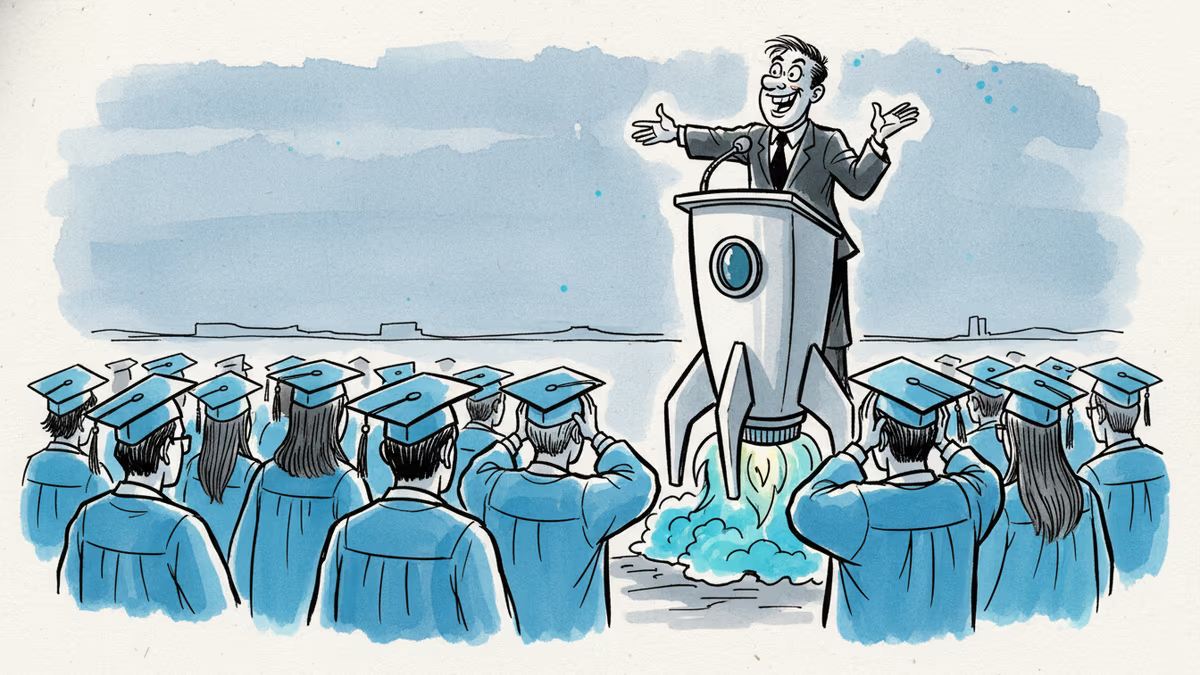
Two commencement speakers learned the hard way that AI enthusiasm doesn't land well with today's graduates. The backlash reveals a widening gap between tech optimism and Gen Z's economic reality.
Samsung and SK unveiled a chip and AI investment package worth thousands of trillions of won on June 29. The headline number swings wildly by outlet, but the real contest isn't capital — it's water and power.
Viral videos show 2026 graduates jeering executives who praise AI at commencement ceremonies. It's not just rudeness — it's a signal about who pays for technological optimism.
Filipino virtual assistants using AI to ghost-manage LinkedIn profiles for executives is now a structured industry. 30 comments a day, fake engagement rings, and a platform struggling to tell real from fabricated.
Two commencement speakers learned the hard way that AI enthusiasm doesn't land well with today's graduates. The backlash reveals a widening gap between tech optimism and Gen Z's economic reality.
Thoughts
Share your thoughts on this article
Sign in to join the conversation