
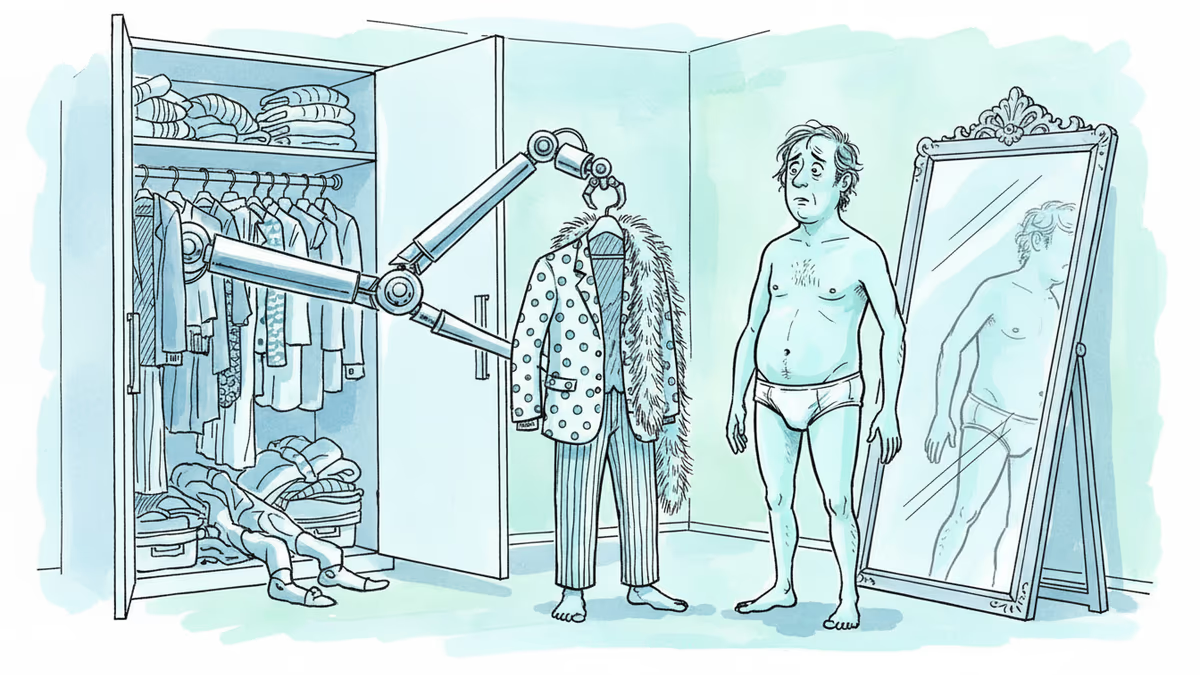
When AI Picks Your Outfit, Whose Taste Is It Really?
Alibaba's AI agent Qwen promises to handle life's daily decisions. But as convenience meets autonomy, what are we actually giving up?
$431 Million to Make You Never Choose Again
That's how much Alibaba spent promoting its AI agent Qwen ahead of Lunar New Year. The hook? Bubble tea for 0.01 yuan (less than a penny) for every new user. But this wasn't just about cheap drinks. It was the first mass experiment in AI agents that don't just chat—they act.
The results were telling. The app crashed under demand. Delivery drivers crowded bubble tea shops. But the real question wasn't about server capacity. It was about something deeper: When AI makes decisions for us, are they still our decisions?
The Ecosystem Advantage
Here's what Qwen has that ChatGPT and Google largely don't: a complete digital ecosystem. Shopping, food delivery, ride-hailing, maps, payments—all under one roof. One tap grants access to your credit cards, passport details, and live location.
When a journalist asked Qwen to plan a Hong Kong-to-Shenzhen trip, it suggested only rail options—not the preferred direct bus that isn't sold on Alibaba's platforms. For hot pot restaurants, it optimized for proximity, not taste. The journalist ended up opening a separate review app to compare options.
This reveals the fundamental tension: convenience versus choice. Qwen makes life frictionless, but only within Alibaba's walled garden.

The Wardrobe Moment
The most surprising interaction was unexpectedly intimate. When asked to choose a Lunar New Year outfit, Qwen analyzed wardrobe photos and noticed a preference for neutral tones over festive red. It suggested a "soft, chic" look using existing clothes, with a red bag for tradition.
The journalist followed the advice and felt satisfied. But it raised an unsettling question: Was this genuinely personal style advice, or algorithmic manipulation disguised as taste?
Trust vs. Control
For low-stakes decisions—bubble tea orders, weather checks—AI agents feel helpful. But for anything involving money, logistics, or personal preferences, users instinctively want options, not answers.
The bottleneck isn't technical capability. It's trust. Until AI agents can convince users they're acting not just on our behalf, but in our best interests, many will choose a few extra taps to stay in control.
The American Challenge
OpenAI and Google face a different reality. They're building agents while navigating platform restrictions, security concerns, and regulatory scrutiny. They can't simply integrate across ecosystems like Alibaba can in China.
This creates an interesting dynamic: Chinese AI agents may become more capable faster, while American ones remain more constrained but potentially more trustworthy.
Authors
Related Articles
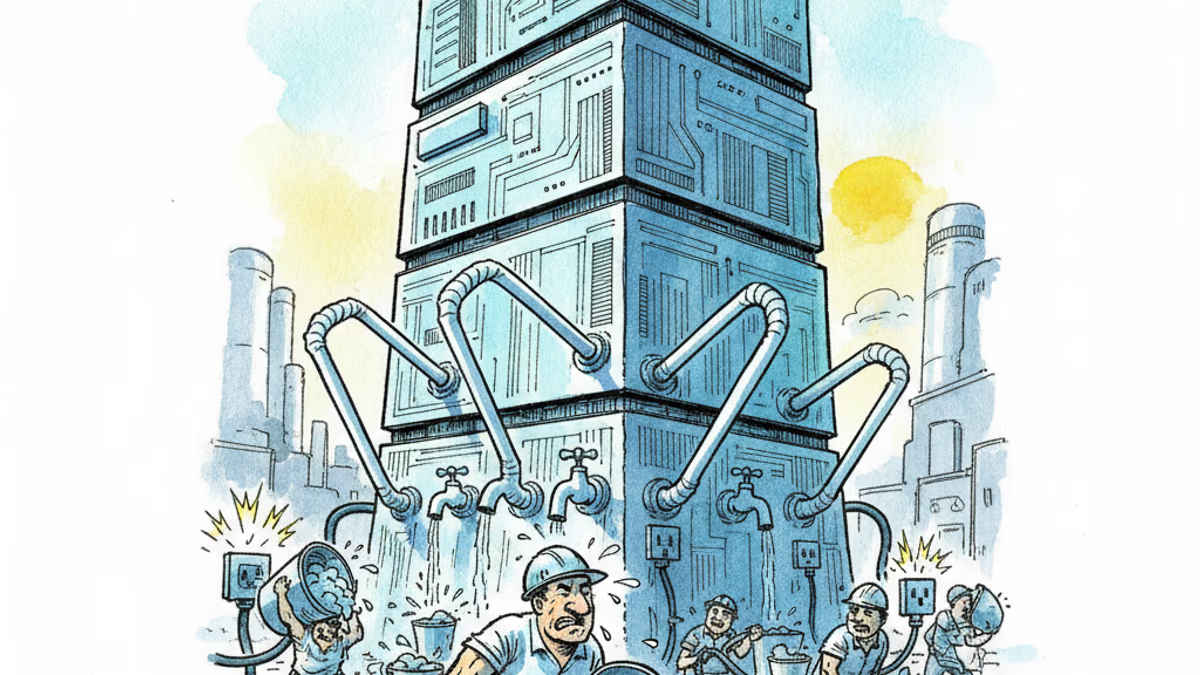
Samsung and SK unveiled a chip and AI investment package worth thousands of trillions of won on June 29. The headline number swings wildly by outlet, but the real contest isn't capital — it's water and power.
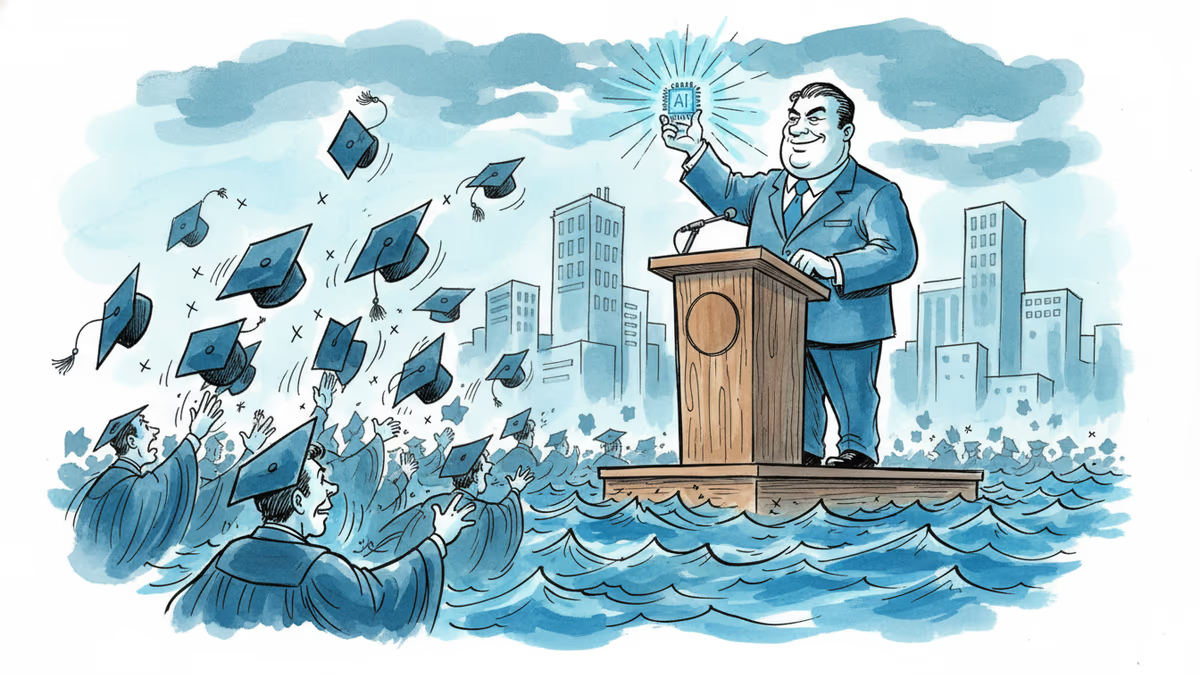
Viral videos show 2026 graduates jeering executives who praise AI at commencement ceremonies. It's not just rudeness — it's a signal about who pays for technological optimism.
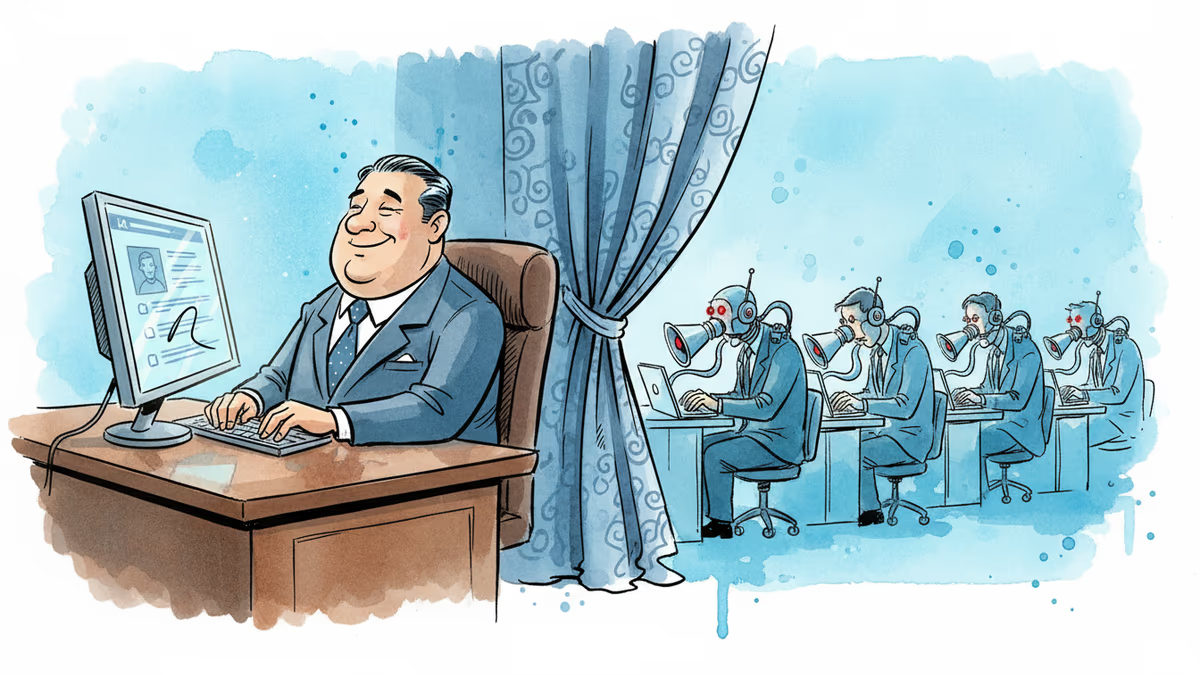
Filipino virtual assistants using AI to ghost-manage LinkedIn profiles for executives is now a structured industry. 30 comments a day, fake engagement rings, and a platform struggling to tell real from fabricated.
Two commencement speakers learned the hard way that AI enthusiasm doesn't land well with today's graduates. The backlash reveals a widening gap between tech optimism and Gen Z's economic reality.
Samsung and SK unveiled a chip and AI investment package worth thousands of trillions of won on June 29. The headline number swings wildly by outlet, but the real contest isn't capital — it's water and power.
Viral videos show 2026 graduates jeering executives who praise AI at commencement ceremonies. It's not just rudeness — it's a signal about who pays for technological optimism.
Filipino virtual assistants using AI to ghost-manage LinkedIn profiles for executives is now a structured industry. 30 comments a day, fake engagement rings, and a platform struggling to tell real from fabricated.
Two commencement speakers learned the hard way that AI enthusiasm doesn't land well with today's graduates. The backlash reveals a widening gap between tech optimism and Gen Z's economic reality.
Thoughts
Share your thoughts on this article
Sign in to join the conversation