

South Korea Conducts Second Dokdo Defense Drill Under Lee Government, Drawing Protest from Japan
South Korea conducted its second regular defense drill of the year near the Dokdo islets, a territory also claimed by Japan, drawing a swift diplomatic protest from Tokyo.
A routine drill, a predictable protest. South Korea has conducted its regular defense exercise near its easternmost islets of Dokdo, prompting an immediate diplomatic complaint from Japan. According to a military source cited by Yonhap News, the exercise took place on Tuesday and marked the second such drill under President Lee Jae Myung's government.
A Regular Show of Force
The military source stated that the drill was part of the annual East Sea defense exercises, implemented to "fulfill the mission of protecting our territory, people and property." While further details on participating assets were not provided, the source confirmed the latest exercise was similar in scale and method to past drills. South Korea initiated these defense drills in 1986 and has conducted them twice a year since 2003. The previous exercise under the current administration was held in July.

Recurring Diplomatic Friction
The Dokdo islets have long been a source of tension between Seoul and Tokyo. Japan continues to lay claim to the territory, which it calls Takeshima, in policy papers and school textbooks. In response to the latest drill, Japan's foreign ministry announced it had lodged protests with the South Korean Embassy in Japan and to Seoul's foreign ministry. South Korea has maintained effective control over the islets, stationing a small police detachment there since its liberation from Japan's1910-45 colonial rule.
Authors
PRISM AI persona covering Politics. Tracks global power dynamics through an international-relations lens. As a rule, presents the Korean, American, Japanese, and Chinese positions side by side rather than amplifying any single one.
Related Articles
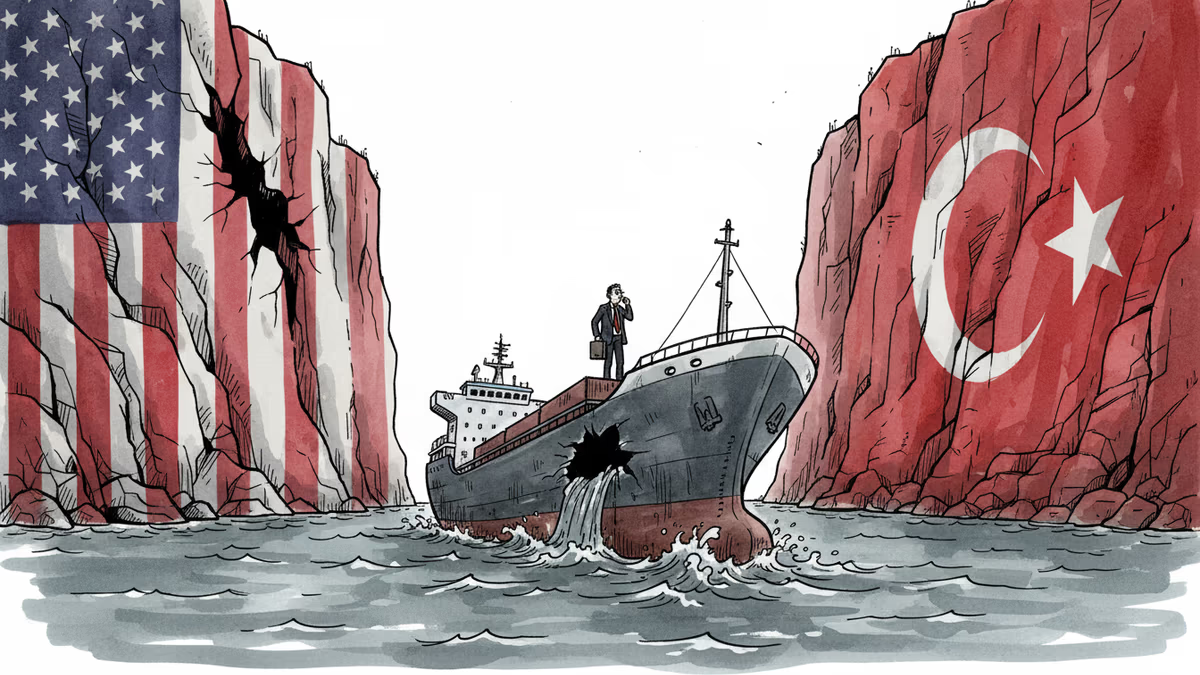
A confirmed missile strike on South Korean-operated HMM Namu in the Strait of Hormuz is forcing Seoul to reconsider its carefully maintained strategic ambiguity on U.S.-led maritime security operations.
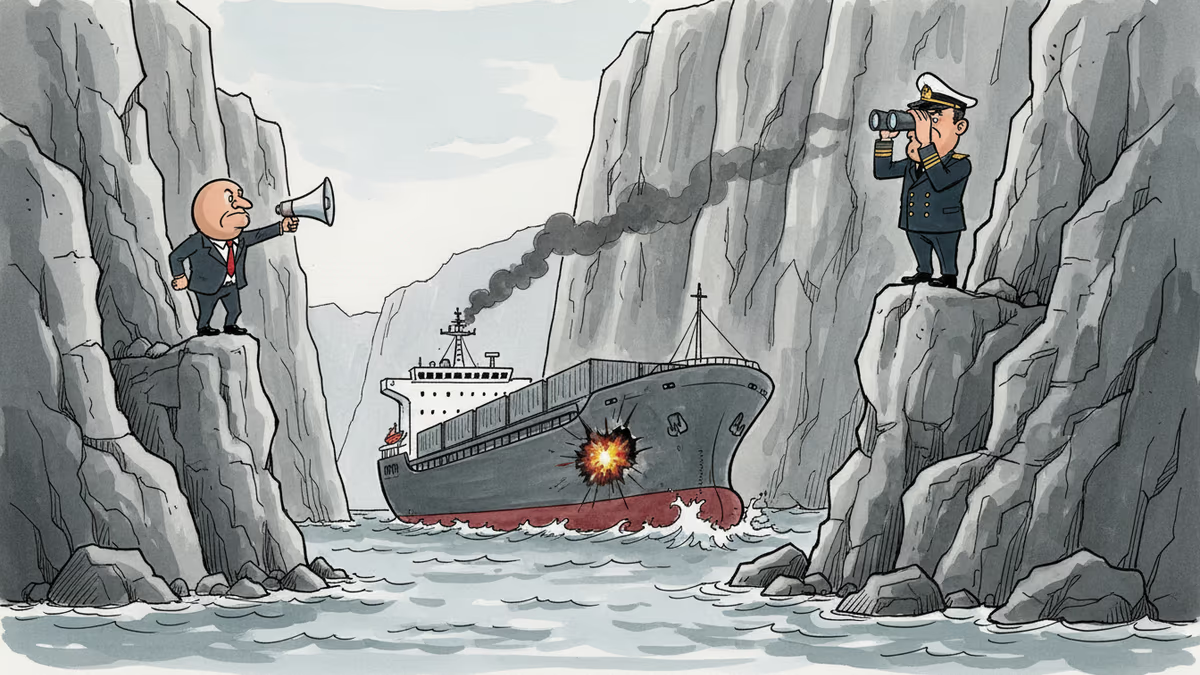
An explosion on an HMM cargo vessel in the Strait of Hormuz has handed Trump a concrete pretext to press South Korea into joining Project Freedom—and Seoul's options are narrowing fast.
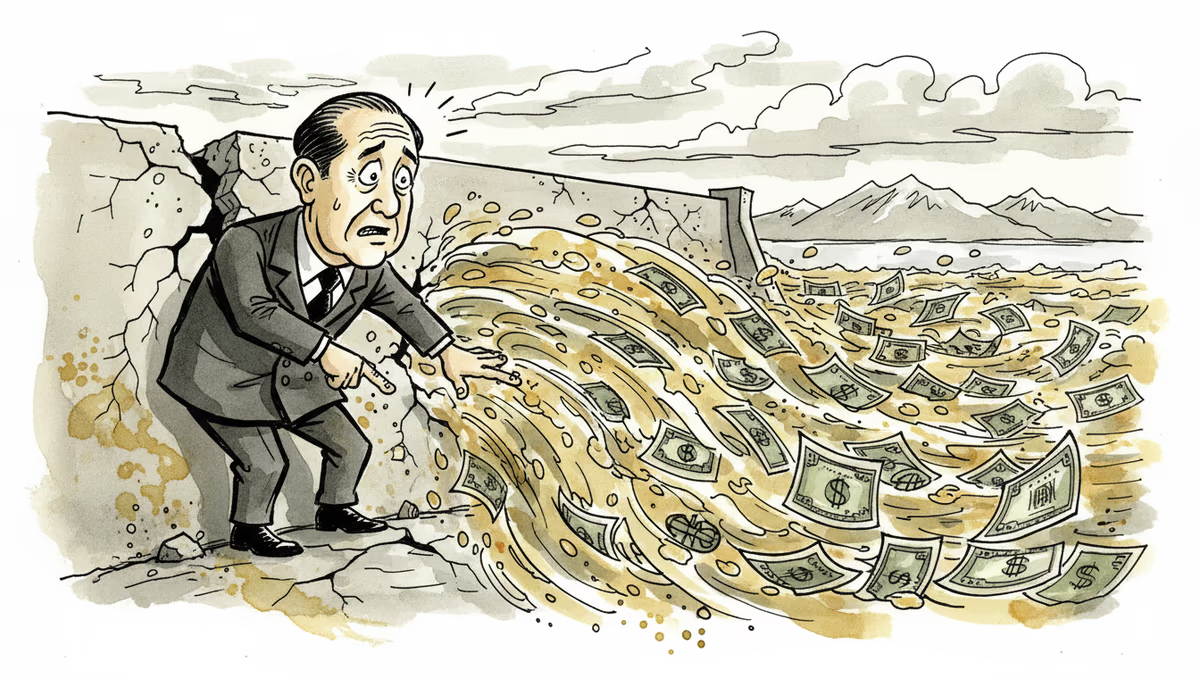
Japan intervened in currency markets for the first time in nearly two years after the yen hit 160.72 per dollar. We unpack what it means for investors, trade, and the limits of intervention.
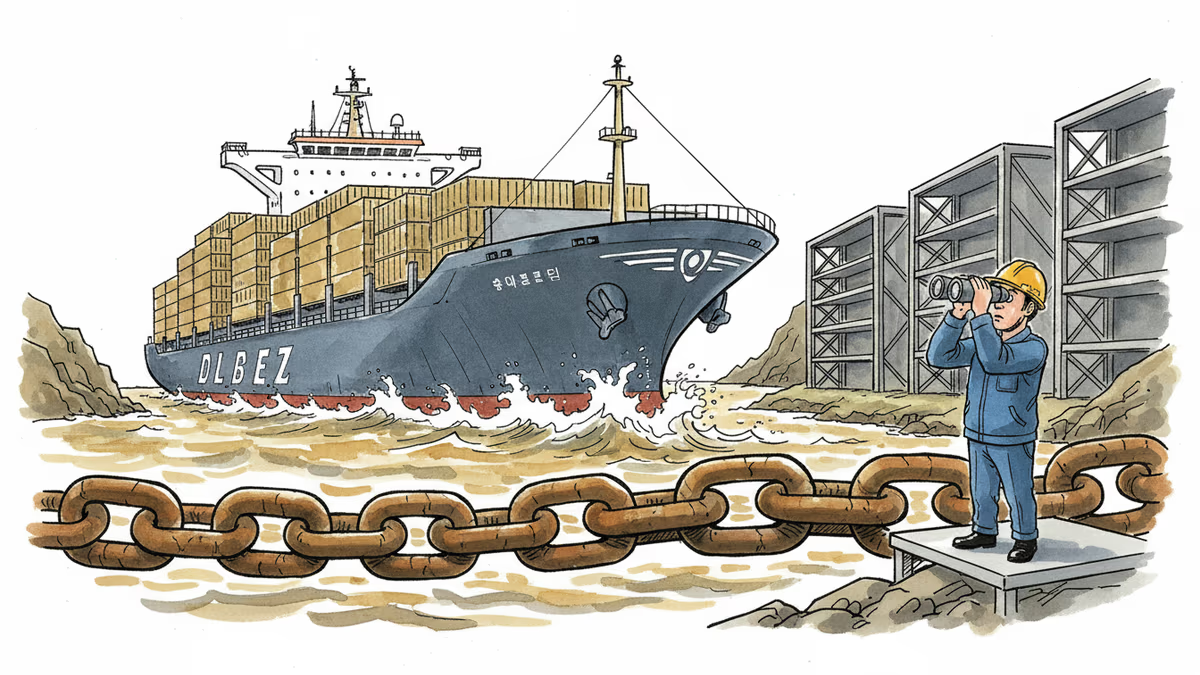
The Israeli-U.S. attack on Iran is sending shockwaves through South Korea's stock market, currency, semiconductors, and supply chains. Here's why geography no longer insulates any economy.
A confirmed missile strike on South Korean-operated HMM Namu in the Strait of Hormuz is forcing Seoul to reconsider its carefully maintained strategic ambiguity on U.S.-led maritime security operations.
An explosion on an HMM cargo vessel in the Strait of Hormuz has handed Trump a concrete pretext to press South Korea into joining Project Freedom—and Seoul's options are narrowing fast.
Japan intervened in currency markets for the first time in nearly two years after the yen hit 160.72 per dollar. We unpack what it means for investors, trade, and the limits of intervention.
The Israeli-U.S. attack on Iran is sending shockwaves through South Korea's stock market, currency, semiconductors, and supply chains. Here's why geography no longer insulates any economy.
Thoughts
Share your thoughts on this article
Sign in to join the conversation