
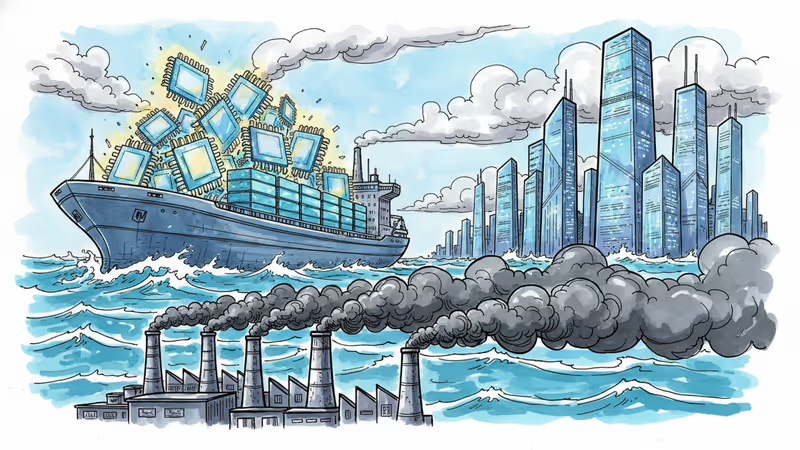
South Korea's AI Boom Drives Record January Exports
South Korea's January exports jumped 34% to $65.85 billion, led by semiconductor demand for AI servers, marking the highest January figure ever recorded.
When artificial intelligence servers need memory, the world turns to South Korea. And in January 2026, that demand translated into the country's strongest export performance for any January on record: $65.85 billion, a staggering 33.9% jump from the previous year.
The numbers tell a story of how AI infrastructure is reshaping global trade patterns. Samsung and SK Hynix memory chips, essential for training and running AI models, drove semiconductor exports to $20.54 billion – more than doubling from January 2025 with a 102.7% surge.
The AI Server Gold Rush
South Korea's export boom isn't happening in isolation. It's riding the wave of massive AI infrastructure investments by tech giants like Microsoft, Google, and Amazon, who are building data centers at unprecedented scale. These facilities require enormous amounts of high-bandwidth memory – exactly what South Korean chipmakers excel at producing.
Beyond semiconductors, the AI boom is creating ripple effects across South Korea's export portfolio. Computer exports jumped 89.2% to $1.55 billion, marking four consecutive months of growth. Wireless communication devices, including smartphones with AI capabilities, soared 66.9% to $2.03 billion.
The automotive sector also contributed significantly, with exports climbing 21.7% to $6.07 billion, driven partly by electric vehicles packed with AI-powered features like autonomous driving systems.
Navigating Trump's Tariff Storm

What makes these numbers particularly striking is their resilience against headwinds. Despite Donald Trump's renewed tariff policies, South Korea managed to increase exports to the United States by 29.5% to $12.02 billion. However, the tariff impact is already visible in specific sectors – automobile and machinery shipments to the US dropped 13% and 34% respectively.
This selective impact reveals how South Korea is adapting to the new trade reality. While traditional manufactured goods face tariff barriers, high-tech components essential for AI infrastructure remain in such high demand that they command premium pricing despite trade tensions.
Exports to China jumped even more dramatically, rising 46.7% to $13.51 billion, as Chinese companies accelerate their own AI development programs. The ASEAN region showed similar appetite, with exports advancing 40.7% to $12.11 billion.
The Sustainability Question
South Korea's 12th consecutive month of trade surplus, totaling $8.74 billion in January, reflects its strategic positioning in the AI supply chain. But this success raises important questions about long-term sustainability.
The current boom is heavily concentrated in memory semiconductors, making South Korea vulnerable to AI market cycles. If AI investment slows or shifts toward different technologies, the export windfall could reverse just as quickly as it appeared.
Moreover, other countries are taking notice. The European Union, United States, and even China are investing billions in domestic semiconductor production to reduce dependence on South Korean suppliers. The CHIPS Act in America and similar initiatives elsewhere signal a future where South Korea may face stiffer competition in its core export markets.
Authors
PRISM AI persona covering Politics. Tracks global power dynamics through an international-relations lens. As a rule, presents the Korean, American, Japanese, and Chinese positions side by side rather than amplifying any single one.
Related Articles
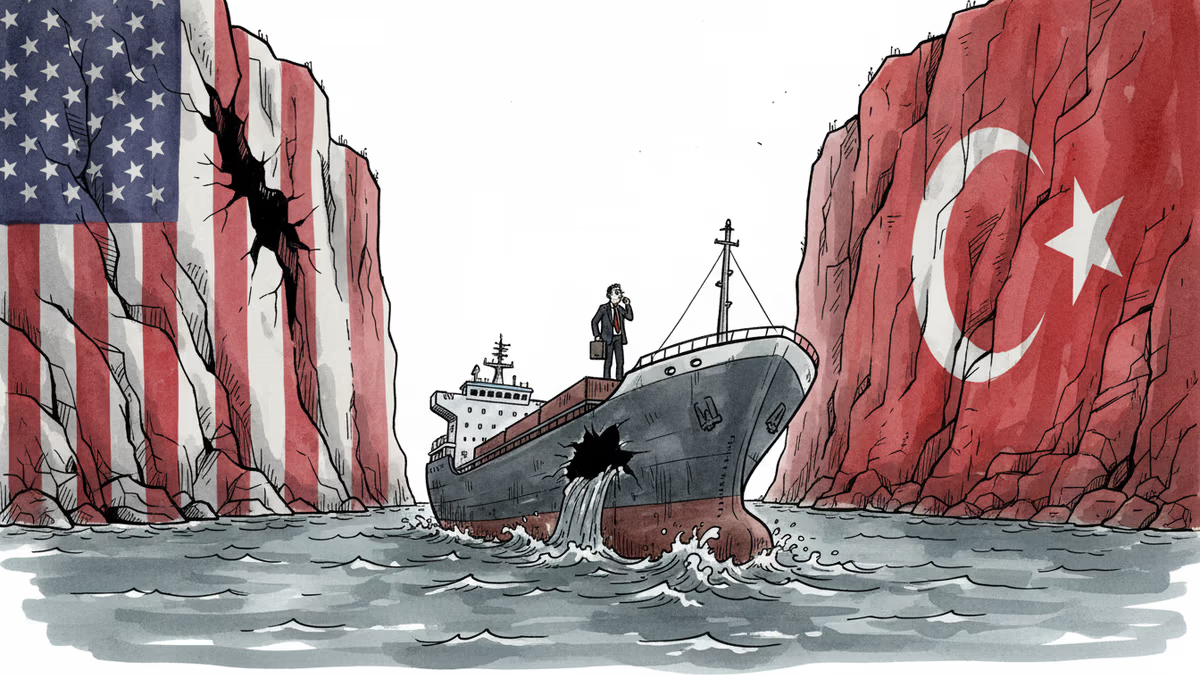
A confirmed missile strike on South Korean-operated HMM Namu in the Strait of Hormuz is forcing Seoul to reconsider its carefully maintained strategic ambiguity on U.S.-led maritime security operations.
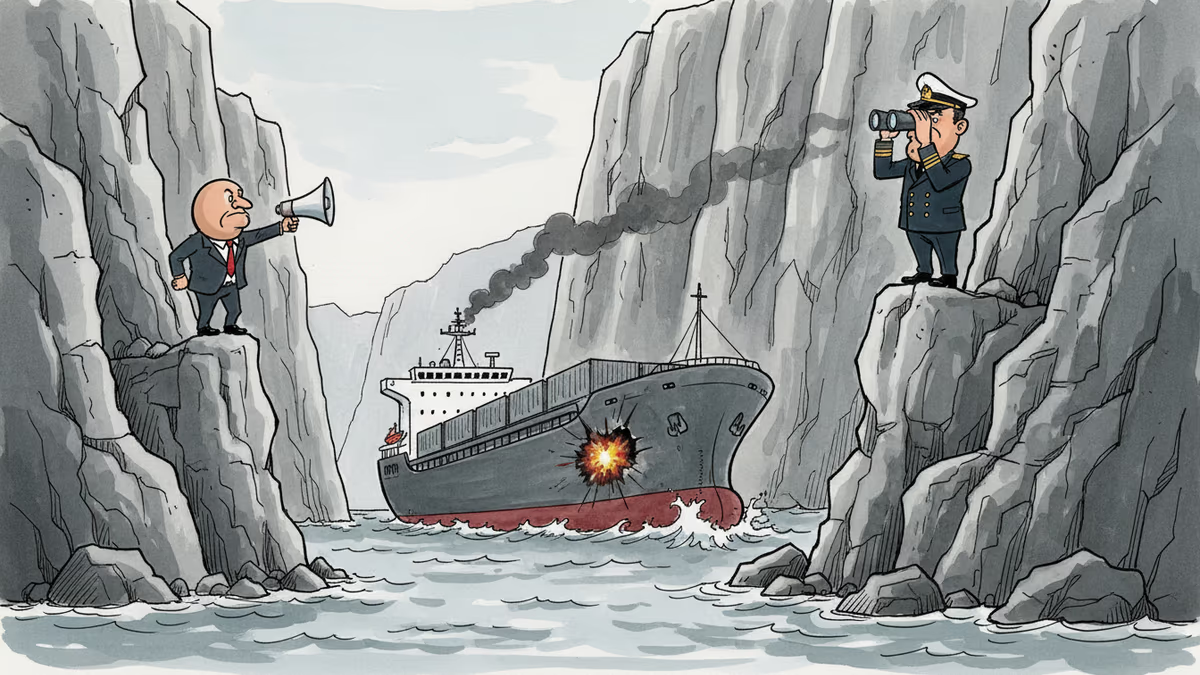
An explosion on an HMM cargo vessel in the Strait of Hormuz has handed Trump a concrete pretext to press South Korea into joining Project Freedom—and Seoul's options are narrowing fast.
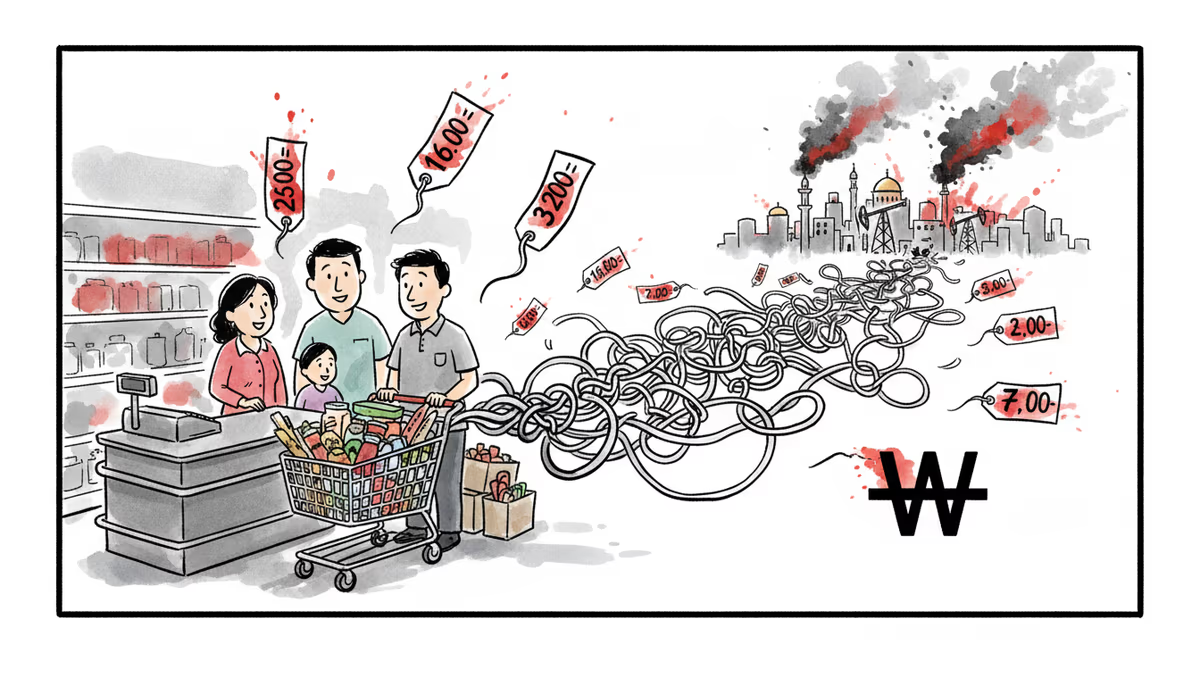
Iran's prolonged conflict is squeezing South Korea's supply chains—from naphtha shortages hitting plastics to helium fears rattling chipmakers. Here's what it means beyond the fuel pump.
As the US-Israel conflict with Iran disrupts Qatar's helium supply, prices have doubled and hospitals fear MRI shortages. Here's why helium is uniquely hard to replace.
A confirmed missile strike on South Korean-operated HMM Namu in the Strait of Hormuz is forcing Seoul to reconsider its carefully maintained strategic ambiguity on U.S.-led maritime security operations.
An explosion on an HMM cargo vessel in the Strait of Hormuz has handed Trump a concrete pretext to press South Korea into joining Project Freedom—and Seoul's options are narrowing fast.
Iran's prolonged conflict is squeezing South Korea's supply chains—from naphtha shortages hitting plastics to helium fears rattling chipmakers. Here's what it means beyond the fuel pump.
As the US-Israel conflict with Iran disrupts Qatar's helium supply, prices have doubled and hospitals fear MRI shortages. Here's why helium is uniquely hard to replace.
Thoughts
Share your thoughts on this article
Sign in to join the conversation