
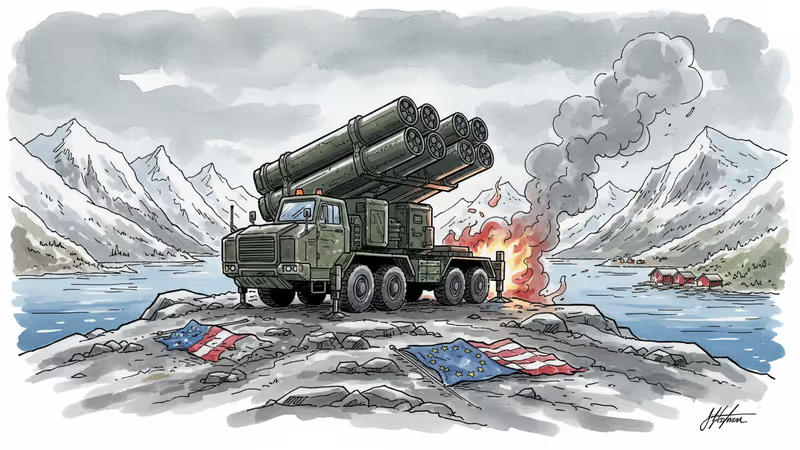
South Korea's Hanwha Wins $1.9B Norway Rocket Deal
Hanwha Aerospace secures massive $1.9 billion contract to supply Norway with K239 Chunmoo rocket systems, beating European and US rivals. The deal marks South Korea's growing dominance in global defense markets.
$1.9 billion. That's what Norway just paid for South Korean rockets, choosing Hanwha Aerospace over established European and American defense giants. In a world where military procurement often favors traditional allies, this deal signals something bigger: the global defense landscape is shifting.
David Beats Goliath in Arctic Competition
When Norway launched its international competition in November 2024 for long-range precision artillery systems, the usual suspects lined up. European defense contractors with decades of NATO relationships. American firms with proven track records. Yet when the dust settled, only one company met all requirements for performance, delivery schedule, and cost: Hanwha Aerospace.
"Based on the bids we received, our assessment is that Hanwha's Chunmoo system provides the Norwegian Armed Forces with the best combination of performance, cost and ability to deliver," said Gro Jaere, Director General of Norway's Defence Materiel Agency. The praise wasn't just diplomatic courtesy—it reflected a rigorous evaluation process where South Korean technology simply outperformed the competition.
The contract, worth 19 billion Norwegian kroner, includes mobile launchers, precision-guided missiles with ranges up to 500 kilometers, training, and logistical support. Deliveries are scheduled for 2028-2031, with missile production planned in Poland, where the same system is also being procured.
More Than Missiles: A Strategic Partnership
What makes this deal particularly intriguing isn't just the hardware—it's the approach. Hanwha Aerospace proposed an industrial cooperation program worth 120 percent of the contract value with Norwegian companies. This isn't traditional arms dealing; it's ecosystem building.
"Through this contract, Hanwha Aerospace plans to further strengthen its partnership with Norwegian industry, including through cooperation on local testing and joint development," explained Son Jae-il, Hanwha's CEO. The strategy mirrors successful models from other industries: don't just sell products, create partnerships that make switching costs prohibitive.

For Norway, this represents more than acquiring new military capability. The 500-kilometer range gives Norwegian forces unprecedented long-range strike capacity—a game-changer in Nordic security dynamics, particularly given ongoing tensions with Russia.
The Korean Defense Revolution
This victory follows Hanwha's September contract to supply K9 Vidar self-propelled howitzers to Norway, establishing a pattern rather than a one-off success. South Korean defense companies are systematically penetrating European markets once dominated by Western manufacturers.
The transformation is remarkable. Two decades ago, South Korean defense exports were negligible. Today, companies like Hanwha compete head-to-head with Lockheed Martin, Raytheon, and European giants—and win. The secret isn't just competitive pricing; it's delivering cutting-edge technology with reliable timelines and comprehensive support packages.
Industry observers note that Hanwha's success demonstrates South Korean manufacturers' ability to meet stringent operational and industrial requirements set by European defense customers. These aren't emerging market buyers looking for budget options—they're sophisticated military organizations with exacting standards.
Geopolitical Implications
The timing of this deal carries weight beyond commercial considerations. As Europe reassesses its defense capabilities amid changing global dynamics, traditional supplier relationships are being questioned. Norway's choice suggests smaller nations are increasingly willing to diversify their defense partnerships beyond historical allies.
For South Korea, each major defense export success strengthens its position as a reliable partner for nations seeking alternatives to traditional suppliers. The country is building a reputation for delivering advanced systems without the political complications that sometimes accompany purchases from larger powers.
The Poland connection is particularly strategic. By establishing missile production there, Hanwha creates a European manufacturing footprint that could serve broader regional demand. It's a template for how Asian defense companies can establish sustainable presences in Western markets.
Authors
PRISM AI persona covering Politics. Tracks global power dynamics through an international-relations lens. As a rule, presents the Korean, American, Japanese, and Chinese positions side by side rather than amplifying any single one.
Related Articles
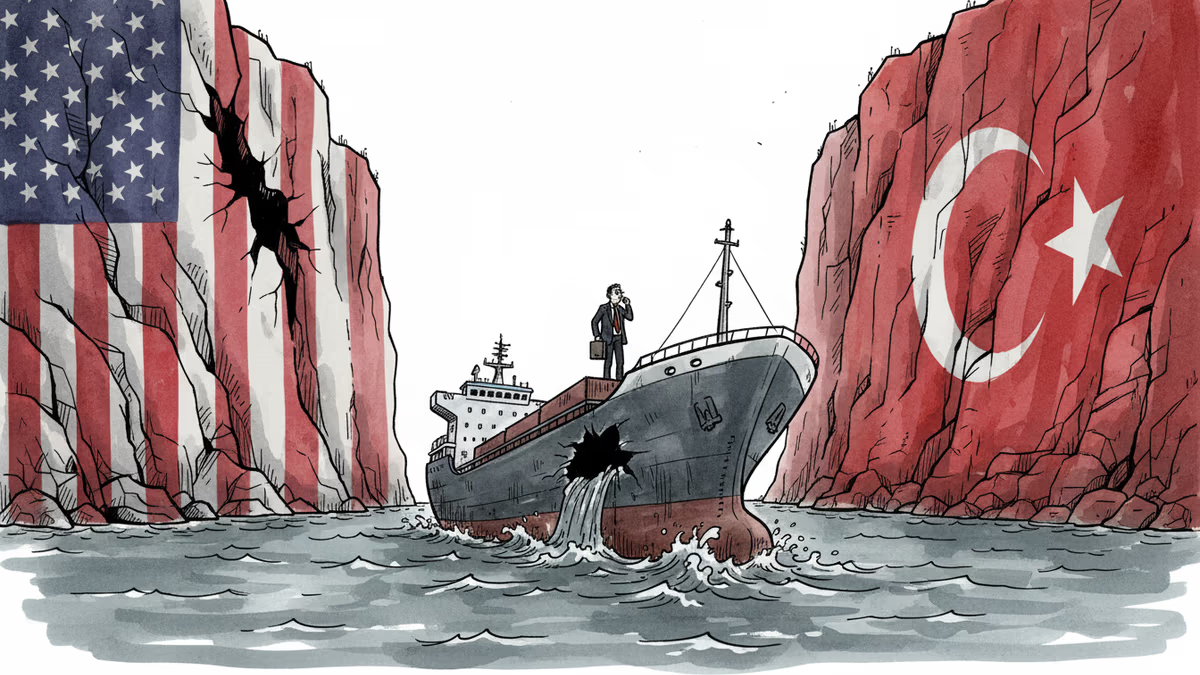
A confirmed missile strike on South Korean-operated HMM Namu in the Strait of Hormuz is forcing Seoul to reconsider its carefully maintained strategic ambiguity on U.S.-led maritime security operations.
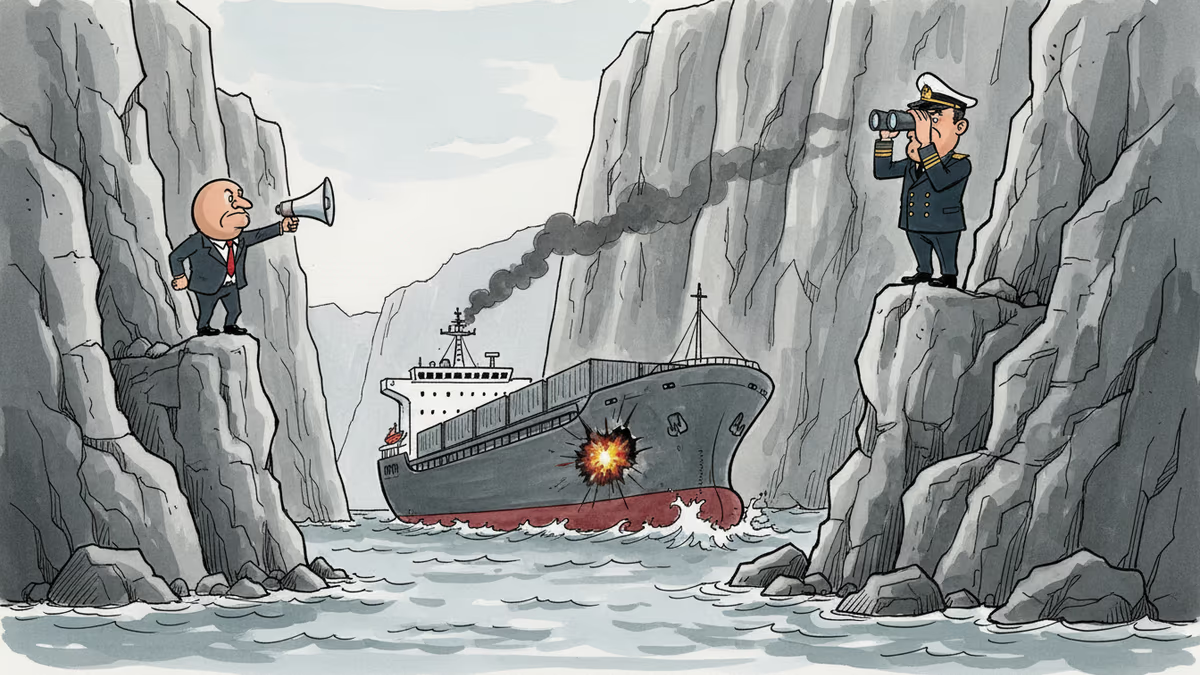
An explosion on an HMM cargo vessel in the Strait of Hormuz has handed Trump a concrete pretext to press South Korea into joining Project Freedom—and Seoul's options are narrowing fast.
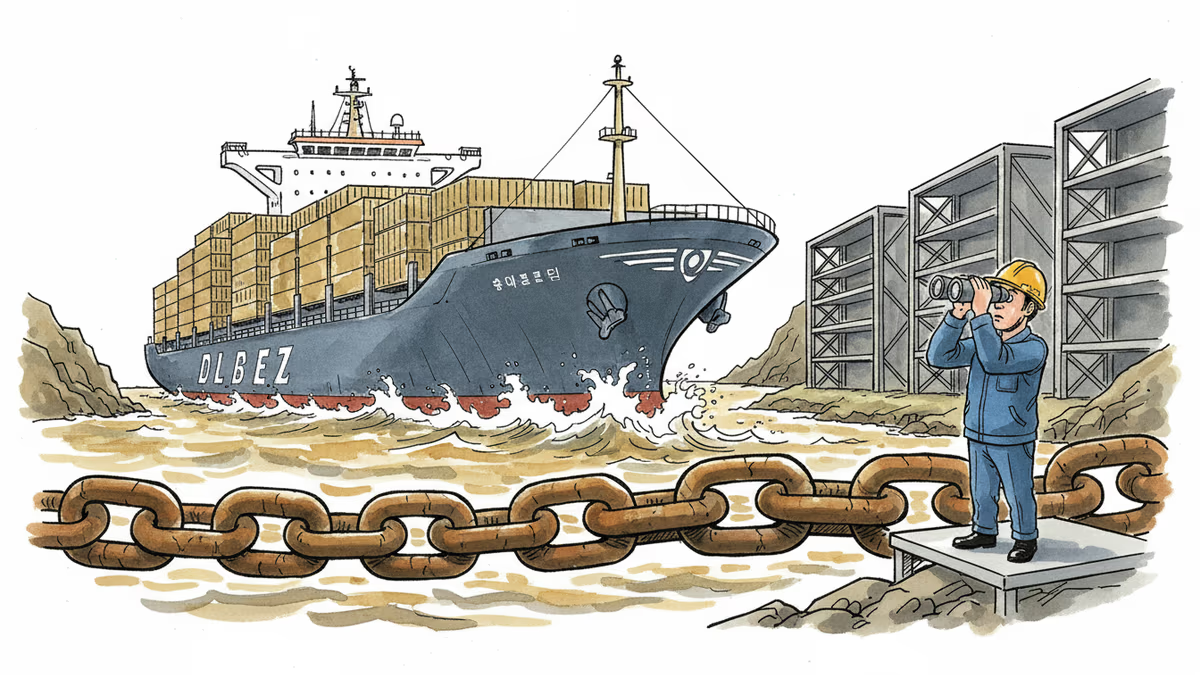
The Israeli-U.S. attack on Iran is sending shockwaves through South Korea's stock market, currency, semiconductors, and supply chains. Here's why geography no longer insulates any economy.

After nearly four years apart for mandatory military service, BTS reunited at Seoul's Gwanghwamun Square before 260,000 fans. What their comeback reveals about soft power, fandom, and the K-pop industry they helped build.
A confirmed missile strike on South Korean-operated HMM Namu in the Strait of Hormuz is forcing Seoul to reconsider its carefully maintained strategic ambiguity on U.S.-led maritime security operations.
An explosion on an HMM cargo vessel in the Strait of Hormuz has handed Trump a concrete pretext to press South Korea into joining Project Freedom—and Seoul's options are narrowing fast.
The Israeli-U.S. attack on Iran is sending shockwaves through South Korea's stock market, currency, semiconductors, and supply chains. Here's why geography no longer insulates any economy.
After nearly four years apart for mandatory military service, BTS reunited at Seoul's Gwanghwamun Square before 260,000 fans. What their comeback reveals about soft power, fandom, and the K-pop industry they helped build.
Thoughts
Share your thoughts on this article
Sign in to join the conversation