
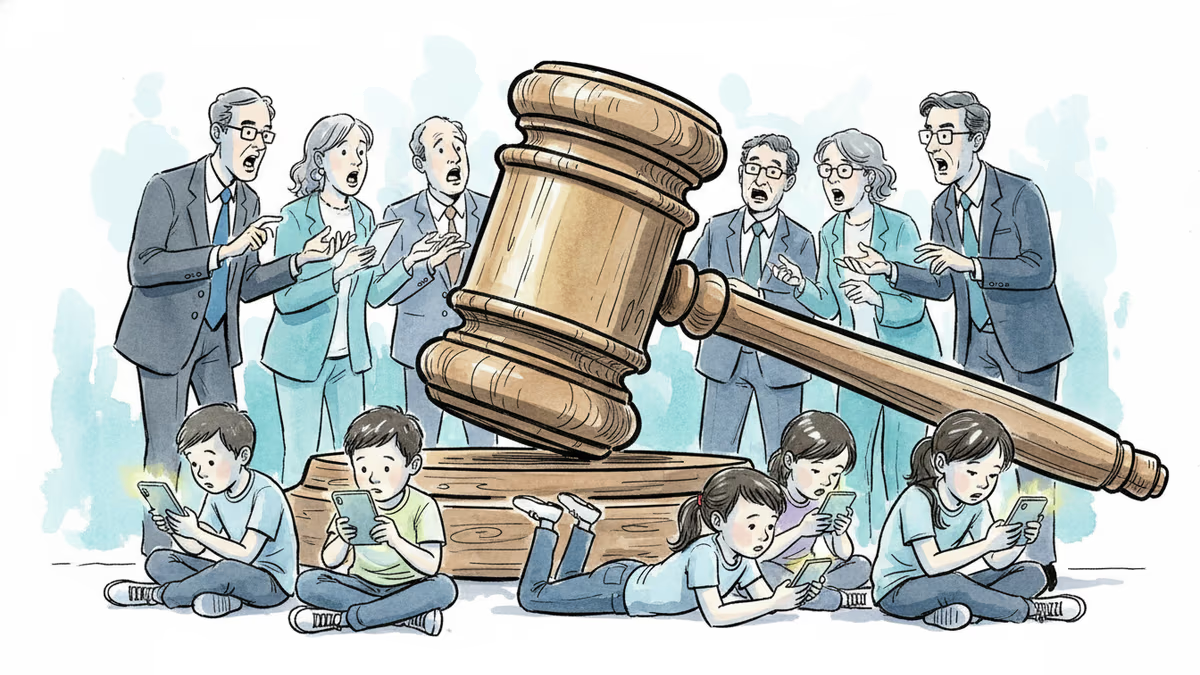
Congress Moves to Reshape Kids' Digital World
House committee advances three child safety bills requiring age verification and digital protections. Tech giants face new compliance burdens as lawmakers split on approach.
Three Bills, One Marathon Session
After hours of heated debate Thursday, the House Energy and Commerce Committee advanced a trio of child safety measures that could reshape how kids interact with digital platforms. The Kids Internet and Digital Safety (KIDS) Act, Sammy's Law, and the App Store Accountability Act all cleared committee despite sharp partisan divisions.
The centerpiece legislation would force app stores to implement age-gating systems, while requiring social media platforms to adopt new protections for minors. But the path forward revealed deep disagreements about how far government should reach into Silicon Valley's business models.
Republicans vs. Democrats: Two Visions of Protection
Republican lawmakers framed the bills as empowering parents while preserving business flexibility. "We're giving families tools, not government mandates," argued supporters who stripped the controversial "duty of care" provision from earlier Senate versions.
Democrats pushed back hard. They questioned whether age verification systems would actually work, pointing out that determined 13-year-olds can easily lie about their birth dates. "This feels like security theater," one committee member said, calling for stronger enforcement mechanisms.
The split reflects broader tensions about tech regulation. Republicans favor market-based solutions with parental oversight, while Democrats want binding corporate responsibilities backed by federal enforcement.
Tech Giants Face Compliance Scramble

If these bills become law, Apple, Google, Meta, and other platform operators will need to overhaul their systems within months. App stores must build age verification infrastructure. Social platforms need new algorithms to identify and protect minor users. Gaming companies face restrictions on monetization features targeting kids.
The compliance costs could be staggering. Industry estimates suggest billions in initial implementation expenses, plus ongoing operational overhead. That's manageable for tech giants but potentially devastating for smaller app developers and startups.
Some companies are already preparing. TikTok has quietly expanded its teen safety features, while YouTube rolled out additional parental controls. But comprehensive age verification remains technically challenging and privacy-invasive.
Parents Caught in the Middle
Parent advocacy groups are split on the legislation. Safety-focused organizations applaud any steps toward better protection, especially after high-profile cases of online predation and cyberbullying. But digital rights advocates worry about creating a "sanitized internet" that limits kids' learning opportunities.
"My 14-year-old uses coding tutorials on YouTube and connects with other young programmers on Discord," said one parent. "I want her safe, but not locked out of valuable experiences."
The generational divide is stark. Parents who grew up offline often favor restrictions, while those raised digital-native tend toward education over prohibition.
Global Ripple Effects
These bills could influence international policy. The EU is watching closely as it develops its own Digital Services Act enforcement. Countries like Australia and Canada have similar child safety initiatives in progress.
For multinational platforms, the compliance burden multiplies. Different age verification requirements across jurisdictions could fragment the global internet, creating region-specific versions of popular apps and services.
Authors
Related Articles
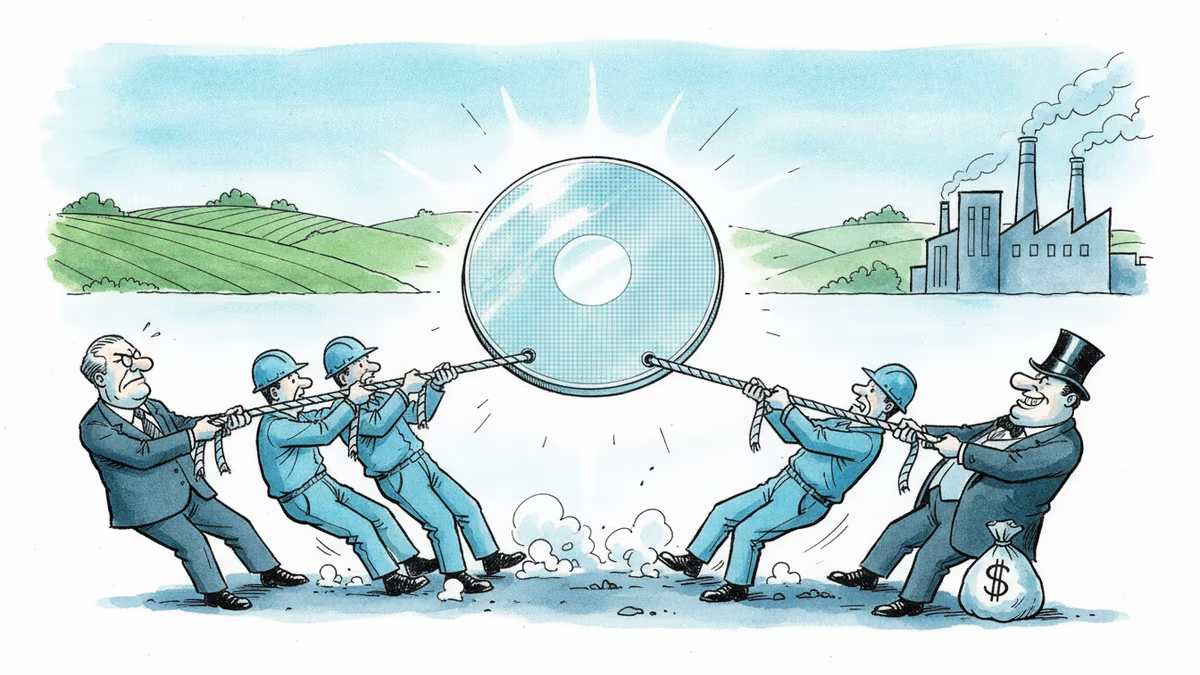
Samsung Electronics' union branch revealed that 84% of survey respondents oppose the government's roughly $290 billion (₩400 trillion) semiconductor megaproject in Gwangju. Government, management, the union and shareholders are all reading the same national project in sharply different ways.

Nvidia shipped roughly a billion RISC-V cores in 2024, then announced it would run CUDA on the open standard. We break down how royalty-free instruction sets and open software stacks are trying to route around CUDA's lock-in. Part 2 of the Semiconductor Sovereignty series.
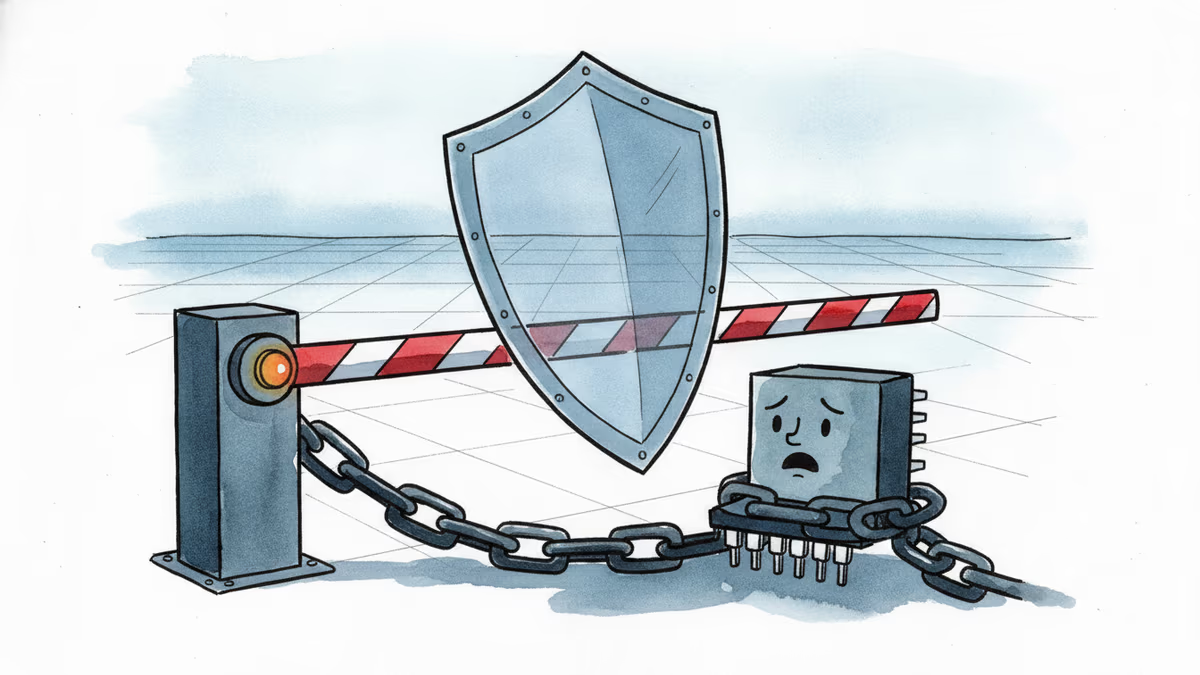
US AI-chip export controls split into three layers in the first half of 2026 — January easing, a May crackdown on circumvention, and a pending bill. Nvidia erased China from its guidance and still posted a record $81.6 billion quarter. A look at the export policy that both shields and cages it.
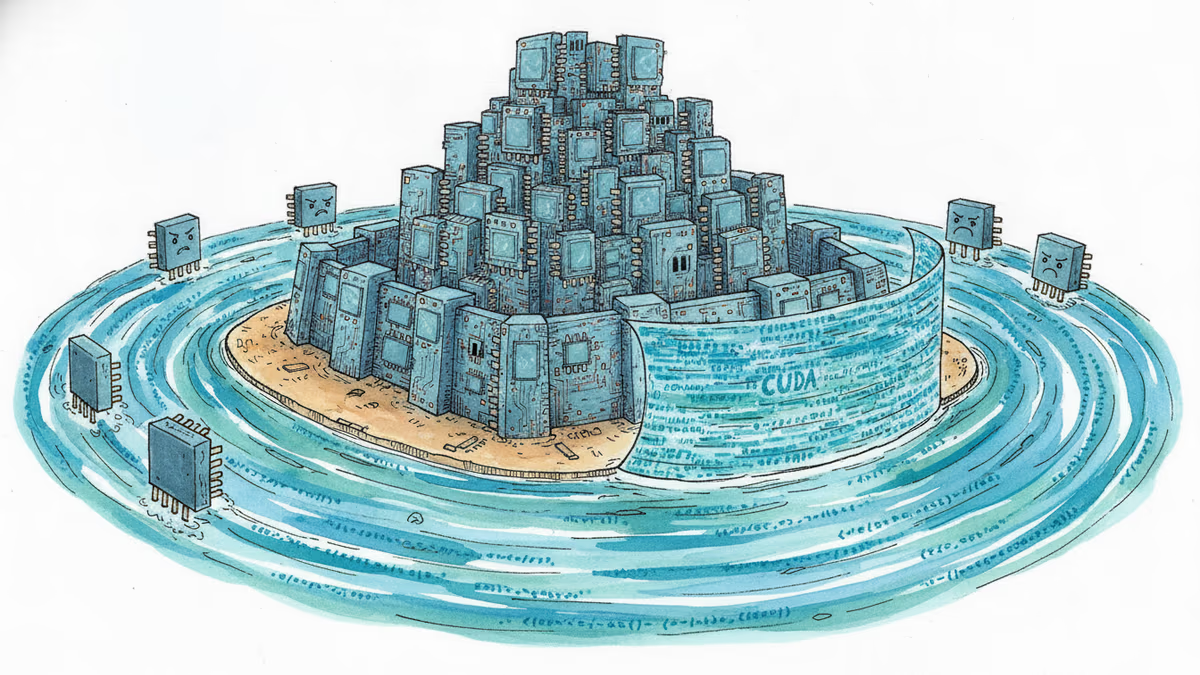
AMD's MI325X matches or beats Nvidia on memory and bandwidth — yet Nvidia's 86-92% share holds. The real moat is CUDA, 20 years in the making. Part 1 of 4.
Samsung Electronics' union branch revealed that 84% of survey respondents oppose the government's roughly $290 billion (₩400 trillion) semiconductor megaproject in Gwangju. Government, management, the union and shareholders are all reading the same national project in sharply different ways.
Nvidia shipped roughly a billion RISC-V cores in 2024, then announced it would run CUDA on the open standard. We break down how royalty-free instruction sets and open software stacks are trying to route around CUDA's lock-in. Part 2 of the Semiconductor Sovereignty series.
US AI-chip export controls split into three layers in the first half of 2026 — January easing, a May crackdown on circumvention, and a pending bill. Nvidia erased China from its guidance and still posted a record $81.6 billion quarter. A look at the export policy that both shields and cages it.
AMD's MI325X matches or beats Nvidia on memory and bandwidth — yet Nvidia's 86-92% share holds. The real moat is CUDA, 20 years in the making. Part 1 of 4.
Thoughts
Share your thoughts on this article
Sign in to join the conversation