
20 Minutes a Day, 90 Days — Until News Reading Becomes a Habit
You've tried for three days and quit. You're not alone.
You've tried for three days and quit. You're not alone.
The average drop-off rate for language learning apps exceeds 80% within two weeks. Most learners stop when initial enthusiasm fades. It's not a willpower problem. It's a system problem.
Part 1 covered why news. Part 2 covered how to read. This part covers how to turn a single attempt into a lasting habit.
The 90-Day Roadmap
We divide 90 days into 4 phases. Each phase has different goals and methods. Trying everything at once leads to failure. Add one thing at a time, phase by phase.
Weeks 1-2: Exploration Phase
Goal: Plant the seed of habit.
- Read 1 article on PRISM daily.
- First in English, then in your target language.
- Don't take notes. Just get a feel for it.
- Skip unknown expressions.
The key at this phase is "opening PRISM every day." Don't worry about comprehension or memorization. Focus on showing up. The secret is attaching it to existing routines. Commute time, coffee break after lunch, 10 minutes before bed. New habits stick best when attached to actions you already do.
Daily time: 10-15 minutes
Weeks 3-4: Collection Phase
Goal: Start comparative reading and collect expressions.
- Do comparative reading on 1 article daily (using Part 2 methods).
- Note 3 expressions that catch your eye.
- Note format is free. Notes app, paper, flashcard app — anything works.
- Write 1 sentence daily: Pick one expression you collected and write a short sentence in your target language. It's okay to make mistakes. Just 1 minute is enough. If you're curious whether your sentence sounds natural, ask an AI chatbot. "Does this Korean sentence sound natural?" — that alone gets you instant feedback.
- Review the week's expressions once weekly.
Two weeks of 3 expressions daily gives you about 40 expressions. Seems small, but these are all expressions you encountered in real context. They stick in memory.
Daily time: 15-20 minutes
Weeks 5-8: Deepening Phase
Goal: Add structure analysis and build review into routine.
- Maintain comparative reading + expression collection + daily 1-sentence writing.
- Add paragraph structure comparison 2-3 times weekly (using Part 2's structure analysis method).
- Add a flashcard app like Anki for review.
- Expand to 2-3 categories.
Not seeing clear results in the first 4 weeks is normal. Plateaus don't mean you're not improving — it's when invisible progress is accumulating. Then comes the moment: "I've seen this expression before." That's your turning point.
Daily time: 20-25 minutes
Weeks 9-12: Expansion Phase
Goal: Read in target language first.
- Read target language articles first, then check in English. Flip the order.
- Try inferring unknown expressions from context.
- Expand daily writing from 1 sentence to 2-3 sentences.
- Connect to speaking practice with conversation partners or AI chatbots.
- Challenge a new category once weekly.
By week 12, you should understand 60-70% of articles in target language first. English becomes the backup, not the primary.
Daily time: 20-30 minutes
Weekly Routine by Phase
No more "What should I do today?" dilemmas. Just follow the routine for your phase. Ignore activities from other phases.
Exploration Phase Routine (Weeks 1-2)
Same activity every day. Simple sticks.
| Day | Activity | Time |
|---|---|---|
| Mon-Fri | Read 1 article: English → target language. No notes. | 10-15 min |
| Sat-Sun | Rest or just scan headlines | 0-5 min |
Collection Phase Routine (Weeks 3-4)
Comparative reading and note-taking added.
| Day | Activity | Time |
|---|---|---|
| Mon/Wed/Fri | Comparative reading — 1 article, identify contrast points | 15 min |
| Tue/Thu | Expression collection — Note 3 from yesterday's article + write 1 sentence | 10 min |
| Sat | Review this week's expressions | 10 min |
| Sun | Rest | — |
Deepening Phase Routine (Weeks 5-8)
Structure analysis and Anki review added.
| Day | Activity | Time |
|---|---|---|
| Mon/Wed | Comparative reading — 1 article, collect 3-5 expressions + write 1 sentence | 20 min |
| Tue/Thu | Structure analysis — Pick one article from this week, compare paragraphs | 15 min |
| Fri | Free reading — Read interesting articles without pressure | 15 min |
| Sat | Anki review + organize this week's expressions | 15 min |
| Sun | Rest or just scan headlines | 0-10 min |
Expansion Phase Routine (Weeks 9-12)
Flip reading order, connect to writing and speaking.
| Day | Activity | Time |
|---|---|---|
| Mon/Wed | Read target language first → check in English + collect expressions | 20 min |
| Tue/Thu | Anki review + write 2-3 sentences | 15 min |
| Fri | Free reading (try a new category) | 15 min |
| Sat | Weekly review + use expressions in conversation/AI chatbot | 20 min |
| Sun | Rest | — |
Three core principles:
- Follow only your current phase's routine. Don't do activities from the next phase yet.
- 80% comprehension is enough. Trying to understand everything perfectly exhausts you. Repetition fills the gaps.
- Consistency over volume. 15 minutes daily beats 3 hours on the weekend.
Tool Combinations by Phase
PRISM alone won't make complete language learning happen. Add one tool at a time matching each phase of the 90-day roadmap. Don't start everything at once.
Exploration Phase (Weeks 1-2): No tools
Just PRISM at this stage. Don't add anything. Focus on building the habit of opening an article daily.
Collection Phase (Weeks 3-4): Add a notes app
As you start expression collection, decide on one note-taking tool. Notes app, paper, spreadsheet — anything works. Consistency matters more than format.
Start daily 1-sentence writing at this phase. Pick one expression you collected today and write a short sentence in your target language. It's okay to make mistakes. Just 1 minute. Reading alone leaves you at "I understand but can't write it." Writing makes it truly yours.
Deepening Phase (Weeks 5-8): Add Anki
When collected expressions pile up, you need a review tool. Add a flashcard app like Anki or Quizlet.
According to Ebbinghaus's research, 70% of newly learned information is forgotten within 24 hours. But reviewing just before forgetting dramatically extends retention time. Widening these intervals while repeating is Spaced Repetition, and Anki manages this timing algorithmically. The timing matters, but the key is the act of trying to recall. Trying to retrieve the answer when you see a card strengthens memory. Attempting to recall beats re-reading every time.
Key rule: Enter sentences, not words.
Front: OpenAI가 새 모델을 전격 공개했다
Back: OpenAI just dropped a new model
3-5 new cards daily, 10-15 review cards — that's a good amount. When you encounter unfamiliar grammar in news, building the habit of looking it up in reference materials also starts at this phase.
Expansion Phase (Weeks 9-12): Connect to speaking
Once reading and writing are stable, connect to speaking.
With native tutors or language exchange partners:
- "I read this article today..."
- "I saw this expression in news — do you actually use it in daily conversation?"
AI chatbots work as instant tutors too:
- "I saw 'The Fed held rates steady' in English news. What nuance does 'held steady' have?"
- "I saw '〜を余儀なくされた' in a Japanese article. Can you explain this grammar?"
The flow completes: Discover expressions on PRISM → Organize in notes → Review with Anki → Use in conversation.
Self-Progress Check
Use checklists to check your own progress. If more than half are checked at each point, you're ready to move to the next phase.
Week 4 Checklist
- [ ] I open PRISM daily (or almost daily)
- [ ] Switching from English to target language feels natural
- [ ] I have 20+ expressions collected in my notes
- [ ] I notice 2-3 expressions that repeat in a specific category
- [ ] "I've seen this expression before" happens at least once a week
Week 8 Checklist
- [ ] I can identify contrast points on my own during comparative reading
- [ ] I have 80+ collected expressions
- [ ] I can explain the paragraph structure differences between English/Korean/Japanese/Chinese news
- [ ] I understand 50%+ of target language articles without English
- [ ] I'm reading across 2+ categories
Week 12 Checklist
- [ ] My order is now target language first, then English to check
- [ ] I have 150+ collected expressions
- [ ] I've used at least 1 expression from news in conversation or writing
- [ ] Inferring unknown expressions from context is possible
- [ ] Looking at target language headlines, I can roughly predict article content
- [ ] Opening PRISM is automatic — no conscious effort needed
Frequently Asked Questions (FAQ)
Q: Can complete beginners use this?
Honestly, it's difficult. You need to be able to read the script and know basic grammar. We recommend trying after 6 months to 1 year of study. Before that, focus on textbooks and beginner apps.
Q: How many minutes per day should I spend?
20 minutes is enough. That's reading one article in two languages and noting 3 expressions. 10 minutes daily beats 2 hours on the weekend.
Q: Which language combinations work best?
Focus on one target language, occasionally peek at others.
- English → Korean: Growing interest thanks to K-content
- English → Japanese: Lots of learners, rich resources
- English → Chinese: Business value, large speaker population
- All 4 languages: For translators, interpreters, linguistics majors
Q: What if there are too many unknown words?
Two strategies:
- Strategy A (Recommended): Ignore unknown words and focus on overall flow. Check content in English, then re-read.
- Strategy B: Look up every unknown word. Slower but thorough.
Start with Strategy A to build speed, then add Strategy B for depth once comfortable.
Q: Can I use dictionaries or translators?
Yes. But don't rely only on translators.
Order: First guess from context → Compare with English version → If still unclear, use dictionary/translator. Guessing then confirming sticks in memory longer.
Q: Does this help with tests (JLPT, TOPIK, HSK)?
Indirectly, yes. Effective for reading speed improvement, current affairs vocabulary, and reading intuition. But you'll still need separate test-specific practice for question formats.
Q: Is it okay to learn from AI-written articles?
PRISM articles are AI-generated and reviewed by editorial systems. Style guidelines are applied consistently across languages, which actually gives learning materials consistency. But 100% native-level can't be guaranteed. Combine with native-speaker content (news, books, dramas) for balanced learning.
Q: How is this different from other language learning apps?
Apps like Duolingo or Busuu teach grammar and vocabulary systematically. PRISM doesn't teach. It's a news platform.
The difference is "real-world text." Learning app sentences are created for learning. PRISM articles are actual news. For intermediate+ learners, real-world exposure is more effective. If you're a beginner, start with learning apps first.
PRISM complements learning apps, not replaces them.
Collecting 3 expressions daily for 90 days gives you 270 expressions. 270 doesn't sound like much.
But these 270 are all from real news. They come with context and 4-language comparison. Quality is different from 270 words memorized from a word list.
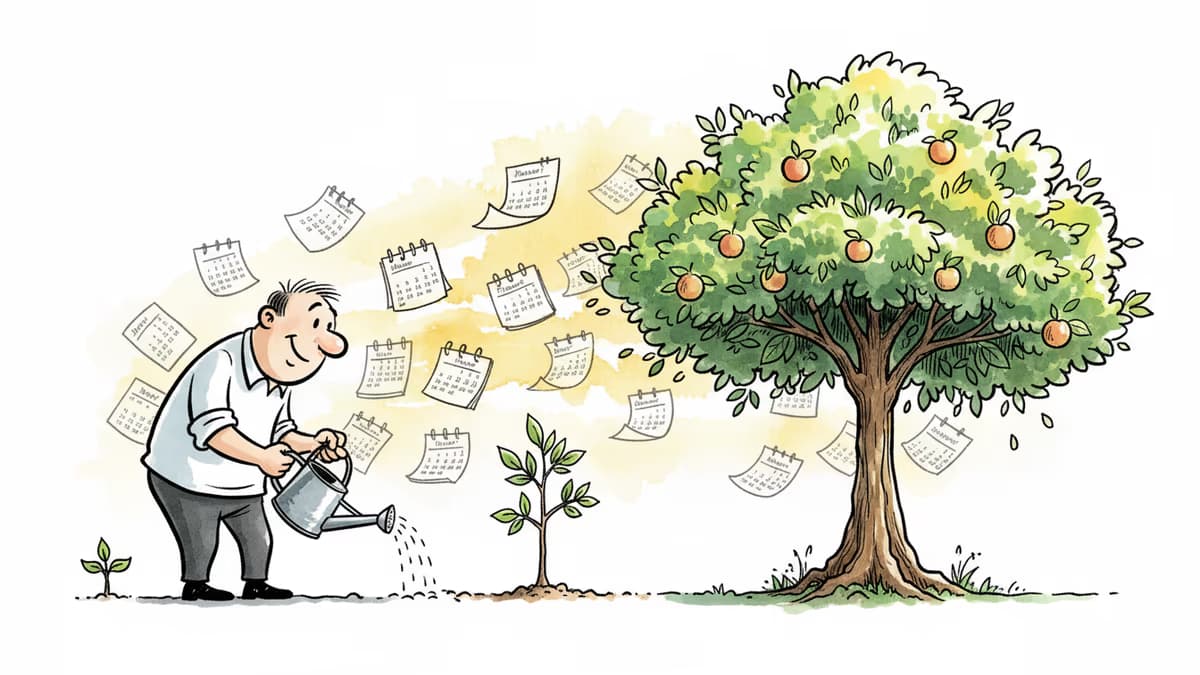
Compound interest isn't just for finance. Learning works on compound interest too. The first 30 days show little visible progress. Around day 60, "I've seen this expression before" moments start happening. By day 90, you understand more than half of target language articles without English backup. Small inputs accumulate into big change.
Previous Parts: Part 1 — What Your Textbook Never Taught You | Part 2 — Dissecting the Same News in 4 Languages
Authors

"17 years in the field, now telling the story of technology"
Related Articles

If you read Part 1 and thought "Okay, but how exactly?" — this is your answer.
Have you ever used what your textbook taught you?

Robinhood's startup fund raised only 66% of its $1B target and dropped 16% on debut. Meanwhile, Destiny Tech100 trades at 33% premium. What went wrong?

A security researcher discovered he could access 7,000 DJI robot vacuums and peek into strangers' homes. This Valentine's Day revelation exposes the hidden privacy risks of our smart home obsession.
If you read Part 1 and thought "Okay, but how exactly?" — this is your answer.
Have you ever used what your textbook taught you?
Robinhood's startup fund raised only 66% of its $1B target and dropped 16% on debut. Meanwhile, Destiny Tech100 trades at 33% premium. What went wrong?
A security researcher discovered he could access 7,000 DJI robot vacuums and peek into strangers' homes. This Valentine's Day revelation exposes the hidden privacy risks of our smart home obsession.
Thoughts
Share your thoughts on this article
Sign in to join the conversation