

LandSpace vs SpaceX Competition 2025: China’s Private Rocket Race Heats Up
LandSpace is narrowing the gap with SpaceX in the reusable rocket race. As of late 2025, the Chinese startup's progress signals a new era in global space competition and pricing.
They're chasing the Starship dream. According to Reuters, China's LandSpace is gearing up to take on Elon Musk and SpaceX in a battle for orbital dominance. With reusable technology now the industry standard, this Chinese startup is proving it’s no longer just a follower, but a serious contender in the 2025 space race.
Decoding the LandSpace vs SpaceX Competition 2025
LandSpace has already made history as the first to reach orbit with a methane-liquid oxygen rocket, the Zhuque-2. Now, the focus has shifted to the Zhuque-3, a stainless-steel monster designed to be reused up to 20 times. This puts it in direct competition with SpaceX's workhorse, the Falcon 9, aiming to slash launch costs by leveraging China's massive industrial supply chain.

While SpaceX remains the gold standard with its Starship program, LandSpace’s rapid iteration cycle is catching eyes. By late 2025, the gap in reliability is narrowing. Analysts suggest that if LandSpace achieves consistent recovery of its first-stage boosters, the pricing pressure on the global satellite market will be enormous.
Authors
Related Articles
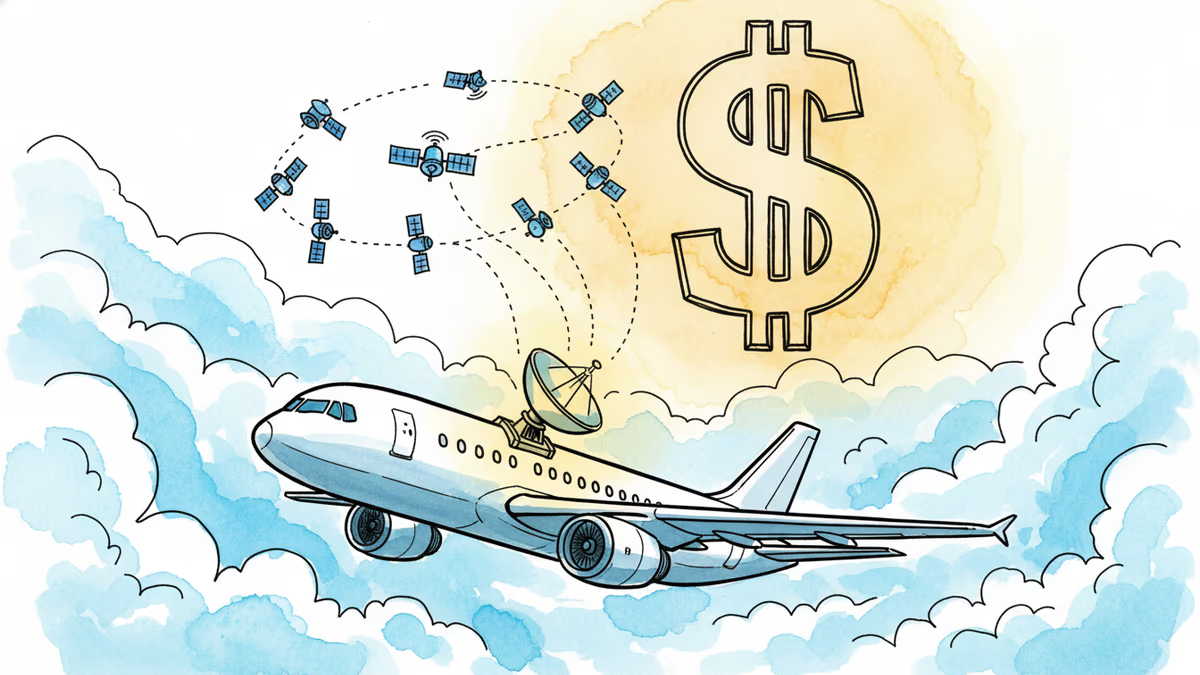
American Airlines just signed Starlink for 500+ aircraft. It's not just about faster inflight internet — it's a calculated move in the run-up to what could be the largest IPO in history.
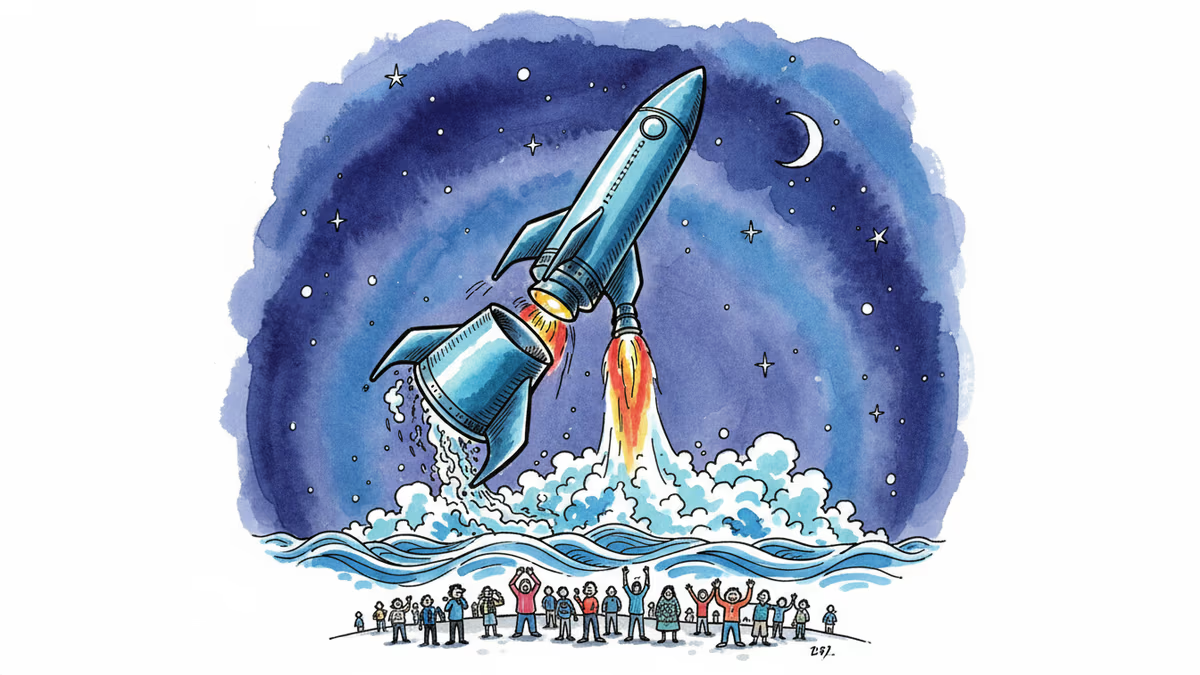
SpaceX's upgraded Starship V3 completed its first test flight, deploying 20 Starlink simulators but losing the Super Heavy booster. With an IPO weeks away, the stakes just got higher.
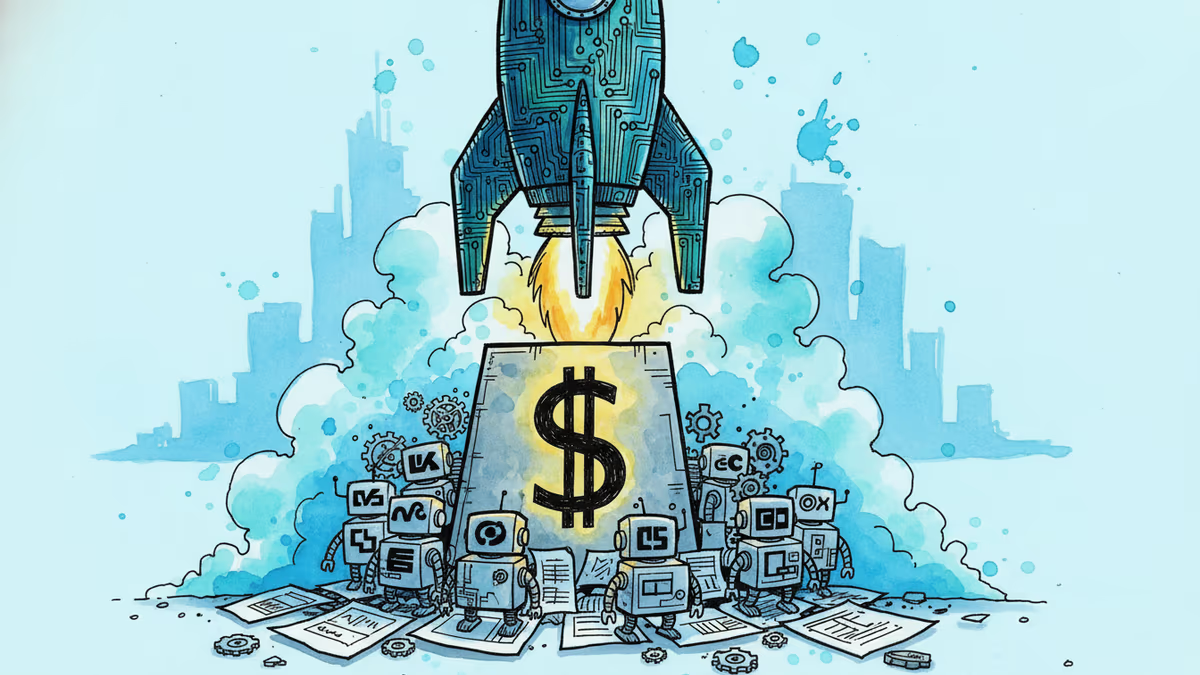
SpaceX's IPO filing puts AI at the center, claiming a $26.5 trillion market opportunity. But can Grok compete with OpenAI and Anthropic for enterprise customers?
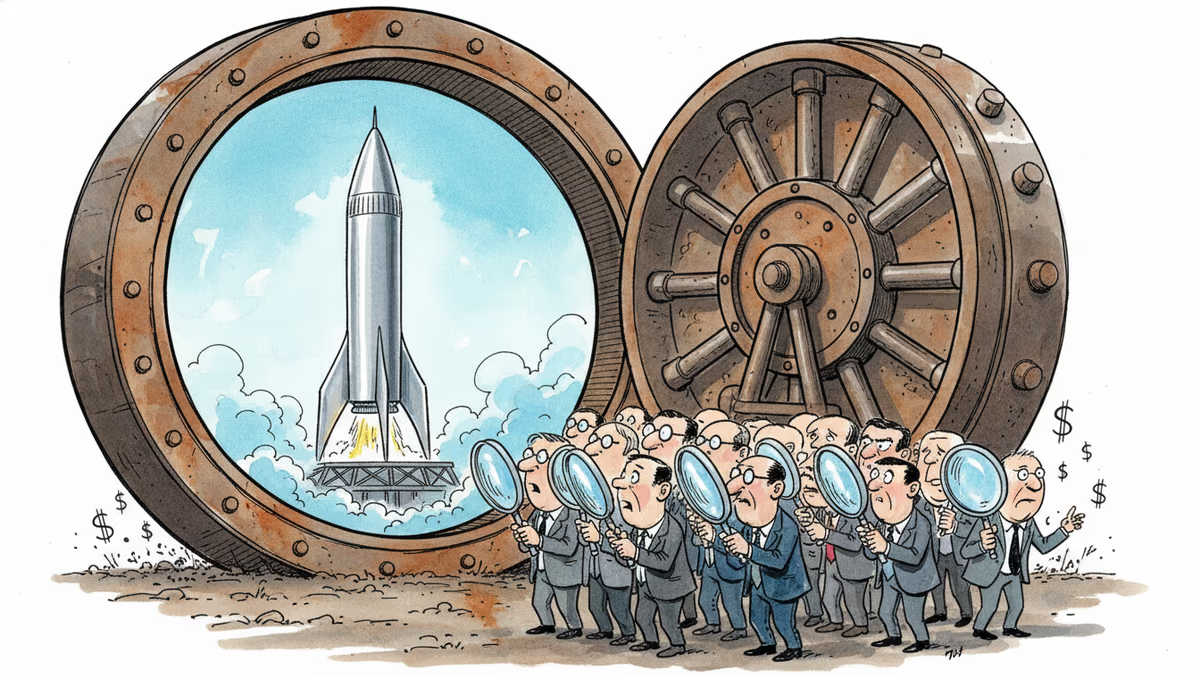
SpaceX filed a nearly 400-page S-1 with the SEC, targeting an IPO as early as June 12. Here's what the filing reveals—and what it doesn't.
American Airlines just signed Starlink for 500+ aircraft. It's not just about faster inflight internet — it's a calculated move in the run-up to what could be the largest IPO in history.
SpaceX's upgraded Starship V3 completed its first test flight, deploying 20 Starlink simulators but losing the Super Heavy booster. With an IPO weeks away, the stakes just got higher.
SpaceX's IPO filing puts AI at the center, claiming a $26.5 trillion market opportunity. But can Grok compete with OpenAI and Anthropic for enterprise customers?
SpaceX filed a nearly 400-page S-1 with the SEC, targeting an IPO as early as June 12. Here's what the filing reveals—and what it doesn't.
Thoughts
Share your thoughts on this article
Sign in to join the conversation