
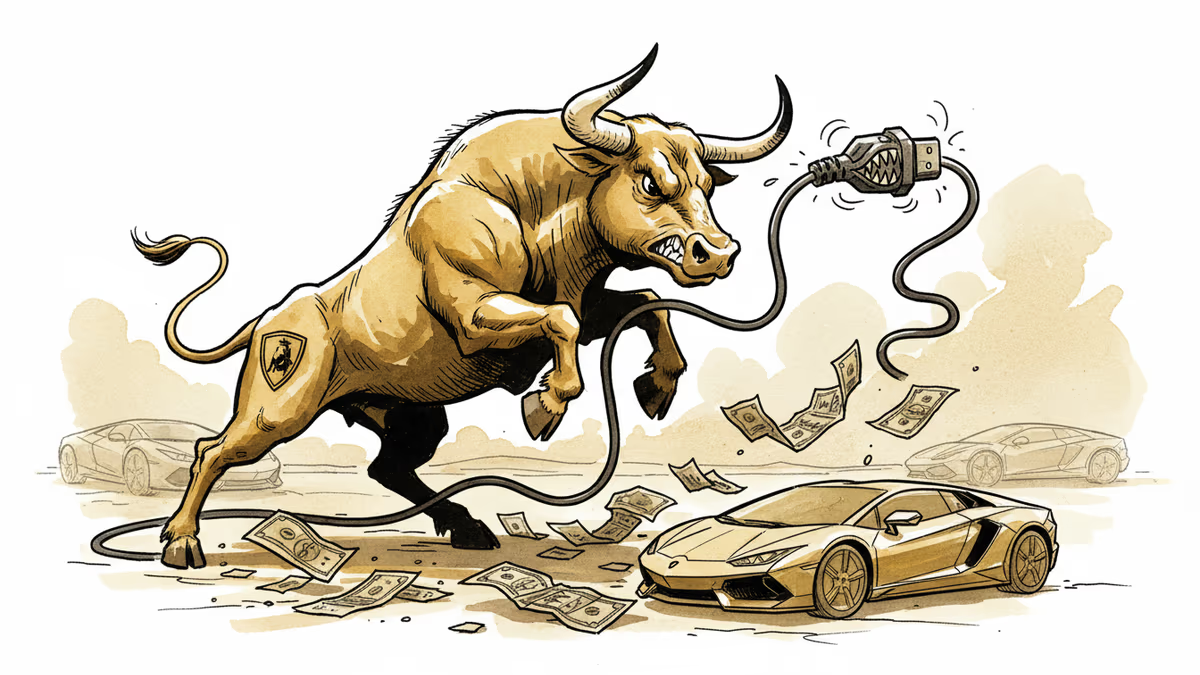
Why Lamborghini Just Gave Up on Electric Cars
Supercar maker Lamborghini canceled its electric SUV project, admitting customers simply don't want EVs. The decision reveals uncomfortable truths about luxury markets and environmental virtue signaling.
When you're dropping $400,000 on a car, saving the planet isn't exactly top of mind. That brutal honesty explains why Lamborghini just killed its electric SUV project after years of development, admitting what other luxury brands won't: their customers simply don't want EVs.
It's Not About Technology
As part of Volkswagen Group, Lamborghini has access to the same EV platforms powering Audi's e-tron GT and Porsche's Taycan. The technology exists. The expertise is there. What's missing? Customer demand.
"Investing heavily in full-EV development when the market and customer base are not ready would be an expensive hobby," CEO Stephan Winkelmann told the Sunday Times, "and financially irresponsible towards shareholders, customers, and our employees."
The Lanzador electric SUV, canceled in late 2025, represented years of R&D investment. But Lamborghini discovered something uncomfortable: electric motors might deliver instant torque, but they can't deliver drama.
The Luxury Market's Dirty Secret
Here's what the industry won't say publicly: wealthy buyers aren't interested in restraint. People spending six or seven figures on a supercar want excess, not efficiency. They want their car to announce its presence, not whisper past pedestrians.

Ferrari promises full electrification by 2030, but it's hedging with hybrids. McLaren is taking a similar approach. Even Porsche, despite the Taycan's success, keeps its 911 firmly in internal combustion territory. They all face the same question: How do you electrify emotion?
The Tesla Problem
This creates an interesting dynamic. Tesla proved electric cars could be fast and desirable, but Tesla buyers and Lamborghini buyers are fundamentally different customers. Tesla appeals to tech enthusiasts who view their car as a statement about the future. Lamborghini buyers want a statement about themselves—right now.
What This Means for the Industry
Lamborghini's retreat signals a broader truth: the transition to electric isn't uniform across all market segments. While mainstream brands race toward electrification, luxury performance brands are discovering that their customers' values don't align with environmental messaging.
This could create opportunities for new players. Chinese luxury EV brands like NIO and Lucid Motors are building electric supercars from the ground up, unencumbered by combustion engine heritage. They might capture buyers who want both performance and environmental credentials.
The answer might determine not just the future of supercars, but the very nature of luxury itself.
Authors
Related Articles
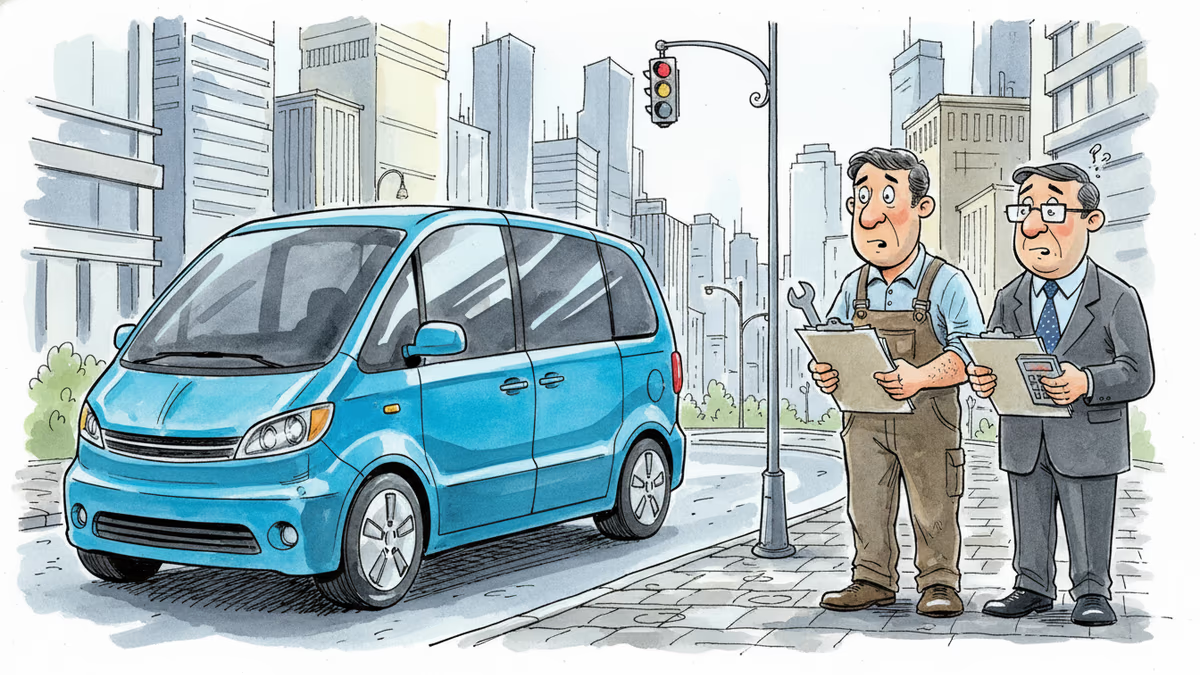
Waymo's new Ojai robotaxi isn't just a vehicle upgrade. It's the company's most serious attempt yet at cracking the cost problem that has kept autonomous vehicles from scaling. Here's what's really at stake.
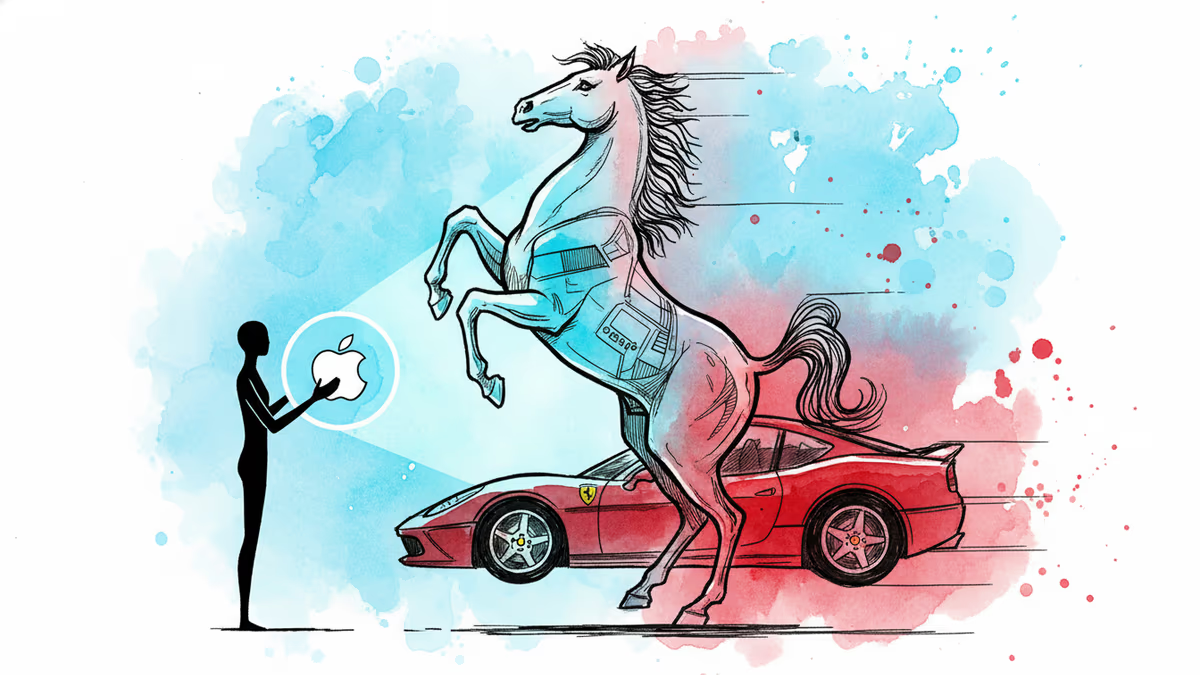
The Ferrari Luce is finally here — 1,000 hp, a 122 kWh battery, and an interior designed by the team behind the iPhone. But the real story is what Ferrari risked to build it.
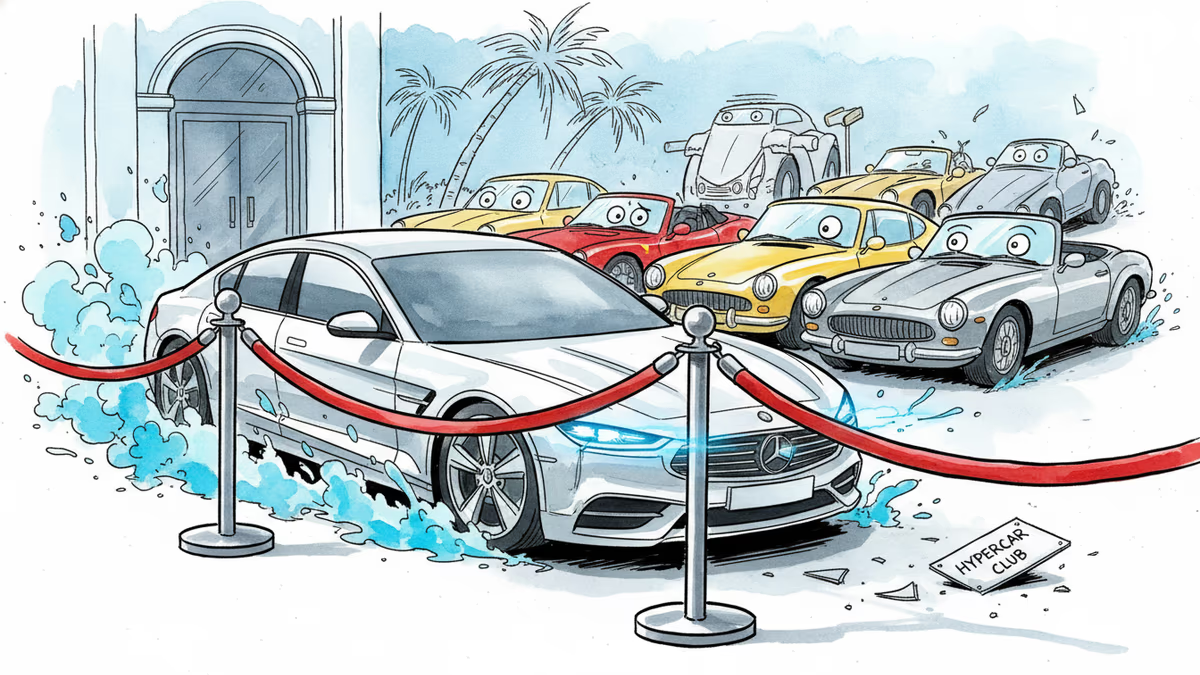
Mercedes-AMG's new GT 4-door coupe packs three YASA axial flux motors producing 1,153 hp and 1,475 lb-ft of torque. Here's what it means for the EV performance race—and who actually wins.
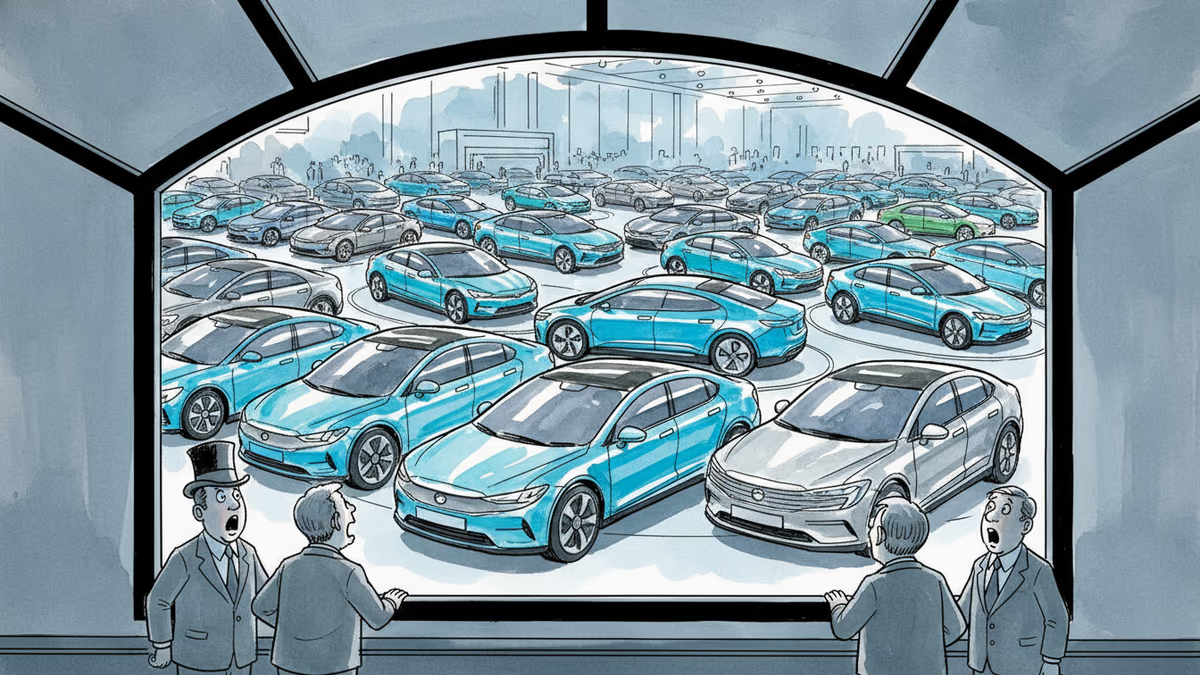
Auto China 2026 set records with 1,451 vehicles and 181 world premieres. But the real story isn't the size—it's how Chinese automakers stopped competing on price and started competing on brains.
Waymo's new Ojai robotaxi isn't just a vehicle upgrade. It's the company's most serious attempt yet at cracking the cost problem that has kept autonomous vehicles from scaling. Here's what's really at stake.
The Ferrari Luce is finally here — 1,000 hp, a 122 kWh battery, and an interior designed by the team behind the iPhone. But the real story is what Ferrari risked to build it.
Mercedes-AMG's new GT 4-door coupe packs three YASA axial flux motors producing 1,153 hp and 1,475 lb-ft of torque. Here's what it means for the EV performance race—and who actually wins.
Auto China 2026 set records with 1,451 vehicles and 181 world premieres. But the real story isn't the size—it's how Chinese automakers stopped competing on price and started competing on brains.
Thoughts
Share your thoughts on this article
Sign in to join the conversation