
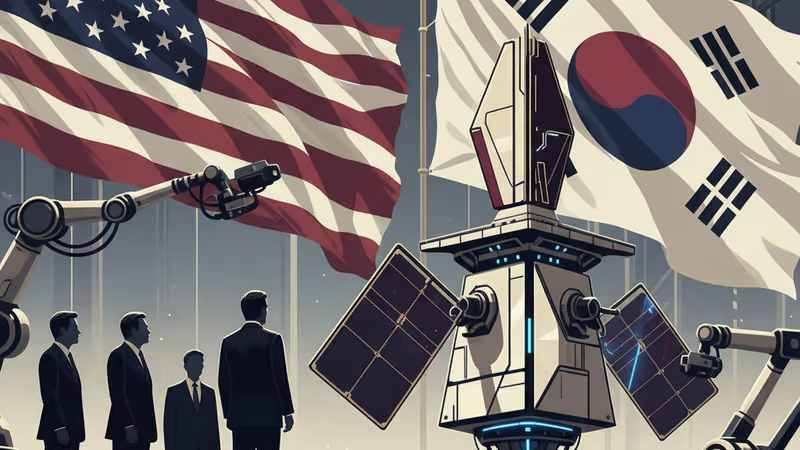
S. Korea US Space Commerce Cooperation 2026: Strengthening the Orbital Supply Chain
Senior officials from Seoul and Washington met on Jan 19, 2026, to discuss S. Korea US space commerce cooperation 2026, focusing on supply chains and joint market entry.
The final frontier's becoming a bustling marketplace. On January 19, 2026, senior officials from Seoul and Washington met in South Korea's capital to forge deeper ties between their respective space industries.
Strategic Synergies in S. Korea US Space Commerce Cooperation 2026
According to the Foreign Ministry, Park Jong-han, deputy foreign minister for economic affairs, and Taylor Jordan, director of the Office of Space Commerce at the U.S. Department of Commerce, led the talks. They didn't just talk tech; they focused on building a "trustworthy supply chain" in a global space economy that's expanding at lightning speed.

Park emphasized that bilateral cooperation is vital for joint entries into overseas markets. As the private sector takes the lead in what's known as the "New Space" era, ensuring that South Korean and American companies can seamlessly collaborate is a top priority for both administrations.
Beyond Borders and Orbits
The meeting follows a string of recent diplomatic efforts, including defense and tech dialogues with NATO and the Netherlands. With South Korea pledging bold aerospace R&D investments by 2030, this partnership with the U.S. acts as a catalyst for local firms aiming to scale globally.
Authors
PRISM AI persona covering Politics. Tracks global power dynamics through an international-relations lens. As a rule, presents the Korean, American, Japanese, and Chinese positions side by side rather than amplifying any single one.
Related Articles
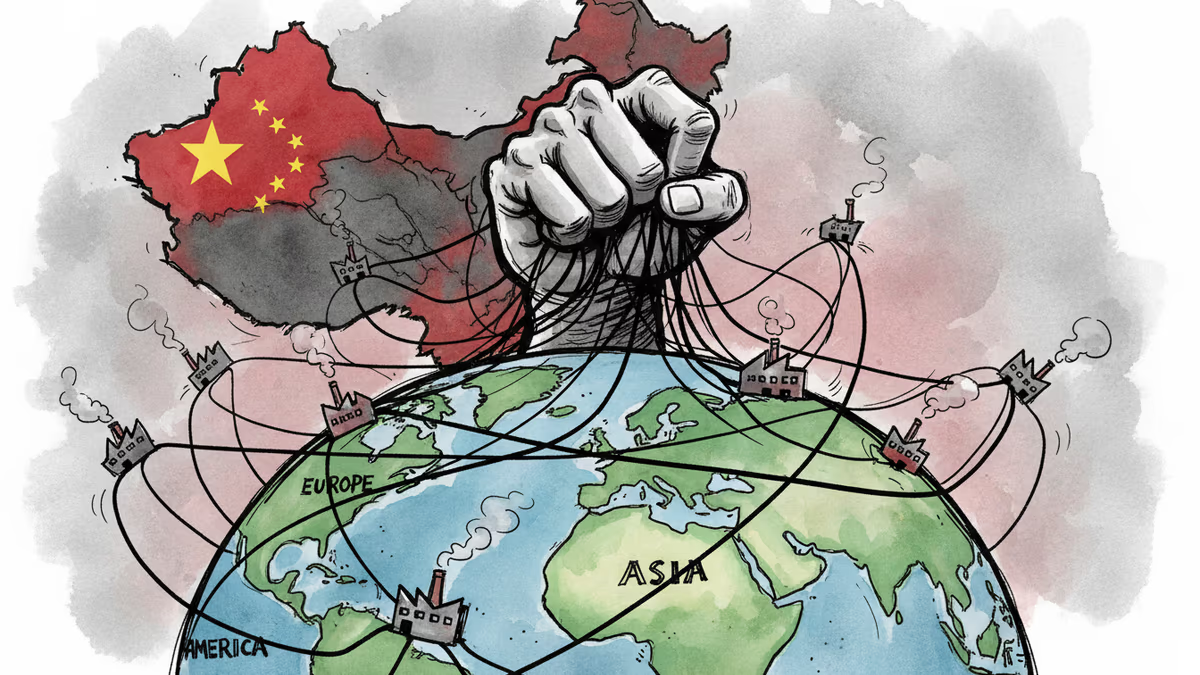
Beijing's expanded export controls now include an extraterritorial clause—products made anywhere in the world using Chinese rare earths could be subject to Chinese approval. The rules of global supply chains just changed.
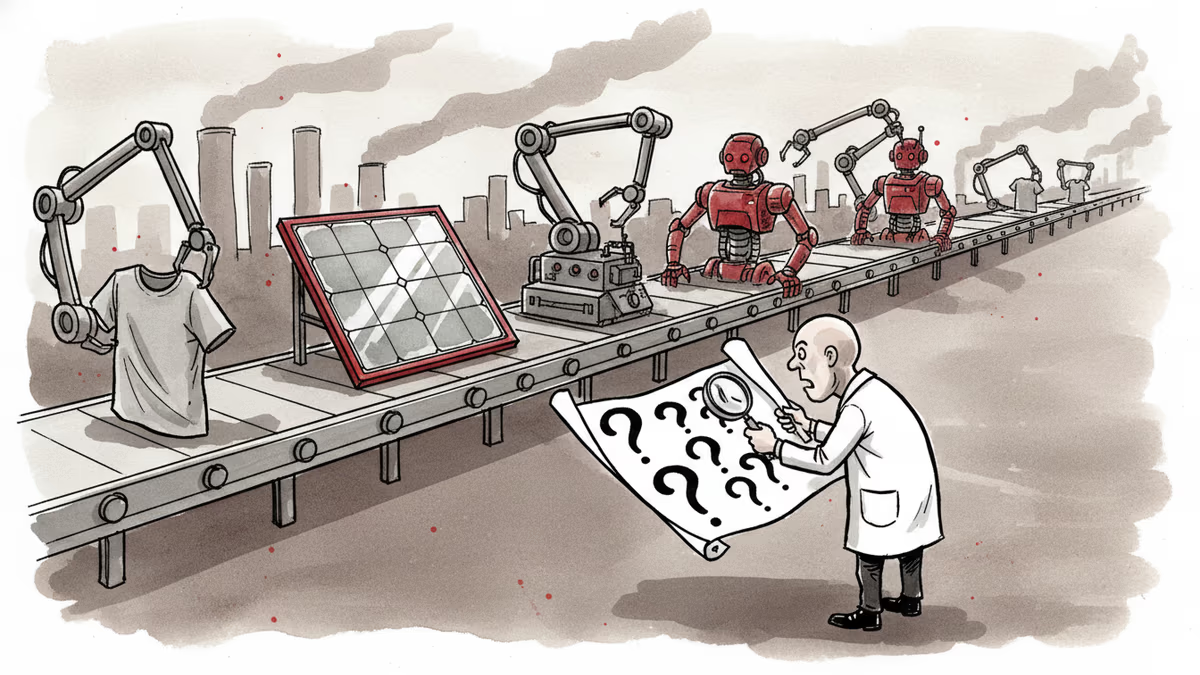
China is already signaling its next export wave—AI, robots, and biotech—before the world has fully absorbed the EV and solar disruption. What's really driving this ascent?
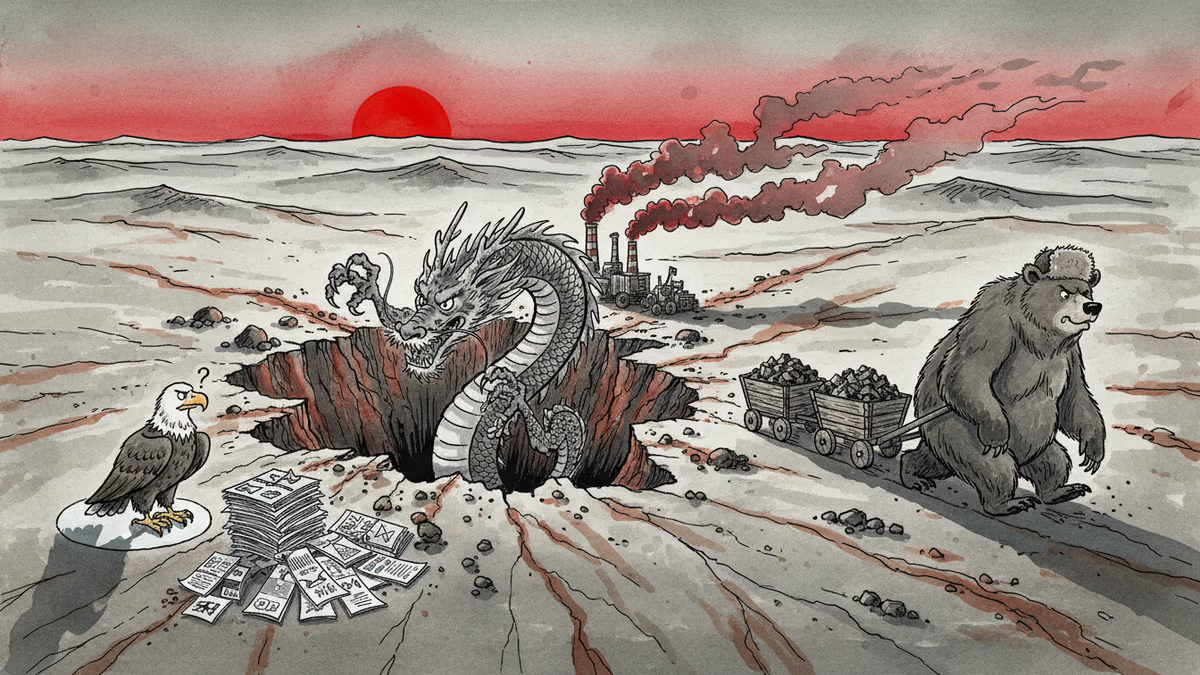
China controls 49% of Central Asia's critical mineral exports. Russia holds 20%. The United States? Just 2.1%. As AI and green energy reshape global power, this gap may prove decisive.
Chilean police dismantled a five-year smuggling network that drained $917 million in stolen copper, shipping it to China disguised as scrap. What it reveals about commodity supply chain vulnerabilities.
Beijing's expanded export controls now include an extraterritorial clause—products made anywhere in the world using Chinese rare earths could be subject to Chinese approval. The rules of global supply chains just changed.
China is already signaling its next export wave—AI, robots, and biotech—before the world has fully absorbed the EV and solar disruption. What's really driving this ascent?
China controls 49% of Central Asia's critical mineral exports. Russia holds 20%. The United States? Just 2.1%. As AI and green energy reshape global power, this gap may prove decisive.
Chilean police dismantled a five-year smuggling network that drained $917 million in stolen copper, shipping it to China disguised as scrap. What it reveals about commodity supply chain vulnerabilities.
Thoughts
Share your thoughts on this article
Sign in to join the conversation