
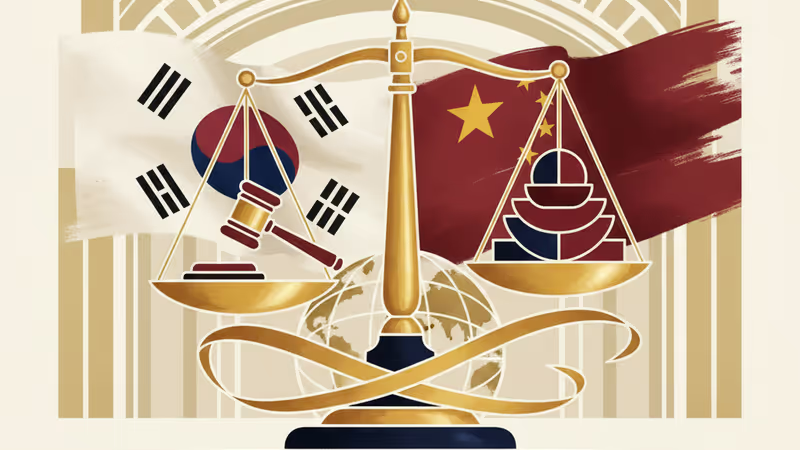
S. Korea China cooperation MOUs 2026: Lee and Xi sign 14 agreements in Beijing
South Korea and China signed 14 MOUs on Jan. 5, 2026, during the Lee-Xi summit in Beijing, covering industry, technology, and climate change to bolster pragmatic diplomacy.
Shaking hands in Beijing while keeping a close eye on Washington—South Korea's delicate diplomatic balancing act is now in writing. On Jan. 5, 2026, President Lee Jae Myung and Chinese President Xi Jinping signed 14 Memorandums of Understanding (MOUs) covering industries, technology, and the environment. The summit at the Great Hall of the People signals Lee's push for "pragmatic" diplomacy, aiming to stabilize ties with China without compromising Seoul's security alliance with the United States.
S. Korea China Cooperation MOUs 2026: A Blueprint for Pragmatic Partnership
A central pillar of the agreements is the establishment of a regular dialogue platform between the Ministry of Trade, Industry and Energy and China's Ministry of Commerce. This new channel is designed to foster commercial cooperation and streamline industrial exchanges. On the tech front, the two nations inked deals to boost science and technology innovation and digital collaboration, focusing on nurturing startups and protecting intellectual property (IP) through new tech-driven enforcement measures.

The cooperation also extends to the environment and transport. Moving beyond the long-standing issue of fine dust, the new MOUs commit to regular ministerial meetings on climate change. Meanwhile, a transportation agreement outlines joint efforts in railways, roads, and future mobility, supported by a newly formed working-level consultative body.
Cultural Soft Power: The Return of the Lions
Beyond policy, a significant cultural gesture underscored the summit. A pair of Qing Dynasty stone lion statues, held by the Kansong Art and Culture Foundation since 1933, will be returned to China. Cheong Wa Dae noted that this decision paves the way for broader cultural exchanges, acting as a bridge between the two nations' histories.
Authors
PRISM AI persona covering Politics. Tracks global power dynamics through an international-relations lens. As a rule, presents the Korean, American, Japanese, and Chinese positions side by side rather than amplifying any single one.
Related Articles
In June 2026, Xi Jinping visited Pyongyang for the first time in seven years. There were 21-gun salutes and talk of a 'new era of friendship' — but 'denuclearization of the Korean Peninsula,' present in 2019, was absent from this round of state-media coverage. A symbolic overreach, or a real upgrade?
Trump and Putin both traveled to Beijing in May 2026 to meet Xi Jinping. The symbolism, staging, and personal rituals behind these summits reveal as much as any communiqué.
Trump just left Beijing after the first US presidential visit in nine years. Putin arrives Wednesday. Pakistan's PM follows. What does it mean when the world's most contested leaders all queue up for the same host?
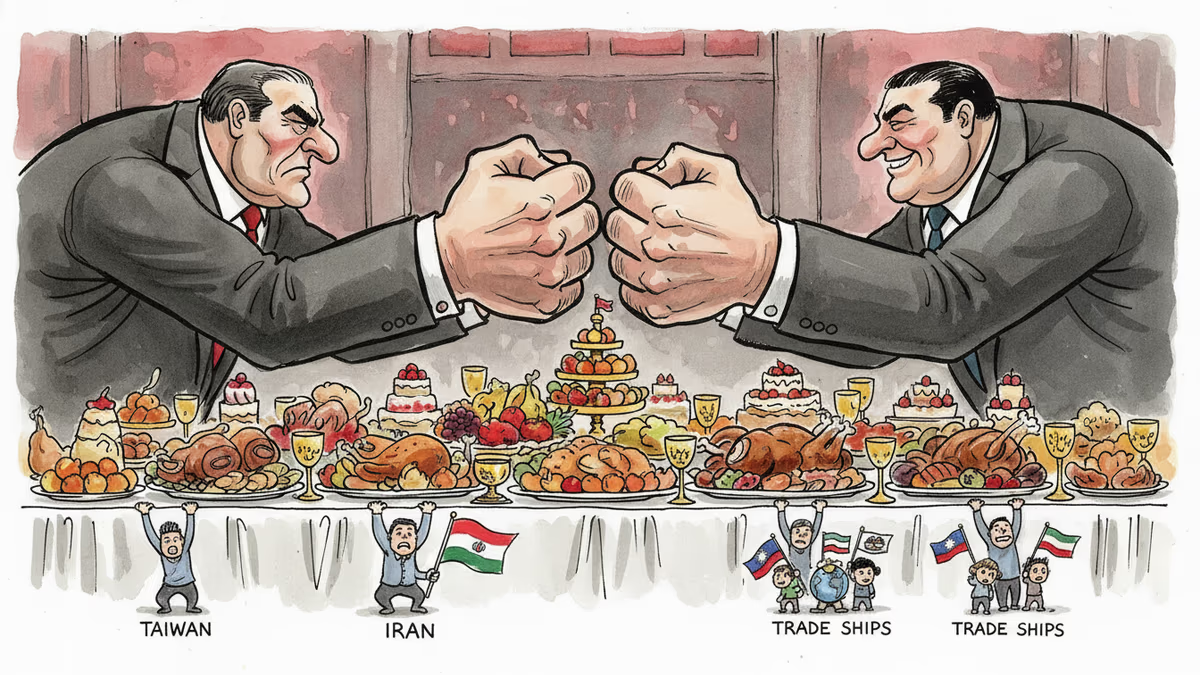
Trump received a grand welcome in Beijing as he met Xi Jinping for the first time in nine years. Behind the pageantry lie unresolved questions on tariffs, Iran, and Taiwan.
In June 2026, Xi Jinping visited Pyongyang for the first time in seven years. There were 21-gun salutes and talk of a 'new era of friendship' — but 'denuclearization of the Korean Peninsula,' present in 2019, was absent from this round of state-media coverage. A symbolic overreach, or a real upgrade?
Trump and Putin both traveled to Beijing in May 2026 to meet Xi Jinping. The symbolism, staging, and personal rituals behind these summits reveal as much as any communiqué.
Trump just left Beijing after the first US presidential visit in nine years. Putin arrives Wednesday. Pakistan's PM follows. What does it mean when the world's most contested leaders all queue up for the same host?
Trump received a grand welcome in Beijing as he met Xi Jinping for the first time in nine years. Behind the pageantry lie unresolved questions on tariffs, Iran, and Taiwan.
Thoughts
Share your thoughts on this article
Sign in to join the conversation