

Kia's PV5 Could Be the iPhone of Commercial Vans
Kia's first electric van PV5 introduces modular design to the commercial vehicle market, promising to transform everything from delivery fleets to camper conversions with a single adaptable platform.
The Last Mile Revolution Nobody Saw Coming
When was the last time you really looked at a delivery van? Probably never. They're the invisible workhorses of modern commerce, moving 11 billion packages annually in the US alone. Yet for decades, they've remained virtually unchanged: a big metal box with an engine, maybe some dents for character.
Kia just threw that playbook out the window with the PV5, their first electric van. But calling it just an "electric van" misses the point entirely. This isn't about swapping gas for batteries—it's about reimagining what a commercial vehicle can be.
Building Blocks for Business
The PV5's secret weapon isn't its electric drivetrain—it's modularity. Think of it as automotive Lego. One platform, four distinct configurations: PV5 Passenger for people, PV5 Cargo for goods, PV5 Crew for both, and PV5 Chassis Cab for whatever your imagination conjures up.
This matters because Kia isn't going it alone. They've already lined up conversion partners—companies ready to transform these electric platforms into specialized vehicles. Food trucks, mobile clinics, luxury campers, even mobile offices. The van becomes a canvas, not a constraint.
The Camper Van Gold Rush

Speaking of campers, the "vanlife" community is buzzing. Electric camper vans solve two major pain points: noise and fuel costs. No more diesel rumble at 5 AM in national parks. No more $200 fill-ups. Solar panels on the roof could theoretically provide indefinite off-grid power.
But here's the catch: most campgrounds aren't equipped for EV charging. The vanlife dream meets infrastructure reality. Early adopters will need to be strategic about route planning and camping locations.
Fleet Managers Face a New Math
For commercial fleets, the PV5 presents a fascinating cost equation. Higher upfront costs, yes, but potentially dramatic operational savings. UPS estimates electric delivery vehicles cost 40% less to operate than diesel equivalents. Factor in government incentives and tightening emissions regulations, and the math starts favoring electrons over hydrocarbons.
Amazon has already committed to 100,000 electric delivery vehicles by 2030. FedEx is testing electric vans in multiple markets. The question isn't whether commercial fleets will go electric—it's how fast.
Tesla's Shadow Looms Large
Kia's timing is interesting. Tesla's Cybertruck grabbed headlines, but commercial vans are where the real money lies. The global commercial vehicle market is worth $1.2 trillion, dwarfing passenger cars in many segments.
Yet Tesla's approach differs fundamentally. Where Tesla builds vehicles and expects the world to adapt, Kia is building platforms and inviting partners to innovate on top. It's the difference between Apple's closed ecosystem and Android's open platform strategy.
Authors
Related Articles
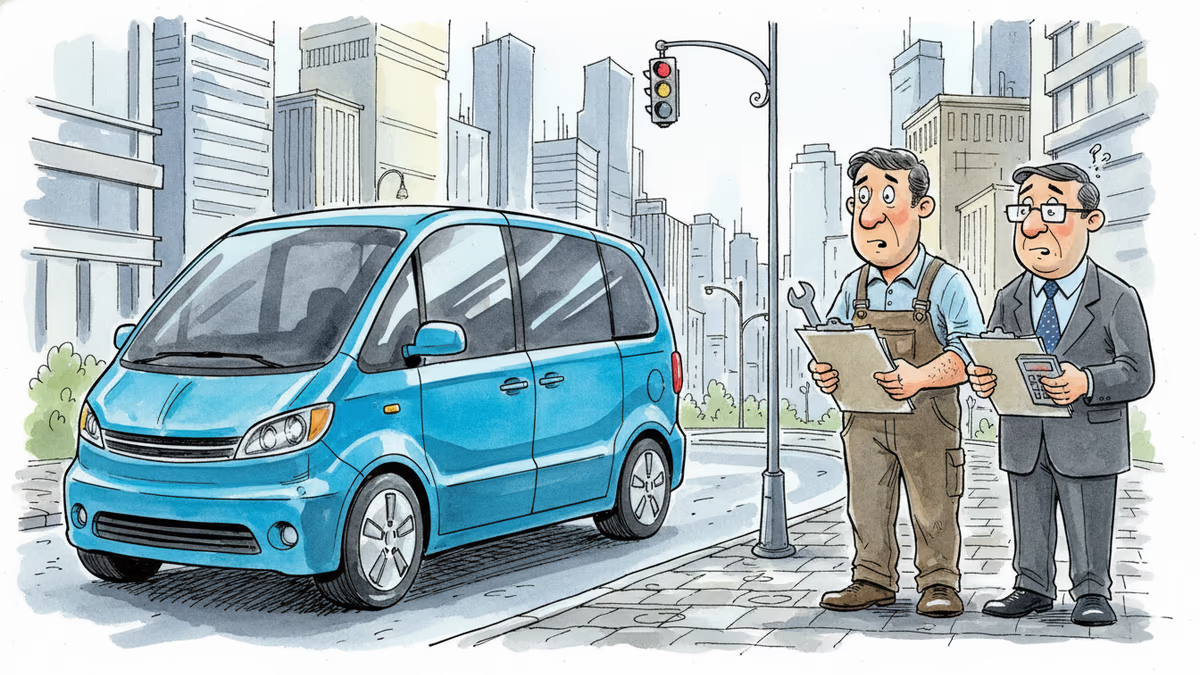
Waymo's new Ojai robotaxi isn't just a vehicle upgrade. It's the company's most serious attempt yet at cracking the cost problem that has kept autonomous vehicles from scaling. Here's what's really at stake.
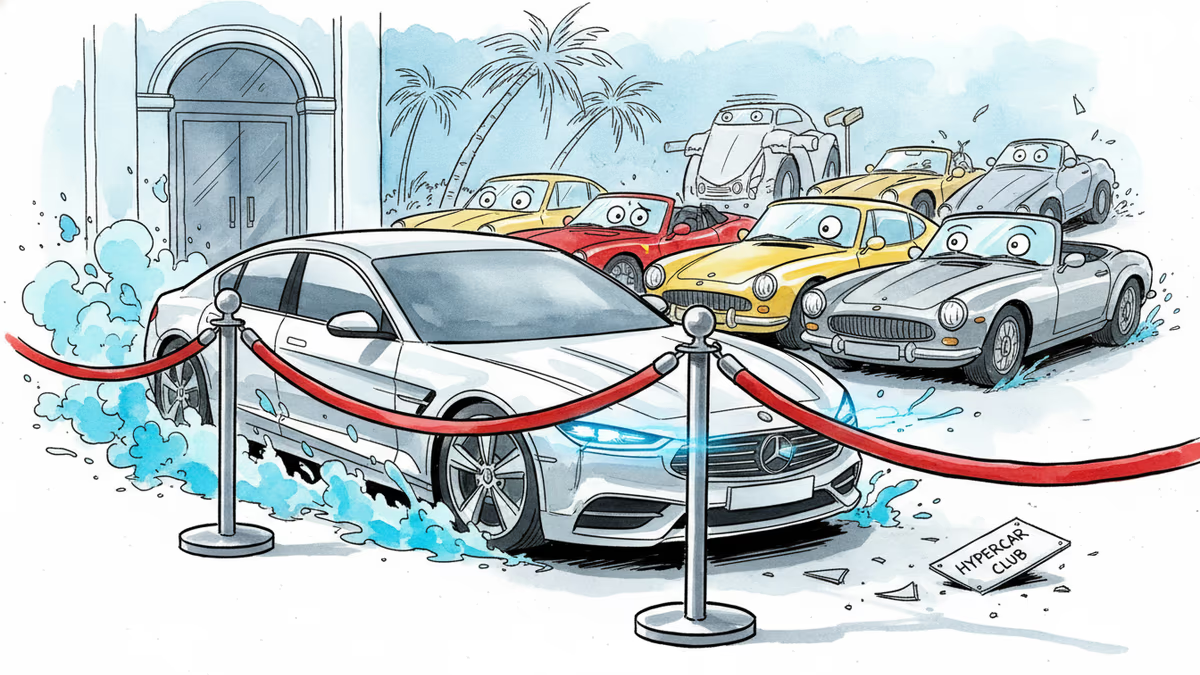
Mercedes-AMG's new GT 4-door coupe packs three YASA axial flux motors producing 1,153 hp and 1,475 lb-ft of torque. Here's what it means for the EV performance race—and who actually wins.
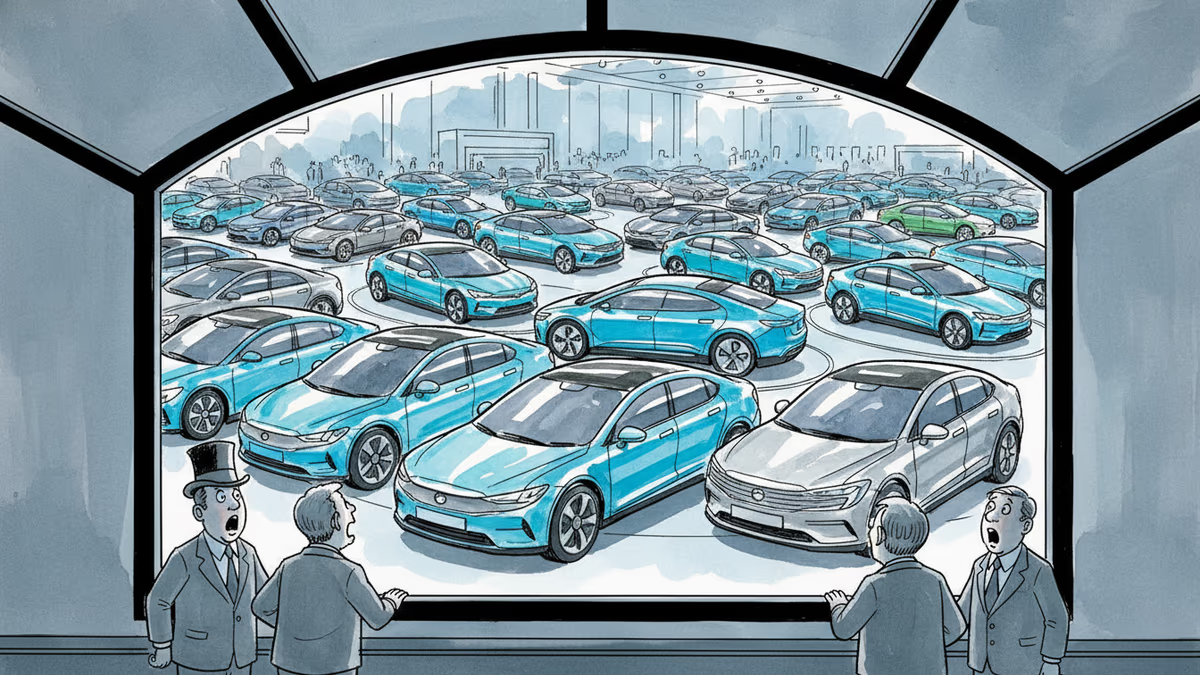
Auto China 2026 set records with 1,451 vehicles and 181 world premieres. But the real story isn't the size—it's how Chinese automakers stopped competing on price and started competing on brains.

Expiring leases will flood the US used car market with over a million electric vehicles by 2028. Could this do what subsidies couldn't — make EVs genuinely affordable?
Waymo's new Ojai robotaxi isn't just a vehicle upgrade. It's the company's most serious attempt yet at cracking the cost problem that has kept autonomous vehicles from scaling. Here's what's really at stake.
Mercedes-AMG's new GT 4-door coupe packs three YASA axial flux motors producing 1,153 hp and 1,475 lb-ft of torque. Here's what it means for the EV performance race—and who actually wins.
Auto China 2026 set records with 1,451 vehicles and 181 world premieres. But the real story isn't the size—it's how Chinese automakers stopped competing on price and started competing on brains.
Expiring leases will flood the US used car market with over a million electric vehicles by 2028. Could this do what subsidies couldn't — make EVs genuinely affordable?
Thoughts
Share your thoughts on this article
Sign in to join the conversation