
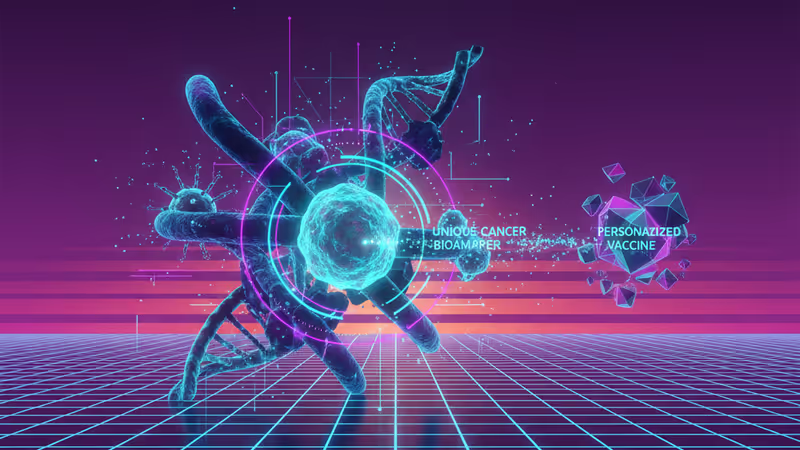
KAIST Personalized Cancer Vaccine AI: World's First Model to Predict B-cell Immunity
KAIST and Neogenlogic have unveiled a world-first KAIST personalized cancer vaccine AI model that predicts B-cell immunity to prevent recurrence. Clinical trials planned for 2027.
Can AI finally make cancer recurrence a thing of the past? A joint research team from KAIST and biotechnology firm Neogenlogic has developed a new AI model that targets the very 'fingerprints' of tumors to create personalized vaccines.
KAIST Personalized Cancer Vaccine AI: Beyond T-cells
While current cancer vaccines focus almost exclusively on activating cytotoxic T-cells for immediate attacks, this new AI platform shifts the focus toward B-cell-mediated immune memory. It's widely believed that this memory is the secret to durable, long-term antitumor responses and preventing the illness from returning.
The model works by learning structural interaction patterns between mutant peptides and B-cell receptors (BCRs). According to the team led by Professor Choi Jung-kyoon, this is the world's first AI framework capable of predicting B-cell immunogenicity alongside T-cell responses for vaccine design. Their findings were published in the Dec. 3 edition of Science Advances.

Roadmap to FDA Approval and 2027 Trials
Neogenlogic has already integrated this AI into its proprietary discovery engine, DeepNeo. The technology has been validated against large-scale genomic datasets and clinical trial data from global vaccine leaders, ensuring its scientific rigor.
The team is now preparing an investigational new drug (IND) submission with the FDA. They plan to enter clinical trials in 2027. Professor Choi noted that the study provides the empirical evidence needed to move from theoretical prediction to systematic clinical application.
Authors
Related Articles
Nine people across three states have been sickened in an E. coli outbreak linked to Raw Farm's unpasteurized dairy. The company refuses to recall. What does this reveal about food safety systems?
After Trump administration officials publicly promoted leucovorin as a potential autism treatment, new prescriptions for children surged 71% in three months. What happens when government rhetoric moves faster than science?
Experimental peptides flood the wellness market with animal data as evidence. Why millions inject unapproved compounds sold with research disclaimers, and what regulators plan to do about it.
Trump appointee overruled FDA scientists to reject Moderna's mRNA flu vaccine, then reversed course within a week after public backlash. Political interference in vaccine approval raises concerns.
Nine people across three states have been sickened in an E. coli outbreak linked to Raw Farm's unpasteurized dairy. The company refuses to recall. What does this reveal about food safety systems?
After Trump administration officials publicly promoted leucovorin as a potential autism treatment, new prescriptions for children surged 71% in three months. What happens when government rhetoric moves faster than science?
Experimental peptides flood the wellness market with animal data as evidence. Why millions inject unapproved compounds sold with research disclaimers, and what regulators plan to do about it.
Trump appointee overruled FDA scientists to reject Moderna's mRNA flu vaccine, then reversed course within a week after public backlash. Political interference in vaccine approval raises concerns.
Thoughts
Share your thoughts on this article
Sign in to join the conversation