
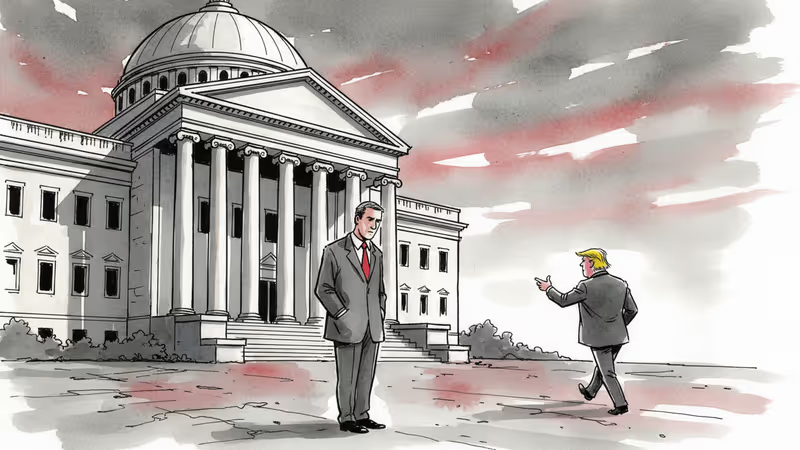
Musk Faces SEC Lawsuit Alone as Trump Stays Silent
The SEC seeks $150 million from Elon Musk over Twitter acquisition disclosure violations, but Trump isn't intervening to help his former ally.
$150 million. That's what the Securities and Exchange Commission wants from Elon Musk for his 2022 Twitter takeover. But his once-reliable political ally Donald Trump isn't riding to the rescue this time.
The Twitter Acquisition That Won't Go Away
In the final days of the Biden administration, the SEC filed a lawsuit alleging that Musk violated federal securities laws during his Twitter acquisition. The crux of the matter: Musk quietly accumulated a 9% stake in Twitter without filing the required disclosures within the legal timeframe.
Under federal law, anyone acquiring more than 5% of a public company must disclose their holdings within 10 days. This rule exists to alert other investors about potential changes in corporate control. By allegedly skipping this requirement, Musk was able to purchase over 70 million shares at artificially depressed prices, according to the SEC.
The real victims? Investors who sold their Twitter stock during this period. Had Musk's accumulation been properly disclosed, the stock price would likely have risen, allowing these sellers to get better prices for their shares. Some of these investors have filed separate lawsuits against Musk.
Trump's Notable Silence
What's particularly striking is Trump's hands-off approach. A federal judge noted this week that the former and future president hasn't stepped in to help Musk fight the SEC charges. This silence speaks volumes.

Consider the context: Musk spent $44 billion acquiring Twitter, immediately restored Trump's banned account, and became one of Trump's most vocal supporters during the 2024 campaign. The two seemed inseparable during the election cycle, with Musk even joining Trump at campaign rallies.
Yet when it comes to securities law enforcement, Trump appears to be maintaining distance. This could signal that even a business-friendly administration recognizes the importance of market integrity rules—or perhaps that political favors have their limits.
What This Means for Investors
This case isn't just about one billionaire's disclosure habits. It's about market fairness and whether the rules apply equally to everyone, regardless of wealth or influence.
For Tesla shareholders, the implications could be significant. If Musk loses this case, he may face heightened scrutiny in future investment activities. This could constrain his ability to make quick decisions or pursue aggressive investment strategies—potentially affecting Tesla's growth trajectory.
The case also highlights broader concerns about big tech acquisitions. When influential figures can manipulate timing and information flow, it creates an uneven playing field that undermines market confidence.
The Regulatory Reckoning
The SEC's pursuit of this case, despite the change in administration, suggests that securities law enforcement may be less politicized than other regulatory areas. This could be reassuring for investors who worry about regulatory capture or political interference in market oversight.
But it also raises questions about timing and priorities. Why pursue this case now, years after the acquisition? Is the SEC sending a message about accountability, or is this simply bureaucratic momentum?
Authors
Related Articles
SpaceX's IPO filing puts AI at the center, claiming a $26.5 trillion market opportunity. But can Grok compete with OpenAI and Anthropic for enterprise customers?
SpaceX filed a nearly 400-page S-1 with the SEC, targeting an IPO as early as June 12. Here's what the filing reveals—and what it doesn't.
SpaceX has filed its S-1 with the SEC, targeting the Nasdaq under ticker SPCX. With $18.67B in revenue but a $4.9B loss, the IPO forces investors to answer one hard question.
Over 50 researchers and engineers have left SpaceXAI since February's merger. With the pre-training team nearly gutted, questions mount about whether Musk's AI ambitions can survive his management style.
SpaceX's IPO filing puts AI at the center, claiming a $26.5 trillion market opportunity. But can Grok compete with OpenAI and Anthropic for enterprise customers?
SpaceX filed a nearly 400-page S-1 with the SEC, targeting an IPO as early as June 12. Here's what the filing reveals—and what it doesn't.
SpaceX has filed its S-1 with the SEC, targeting the Nasdaq under ticker SPCX. With $18.67B in revenue but a $4.9B loss, the IPO forces investors to answer one hard question.
Over 50 researchers and engineers have left SpaceXAI since February's merger. With the pre-training team nearly gutted, questions mount about whether Musk's AI ambitions can survive his management style.
Thoughts
Share your thoughts on this article
Sign in to join the conversation