
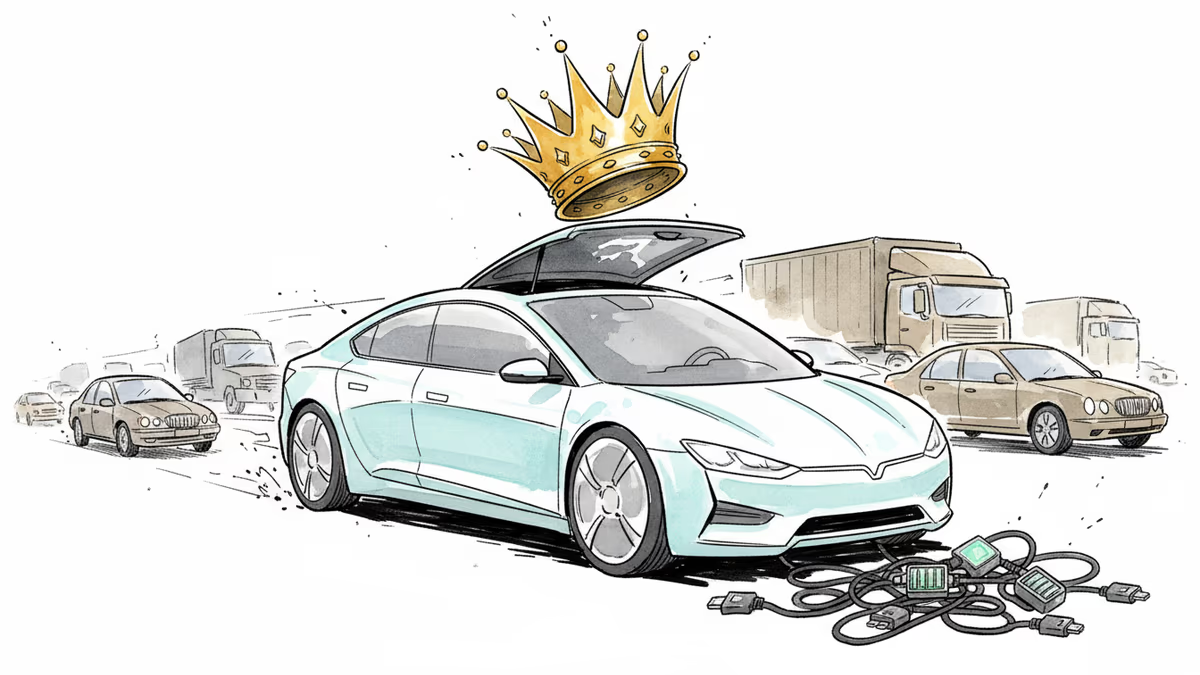
Tesla's Crown Slips as EV Market Reshuffles
Once the undisputed king of electric vehicles, Tesla lost its global sales crown to China's BYD in 2024. As every automaker races into EVs, what's next for the market?
The King is Dead, Long Live the King?
2024 wasn't kind to Tesla. The company that once seemed untouchable in the electric vehicle space lost its crown as the world's largest EV maker to China's BYD. Sales faltered, market dominance waned, and Elon Musk's automotive empire suddenly looked... mortal.
Yet here's the paradox: while Tesla stumbled, virtually every other automaker—from luxury brands to budget manufacturers—is doubling down on EVs. But simultaneously, some are quietly scaling back production plans. What gives?
The Great EV Contradiction
The market is sending mixed signals. On one hand, we're seeing an unprecedented rush into electric vehicles. Legacy automakers like Ford, GM, and Volkswagen are pouring billions into EV platforms. Luxury brands are going all-electric. Even Porsche and Bentley have joined the party.
On the other hand, reality is proving more complex than the hype suggested. Charging infrastructure remains patchy, especially in rural areas. Battery costs, while declining, still make EVs expensive. And consumer adoption isn't following the hockey-stick curve many predicted.
China's Quiet Revolution

BYD's rise isn't just a corporate success story—it's a masterclass in industrial strategy. While American companies focused on premium markets and flashy features, Chinese manufacturers zeroed in on affordable, practical EVs. BYD didn't just build cars; they built an entire ecosystem: batteries, charging networks, even the mining operations for raw materials.
The result? They're selling EVs at price points that would make Western manufacturers weep. A decent BYD electric sedan costs less than a mid-range gasoline car in many markets.
The Infrastructure Question
Here's where things get interesting for American consumers. The Biden administration has committed billions to EV charging infrastructure through the Inflation Reduction Act. But building a nationwide charging network isn't just about money—it's about coordination, standardization, and overcoming the classic chicken-and-egg problem.
Drivers won't buy EVs without charging stations. Companies won't build charging stations without drivers. Tesla solved this by building their own Supercharger network, but that's not scalable for every manufacturer.
The Policy Wild Card
With the political landscape shifting, EV policies could change dramatically. Federal tax credits, state mandates, emissions standards—all could be on the table. Some states are pushing aggressive EV adoption timelines, while others remain skeptical.
The regulatory environment will likely determine whether we see gradual EV adoption or a rapid transition that leaves gasoline cars looking like flip phones in the smartphone era.
The answer will determine whether electric vehicles become truly mainstream or remain a luxury for the privileged few.
Authors
Related Articles
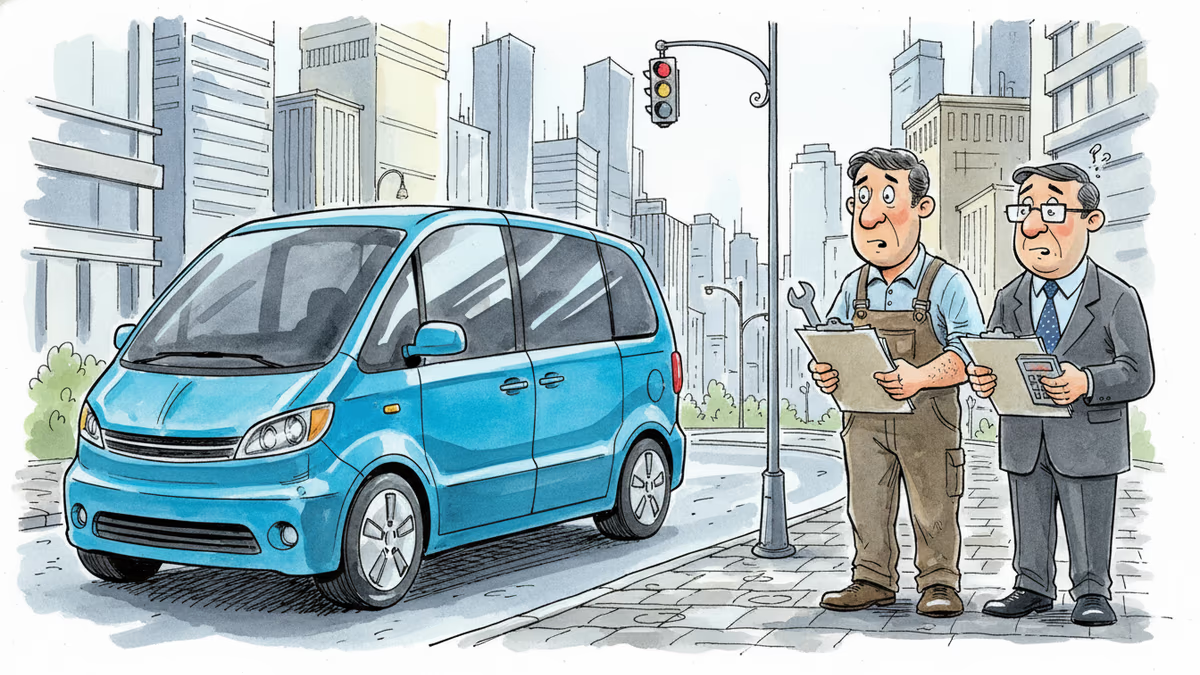
Waymo's new Ojai robotaxi isn't just a vehicle upgrade. It's the company's most serious attempt yet at cracking the cost problem that has kept autonomous vehicles from scaling. Here's what's really at stake.
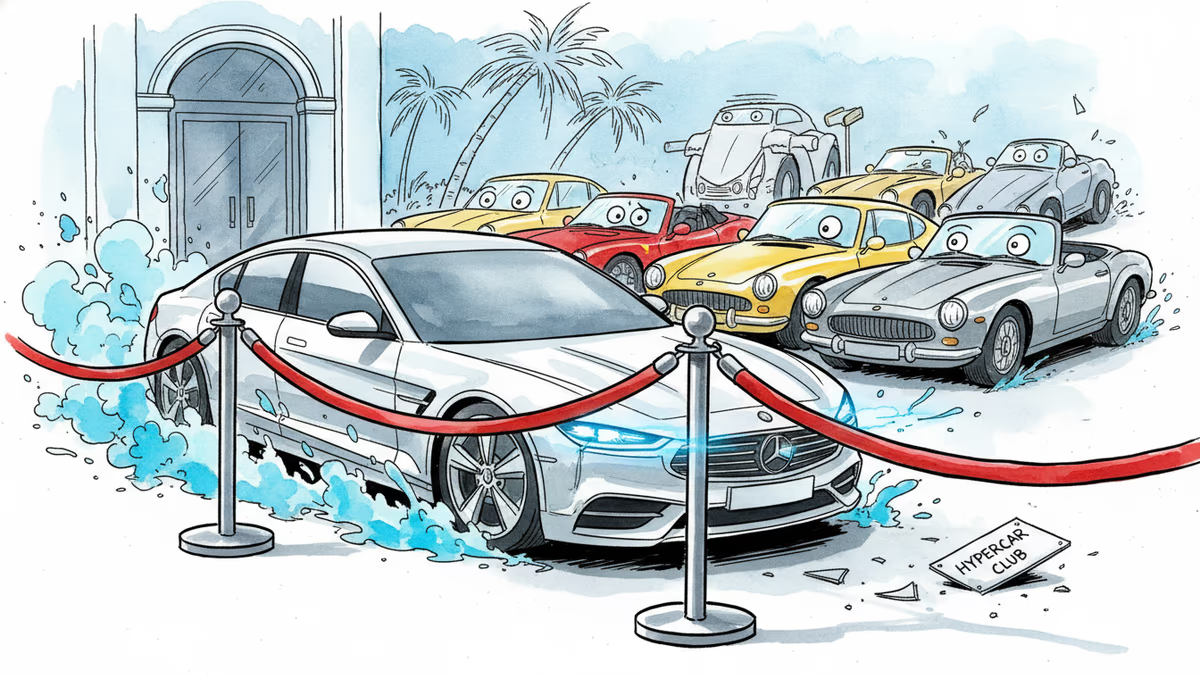
Mercedes-AMG's new GT 4-door coupe packs three YASA axial flux motors producing 1,153 hp and 1,475 lb-ft of torque. Here's what it means for the EV performance race—and who actually wins.
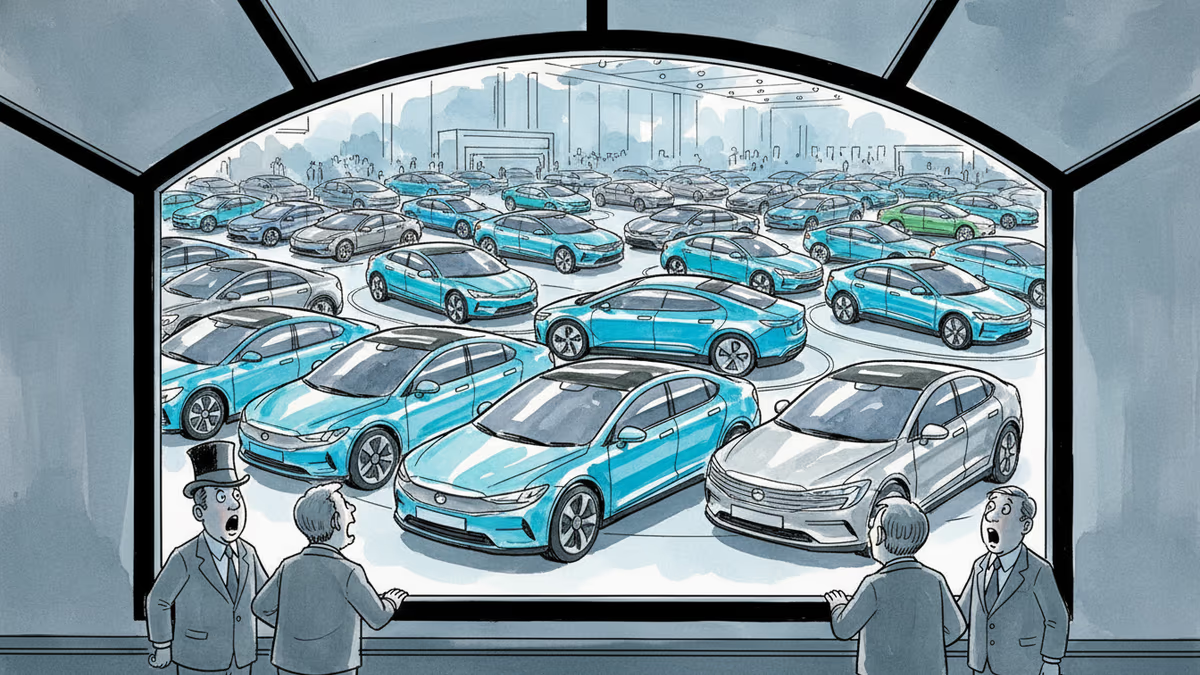
Auto China 2026 set records with 1,451 vehicles and 181 world premieres. But the real story isn't the size—it's how Chinese automakers stopped competing on price and started competing on brains.
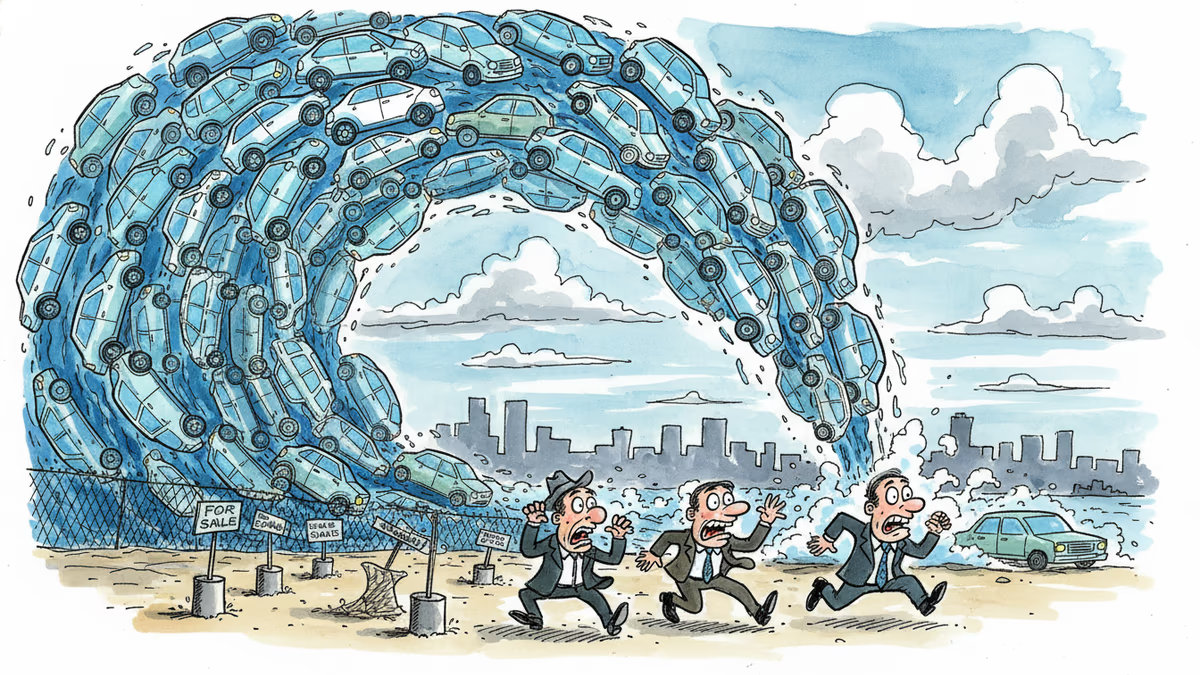
Expiring leases will flood the US used car market with over a million electric vehicles by 2028. Could this do what subsidies couldn't — make EVs genuinely affordable?
Waymo's new Ojai robotaxi isn't just a vehicle upgrade. It's the company's most serious attempt yet at cracking the cost problem that has kept autonomous vehicles from scaling. Here's what's really at stake.
Mercedes-AMG's new GT 4-door coupe packs three YASA axial flux motors producing 1,153 hp and 1,475 lb-ft of torque. Here's what it means for the EV performance race—and who actually wins.
Auto China 2026 set records with 1,451 vehicles and 181 world premieres. But the real story isn't the size—it's how Chinese automakers stopped competing on price and started competing on brains.
Expiring leases will flood the US used car market with over a million electric vehicles by 2028. Could this do what subsidies couldn't — make EVs genuinely affordable?
Thoughts
Share your thoughts on this article
Sign in to join the conversation