
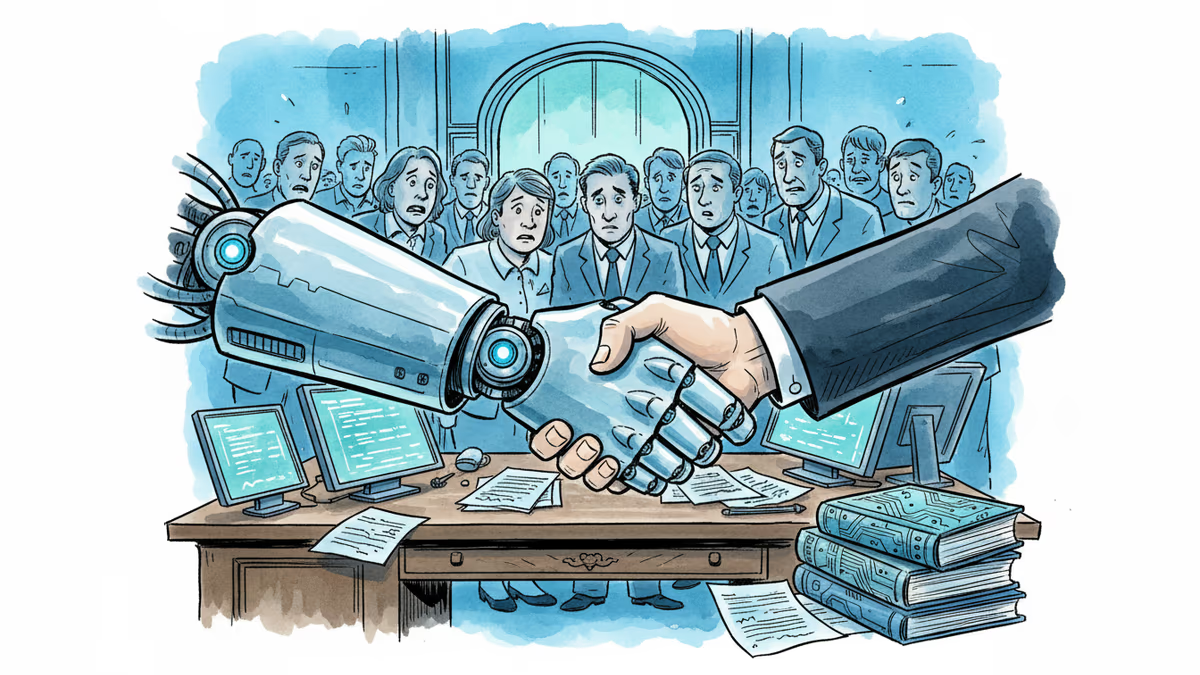
Why a $280B Industry Just Partnered With Its Biggest Threat
Infosys-Anthropic partnership reveals how India's IT services giants are adapting to AI disruption. Can human expertise survive the automation wave?
When Your Biggest Competitor Becomes Your Partner
Last Tuesday, Indian IT giant Infosys announced a partnership with AI company Anthropic. On the surface, it looks like just another tech alliance. Dig deeper, and you'll find a $280 billion industry's desperate bid for survival.
Earlier this month, when Anthropic launched enterprise AI tools claiming to automate legal, sales, marketing, and research tasks, Indian IT stocks went into freefall. The reason was obvious: these AI tools were targeting exactly the kind of work that Indian IT services companies have been doing for decades.
The Numbers Don't Lie
Under the partnership, Infosys will integrate Anthropic's Claude models into its Topaz AI platform to build "agentic" systems—AI agents that can autonomously handle complex enterprise workflows across banking, telecoms, and manufacturing.
The financial picture tells the story of an industry in transition. Infosys generated ₹25 billion (around $275 million) from AI-related services last quarter—5.5% of total revenue. Rival Tata Consultancy Services reports $1.8 billion annually from AI services, about 6% of revenue.
These aren't massive percentages yet, but they represent a fundamental shift in how these companies see their future.
The Expertise Gap That AI Can't Fill (Yet)
"There's a big gap between an AI model that works in a demo and one that works in a regulated industry," said Anthropic CEO Dario Amodei. This gap is where companies like Infosys see their opportunity.

Consider the challenge: deploying AI in a major bank isn't just about having a smart algorithm. It requires understanding compliance requirements, integration complexities, risk management protocols, and industry-specific workflows that have evolved over decades.
This is where decades of domain expertise become valuable. Infosys isn't just implementing AI tools—they're translating AI capabilities into enterprise-ready solutions that can navigate regulatory requirements and organizational complexity.
India's Paradoxical Position
Here's the twist: while AI threatens India's IT services industry, India has become Anthropic's second-largest market after the US. The country accounts for about 6% of global Claude usage, with much of that concentrated in programming tasks.
Anthropic even opened its first India office in Bengaluru this week, recognizing the country's growing importance as both a market and talent hub for AI development.
This creates a fascinating paradox: the same country whose traditional outsourcing model is being disrupted by AI is simultaneously becoming a major consumer and developer of AI technologies.
The Bigger Question for Enterprise Leaders
For enterprise decision-makers, the Infosys-Anthropic partnership raises critical questions about the future of IT services. If AI can automate routine tasks, what role will human expertise play?
The answer might lie in the complexity gap. While AI excels at pattern recognition and routine processing, enterprise transformation still requires human judgment, cultural understanding, and the ability to navigate organizational politics.
But how long will this gap persist? And what happens when AI becomes sophisticated enough to handle not just the technical implementation, but also the strategic consulting that has been the high-value part of IT services?
Authors
Related Articles
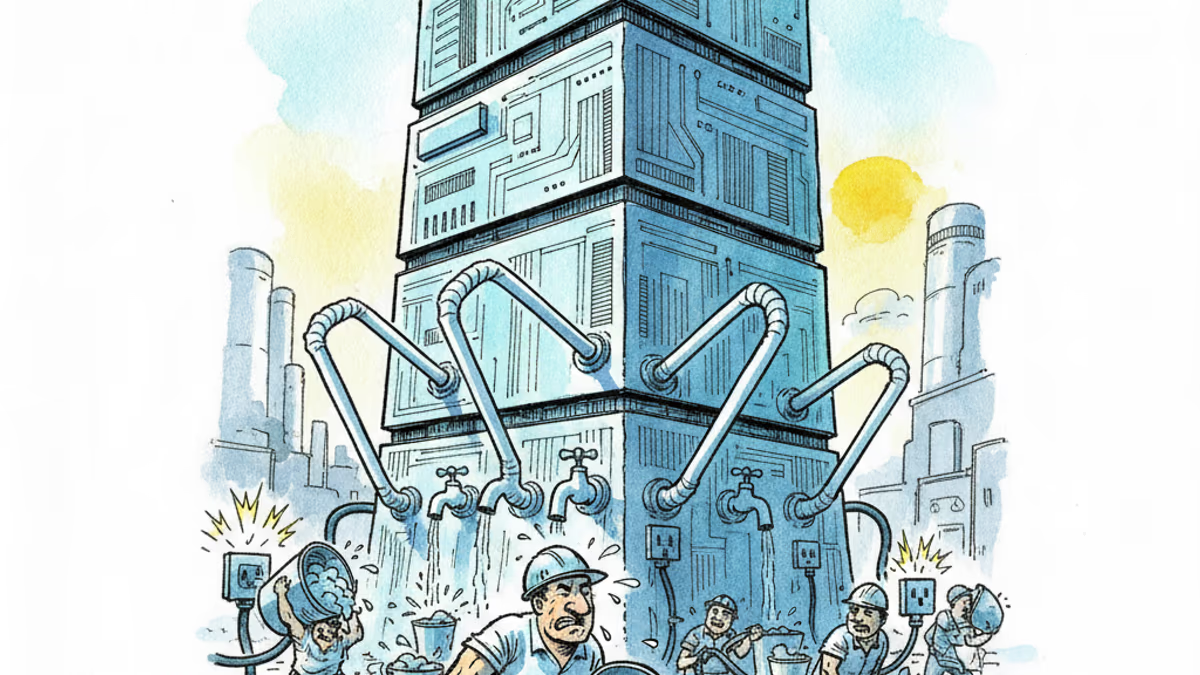
Samsung and SK unveiled a chip and AI investment package worth thousands of trillions of won on June 29. The headline number swings wildly by outlet, but the real contest isn't capital — it's water and power.
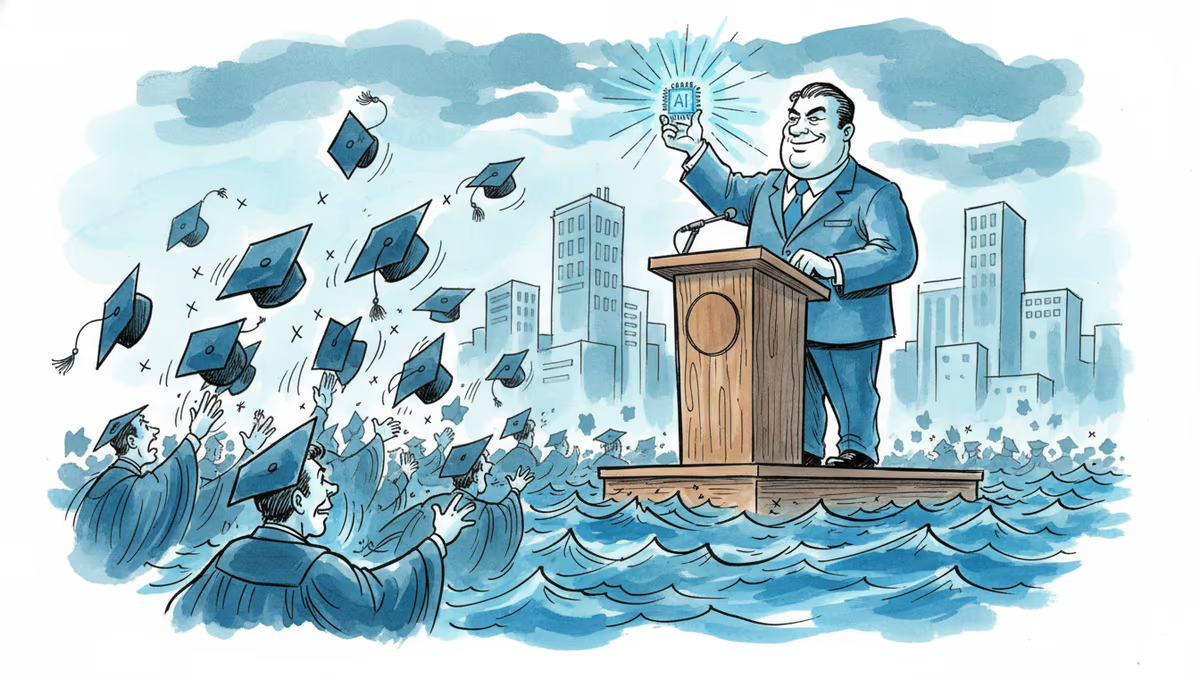
Viral videos show 2026 graduates jeering executives who praise AI at commencement ceremonies. It's not just rudeness — it's a signal about who pays for technological optimism.
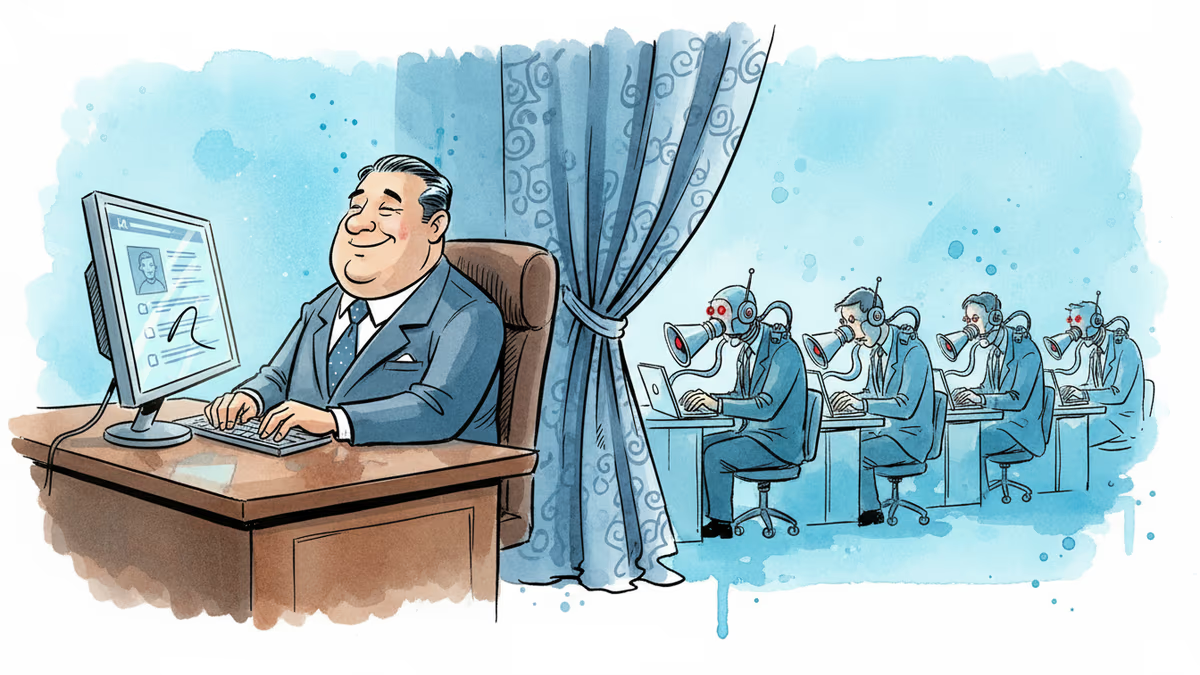
Filipino virtual assistants using AI to ghost-manage LinkedIn profiles for executives is now a structured industry. 30 comments a day, fake engagement rings, and a platform struggling to tell real from fabricated.
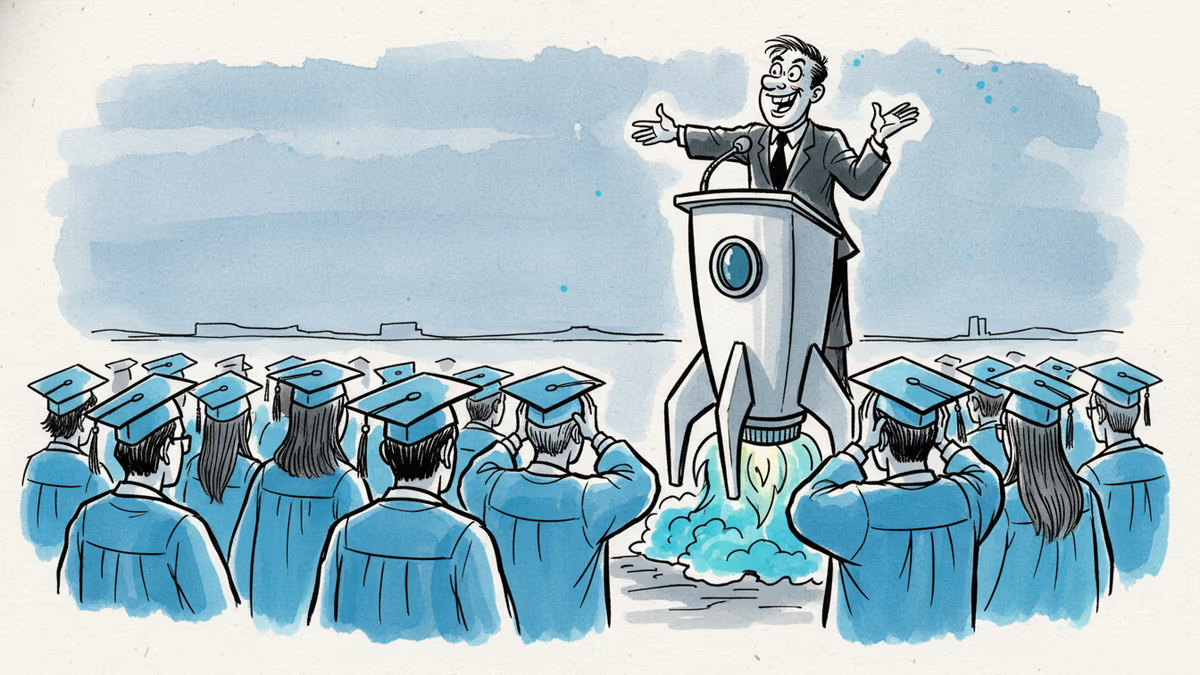
Two commencement speakers learned the hard way that AI enthusiasm doesn't land well with today's graduates. The backlash reveals a widening gap between tech optimism and Gen Z's economic reality.
Samsung and SK unveiled a chip and AI investment package worth thousands of trillions of won on June 29. The headline number swings wildly by outlet, but the real contest isn't capital — it's water and power.
Viral videos show 2026 graduates jeering executives who praise AI at commencement ceremonies. It's not just rudeness — it's a signal about who pays for technological optimism.
Filipino virtual assistants using AI to ghost-manage LinkedIn profiles for executives is now a structured industry. 30 comments a day, fake engagement rings, and a platform struggling to tell real from fabricated.
Two commencement speakers learned the hard way that AI enthusiasm doesn't land well with today's graduates. The backlash reveals a widening gap between tech optimism and Gen Z's economic reality.
Thoughts
Share your thoughts on this article
Sign in to join the conversation