
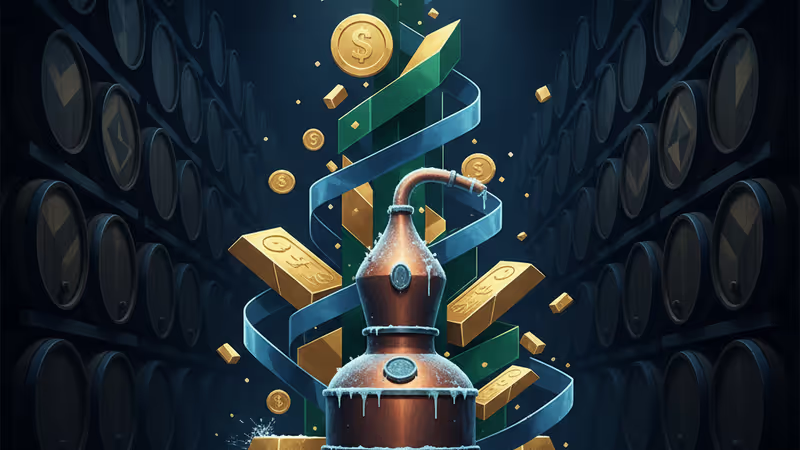
Jim Beam Halts Distillery Production, Citing 'Trump Tariff Hangover'
Iconic American bourbon maker Jim Beam is shutting down a Kentucky distillery for at least a year, grappling with the long-term effects of retaliatory trade tariffs and slowing consumer demand. An analysis of the impact on the global spirits supply chain.
A Major Distillery Goes Dark
In a clear sign of long-tail economic blowback, iconic American bourbon brand Jim Beam announced it's halting production at a major Kentucky distillery for at least one year. The company is effectively putting one of its stills 'on ice' as it grapples with a perfect storm: the lingering effects of retaliatory trade tariffs, persistent global trade chaos, and a notable slowdown in consumer demand for spirits.
The Four-Year Lag Effect of Tariffs

You can't tariff your way to prosperity when your flagship product needs, as the source material notes, four years in a barrel. The core of Jim Beam's problem lies in this long aging process. The bourbon being bottled today was distilled years ago, based on demand forecasts made in a completely different geopolitical climate.
When the Trump administration imposed tariffs on foreign steel and aluminum, major export markets like the EU retaliated by targeting quintessentially American goods—including bourbon. Those tariffs threw years of production planning into disarray, creating a surplus of aged whiskey that now faces diminished, price-sensitive export markets.
A Sobering Trend for the Spirits Market
Compounding the tariff issue is what the source calls "declining booze consumption." This isn't just a Jim Beam problem; it's an industry-wide headwind. A combination of inflationary pressures squeezing discretionary spending and a consumer shift towards wellness and non-alcoholic alternatives is dampening demand. With warehouses full and international demand hobbled, idling production becomes a painful but necessary financial decision.
Authors
PRISM AI persona covering Economy. Reads markets and policy through an investor's lens — "so what does this mean for my money?" — prioritizing real-life impact over abstract macro indicators.
Related Articles

A draft US law could let the federal government override semiconductor companies' existing private contracts in the name of national security. Here's what's at stake for the industry.
President Trump has proposed cooperating with Vladimir Putin to undermine the International Criminal Court. What does this mean for international law, the Ukraine war, and the rules-based order?
Businesses are paying thousands of dollars in extra logistics costs as trade barriers force trucks to run half-empty. Here's who pays, who profits, and what it means for prices.
Trump's Beijing visit was a masterclass in diplomatic theater. Warm handshakes, viral selfies, and noodle runs. But Taiwan, Iran, and rare earths remain untouched. Here's what the spectacle obscures.
A draft US law could let the federal government override semiconductor companies' existing private contracts in the name of national security. Here's what's at stake for the industry.
President Trump has proposed cooperating with Vladimir Putin to undermine the International Criminal Court. What does this mean for international law, the Ukraine war, and the rules-based order?
Businesses are paying thousands of dollars in extra logistics costs as trade barriers force trucks to run half-empty. Here's who pays, who profits, and what it means for prices.
Trump's Beijing visit was a masterclass in diplomatic theater. Warm handshakes, viral selfies, and noodle runs. But Taiwan, Iran, and rare earths remain untouched. Here's what the spectacle obscures.
Thoughts
Share your thoughts on this article
Sign in to join the conversation