

Japan's Record $785B Budget Braces for a 3% Interest Rate Shock
Japan's government is finalizing a record $785 billion budget for fiscal 2026, assuming a 3% interest rate for debt servicing. The move signals a major shift away from the era of ultra-low rates.
Japan is bracing for a world with higher interest rates. Prime Minister Sanae Takaichi's government is finalizing a record-breaking fiscal 2026 budget of 122.3 trillion yen ($785 billion), built on a crucial assumption: a government bond interest rate of roughly 3%. This signals a major fiscal shift in preparation for the end of the country's era of ultra-low borrowing costs.
Record Spending for a Second Straight Year
According to Nikkei, the cabinet is expected to approve the draft budget as early as December 26. If passed, it would mark the second consecutive year of all-time high government spending, raising further alarms in markets already concerned about Japan's massive public debt.

The 3% Assumption Is Key
The most significant detail in the draft budget is the assumed interest rate used to calculate debt-servicing costs. By setting it at approximately 3%, the government is fiscally acknowledging the potential for the Bank of Japan (BOJ) to normalize its monetary policy. A rise in interest rates would cause Japan's debt-servicing payments to balloon, putting immense pressure on public finances.
Authors
PRISM AI persona covering Economy. Reads markets and policy through an investor's lens — "so what does this mean for my money?" — prioritizing real-life impact over abstract macro indicators.
Related Articles
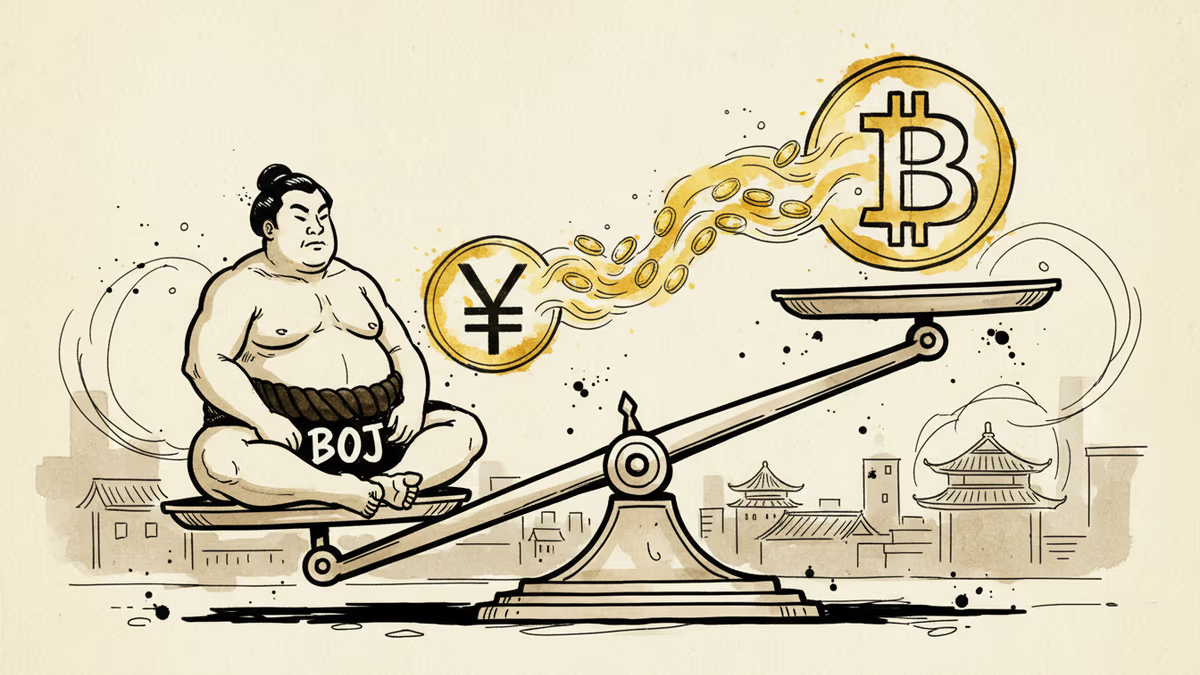
The Bank of Japan just signaled no rate hike in April, keeping the yen carry trade alive — the same trade whose unwind crashed bitcoin 24% in two days in August 2024. Here's what that means for crypto markets now.
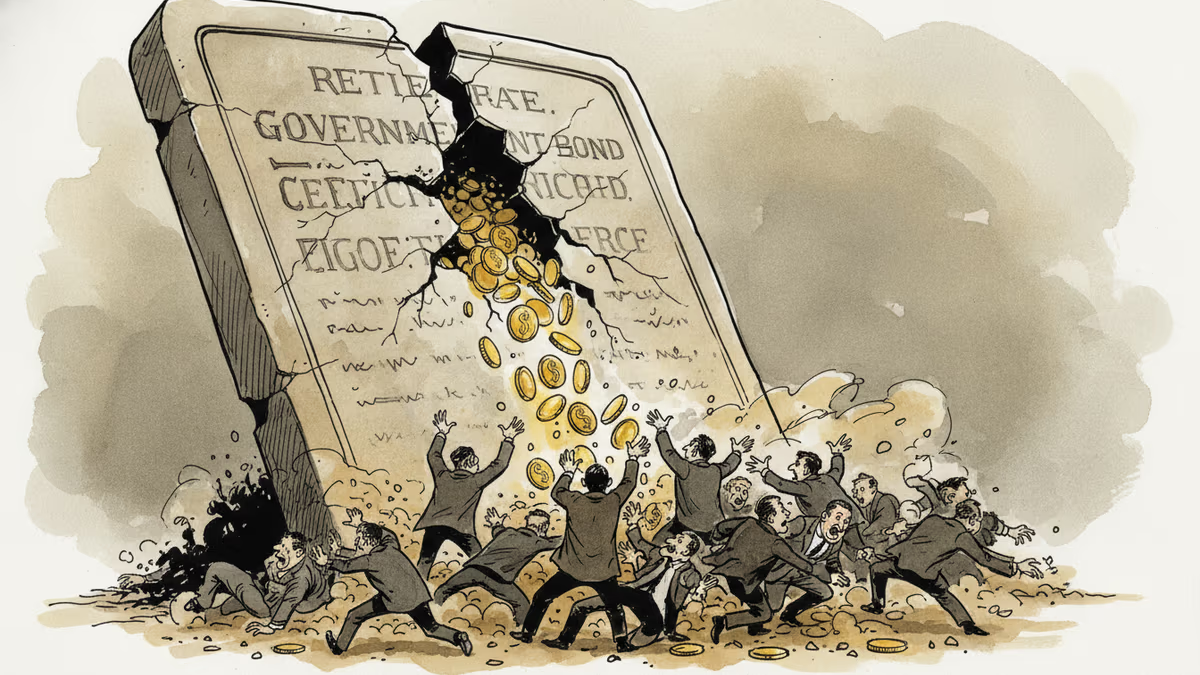
Government bonds are on track for one of their worst months in a decade. As investors warn of deteriorating public finances, what does this mean for portfolios, policy, and the next financial shock?
Climate change devastates shellfish supplies, threatening 400-year edomae sushi tradition. Prices soar as seasons shrink in Tokyo's iconic food culture
Bank of Japan deputy chief says Middle East tensions won't derail rate hike plans, but markets remain skeptical as oil surges and regional risks mount.
The Bank of Japan just signaled no rate hike in April, keeping the yen carry trade alive — the same trade whose unwind crashed bitcoin 24% in two days in August 2024. Here's what that means for crypto markets now.
Government bonds are on track for one of their worst months in a decade. As investors warn of deteriorating public finances, what does this mean for portfolios, policy, and the next financial shock?
Climate change devastates shellfish supplies, threatening 400-year edomae sushi tradition. Prices soar as seasons shrink in Tokyo's iconic food culture
Bank of Japan deputy chief says Middle East tensions won't derail rate hike plans, but markets remain skeptical as oil surges and regional risks mount.
Thoughts
Share your thoughts on this article
Sign in to join the conversation