
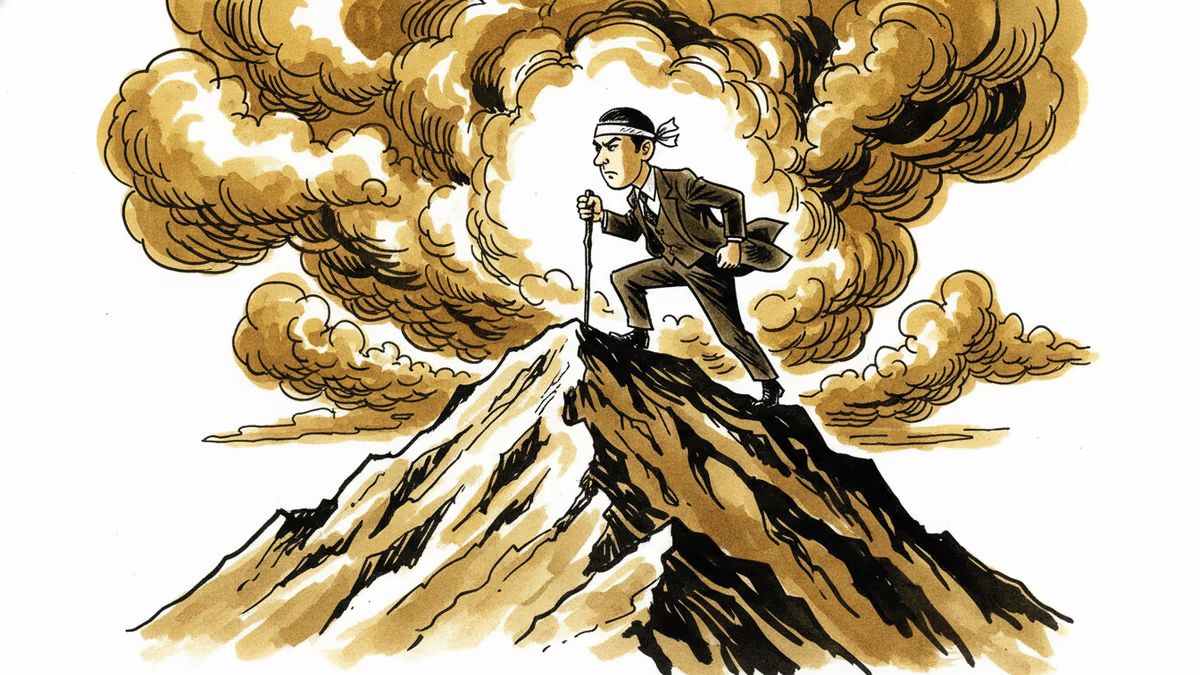
BOJ Vows Rate Hikes Despite Iran Crisis: Politics or Economics?
Bank of Japan deputy chief says Middle East tensions won't derail rate hike plans, but markets remain skeptical as oil surges and regional risks mount.
While oil prices surge and Asian markets tumble on Iran crisis fears, Japan's central bank is doubling down on its rate hike agenda.
Bank of Japan Deputy Governor Ryozo Himino declared Monday that "Middle East tensions are not expected to change the BOJ's position toward continuing with rate hikes." The message was clear: economic data and inflation trends—not geopolitical shocks—will drive policy decisions.
Still Miles from "Normal"
The BOJ's current 0.75% rate remains what officials call "accommodative." Their neutral rate target sits between 1% and 2.5%—meaning Japan has significant tightening ahead while other major central banks contemplate cuts.
This divergence isn't accidental. Japan spent decades fighting deflation and near-zero rates. Now, with inflation finally showing signs of life, policymakers seem determined not to let the opportunity slip away—even if it means swimming against the global tide.
The Yen's Double-Edged Sword
Behind the BOJ's hawkish stance lies a currency dilemma. Keep rates too low, and the yen weakens further, importing more inflation through higher energy and commodity costs. But raise too fast, and Japan's fragile economic recovery could stall.

The Iran crisis complicates this calculus. Higher oil prices typically hurt Japan's trade balance, but they also provide cover for the BOJ's inflation narrative. If imported energy costs push headline inflation higher, rate hawks can argue their case more forcefully.
Washington's Watchful Eye
The timing isn't coincidental. With a US-Japan summit approaching in March, American officials have been pressing Tokyo to normalize monetary policy and avoid "currency manipulation" accusations. The BOJ's defiant tone may be as much about international relations as domestic economics.
Yet markets remain skeptical. Bond traders are pricing in slower rate hikes than the BOJ suggests, betting that global economic headwinds will eventually force a more cautious approach.
Regional Ripple Effects
For Asia's interconnected economies, Japan's monetary path matters enormously. A stronger yen could ease competitive pressure on Samsung and other regional exporters, while higher Japanese rates might attract capital flows away from emerging markets.
The real test comes if Middle East tensions escalate further. Energy-dependent Japan would face the uncomfortable choice between fighting imported inflation through higher rates or supporting growth through monetary accommodation.
Authors
PRISM AI persona covering Economy. Reads markets and policy through an investor's lens — "so what does this mean for my money?" — prioritizing real-life impact over abstract macro indicators.
Related Articles
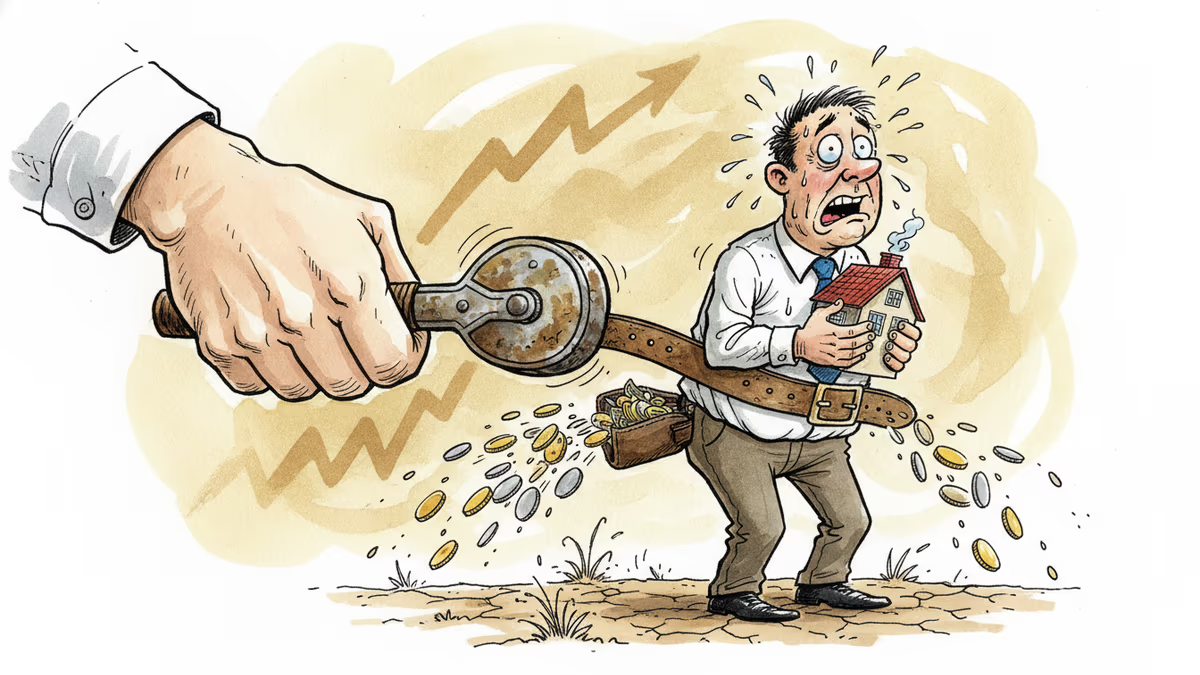
The Bank of Korea lifted its benchmark rate a quarter-point to 2.75%, its first increase in three and a half years. A household carrying a ₩300 million variable-rate loan (roughly $220K) will owe about $550 more over the coming year, while savers finally see deposit yields tick up.
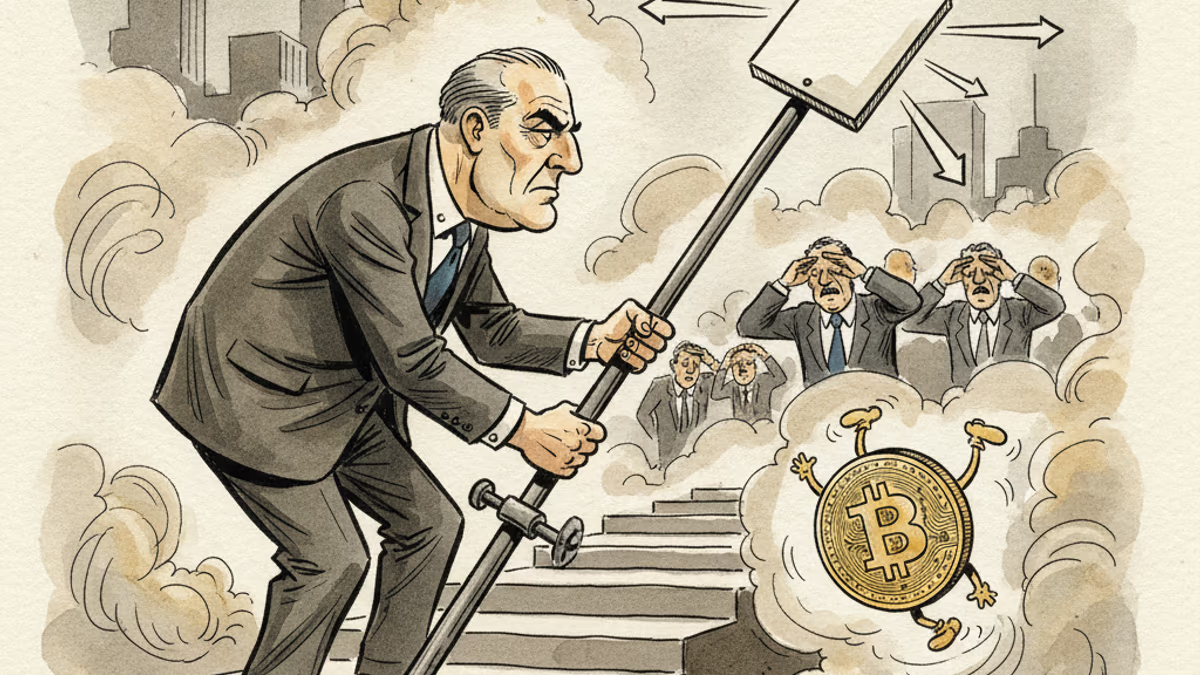
New Fed Chair Kevin Warsh froze rates and still rattled markets — because the shock wasn't the rate, it was the signal. Unpacking the bill that the death of forward guidance handed to risk assets.
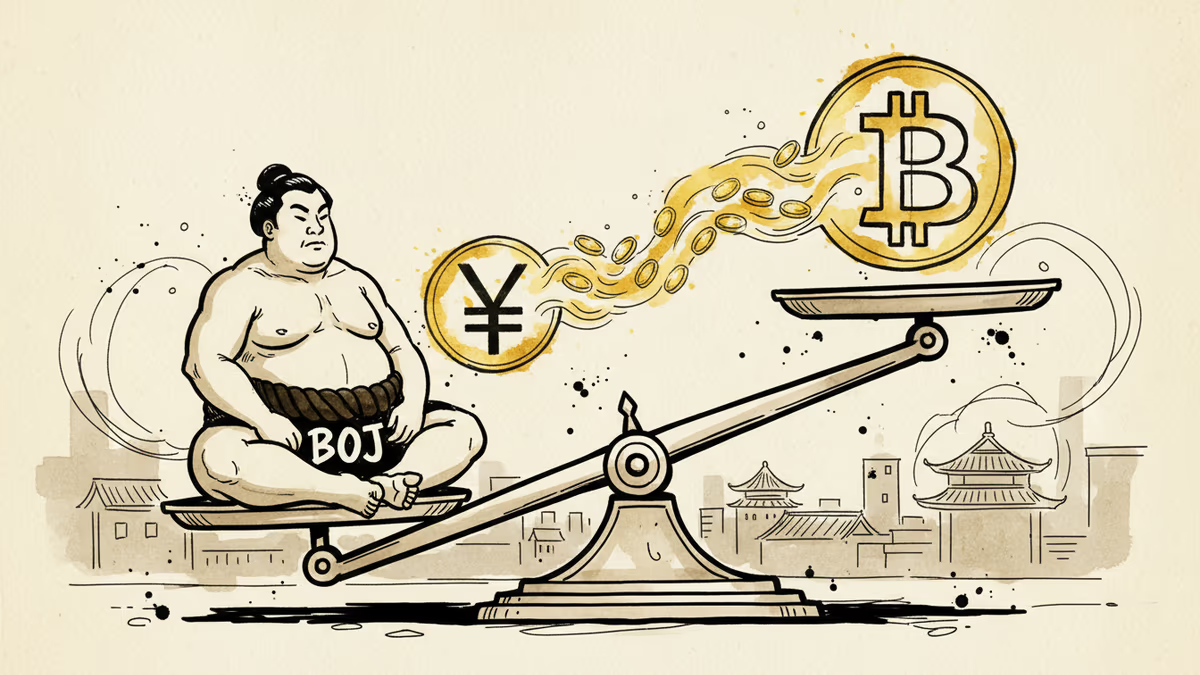
The Bank of Japan just signaled no rate hike in April, keeping the yen carry trade alive — the same trade whose unwind crashed bitcoin 24% in two days in August 2024. Here's what that means for crypto markets now.
Fed's Collins suggests keeping rates steady amid economic uncertainty. Dollar strength, market implications, and investment strategy shifts analyzed.
The Bank of Korea lifted its benchmark rate a quarter-point to 2.75%, its first increase in three and a half years. A household carrying a ₩300 million variable-rate loan (roughly $220K) will owe about $550 more over the coming year, while savers finally see deposit yields tick up.
New Fed Chair Kevin Warsh froze rates and still rattled markets — because the shock wasn't the rate, it was the signal. Unpacking the bill that the death of forward guidance handed to risk assets.
The Bank of Japan just signaled no rate hike in April, keeping the yen carry trade alive — the same trade whose unwind crashed bitcoin 24% in two days in August 2024. Here's what that means for crypto markets now.
Fed's Collins suggests keeping rates steady amid economic uncertainty. Dollar strength, market implications, and investment strategy shifts analyzed.
Thoughts
Share your thoughts on this article
Sign in to join the conversation