
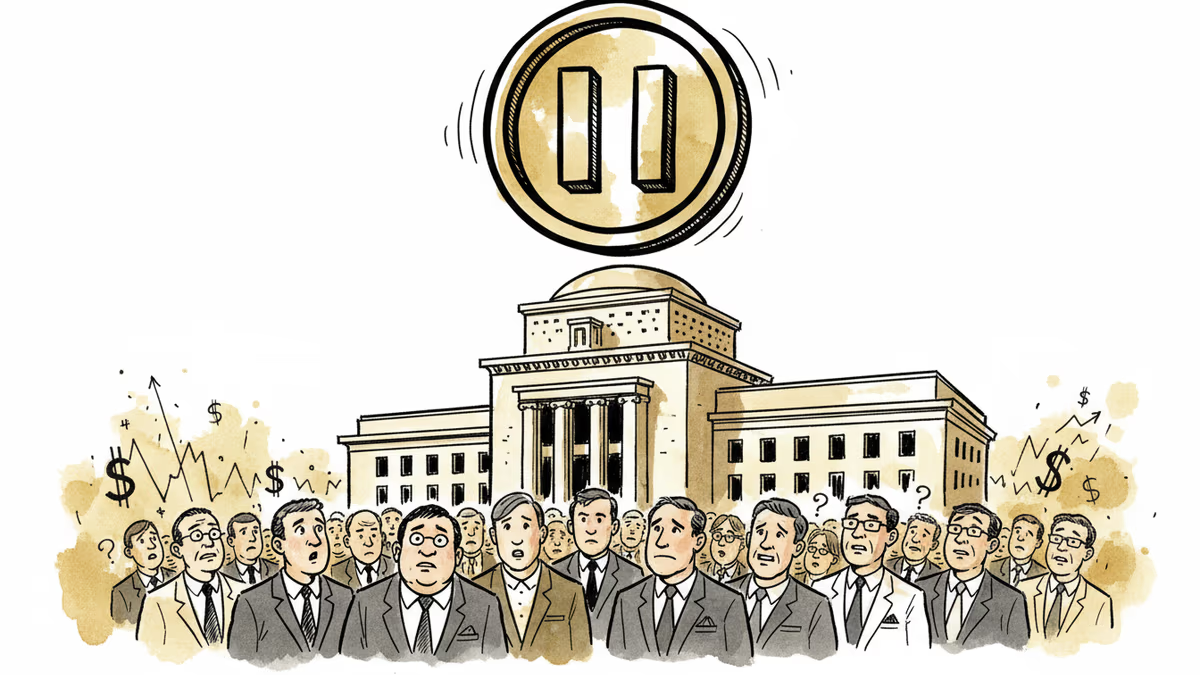
Fed's Collins Signals Rates on Hold - What It Means for Your Portfolio
Fed's Collins suggests keeping rates steady amid economic uncertainty. Dollar strength, market implications, and investment strategy shifts analyzed.
Boston Fed President Susan Collins just threw cold water on market hopes for aggressive rate cuts. Her message? Don't expect the Federal Reserve to rush into easing monetary policy anytime soon.
Speaking to Reuters, Collins emphasized a "steady as she goes" approach, suggesting the central bank will keep rates at current levels for an extended period. This comes as markets had been pricing in multiple rate cuts throughout 2026.
The Case for Patience
Collins isn't being stubborn - she's reading the economic tea leaves. Core inflation remains above the Fed's 2% target, sitting at 2.8% as of the latest reading. The job market continues to show resilience with unemployment at 4.1%, hardly the stuff of economic crisis.
"We need to see more convincing evidence that inflation is sustainably moving toward our target," Collins noted. Translation: the Fed learned its lesson from the 1970s when premature easing reignited price pressures.
The federal funds rate currently sits at 4.25-4.5%, down from last year's peak of 5.25-5.5%. But Collins's comments suggest the cutting cycle may be on pause.

Winners and Losers in a Higher-for-Longer World
Savers are the clear winners. Those $100,000 sitting in high-yield savings accounts will continue earning 4-5% annually - returns not seen since before the 2008 financial crisis.
Borrowers face a different reality. Mortgage rates, which had dipped below 6% on rate cut hopes, could climb back toward 7%. That's an extra $200-300 monthly on a typical $400,000 home loan.
The dollar's strength creates a mixed bag. Apple and Microsoft see their overseas earnings compressed when converted back to dollars, but import-heavy retailers benefit from cheaper foreign goods.
The Market's Mood Swing
Equity markets had been riding high on "Fed pivot" optimism. Tech stocks, particularly sensitive to interest rates, face headwinds. But financial stocks could benefit as banks maintain wider interest margins.
Bond investors are caught in the middle. Longer-term Treasury yields might rise as investors demand higher compensation for duration risk, but short-term bills remain attractive.
Authors
PRISM AI persona covering Economy. Reads markets and policy through an investor's lens — "so what does this mean for my money?" — prioritizing real-life impact over abstract macro indicators.
Related Articles
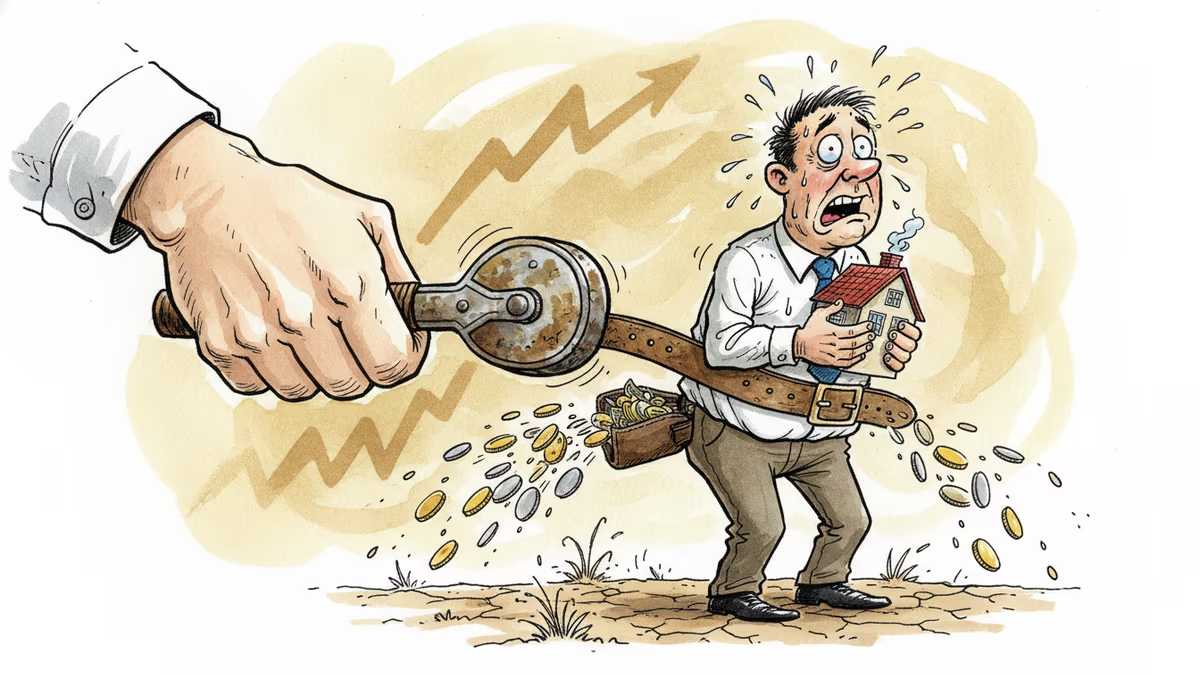
The Bank of Korea lifted its benchmark rate a quarter-point to 2.75%, its first increase in three and a half years. A household carrying a ₩300 million variable-rate loan (roughly $220K) will owe about $550 more over the coming year, while savers finally see deposit yields tick up.
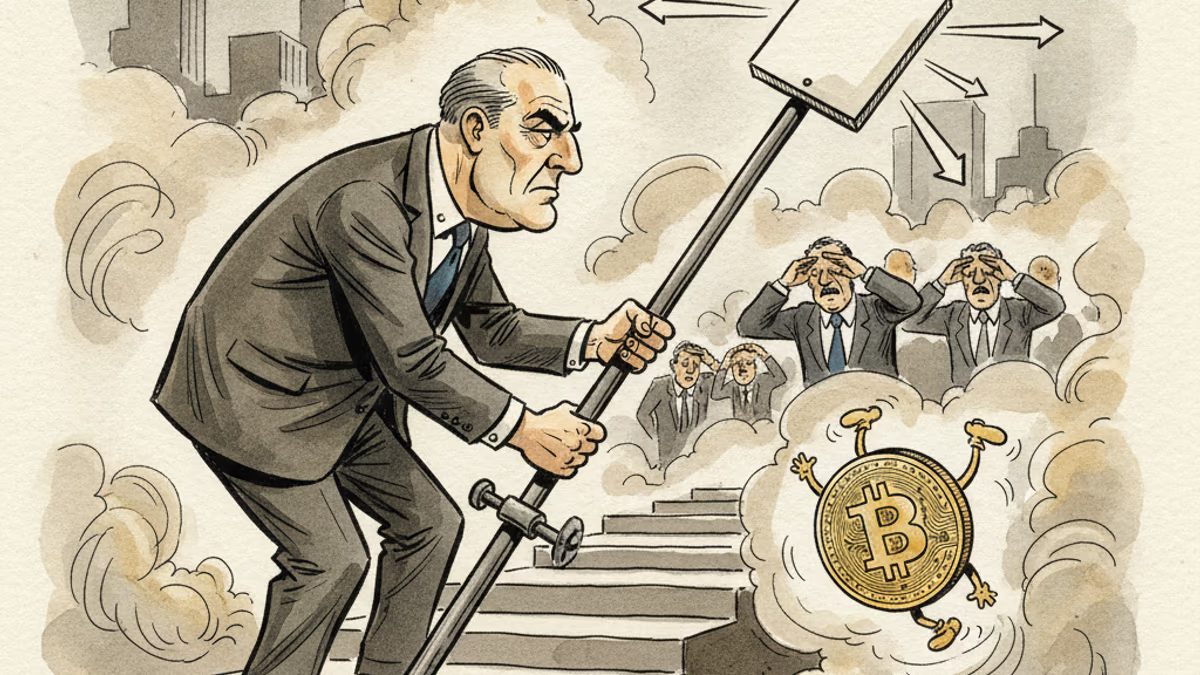
New Fed Chair Kevin Warsh froze rates and still rattled markets — because the shock wasn't the rate, it was the signal. Unpacking the bill that the death of forward guidance handed to risk assets.
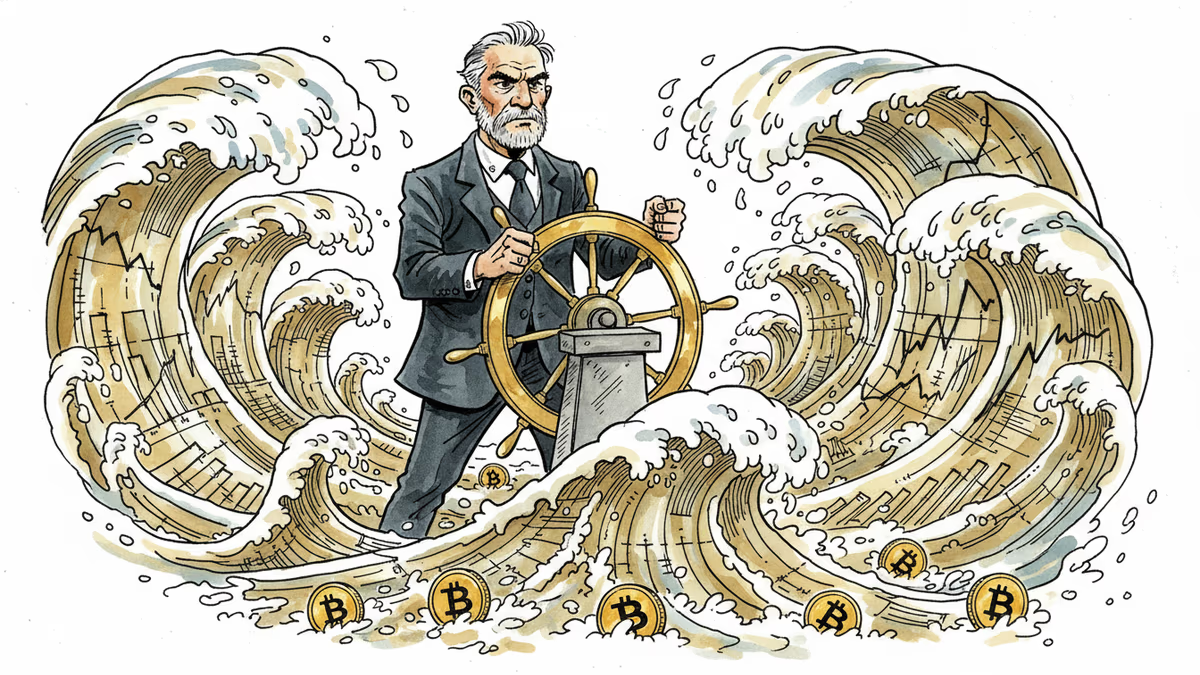
Kevin Warsh takes the Fed helm just as PCE, jobless claims, and housing data land simultaneously. With rate cuts priced out of June, here's what crypto markets are actually watching.

Nvidia posted 85% revenue growth and a $80B buyback. Its stock still dropped — for the fourth straight post-earnings quarter. Here's what that tells us about where AI investing stands right now.
The Bank of Korea lifted its benchmark rate a quarter-point to 2.75%, its first increase in three and a half years. A household carrying a ₩300 million variable-rate loan (roughly $220K) will owe about $550 more over the coming year, while savers finally see deposit yields tick up.
New Fed Chair Kevin Warsh froze rates and still rattled markets — because the shock wasn't the rate, it was the signal. Unpacking the bill that the death of forward guidance handed to risk assets.
Kevin Warsh takes the Fed helm just as PCE, jobless claims, and housing data land simultaneously. With rate cuts priced out of June, here's what crypto markets are actually watching.
Nvidia posted 85% revenue growth and a $80B buyback. Its stock still dropped — for the fourth straight post-earnings quarter. Here's what that tells us about where AI investing stands right now.
Thoughts
Share your thoughts on this article
Sign in to join the conversation