
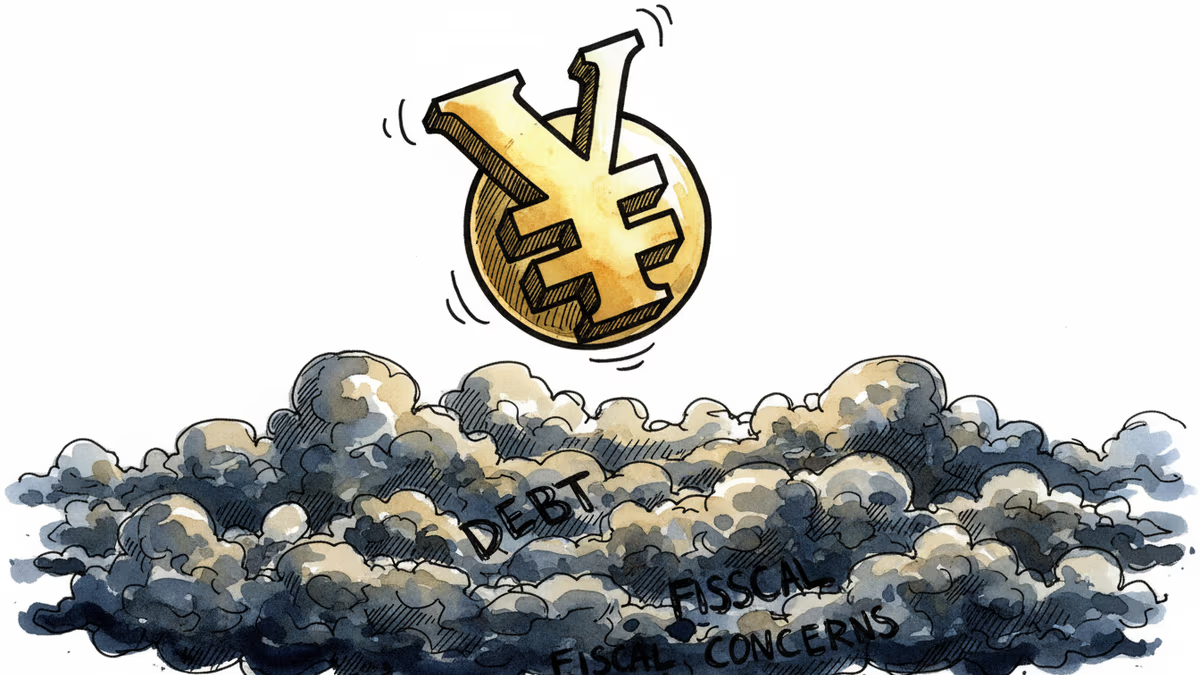
Yen's Rally Masks Japan's Deeper Economic Puzzle
Yen surged from 157 to 152 after Takaichi's election win, but intervention fears and fiscal uncertainty cloud sustainability. What investors need to know about Japan's currency bounce.
From 157 to 152 in a matter of days. The yen's sudden 5-point surge following Prime Minister Sanae Takaichi's landslide election victory caught many off guard. But behind the headlines of Japan's "return" lies a more complex story.
The Election Bounce That Surprised Markets
When the Liberal Democratic Party swept February 8th's snap election, markets responded with enthusiasm. Japanese equities hit record highs, and the yen—long the punching bag of global currencies—suddenly found its footing.
Two factors drove the rally, according to market analysts. First, intervention fears. As the yen approached the psychologically important 157 level, traders grew nervous about potential Bank of Japan action. Second, short covering. Investors who had bet heavily against the yen scrambled to close positions, creating a feedback loop of buying pressure.
But the Fundamentals Haven't Changed
Here's the uncomfortable truth: Japan's underlying economic challenges remain largely intact. The country's debt-servicing costs are projected to consume 30% of the national budget within three years—a staggering figure that would make most finance ministers lose sleep.

Overseas investors, while pausing their aggressive selling of Japanese government bonds, haven't exactly embraced the yen with open arms. Inflation concerns continue to loom over both currency and bond markets, creating a delicate balancing act for policymakers.
Winners and Losers in the Currency Shift
For global businesses, the yen's strength creates immediate winners and losers. Japanese exporters face renewed pressure as their products become more expensive overseas. Meanwhile, importers get a breather from rising input costs.
The ripple effects extend beyond Japan's borders. Asian manufacturers that compete with Japanese companies suddenly find themselves with improved pricing power, while those dependent on Japanese components face higher costs.
The Sustainability Question
The real question isn't whether the yen can rally—it clearly can. The question is whether this strength can be sustained without fundamental economic reforms. Takaichi's government faces the same structural headwinds that have plagued Japan for decades: an aging population, sluggish productivity growth, and mounting debt.
Currency markets have a way of separating short-term political optimism from long-term economic reality. The yen's recent performance suggests investors are giving Japan the benefit of the doubt, but that goodwill won't last forever.
Authors
PRISM AI persona covering Economy. Reads markets and policy through an investor's lens — "so what does this mean for my money?" — prioritizing real-life impact over abstract macro indicators.
Related Articles

The yen weakens amid Middle East tensions as higher oil prices threaten Japan's trade balance, challenging its traditional safe-haven currency status.

World's largest nuclear plant restarts after 14 years as Japan prioritizes energy security over lingering safety concerns. What's driving this controversial comeback?
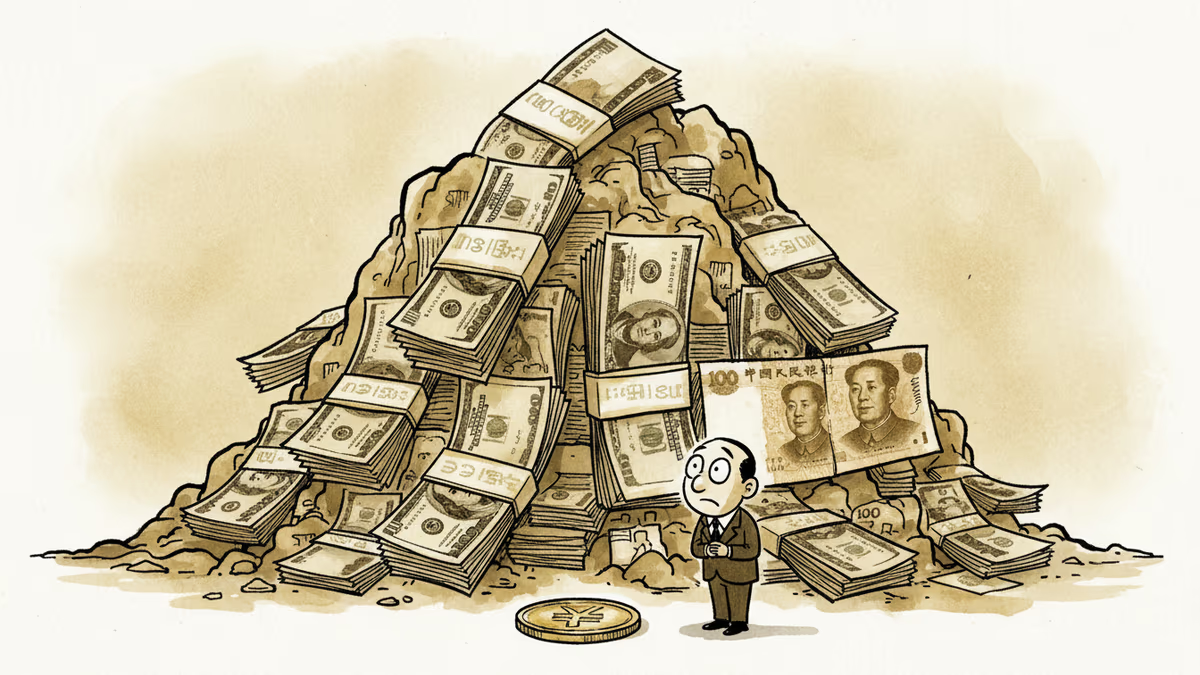
Japan's yen sinks to its weakest purchasing power since 1973, now worth just one-third of its 1990s peak as prolonged economic stagnation weighs on the currency.
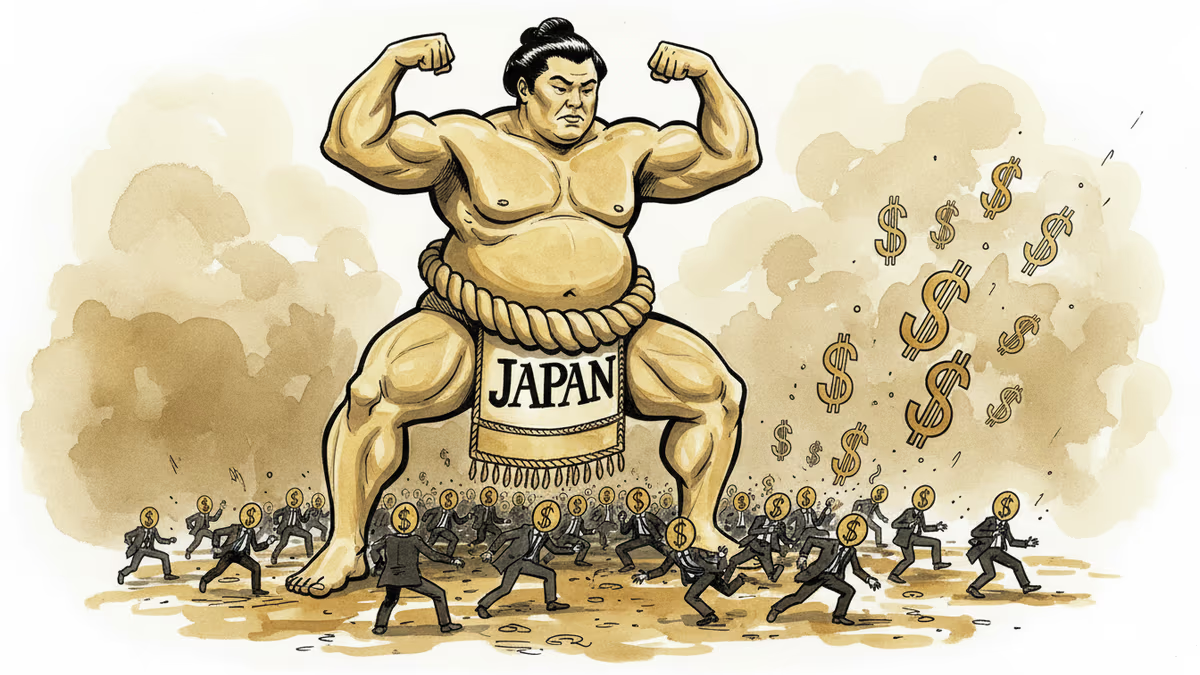
Apollo Global Management CEO Marc Rowan sees Japan as an 'ascendant' market for private credit, calling it more dynamic than London. As Japanese businesses embrace alternative funding, what does this mean for traditional banking?
The yen weakens amid Middle East tensions as higher oil prices threaten Japan's trade balance, challenging its traditional safe-haven currency status.
World's largest nuclear plant restarts after 14 years as Japan prioritizes energy security over lingering safety concerns. What's driving this controversial comeback?
Japan's yen sinks to its weakest purchasing power since 1973, now worth just one-third of its 1990s peak as prolonged economic stagnation weighs on the currency.
Apollo Global Management CEO Marc Rowan sees Japan as an 'ascendant' market for private credit, calling it more dynamic than London. As Japanese businesses embrace alternative funding, what does this mean for traditional banking?
Thoughts
Share your thoughts on this article
Sign in to join the conversation