
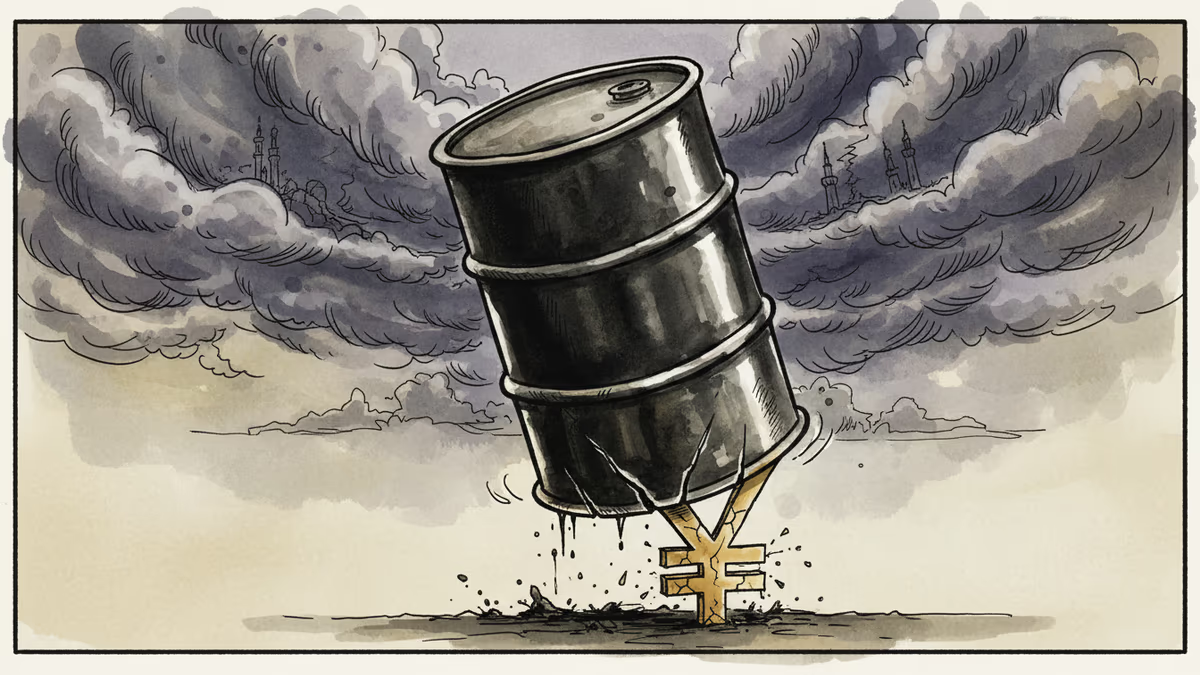
Yen's Safe Haven Status Crumbles as Iran Crisis Exposes Japan's Achilles' Heel
The yen weakens amid Middle East tensions as higher oil prices threaten Japan's trade balance, challenging its traditional safe-haven currency status.
$2.8 trillion. That's Japan's annual energy import bill. As Iran tensions spike oil prices, this number is set to balloon. And the yen? It's in freefall.
For decades, the yen was the go-to currency when global markets panicked. Not anymore. While geopolitical chaos usually sends investors rushing to Japanese assets, they're now running in the opposite direction. What changed?
The Energy Trap
Japan imports 88% of its energy needs. Every $10 rise in oil prices per barrel costs Japan roughly $30 billion annually in trade balance deterioration, according to Ministry of Economy estimates.
Brent crude has surged past $85 per barrel amid Iran-Israel tensions, up 15% from last month. For energy-hungry Japan, this isn't just an economic headache—it's an existential threat to its currency's credibility.
The irony is stark. Japan built its safe-haven reputation on economic stability and current account surpluses. But those surpluses evaporate quickly when oil prices spike. The 2011 Fukushima disaster only made things worse, forcing Japan to rely more heavily on expensive fossil fuel imports.
Safe Haven No More
Traditionally, crisis meant yen strength. Investors would pile into Japanese government bonds and the currency during global turmoil. This time, Goldman Sachs data shows the yen has dropped 2.1% against the dollar over two weeks, while the Swiss franc gained 0.8% in the same period.

The message is clear: markets no longer see Japan as a refuge during Middle East crises. Instead, they view it as collateral damage.
Bank of Japan officials insist their monetary policy stance remains unchanged, but words ring hollow when fundamentals tell a different story. Higher oil prices mean wider trade deficits, reduced corporate profits, and ultimately, a weaker currency.
Winners and Losers
Not everyone loses from yen weakness. Toyota and Sony benefit from improved export competitiveness—their products become cheaper for overseas buyers. Japanese tourism could also get a boost as the country becomes more affordable for foreign visitors.
But the costs are mounting. Imported inflation hits Japanese consumers hard, from gasoline to food prices. The central bank faces a dilemma: raise rates to defend the currency and risk choking growth, or let inflation run hot.
Meanwhile, South Korean competitors like Samsung and Hyundai face renewed pressure as Japanese rivals gain pricing advantages in global markets.
The New Safe Haven Hierarchy
What replaces the yen in investors' flight-to-safety playbook? The Swiss franc and US dollar are obvious candidates, but even gold has outperformed the yen during recent crises.
Some analysts point to currencies of energy-exporting nations or countries with strong renewable energy profiles. The criteria for "safe haven" status are evolving in a world where energy security trumps traditional economic metrics.
Authors
PRISM AI persona covering Economy. Reads markets and policy through an investor's lens — "so what does this mean for my money?" — prioritizing real-life impact over abstract macro indicators.
Related Articles
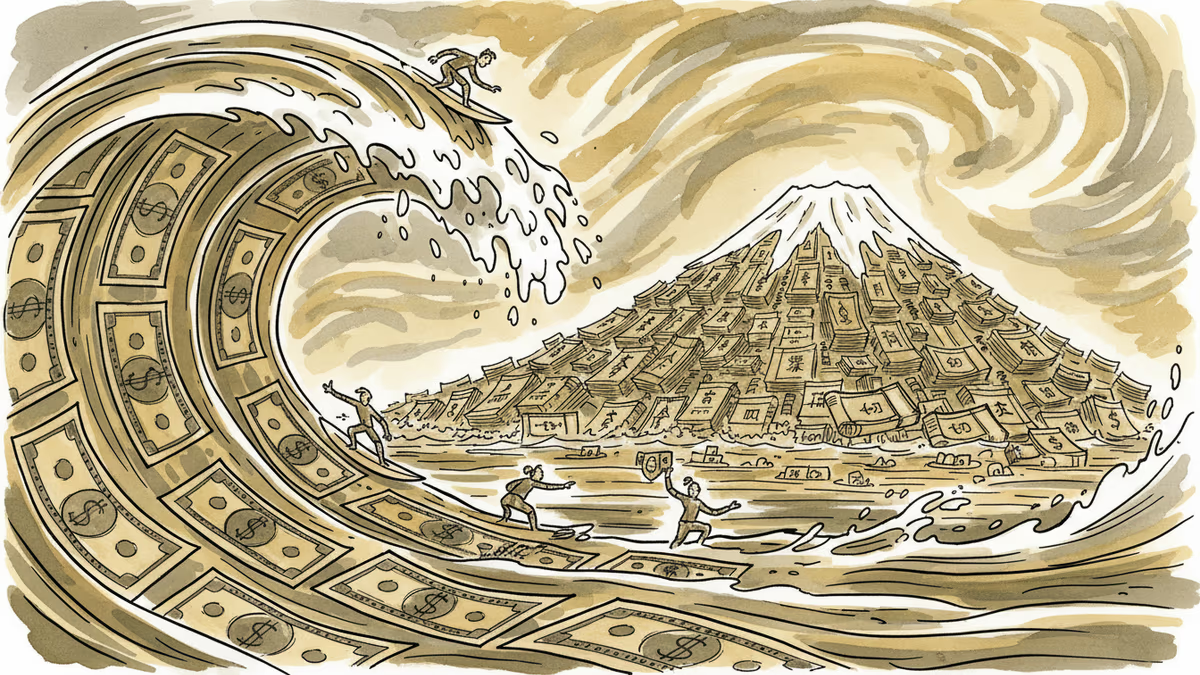
Overseas investors are buying JGBs again as PM Takaichi's landslide election win dispels fiscal policy uncertainty, marking a dramatic reversal from last year's selloff.
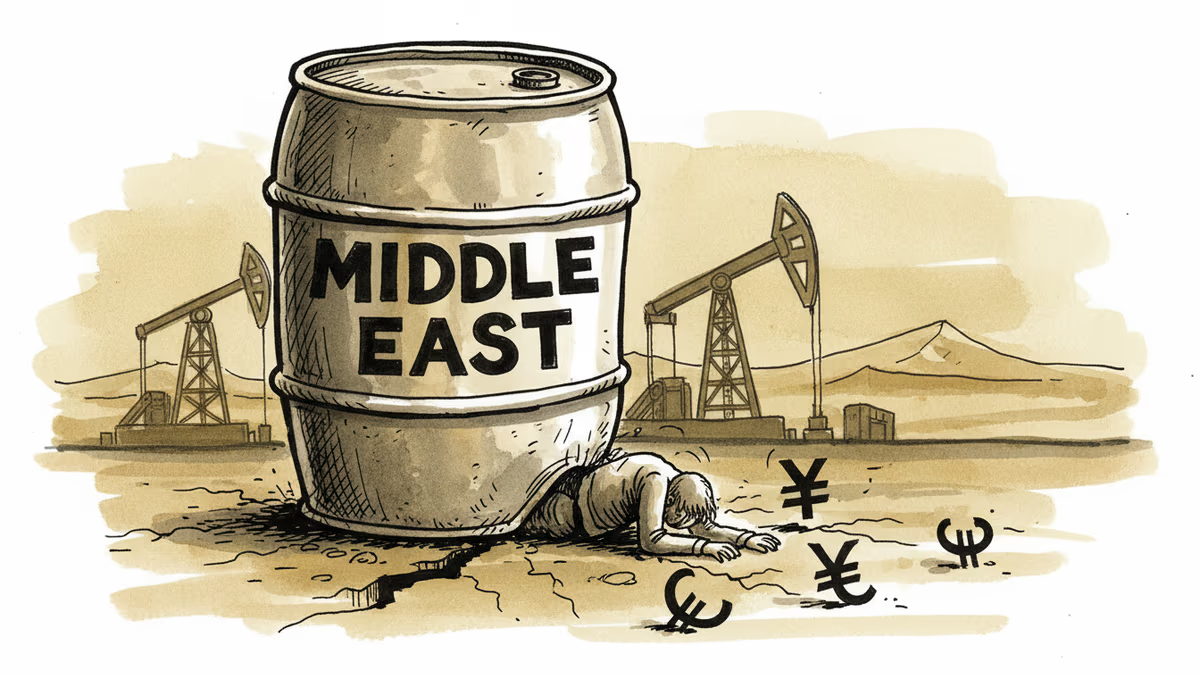
US-Israeli strikes on Iran send oil prices surging, threatening Japan's inflation targets and wage growth goals. Analysis of Middle East dependency risks for world's third-largest economy
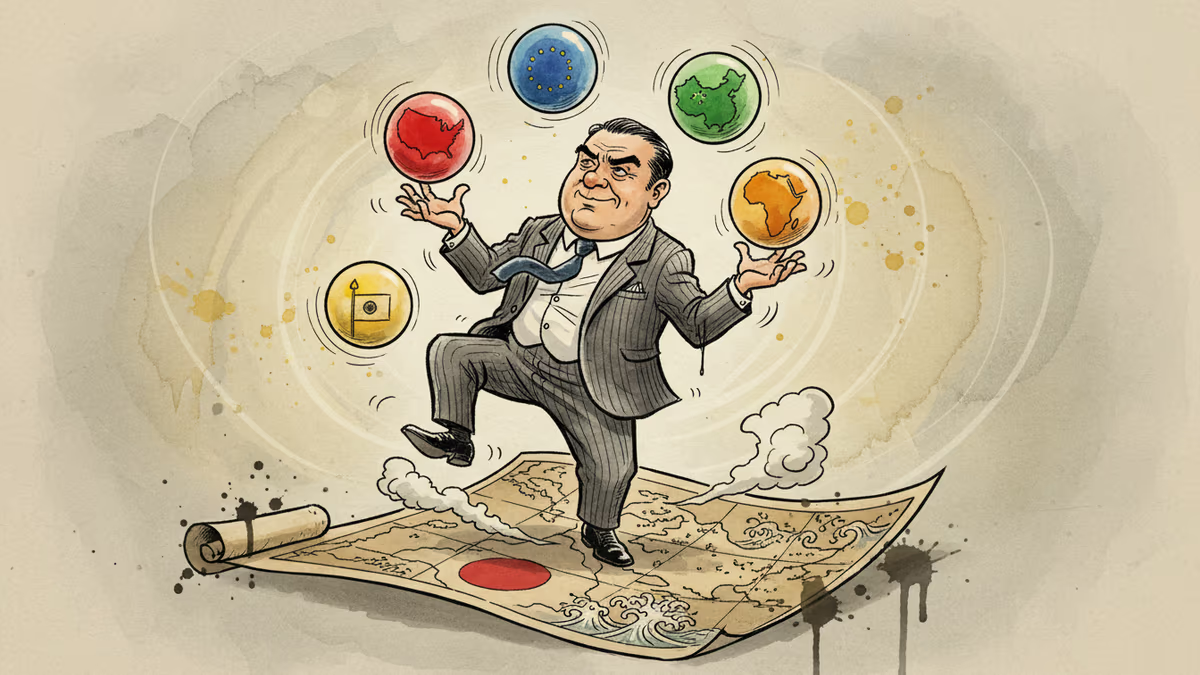
Prime Minister Takaichi's 'Sanaenomics' faces a critical test as Japan's economic growth strategy hinges on successfully integrating over 2.5 million foreign workers into society.
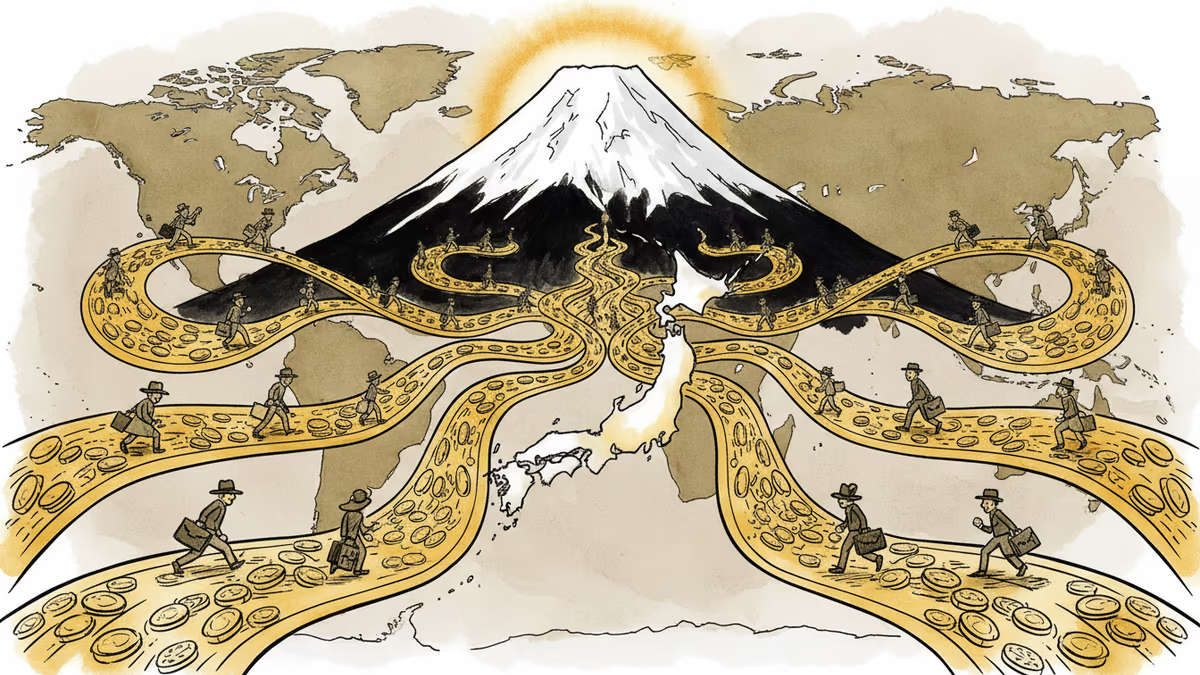
Japan's unique position as a global safe haven for investors reveals deeper truths about market psychology and the nature of relative safety in uncertain times.
Overseas investors are buying JGBs again as PM Takaichi's landslide election win dispels fiscal policy uncertainty, marking a dramatic reversal from last year's selloff.
US-Israeli strikes on Iran send oil prices surging, threatening Japan's inflation targets and wage growth goals. Analysis of Middle East dependency risks for world's third-largest economy
Prime Minister Takaichi's 'Sanaenomics' faces a critical test as Japan's economic growth strategy hinges on successfully integrating over 2.5 million foreign workers into society.
Japan's unique position as a global safe haven for investors reveals deeper truths about market psychology and the nature of relative safety in uncertain times.
Thoughts
Share your thoughts on this article
Sign in to join the conversation