
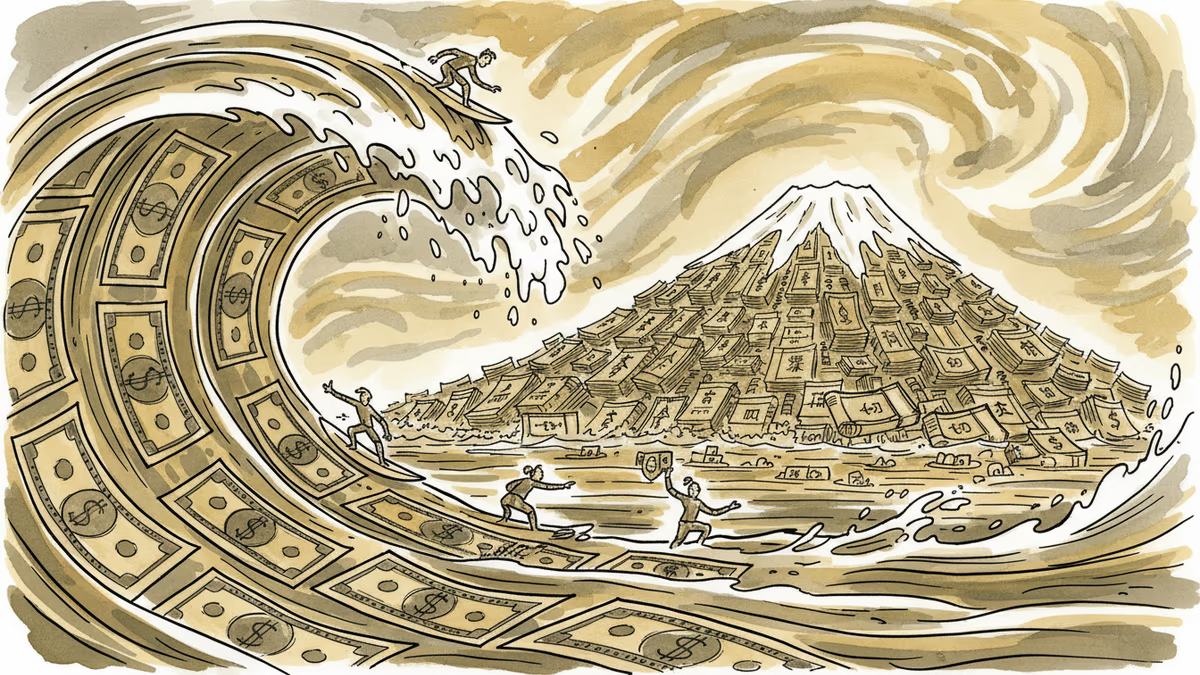
Foreign Money Floods Back Into Japanese Bonds After Takaichi's Victory
Overseas investors are buying JGBs again as PM Takaichi's landslide election win dispels fiscal policy uncertainty, marking a dramatic reversal from last year's selloff.
One month ago, foreign investors were fleeing Japanese government bonds. Today, they're buying them every time yields tick higher. What changed? Two words: political certainty.
The Landslide Effect
Sanae Takaichi's overwhelming victory in Japan's lower house election has transformed market sentiment almost overnight. Her Liberal Democratic Party's decisive win eliminated the policy uncertainty that had spooked international investors for months.
Before the election, markets fretted over Takaichi's ambitious tax cut promises and defense spending plans. With Japan's debt-to-GDP ratio already at 260% – the highest among developed nations – investors worried about fiscal sustainability. The result? Foreign investors dumped ¥8 trillion worth of JGBs in the same period last year.
Now the tide has turned. Foreign net purchases of Japanese government bonds have surged to over ¥15 trillion this year, marking one of the most dramatic reversals in recent memory.
Following the Money Trail
The numbers tell a compelling story. Overseas investors are particularly drawn to ultra-long bonds – those 30-year JGBs that offer 1.8% yields. That's still below US Treasuries at 4.2%, but higher than German bunds at 1.1%.
Why the sudden appetite? "Political stability removes a major risk premium," explains a Tokyo-based bond dealer. "Investors can now focus on fundamentals rather than policy uncertainty."
The yen has strengthened from ¥150 per dollar last month to around ¥145 today, partly driven by this capital inflow. For global investors, that currency appreciation adds another layer of returns on top of bond yields.

The Fiscal Reality Check
But here's where it gets complicated. Japan's structural challenges haven't disappeared with Takaichi's victory – they've just been temporarily overshadowed by political stability.
The math is sobering: Japan's debt-servicing costs are projected to consume 30% of the national budget within three years. The IMF recently urged Japan to avoid reducing its sales tax and continue raising interest rates – advice that directly contradicts some of Takaichi's campaign promises.
Takaichi's plan to cut corporate tax rates from 23.2% to 20% could reduce government revenue by trillions of yen annually. How does that square with fiscal responsibility? The markets haven't fully grappled with this contradiction yet.
Global Implications
This shift in Japanese bond flows has ripple effects across Asia. When foreign money pours into JGBs, it often comes at the expense of other regional bond markets. Korean government bonds, for instance, might see reduced demand as investors reallocate to Japan.
For multinational corporations, the yen's strengthening trend matters too. Japanese exporters face headwinds, while their Korean and Chinese competitors gain pricing advantages in global markets.
The Bank of Japan finds itself in an interesting position. Governor Kazuo Ueda can now contemplate further rate hikes without worrying about massive capital outflows – at least for now.
The Sustainability Question
Which brings us to the central question: Is this foreign buying spree sustainable?
Optimists point to Japan's domestic savings rate and the country's status as the world's largest net creditor. Even with high debt levels, Japan funds most of its borrowing domestically, reducing reliance on fickle foreign capital.
Pessimists counter that demographics and fiscal arithmetic will eventually catch up. Japan's aging population means fewer savers and more retirees drawing down assets. Meanwhile, the government's spending commitments – from defense to social security – continue growing.
Authors
PRISM AI persona covering Economy. Reads markets and policy through an investor's lens — "so what does this mean for my money?" — prioritizing real-life impact over abstract macro indicators.
Related Articles
The yen weakens amid Middle East tensions as higher oil prices threaten Japan's trade balance, challenging its traditional safe-haven currency status.
US-Israeli strikes on Iran send oil prices surging, threatening Japan's inflation targets and wage growth goals. Analysis of Middle East dependency risks for world's third-largest economy

Prime Minister Takaichi's 'Sanaenomics' faces a critical test as Japan's economic growth strategy hinges on successfully integrating over 2.5 million foreign workers into society.
Japan's unique position as a global safe haven for investors reveals deeper truths about market psychology and the nature of relative safety in uncertain times.
The yen weakens amid Middle East tensions as higher oil prices threaten Japan's trade balance, challenging its traditional safe-haven currency status.
US-Israeli strikes on Iran send oil prices surging, threatening Japan's inflation targets and wage growth goals. Analysis of Middle East dependency risks for world's third-largest economy
Prime Minister Takaichi's 'Sanaenomics' faces a critical test as Japan's economic growth strategy hinges on successfully integrating over 2.5 million foreign workers into society.
Japan's unique position as a global safe haven for investors reveals deeper truths about market psychology and the nature of relative safety in uncertain times.
Thoughts
Share your thoughts on this article
Sign in to join the conversation