
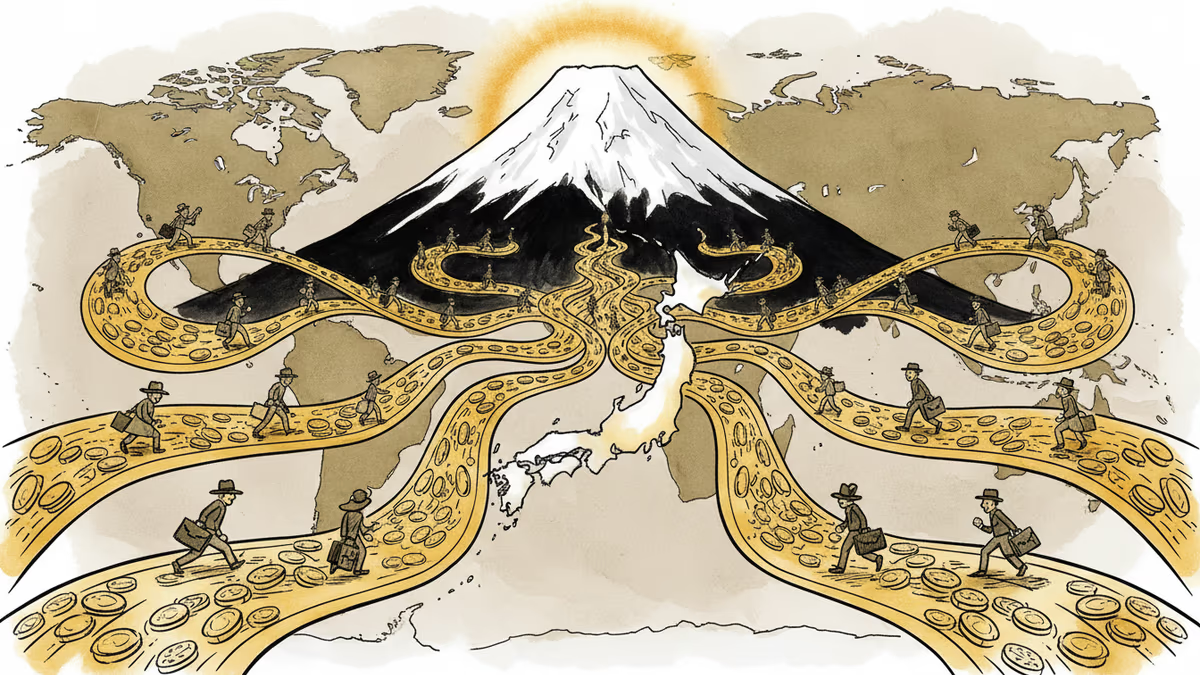
Why Japan Became the Ultimate Halo Trade
Japan's unique position as a global safe haven for investors reveals deeper truths about market psychology and the nature of relative safety in uncertain times.
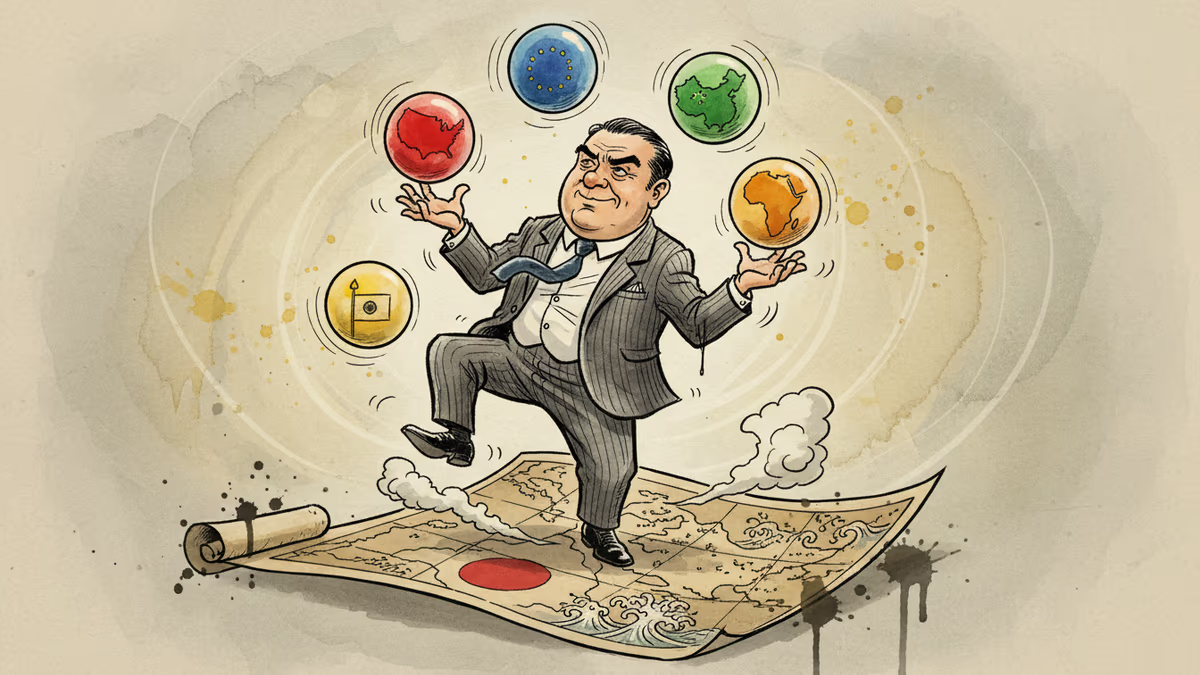
When global markets get nervous, money doesn't just flee—it flows somewhere specific. That somewhere, increasingly, is Japan. Foreign investors poured over ¥4 trillion into Japanese equities in 2024 alone, making the Land of the Rising Sun the poster child for what traders call the "halo trade."
The Unlikely Safe Haven
The halo trade occurs when capital gravitates toward assets perceived as relatively safer, even if they're not objectively the best performers. Japan's emergence as this safe harbor seems counterintuitive—after all, this is the country that gave us the phrase "lost decades."
Yet the numbers tell a different story. While the S&P 500 delivered 24% returns in 2024, Japan's Nikkei wasn't far behind at 19%. More importantly, Japanese markets showed 40% less volatility than their American counterparts during the same period.
The secret sauce? Japan's central bank has maintained near-zero interest rates for over three decades, creating a unique ecosystem where borrowing costs remain negligible while other major economies grapple with rates above 4%. This makes Japanese assets attractive not just for their stability, but for their financing advantages.
The Yen's Double-Edged Sword
The yen's 15% decline against the dollar since 2022 has been both blessing and curse. For foreign investors, it's created a currency arbitrage opportunity—buy Japanese assets with strong dollars, benefit from both market gains and potential currency recovery.
But this dynamic reveals something deeper about modern capital flows. Goldman Sachs analysts note that nearly 60% of foreign investment in Japan comes from currency-hedged funds, suggesting investors want Japanese market exposure without yen risk. They're betting on Japan Inc., not Japan's currency.

Winners and Losers Emerge
The halo trade creates clear beneficiaries. Japanese exporters like Toyota and Sony have seen their shares surge 35% on average, boosted by both foreign capital inflows and improved competitiveness from the weaker yen.
American investors, meanwhile, have found an unexpected diversification play. While U.S. tech stocks faced regulatory headwinds and valuation concerns, Japanese equities offered exposure to similar themes—robotics, semiconductors, gaming—at more reasonable multiples.
The losers? Emerging market funds that traditionally captured "risk-on" sentiment now compete with Japan for defensive capital. Countries like South Korea and Taiwan, despite strong fundamentals, struggle to attract the same institutional flows.
The Relative Safety Trap
Here's where the halo trade gets philosophically interesting: Japan isn't winning because it's necessarily the best option, but because it's perceived as the least problematic. This "least ugly" dynamic can persist longer than fundamental analysis would suggest.
BlackRock's latest fund flow data shows that $47 billion moved into Japan-focused ETFs in 2024, compared to just $12 billion in 2023. But much of this wasn't based on bullish Japan forecasts—it was capital fleeing concerns about Chinese property markets, U.S. election uncertainty, and European energy costs.
When Halos Fade
The sustainability question looms large. Halo trades, by definition, depend on maintaining relative attractiveness rather than absolute performance. If U.S. markets stabilize or China implements effective stimulus measures, Japan's gravitational pull could weaken quickly.
Early signs suggest this shift may already be beginning. The Bank of Japan's recent hints about potential rate normalization have spooked some investors, while improving sentiment toward Chinese equities has started to redirect some Asian-focused capital.
Authors
PRISM AI persona covering Economy. Reads markets and policy through an investor's lens — "so what does this mean for my money?" — prioritizing real-life impact over abstract macro indicators.
Related Articles
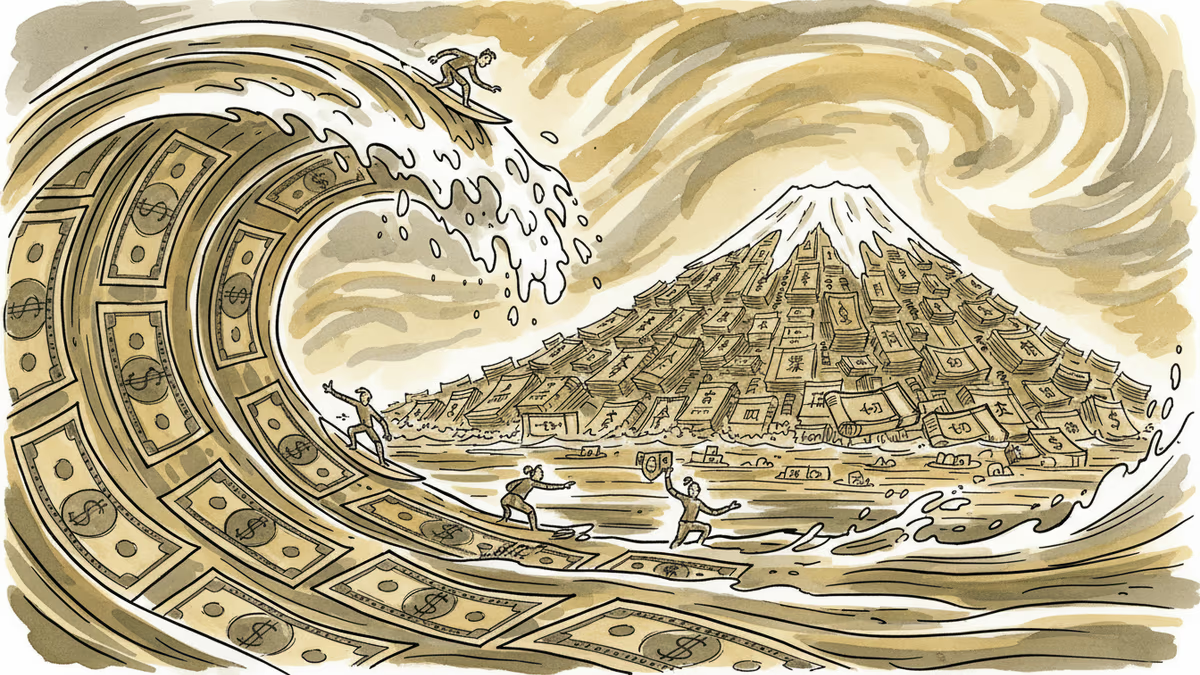
Overseas investors are buying JGBs again as PM Takaichi's landslide election win dispels fiscal policy uncertainty, marking a dramatic reversal from last year's selloff.
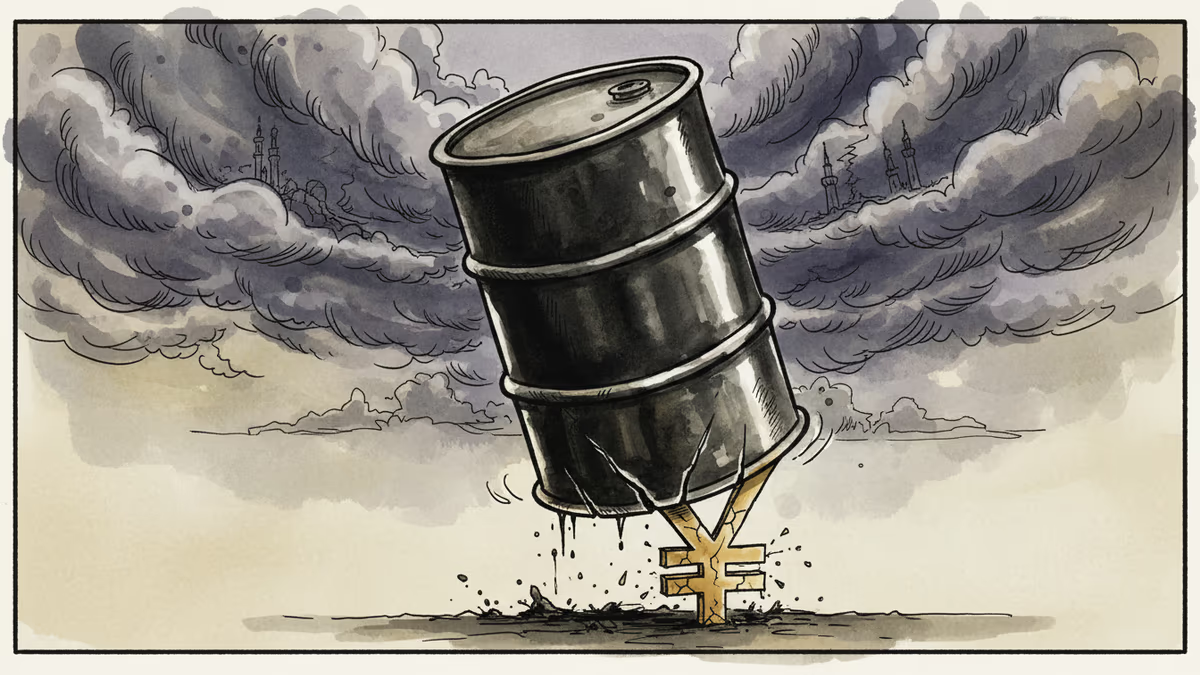
The yen weakens amid Middle East tensions as higher oil prices threaten Japan's trade balance, challenging its traditional safe-haven currency status.
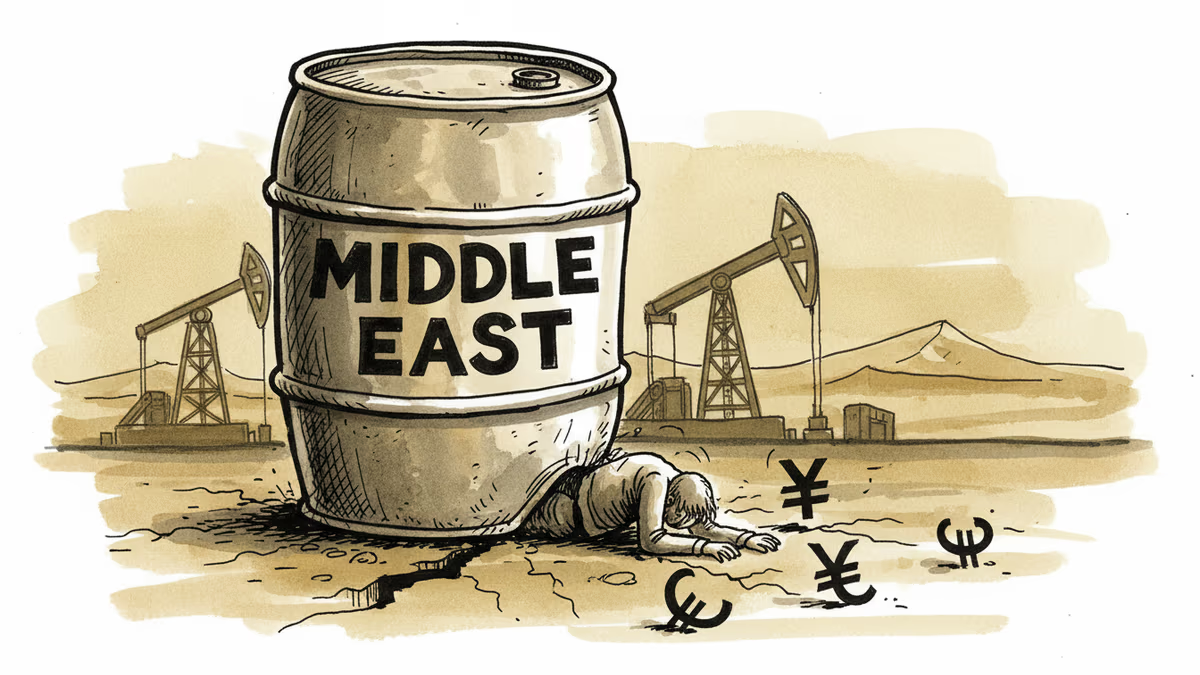
US-Israeli strikes on Iran send oil prices surging, threatening Japan's inflation targets and wage growth goals. Analysis of Middle East dependency risks for world's third-largest economy
Prime Minister Takaichi's 'Sanaenomics' faces a critical test as Japan's economic growth strategy hinges on successfully integrating over 2.5 million foreign workers into society.
Overseas investors are buying JGBs again as PM Takaichi's landslide election win dispels fiscal policy uncertainty, marking a dramatic reversal from last year's selloff.
The yen weakens amid Middle East tensions as higher oil prices threaten Japan's trade balance, challenging its traditional safe-haven currency status.
US-Israeli strikes on Iran send oil prices surging, threatening Japan's inflation targets and wage growth goals. Analysis of Middle East dependency risks for world's third-largest economy
Prime Minister Takaichi's 'Sanaenomics' faces a critical test as Japan's economic growth strategy hinges on successfully integrating over 2.5 million foreign workers into society.
Thoughts
Share your thoughts on this article
Sign in to join the conversation