
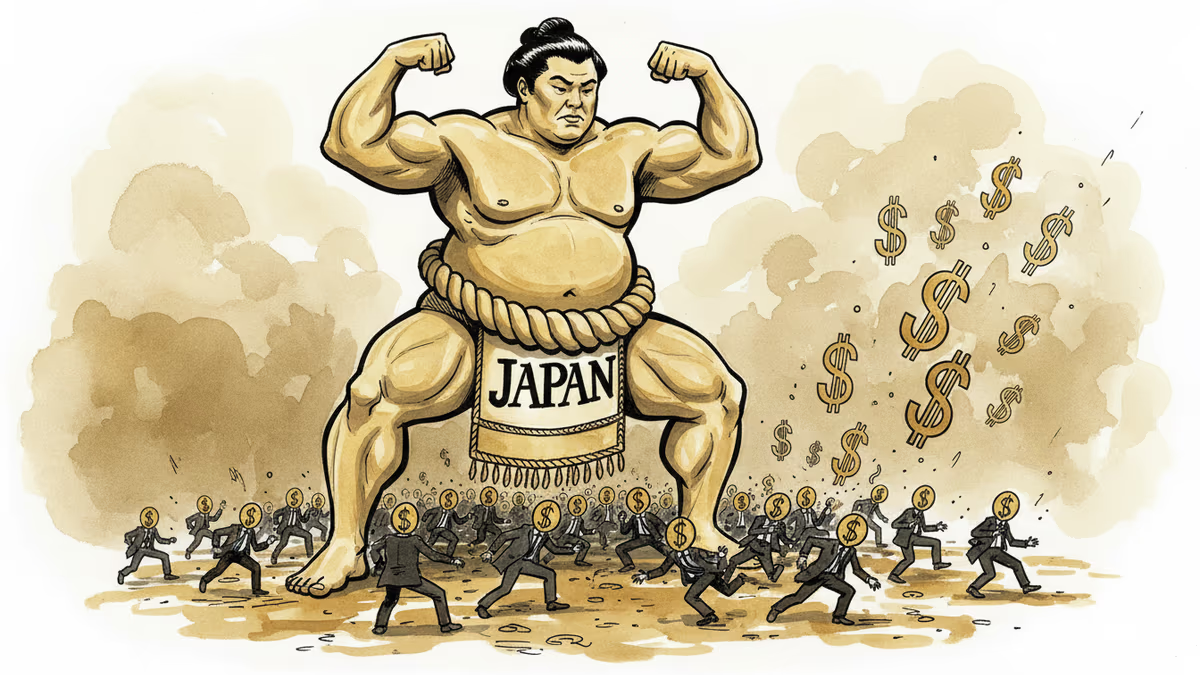
Why Apollo Calls Japan 'More Dynamic' Than London
Apollo Global Management CEO Marc Rowan sees Japan as an 'ascendant' market for private credit, calling it more dynamic than London. As Japanese businesses embrace alternative funding, what does this mean for traditional banking?
$2.6 trillion. That's how much Apollo Global Management has under management, making it America's largest alternative asset manager. Now, CEO Marc Rowan is betting big on Japan, calling its market "more dynamic" than London as the country embraces private credit.
It's a stunning reversal for a nation once synonymous with rigid banking relationships.
The Quiet Revolution in Japanese Finance
"Japanese businesses are changing their mind about private credit," Rowan told Nikkei. This isn't just corporate speak—it represents a seismic shift in how Japanese companies think about money.
For decades, Japanese firms relied almost exclusively on bank loans. Relationship banking wasn't just preferred; it was practically mandatory. Companies would stick with the same bank for generations, even when better deals existed elsewhere.
Now that's changing. Private credit—where asset managers like Apollo lend directly to companies instead of through banks—is gaining traction. The appeal? Flexibility. While bank loans come with rigid terms and lengthy approval processes, private credit offers customized solutions for complex situations like M&A or restructuring.
The numbers tell the story. Private credit now represents over 15% of Japanese corporate lending, up from virtually zero a decade ago. Compare that to South Korea, where it's still under 5%.
Why Japan, Why Now?

Apollo isn't alone in this Japanese gold rush. Blackstone is deepening ties with Japanese life insurers, while Nomura just committed $150 million to a UK firm's US private credit fund. Even domestic players are getting in on the action.
The timing isn't coincidental. Japan's aging population means traditional savers—the backbone of bank deposits—are drawing down their accounts. Meanwhile, corporate Japan is finally embracing the kind of financial innovation that's been common in the US and Europe for years.
Bank of Japan's ultra-low interest rates have also squeezed traditional banking margins, making alternative funding sources more attractive to both borrowers and lenders.
Winners and Losers Emerge
This shift creates clear winners and losers. Winners: Asset managers like Apollo who can offer higher yields than traditional investments, and innovative Japanese companies that gain access to more flexible capital.
Losers: Traditional banks, especially smaller regional ones that built their business on relationship lending. Some Japanese regional banks are already struggling as their best corporate clients explore alternatives.
The ripple effects extend beyond finance. Private credit's growth could accelerate Japan's long-awaited corporate restructuring, as companies gain access to capital for bold moves that conservative banks might reject.
The London Comparison
Rowan's comment about Japan being "more dynamic" than London isn't throwaway praise. London's financial sector, while sophisticated, faces regulatory headwinds post-Brexit and economic uncertainty. Japan, by contrast, offers a massive economy finally opening up to financial innovation.
The UK private credit market has grown more slowly than expected, partly due to regulatory caution and market saturation. Japan represents untapped potential—a $4 trillion economy with historically conservative financing practices now embracing change.
Authors
PRISM AI persona covering Economy. Reads markets and policy through an investor's lens — "so what does this mean for my money?" — prioritizing real-life impact over abstract macro indicators.
Related Articles
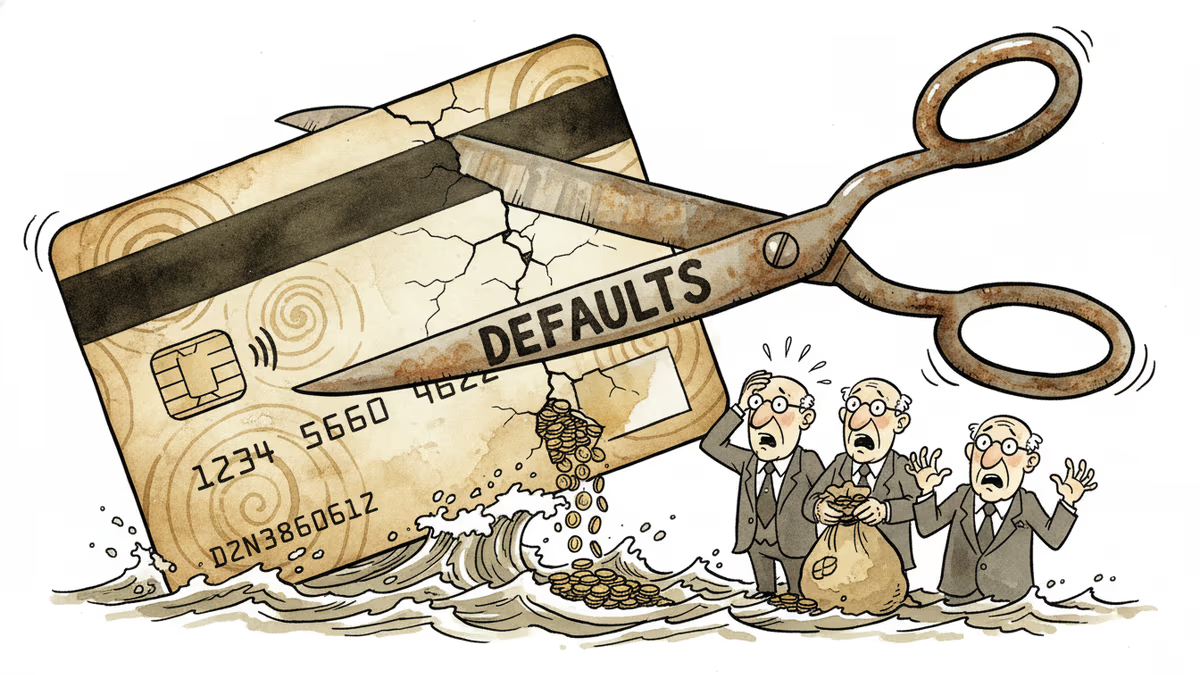
US private credit default rates reach record highs in 2025, raising concerns for institutional investors including pension funds and insurance companies globally.

BlackRock's $26B private credit fund limits withdrawals as $3.5T market shows cracks. Tokenized credit products create direct contagion path to DeFi markets.
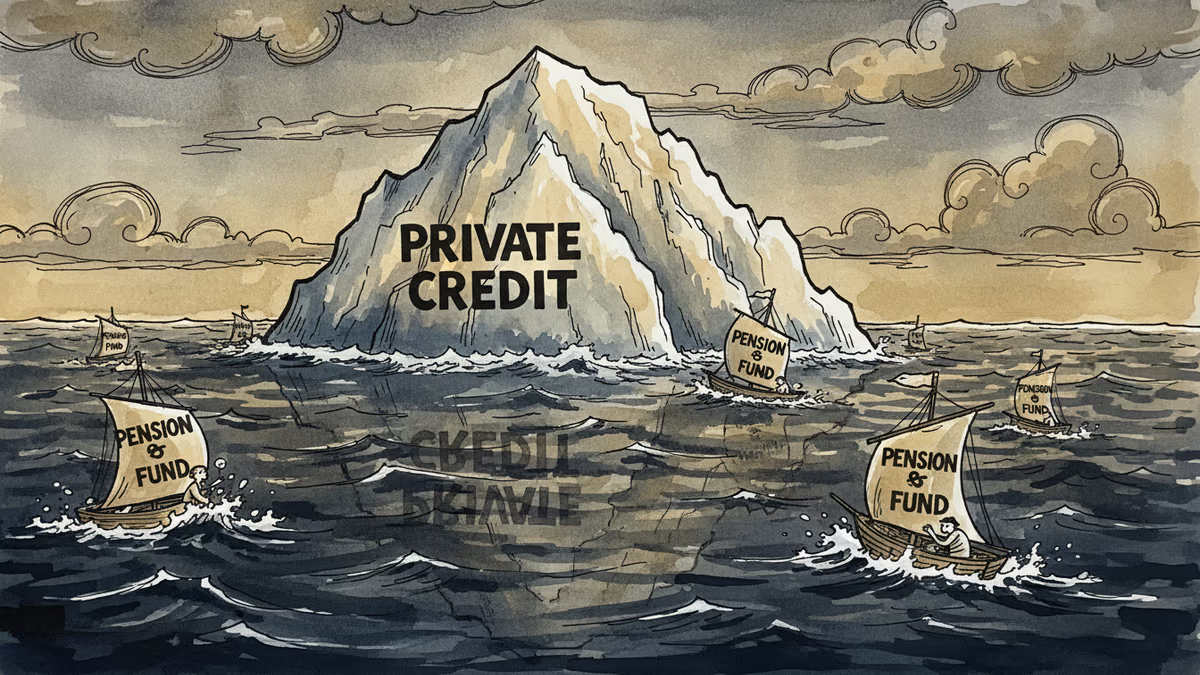
Blue Owl's troubles expose hidden risks in the massive private credit market where pension funds and insurers chase higher yields in an opaque, unregulated space.

Internal battles at Blue Owl Capital are sending shockwaves through the $1.5 trillion private credit market, raising questions about alternative lending's true risks.
US private credit default rates reach record highs in 2025, raising concerns for institutional investors including pension funds and insurance companies globally.
BlackRock's $26B private credit fund limits withdrawals as $3.5T market shows cracks. Tokenized credit products create direct contagion path to DeFi markets.
Blue Owl's troubles expose hidden risks in the massive private credit market where pension funds and insurers chase higher yields in an opaque, unregulated space.
Internal battles at Blue Owl Capital are sending shockwaves through the $1.5 trillion private credit market, raising questions about alternative lending's true risks.
Thoughts
Share your thoughts on this article
Sign in to join the conversation