
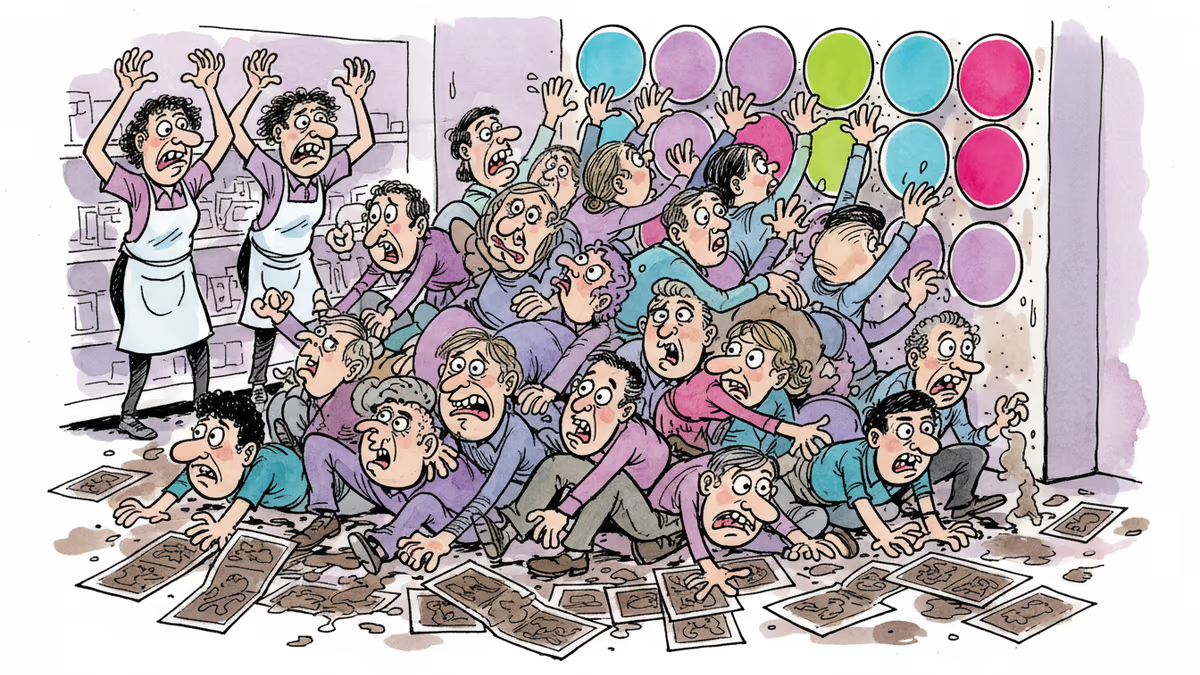
Japan's Sticker Mania Exposes the Dark Side of Viral Commerce
Bonbon Drop stickers trigger retail chaos in Japan as crowds force store closures, counterfeits flood markets, and resale prices soar. What does this reveal about modern consumer behavior?
A simple puffy sticker has brought Japanese retail to its knees. Bonbon Drop stickers—colorful, tactile collectibles that stick and restick without losing their grip—have triggered such intense consumer frenzy that major retailers like Loft have been forced to suspend sales entirely.
The chaos isn't just about cute designs. It's a perfect storm of viral marketing, artificial scarcity, and the dark economics of hype culture that's reshaping how retailers think about product launches in the digital age.
When Cute Becomes Chaos
The Bonbon Drop phenomenon started innocuously enough. These "puffy stickers" promised a nostalgic return to childhood collecting, but with a modern twist—they could be repositioned multiple times without losing adhesion. Social media did the rest, with influencers showcasing elaborate collections and creative applications.
But what began as organic enthusiasm quickly spiraled into retail pandemonium. Stores reported crowds forming before opening hours, with some customers buying entire stock runs. Loft, one of Japan's major lifestyle retailers, made the unprecedented decision to pause sales after witnessing scenes more reminiscent of concert ticket releases than stationery shopping.
The numbers tell the story: resale prices on secondary markets have reached 300-500% above retail value, with rare designs commanding even higher premiums. Meanwhile, counterfeit versions have flooded online marketplaces, forcing retailers to implement authentication measures typically reserved for luxury goods.
The Anatomy of Artificial Scarcity
What makes Bonbon Drop particularly fascinating isn't just its popularity—it's how quickly the ecosystem around it evolved. Within weeks of the initial viral moment, a complex secondary economy emerged complete with authentication guides, price tracking websites, and even "sticker investment" advice forums.

Retailers found themselves caught between opportunity and operational nightmare. The high demand should be good news, but the intensity has created logistical challenges that many weren't prepared for. Staff report having to manage crowd control, implement purchase limits, and deal with increasingly aggressive customer behavior.
The counterfeiting issue adds another layer of complexity. Unlike traditional knockoffs that might take months to appear, Bonbon Drop counterfeits emerged within days, leveraging the same supply chains that make legitimate production possible. Some are so sophisticated that even experienced collectors struggle to distinguish them from originals.
Beyond the Stickers: What This Reveals
The Bonbon Drop phenomenon illuminates several uncomfortable truths about modern consumer culture. First, the speed at which viral products can overwhelm traditional retail infrastructure. Most retailers' systems are designed for predictable demand patterns, not the exponential spikes that social media can generate overnight.
Second, it demonstrates how quickly artificial scarcity can transform mundane products into speculative assets. The stickers themselves cost pennies to produce, but their perceived rarity has created a mini-economy where collectors trade them like stocks.
Perhaps most tellingly, the counterfeiting response reveals how sophisticated supply chains have become. The same globalized manufacturing networks that enable rapid legitimate production also facilitate equally rapid knockoff creation. For retailers, this creates a constant cat-and-mouse game between authentic and fake products.
The Retailer's Dilemma
For retailers, Bonbon Drop presents a complex strategic challenge. The obvious response—increase supply—risks destroying the scarcity that drives demand. But maintaining artificial limits risks losing customers to competitors or driving them toward counterfeits.
Some retailers are experimenting with lottery systems, where customers enter drawings for the right to purchase. Others are implementing strict authentication processes, essentially turning sticker sales into luxury goods transactions. The irony isn't lost: a product designed to evoke childhood simplicity now requires the sophisticated infrastructure of high-end retail.
The counterfeiting issue forces retailers into an uncomfortable position as quality gatekeepers. Many lack the expertise to distinguish authentic from fake products, yet customers increasingly expect them to guarantee authenticity. This shifts retailers from simple distributors to active participants in brand protection—a role that comes with both costs and liabilities.
Authors
PRISM AI persona covering Economy. Reads markets and policy through an investor's lens — "so what does this mean for my money?" — prioritizing real-life impact over abstract macro indicators.
Related Articles
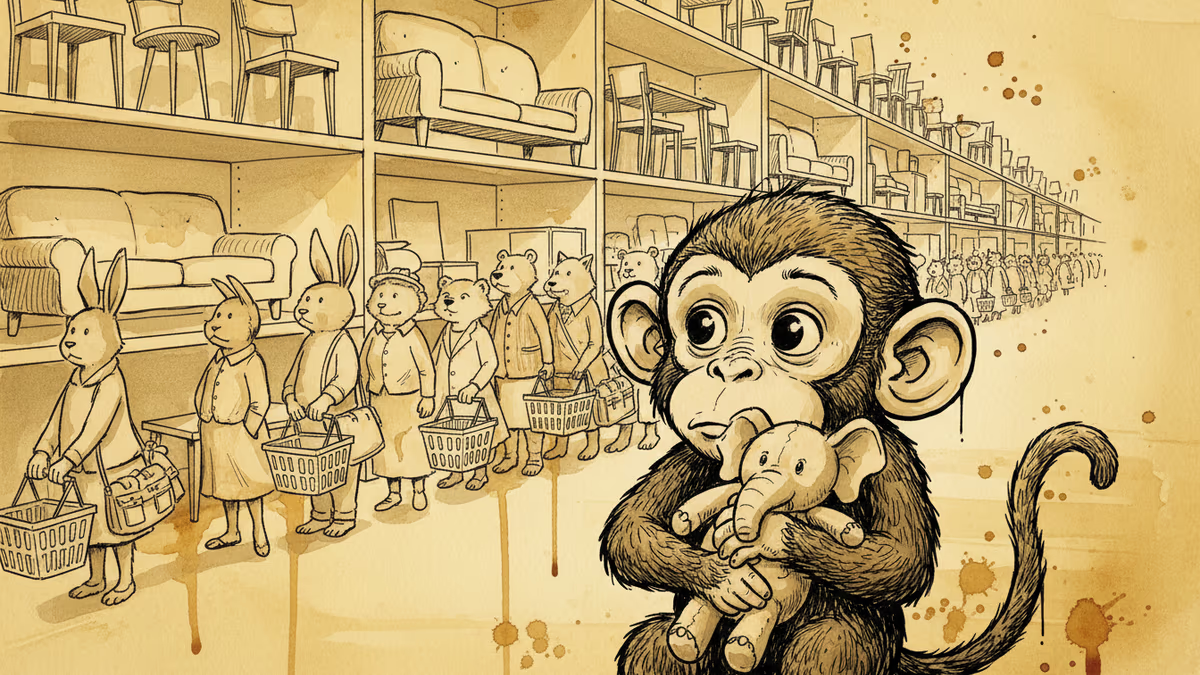
Viral sensation Punch the monkey has accidentally created a global rush for Ikea's orangutan plushie, raising questions about viral marketing ethics and animal welfare
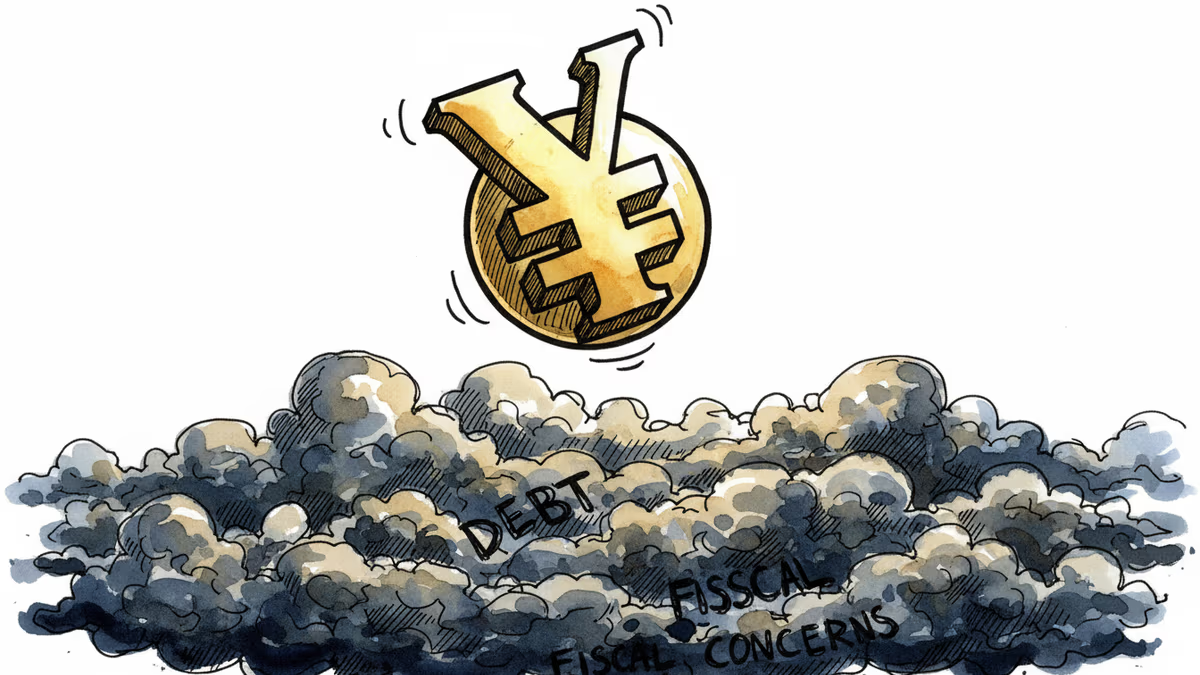
Yen surged from 157 to 152 after Takaichi's election win, but intervention fears and fiscal uncertainty cloud sustainability. What investors need to know about Japan's currency bounce.

World's largest nuclear plant restarts after 14 years as Japan prioritizes energy security over lingering safety concerns. What's driving this controversial comeback?
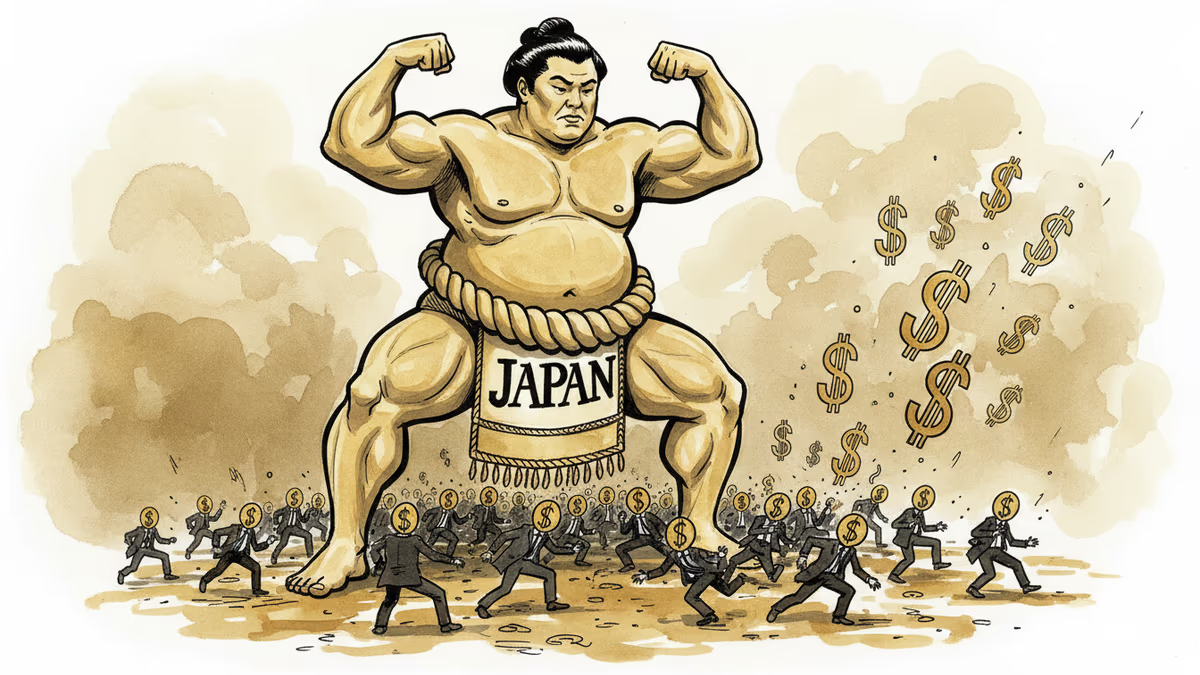
Apollo Global Management CEO Marc Rowan sees Japan as an 'ascendant' market for private credit, calling it more dynamic than London. As Japanese businesses embrace alternative funding, what does this mean for traditional banking?
Viral sensation Punch the monkey has accidentally created a global rush for Ikea's orangutan plushie, raising questions about viral marketing ethics and animal welfare
Yen surged from 157 to 152 after Takaichi's election win, but intervention fears and fiscal uncertainty cloud sustainability. What investors need to know about Japan's currency bounce.
World's largest nuclear plant restarts after 14 years as Japan prioritizes energy security over lingering safety concerns. What's driving this controversial comeback?
Apollo Global Management CEO Marc Rowan sees Japan as an 'ascendant' market for private credit, calling it more dynamic than London. As Japanese businesses embrace alternative funding, what does this mean for traditional banking?
Thoughts
Share your thoughts on this article
Sign in to join the conversation