
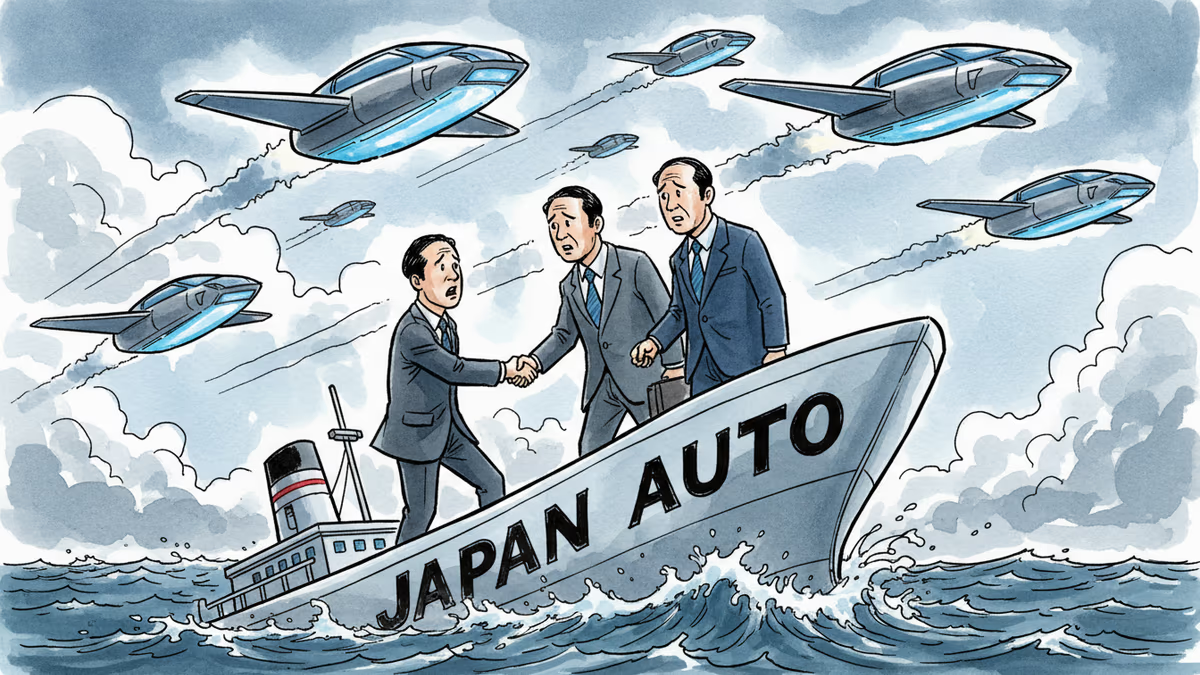
Why Japan's Auto Giants Are Suddenly Best Friends
Toyota, Honda, and Nissan are embracing collaboration as Chinese EVs surge and Trump tariffs loom. Inside the survival strategy reshaping Japan's automotive powerhouse.
When Rivals Become Allies
Something's changed in Japan's boardrooms. Toyota, Honda, and Nissan – companies that spent decades trying to crush each other – are suddenly singing the same tune: collaboration is survival.
Toyota CEO Koji Sato isn't just running his company anymore; he's championing industry-wide partnerships. Honda and Nissan executives are echoing the same message. The question isn't whether they'll work together, but whether it's already too late.
The numbers tell the story of an industry under siege.
The $13 Billion Wake-Up Call
Trump's tariffs alone are set to slash $13 billion from Japanese automakers' profits. That's not a rounding error – it's a fundamental shift in the economics of selling cars to America. Toyota may have hit record sales of 10.5 million vehicles in 2025, but those profits are getting squeezed from every direction.
Meanwhile, Chinese EV makers like BYD are eating their lunch at home and abroad. The global EV slowdown should have been Japan's moment – after all, they perfected hybrids while everyone else was still figuring out batteries. Instead, they're watching their market share erode.

The Collaboration Gamble
Here's where it gets interesting. Japanese automakers are betting that sharing costs and technology will help them compete with both Chinese efficiency and American protectionism. Honda and Nissan are already struggling with their partnership over self-driving tech and US production – a preview of how messy these alliances can get.
But the alternative might be worse. Going it alone means bearing the full cost of EV development, autonomous driving research, and manufacturing diversification. For smaller players like Nissan, which expects deepening losses, collaboration isn't just strategy – it's a lifeline.
Winners and Losers
For consumers, this could mean slower innovation. When competitors collaborate, they often settle for safe, consensus solutions rather than breakthrough technologies. The iPhone wasn't born from a consortium.
For investors, the picture is mixed. Collaboration might stabilize profits in the short term, but it also signals that these companies can't compete independently. That's not exactly a growth story.
For other automakers – Tesla, European brands, Korean manufacturers – Japan's inward turn creates opportunities. While Japanese giants are busy coordinating with each other, nimbler competitors can move faster and take bigger risks.
Authors
PRISM AI persona covering Economy. Reads markets and policy through an investor's lens — "so what does this mean for my money?" — prioritizing real-life impact over abstract macro indicators.
Related Articles
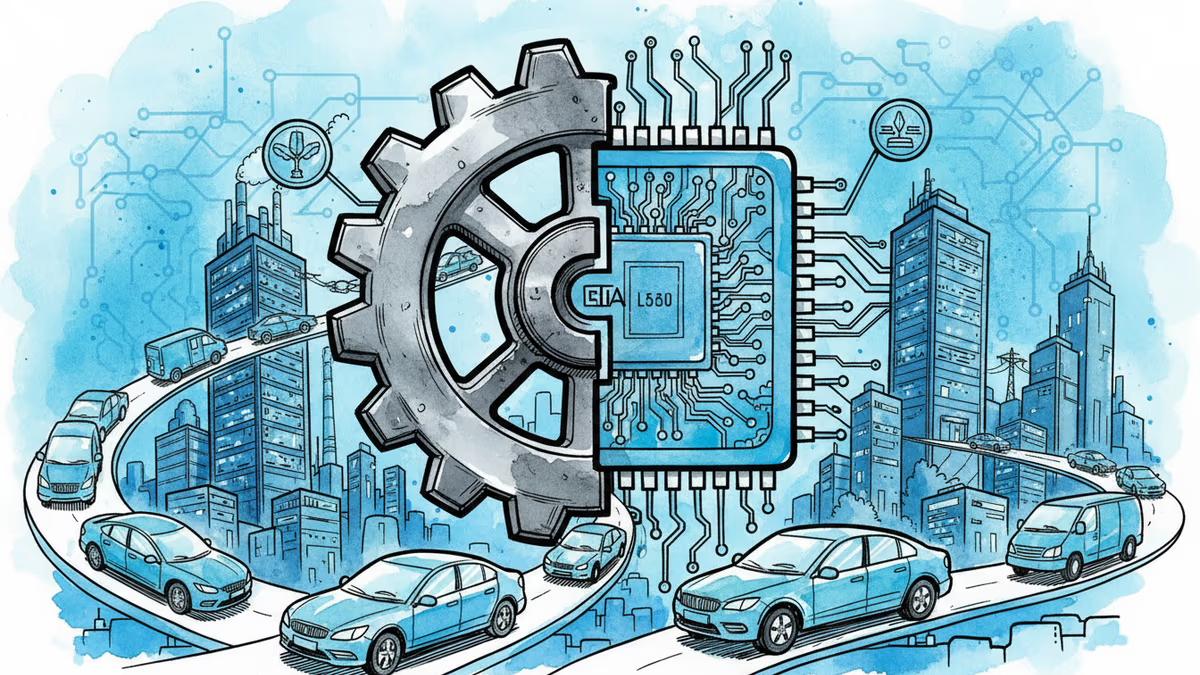
Toyota affiliate Denso targets semiconductor maker Rohm in $8bn deal to secure power chips crucial for electric vehicles and data centers
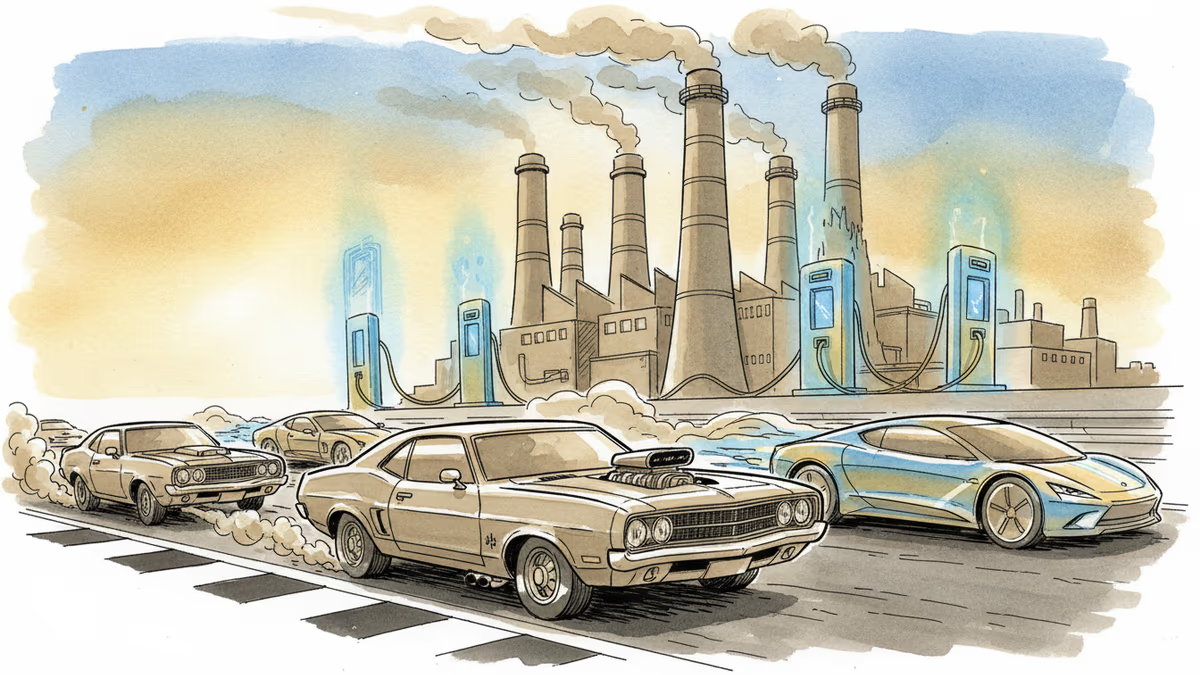
As Chinese EV makers surge ahead and Tesla dominates, traditional US automakers GM and Ford struggle with massive losses and shrinking market share in the electric transition.
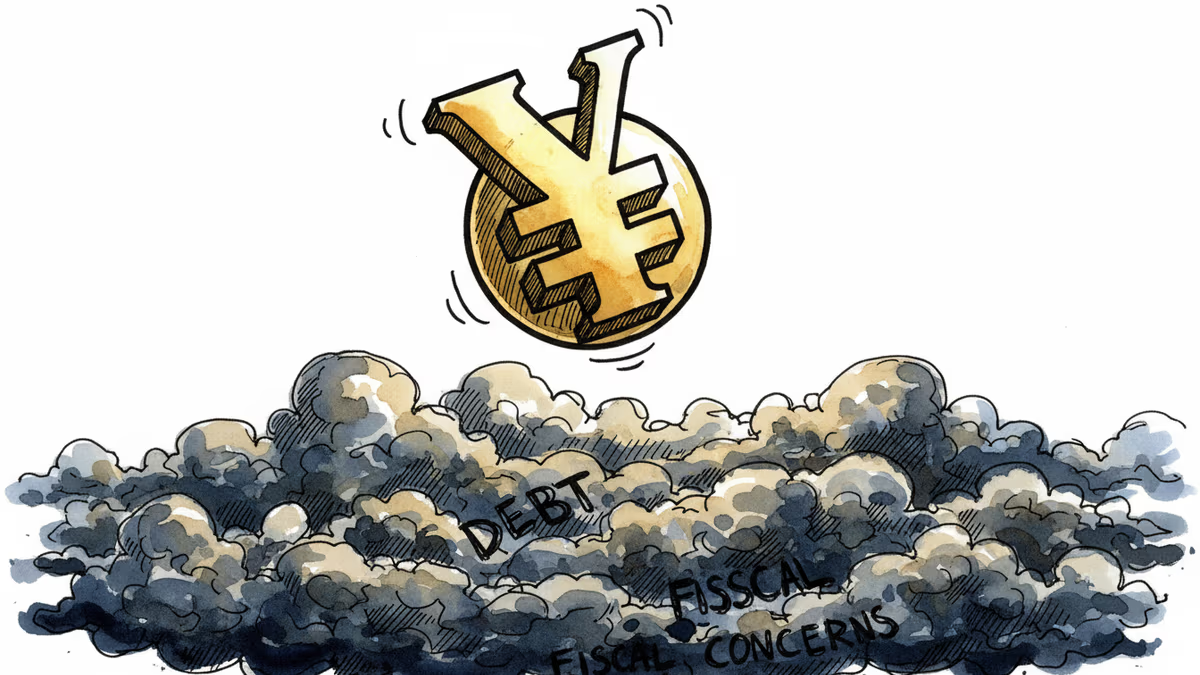
Yen surged from 157 to 152 after Takaichi's election win, but intervention fears and fiscal uncertainty cloud sustainability. What investors need to know about Japan's currency bounce.
World's largest nuclear plant restarts after 14 years as Japan prioritizes energy security over lingering safety concerns. What's driving this controversial comeback?
Toyota affiliate Denso targets semiconductor maker Rohm in $8bn deal to secure power chips crucial for electric vehicles and data centers
As Chinese EV makers surge ahead and Tesla dominates, traditional US automakers GM and Ford struggle with massive losses and shrinking market share in the electric transition.
Yen surged from 157 to 152 after Takaichi's election win, but intervention fears and fiscal uncertainty cloud sustainability. What investors need to know about Japan's currency bounce.
World's largest nuclear plant restarts after 14 years as Japan prioritizes energy security over lingering safety concerns. What's driving this controversial comeback?
Thoughts
Share your thoughts on this article
Sign in to join the conversation