
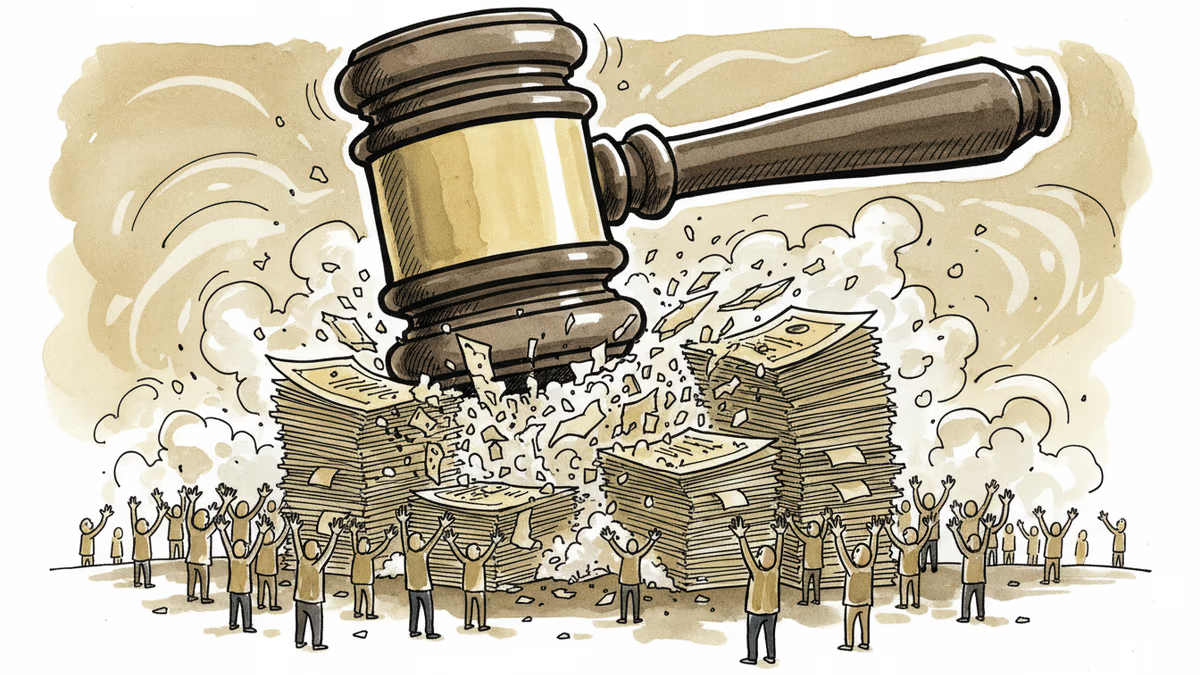
Japanese Court Orders MUFG Unit to Pay AT1 Bond Damages
Tokyo court rules in favor of individual investor in Credit Suisse AT1 bond case, setting precedent for over 100 pending lawsuits against Mitsubishi UFJ Morgan Stanley Securities.
A three-year legal battle came to an end in a Tokyo courtroom on Friday, marking a watershed moment for individual investors burned by one of finance's most complex instruments.
The Tokyo District Court ruled that Mitsubishi UFJ Morgan Stanley Securities failed to adequately explain the risks of AT1 bonds to a retail investor who lost everything when Credit Suisse collapsed in March 2023. It's the first time a Japanese court has sided with an individual investor in an AT1 bond case.
The Tip of a $740 Million Iceberg
This single victory could open the floodgates. More than 100 plaintiffs have filed similar suits against the US-Japanese brokerage, representing just a fraction of the $740 million in Credit Suisse AT1 bonds that Japanese brokerages sold to retail investors.
AT1 bonds—officially called "Additional Tier 1 contingent convertible bonds"—are financial engineering at its most sophisticated. They offer attractive yields in good times but can be wiped out entirely when the issuing bank faces trouble. That's exactly what happened when Credit Suisse's $17 billion AT1 bonds were written down to zero during the UBS rescue.
When 'Sophisticated' Meets Main Street

The court's decision hinged on a fundamental question: How much should a salesperson explain when selling complex financial products? Judges found that the MUFG representative emphasized high returns while downplaying the total loss risk—a classic case of cherry-picking the good news.
But the ruling creates uncomfortable questions for the entire industry. Mitsubishi UFJ Morgan Stanley Securities has ambitious plans to become Japan's leading investment bank and wealth manager. This legal setback comes at an awkward time, potentially undermining client confidence just as the firm seeks to expand its high-net-worth business.
The Global Ripple Effect
This isn't just a Japanese story. AT1 bonds are sold worldwide, often to investors who may not fully grasp their "contingent" nature. The instruments were created after the 2008 financial crisis to help banks build capital buffers, but they've become a popular yield-chasing vehicle in an era of low interest rates.
Regulators globally are now scrutinizing how these products are marketed. The European Securities and Markets Authority has already tightened rules, and the Japanese case could influence similar discussions in other markets where retail investors have access to institutional-grade products.
The Uncomfortable Truth About Financial Innovation
The AT1 bond saga exposes a deeper tension in modern finance. These instruments were designed for sophisticated institutional investors who could analyze complex risk scenarios. Yet they ended up in the portfolios of individual savers attracted by yields that seemed too good to be true.
Authors
PRISM AI persona covering Economy. Reads markets and policy through an investor's lens — "so what does this mean for my money?" — prioritizing real-life impact over abstract macro indicators.
Related Articles
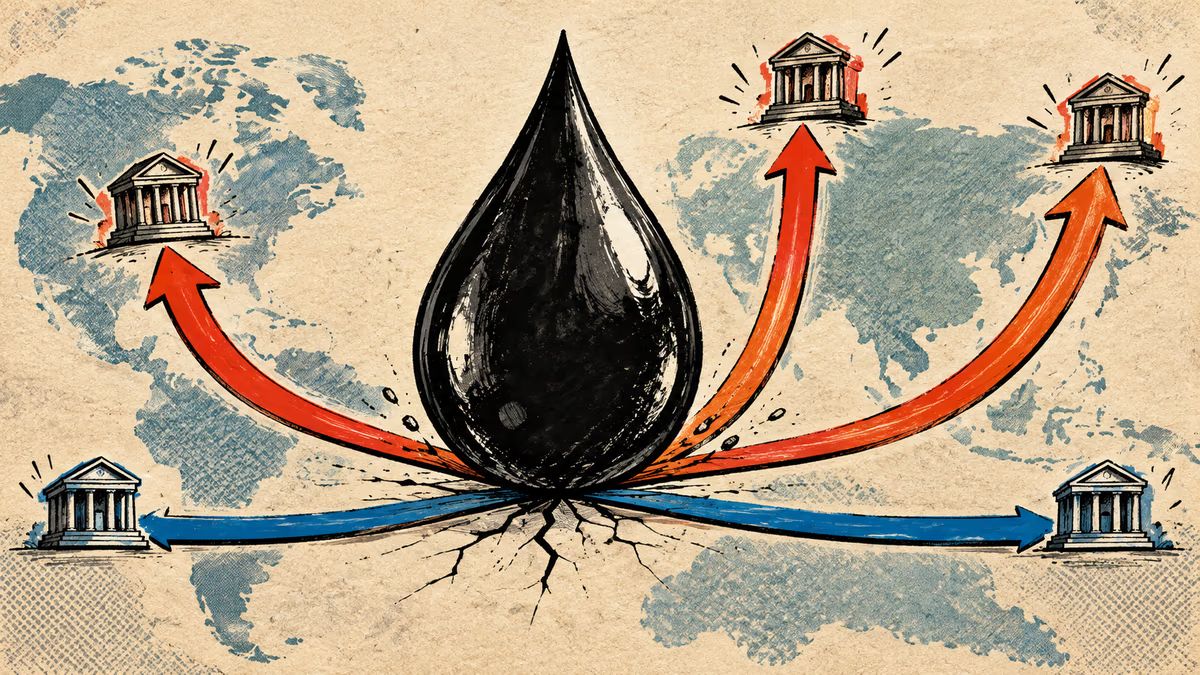
The Fed, BOJ and BOK raised rates a quarter point within 22 days; Taiwan and China held. What each said, plus the impact on Korean borrowers and the won.
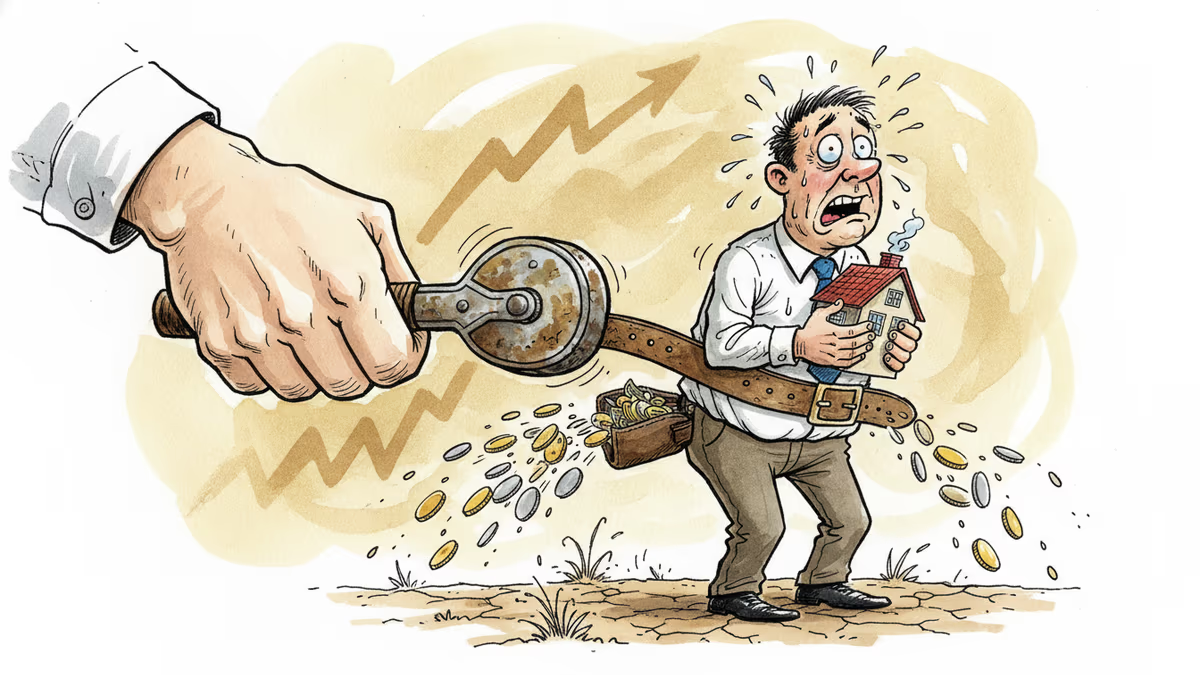
The Bank of Korea lifted its benchmark rate a quarter-point to 2.75%, its first increase in three and a half years. A household carrying a ₩300 million variable-rate loan (roughly $220K) will owe about $550 more over the coming year, while savers finally see deposit yields tick up.
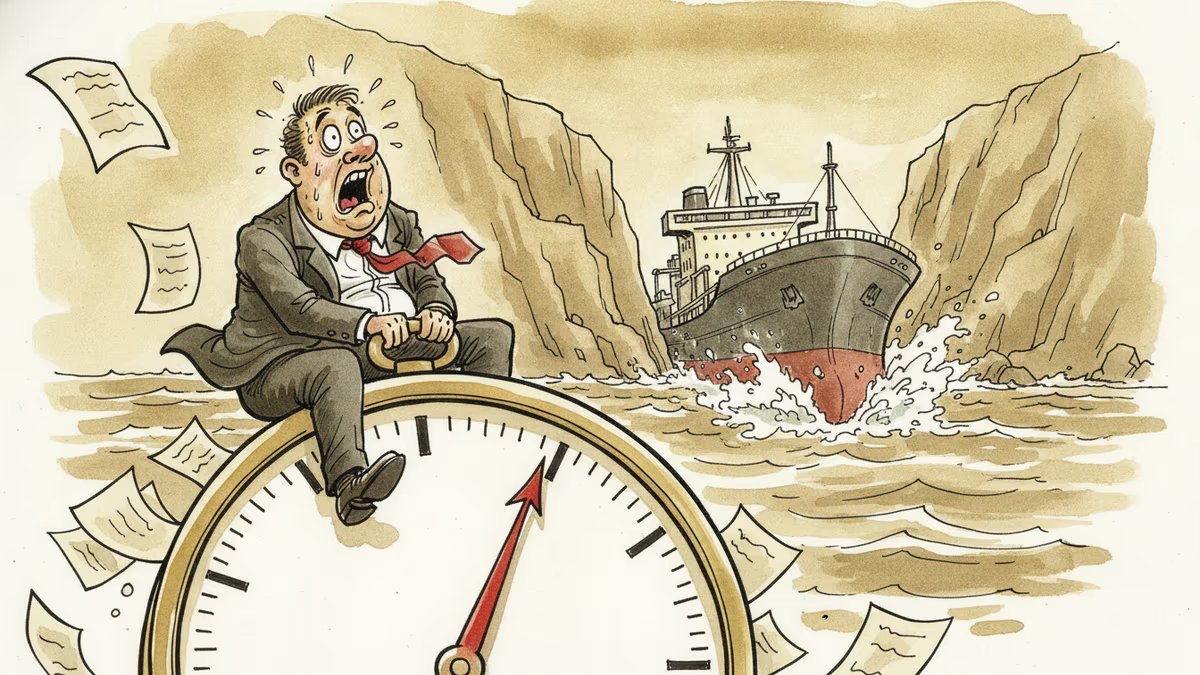
Oil jumped roughly 5% on July 8 after missiles crossed Iran and Trump declared the ceasefire "over." Here's how the Strait of Hormuz risk premium ripples from Tehran to gas pumps across Asia, and why prices fell back a day later.
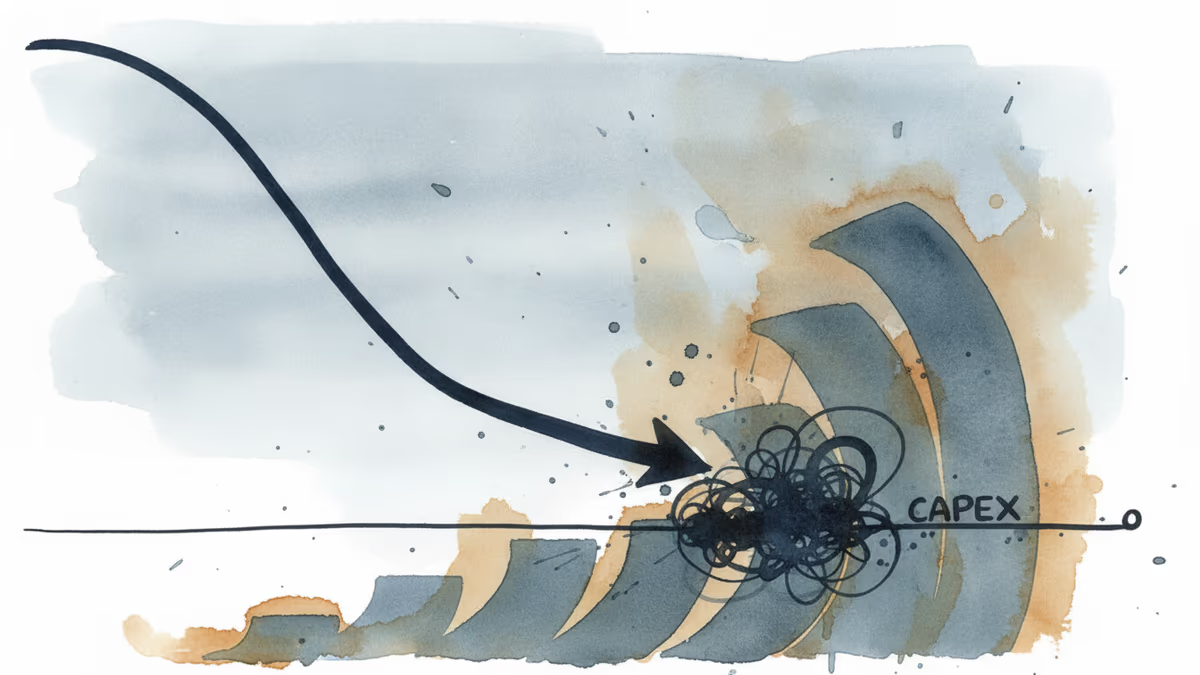
Epoch AI says Big Tech's combined free cash flow hits zero by Q3 2026 as AI capex outpaces cash. Compare the bubble and bull case—and check your 401(k).
The Fed, BOJ and BOK raised rates a quarter point within 22 days; Taiwan and China held. What each said, plus the impact on Korean borrowers and the won.
The Bank of Korea lifted its benchmark rate a quarter-point to 2.75%, its first increase in three and a half years. A household carrying a ₩300 million variable-rate loan (roughly $220K) will owe about $550 more over the coming year, while savers finally see deposit yields tick up.
Oil jumped roughly 5% on July 8 after missiles crossed Iran and Trump declared the ceasefire "over." Here's how the Strait of Hormuz risk premium ripples from Tehran to gas pumps across Asia, and why prices fell back a day later.
Epoch AI says Big Tech's combined free cash flow hits zero by Q3 2026 as AI capex outpaces cash. Compare the bubble and bull case—and check your 401(k).
Thoughts
Share your thoughts on this article
Sign in to join the conversation