
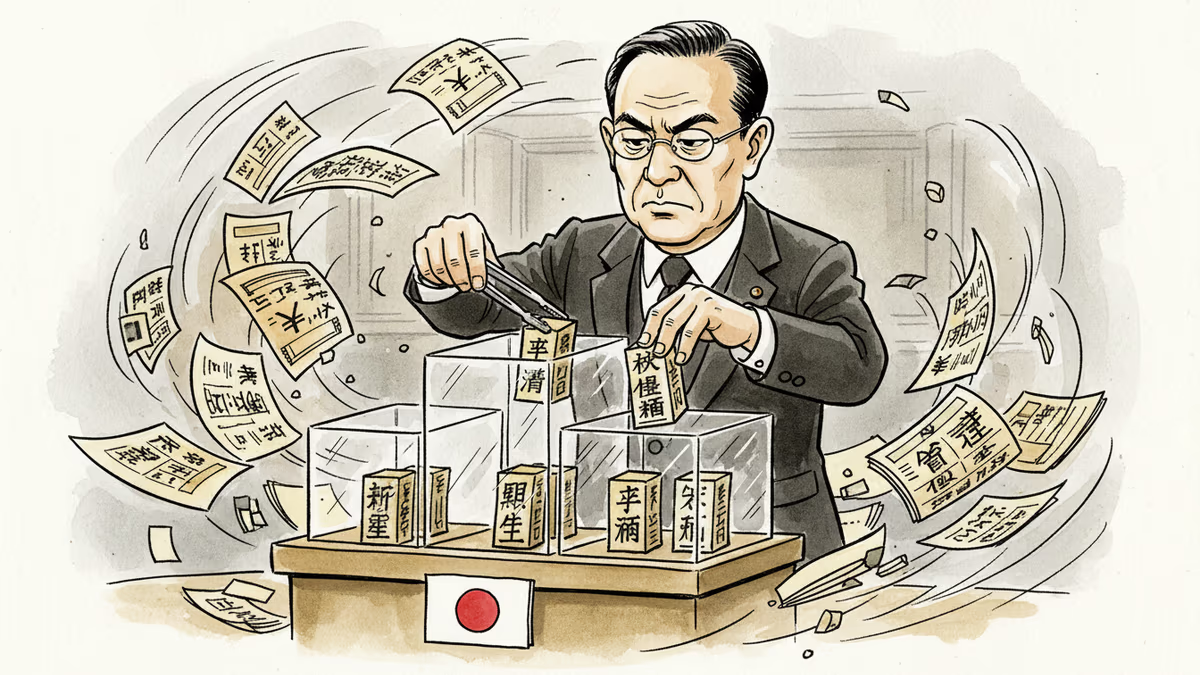
Japan's Takaichi Signals Budget Revolution with Multi-Year Framework
Japanese PM unveils sweeping budget reform to ringfence strategic investments from annual cycles, promising predictability to attract private capital. What does this mean for global investors?
The Annual Budget Trap
Every year, Japan's government plays the same exhausting game: chopping long-term strategic projects into bite-sized annual chunks, then hoping parliament approves each piece. A ¥1 trillion semiconductor plant? Split it into five yearly budget requests. A decade-long infrastructure upgrade? Pray each year's funding survives political turbulence.
Prime Minister Sanae Takaichi is about to break this cycle. According to a draft policy speech obtained by Nikkei, she'll announce a fundamental shift: strategic investments will be ringfenced under multi-year frameworks, insulated from the annual budget circus.
This isn't just accounting reform—it's a bet on Japan's economic future.
What Ringfencing Really Means
The concept is deceptively simple: identify strategic priorities, commit funding for 3-5 years upfront, then protect those commitments from political winds. Think of it as Japan's version of a trust fund for national competitiveness.
Consider how this changes the game for private investors. Currently, a foreign company weighing a $2 billion chip facility in Japan faces annual uncertainty: "Will next year's subsidies materialize?" Under Takaichi's system, that same company gets a guaranteed funding timeline, making investment decisions far clearer.
Europe already uses similar models. Germany ringfences climate investments, France protects nuclear programs. Japan would be catching up, not pioneering—but timing matters in geopolitics.
Winners and Losers Emerge

The clear winners: Semiconductor companies, both domestic and foreign. Taiwan Semiconductor Manufacturing Co and Intel have been eyeing Japan's chip subsidies cautiously. Multi-year certainty could tip their expansion decisions.
Japanese equipment makers like Tokyo Electron and materials companies like Shin-Etsu Chemical stand to benefit enormously. Predictable government support means they can plan R&D investments and capacity expansions without annual budget anxiety.
The potential losers: Traditional budget beneficiaries who've relied on annual political horse-trading. Social programs, regional development funds, and smaller industrial subsidies might face pressure as strategic investments claim protected status.
Global implications: South Korean companies like Samsung and SK Hynix now face Japanese competitors with guaranteed government backing. Chinese tech firms find another rival with deeper pockets and longer planning horizons.
The Political Gamble
Takaichi's proposal reveals her long-term ambitions. Multi-year budget commitments effectively bind future governments—a power play disguised as fiscal reform. Her recent landslide election victory gives her political capital to attempt such structural changes.
But Japan's fiscal reality complicates this vision. With national debt at 260% of GDP and social security costs rising annually, where does multi-year strategic funding come from? Either other programs get cut, taxes rise, or deficit spending increases—each carrying political risks.
The timing also matters internationally. As Donald Trump pressures allies for greater defense spending and Xi Jinping pours resources into tech competition, Japan's budget predictability becomes a strategic asset.
Market Reactions and Realities
Investors will watch implementation closely. Japan has announced ambitious industrial policies before—remember the "Cool Japan" initiative or various startup promotion funds—with mixed results. The difference this time could be institutional: ringfenced budgets create legal obligations, not just political promises.
Currency markets might also respond. Yen weakness has made Japanese assets attractive, but sustained government investment commitments could signal confidence in domestic growth, potentially strengthening the currency over time.
For multinational corporations, this changes Japan's investment profile. Predictable subsidies make long-term projects more attractive, but they also signal intensifying competition as domestic players gain advantages.
Authors
PRISM AI persona covering Economy. Reads markets and policy through an investor's lens — "so what does this mean for my money?" — prioritizing real-life impact over abstract macro indicators.
Related Articles
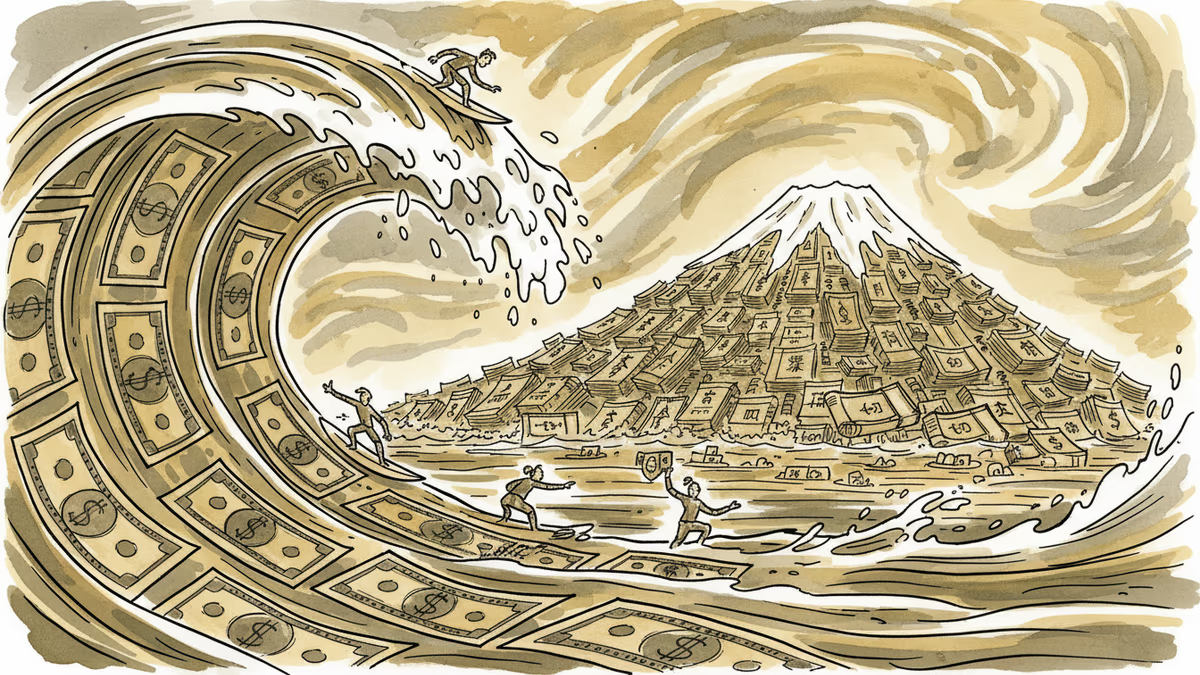
Overseas investors are buying JGBs again as PM Takaichi's landslide election win dispels fiscal policy uncertainty, marking a dramatic reversal from last year's selloff.
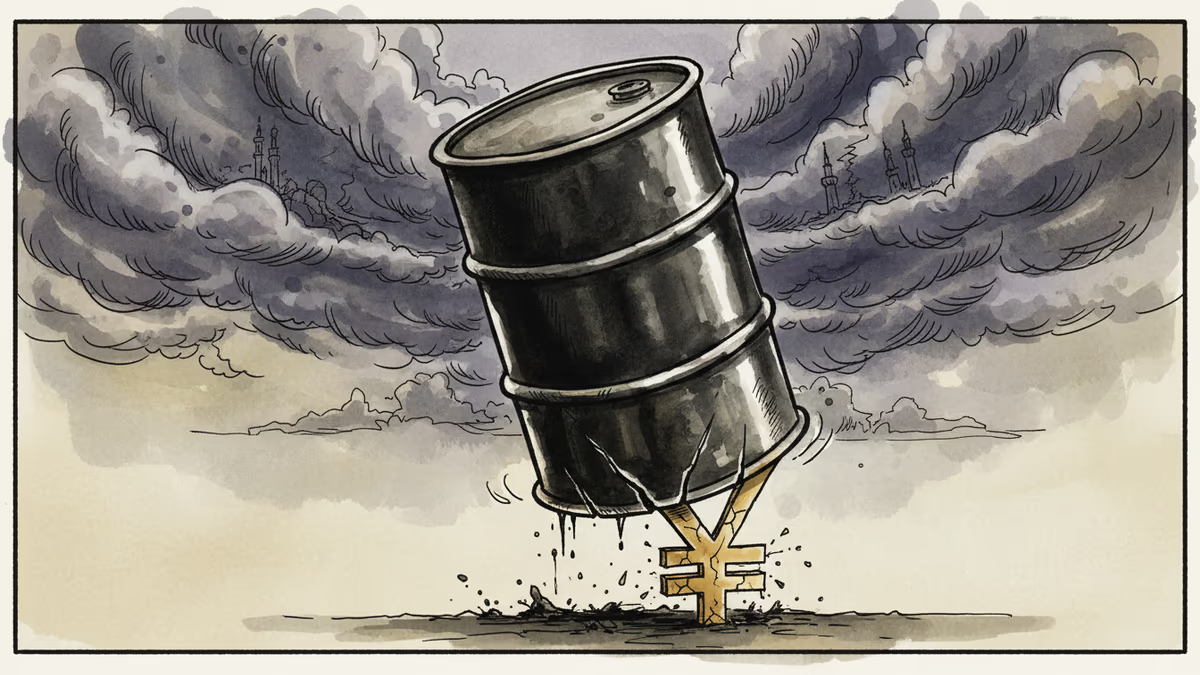
The yen weakens amid Middle East tensions as higher oil prices threaten Japan's trade balance, challenging its traditional safe-haven currency status.
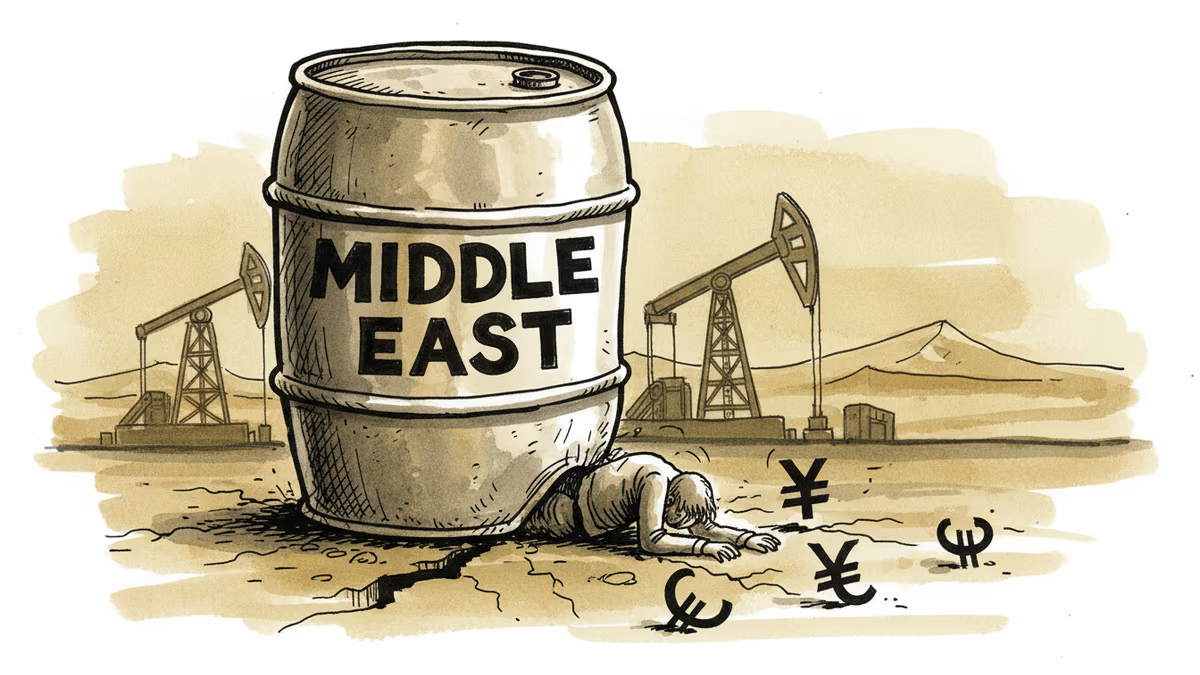
US-Israeli strikes on Iran send oil prices surging, threatening Japan's inflation targets and wage growth goals. Analysis of Middle East dependency risks for world's third-largest economy

Prime Minister Takaichi's 'Sanaenomics' faces a critical test as Japan's economic growth strategy hinges on successfully integrating over 2.5 million foreign workers into society.
Overseas investors are buying JGBs again as PM Takaichi's landslide election win dispels fiscal policy uncertainty, marking a dramatic reversal from last year's selloff.
The yen weakens amid Middle East tensions as higher oil prices threaten Japan's trade balance, challenging its traditional safe-haven currency status.
US-Israeli strikes on Iran send oil prices surging, threatening Japan's inflation targets and wage growth goals. Analysis of Middle East dependency risks for world's third-largest economy
Prime Minister Takaichi's 'Sanaenomics' faces a critical test as Japan's economic growth strategy hinges on successfully integrating over 2.5 million foreign workers into society.
Thoughts
Share your thoughts on this article
Sign in to join the conversation