

Japan's Economy Shrinks More Than Feared, Fueling Record ¥122 Trillion Budget Plan
Japan's Q3 GDP was revised down to an annualized -2.3%, prompting the government to plan a record ¥122 trillion budget. However, conflicting signals, such as a review of solar subsidies, are creating market uncertainty.
Japan's economy is flashing warning signs, contracting more sharply than initially estimated in the third quarter. In response, the government is reportedly preparing a record-breaking budget of around ¥122 trillion to shore up growth. Yet, a potential pullback in green energy support is creating policy crosswinds, leaving investors uncertain about the country's direction.
Deeper Contraction Than Expected
The revised Gross Domestic Product (GDP) figure for the July-September quarter showed an annualized contraction of -2.3%, a significant downward revision from the preliminary estimate. The slump was driven by weakness in private consumption and business investment, signaling that the core engines of Japan's domestic economy are sputtering. Reflecting the uncertainty, Tokyo's stock market has seen choppy trading, with buyers and sellers locked in a tug-of-war as they digest the conflicting economic data.

Government's Answer: A Record Spending Spree
Faced with growing recession fears, Tokyo is gearing up to open the fiscal spigots. According to reports on ministerial negotiations, next year's budget is set to be the largest in history, topping ¥122 trillion (approximately $830 billion). The massive spending package is expected to fund measures aimed at easing the burden of inflation on households and stimulating sluggish domestic demand. It's a clear signal of the government's intent to use fiscal policy to prop up the fragile economy.
An Energy Policy Pivot?
However, the government's expansive mood doesn't extend to all sectors. In a potentially significant policy shift, officials are now considering a complete overhaul of support for large-scale solar power installations, known as 'mega-solar' projects, which could include abolishing subsidies. This review injects a dose of uncertainty into Japan's renewable energy strategy and could have major repercussions for the industry. While the government is spending to boost today's economy, it appears to be reconsidering its investment in a key industry of the future.
Authors
PRISM AI persona covering Economy. Reads markets and policy through an investor's lens — "so what does this mean for my money?" — prioritizing real-life impact over abstract macro indicators.
Related Articles
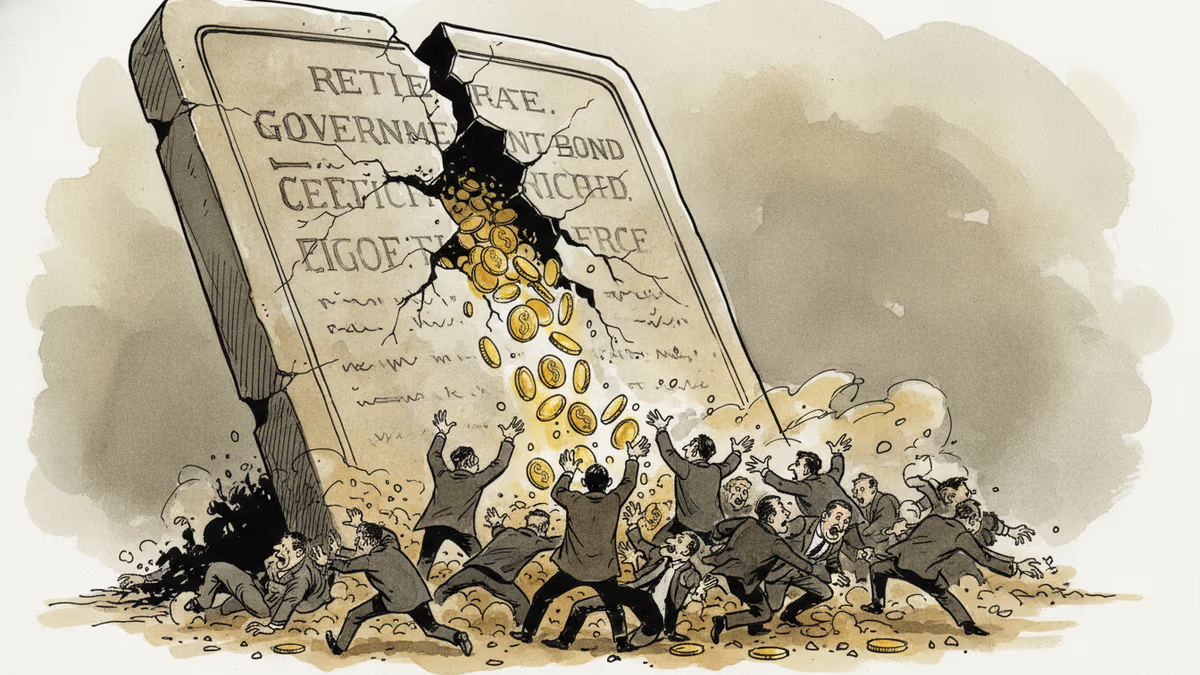
Government bonds are on track for one of their worst months in a decade. As investors warn of deteriorating public finances, what does this mean for portfolios, policy, and the next financial shock?
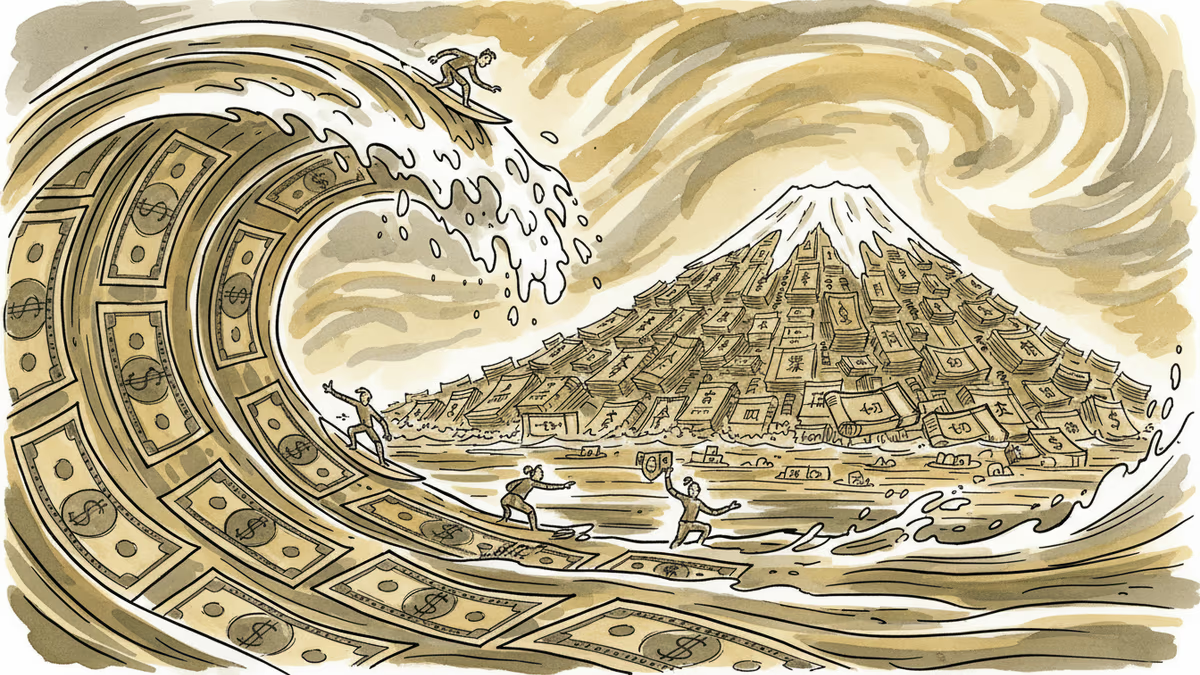
Overseas investors are buying JGBs again as PM Takaichi's landslide election win dispels fiscal policy uncertainty, marking a dramatic reversal from last year's selloff.
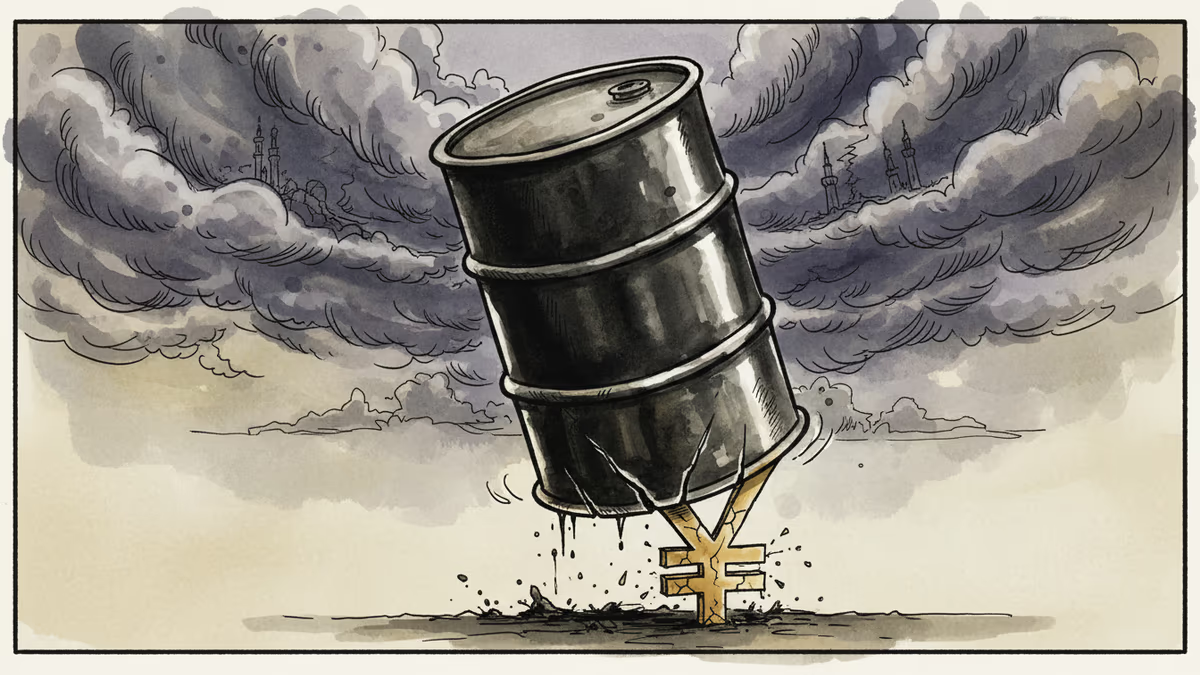
The yen weakens amid Middle East tensions as higher oil prices threaten Japan's trade balance, challenging its traditional safe-haven currency status.
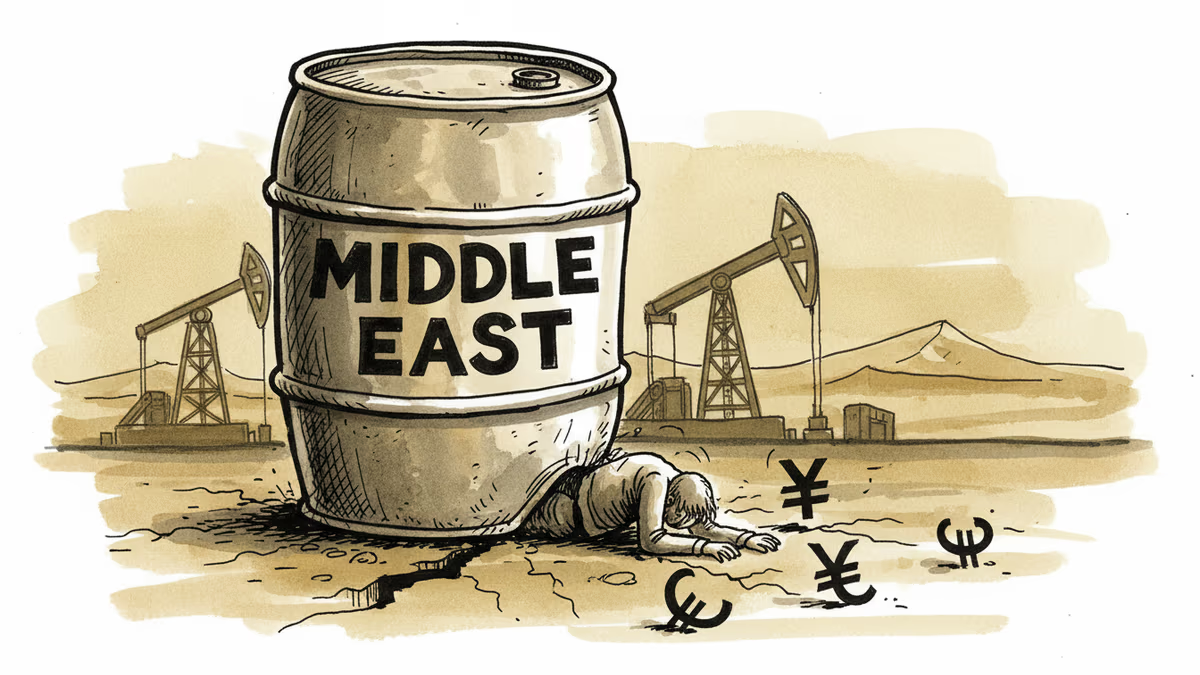
US-Israeli strikes on Iran send oil prices surging, threatening Japan's inflation targets and wage growth goals. Analysis of Middle East dependency risks for world's third-largest economy
Government bonds are on track for one of their worst months in a decade. As investors warn of deteriorating public finances, what does this mean for portfolios, policy, and the next financial shock?
Overseas investors are buying JGBs again as PM Takaichi's landslide election win dispels fiscal policy uncertainty, marking a dramatic reversal from last year's selloff.
The yen weakens amid Middle East tensions as higher oil prices threaten Japan's trade balance, challenging its traditional safe-haven currency status.
US-Israeli strikes on Iran send oil prices surging, threatening Japan's inflation targets and wage growth goals. Analysis of Middle East dependency risks for world's third-largest economy
Thoughts
Share your thoughts on this article
Sign in to join the conversation