
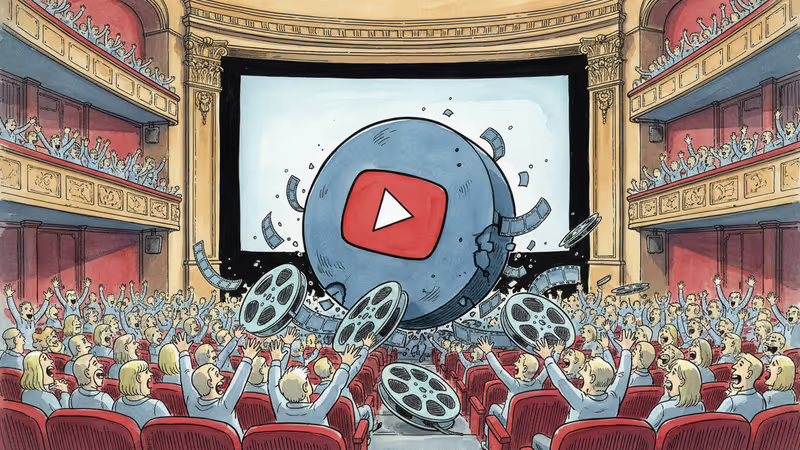
When YouTubers Storm Hollywood: The $20M Wake-Up Call
Iron Lung proves YouTube creators can bypass traditional studios and succeed at the box office. A deep dive into how digital platforms are reshaping film distribution and what it means for the industry.
$20 million at the box office. No major studio backing. No traditional marketing blitz. Just the power of YouTube and a creator who understood how to leverage it. Iron Lung may be a forgettable horror flick by most critical standards, but what it represents could reshape how movies reach audiences forever.
The YouTube-to-Theater Pipeline
The film itself is admittedly modest—a low-budget horror that generates tension without delivering genuine scares. But strip away the cinematic critique, and what emerges is a fascinating case study in modern content distribution. Iron Lung succeeded precisely because it didn't play by Hollywood's rules.
Traditional film distribution operates like a fortress: studios control the gates, theaters depend on their selections, and smaller films fight for scraps of screen time. Meanwhile, blockbusters dominate multiplexes while mid-budget and independent films struggle to find their audience. Iron Lung found a different path entirely.
The film's creator leveraged YouTube's direct creator-to-audience relationship, building anticipation and community around the project long before it hit theaters. This wasn't just marketing—it was relationship-building at scale. When the film finally reached cinemas, it came with a built-in fanbase ready to buy tickets.
The Economics of Disruption
For decades, the film industry has operated on a gatekeeping model. Studios invest millions in production and marketing, theaters provide the venue, and audiences show up hoping for quality content. This system worked when options were limited and attention was scarce.
But YouTube creators operate differently. They've already solved the hardest problem in entertainment: capturing and maintaining audience attention. They've built trust, established regular communication, and created communities around their content. When these creators decide to make movies, they're not starting from zero—they're leveraging years of relationship-building.

The financial implications are staggering. A $20 million box office return without major studio investment suggests dramatically different profit margins. Traditional films often need to earn 2-3 times their production budget just to break even after marketing and distribution costs. YouTube-backed films could potentially profit with much smaller theatrical runs.
Platform Power Meets Creative Ambition
This success story arrives at a crucial moment for the entertainment industry. Streaming services have already disrupted television and film distribution, but they still operate within familiar frameworks—they're essentially digital versions of traditional broadcasters and studios.
YouTube represents something different: a platform where creators maintain direct relationships with their audiences while building sustainable businesses. When these creators expand into traditional media formats, they bring their audiences with them.
The implications extend beyond individual success stories. If YouTube creators can consistently deliver theatrical audiences, it changes the calculus for theater operators, distributors, and even traditional studios. Suddenly, subscriber counts become as relevant as focus group testing, and community engagement metrics matter as much as traditional market research.
The Ripple Effects
For content creators, Iron Lung's success validates the potential for platform-to-theater expansion. But it also raises questions about creative integrity and audience expectations. Will creators feel pressured to make films that cater specifically to their existing fanbase? Or will they use theatrical releases as opportunities to reach new audiences and explore different creative territories?
For traditional industry players, the message is equally complex. Theaters might find themselves courting YouTube creators as eagerly as they pursue studio releases. Distributors may need to develop new frameworks for evaluating and supporting creator-driven projects. Even major studios might start viewing successful YouTube creators as acquisition targets or collaboration partners.
The broader media landscape is watching closely. If other platform-native creators follow suit and find theatrical success, it could accelerate the breakdown of traditional media silos. We might see TikTok creators making feature films, podcast hosts developing television series, or newsletter writers launching streaming shows.
Authors
Related Articles

YouTube's 2025 ad revenue hit $40.4B, surpassing Disney, NBC, Paramount, and Warner Bros. Discovery combined. What this means for advertisers, creators, and the future of media.
Apple's spring video podcast launch isn't just a feature update. It's a strategic play for the **$51 billion** podcasting market that could reshape how creators monetize content.

Apple adds seamless audio-video switching to Podcasts app, challenging YouTube's dominance in video podcasting. What this means for creators, listeners, and the streaming wars.
Google launches official YouTube app for Apple Vision Pro after two years. The timing reveals strategic calculations about the mixed reality market's future.
YouTube's 2025 ad revenue hit $40.4B, surpassing Disney, NBC, Paramount, and Warner Bros. Discovery combined. What this means for advertisers, creators, and the future of media.
Apple's spring video podcast launch isn't just a feature update. It's a strategic play for the **$51 billion** podcasting market that could reshape how creators monetize content.
Apple adds seamless audio-video switching to Podcasts app, challenging YouTube's dominance in video podcasting. What this means for creators, listeners, and the streaming wars.
Google launches official YouTube app for Apple Vision Pro after two years. The timing reveals strategic calculations about the mixed reality market's future.
Thoughts
Share your thoughts on this article
Sign in to join the conversation