

Ireland Spyware Legislation 2026: Lawful Access Bill vs Privacy
Ireland introduces the Communications Bill 2026, aiming to legalize government spyware use for encrypted data. Learn about the new surveillance powers and legal safeguards.
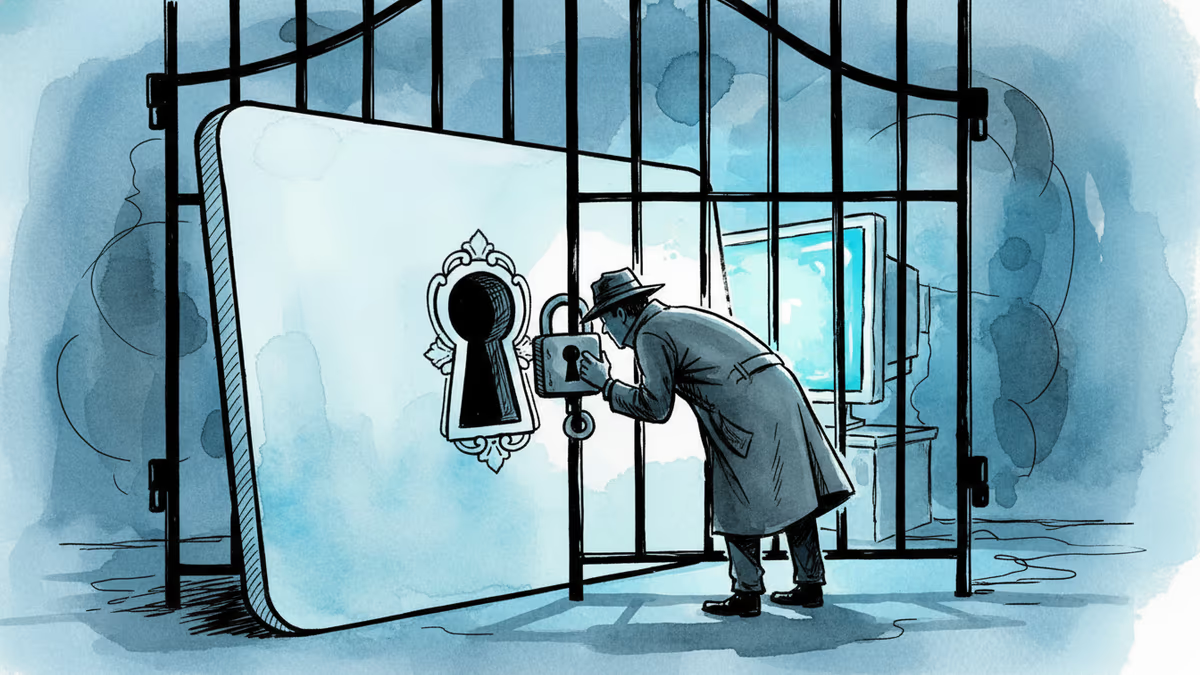
Encryption is no longer a shield in Ireland. The government just signaled a massive shift in digital surveillance, proposing a law that would officially hand police the keys to spyware technology. It's a move that targets the heart of end-to-end encrypted messaging, sparking a fierce debate over state power in the modern age.
Ireland Spyware Legislation 2026: Cracking Encrypted Silence
According to TechCrunch, the Irish government introduced the Communications (Interception and Lawful Access) Bill this week. The legislation aims to regulate the use of high-grade surveillance tools from companies like NSO Group and Intellexa. Jim O’Callaghan, Minister for Justice, stated there's an "urgent need" to update laws that haven't kept pace with 30 years of tech evolution.
- Replacing the 1993 surveillance framework.
- Covering all forms of communication, including encrypted apps.
- Granting access to both content and related metadata.

The European Context of Surveillance Abuse
The bid to legalize spyware comes at a sensitive time for Europe. While Germany and Italy have used similar tech since the early 2000s, recent scandals in Greece and Hungary have highlighted the potential for human rights violations. To counter these concerns, Ireland promises "robust legal safeguards," including mandatory judicial authorization.
However, critics argue that once the infrastructure for "lawful hacking" is built, it's difficult to prevent mission creep. The bill specifically mentions covert surveillance software as an alternative when traditional interception fails—a clear nod to remote hacking tools like Pegasus.
Authors
Related Articles

UK Visa Portal, a private immigration service mistaken for an official government site, has been exposing passport scans and selfies of over 100,000 applicants. The breach remains unpatched.

Pope Leo XIV's first encyclical frames AI not as a technology problem but a power problem. Who controls the algorithm controls reality—and that's a political question, not a spiritual one.
Wisconsin Governor Tony Evers vetoed an age verification bill for adult sites, citing privacy concerns. With 25+ states going the other way, the debate cuts to the heart of online freedom vs. child protection.
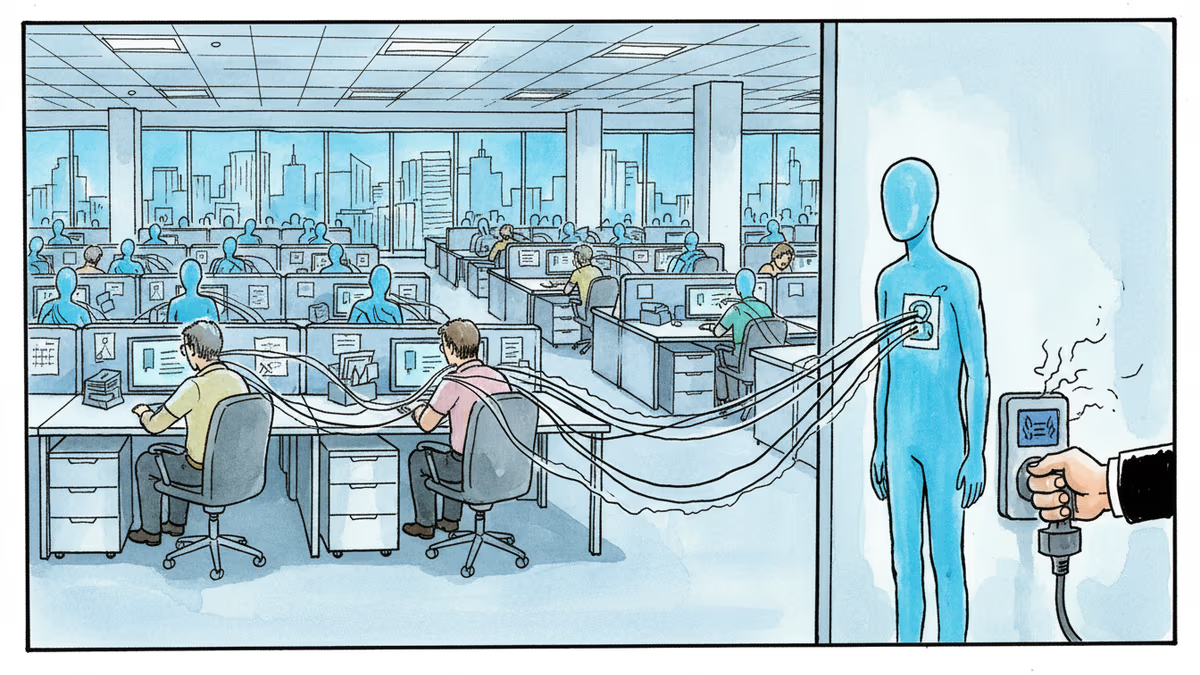
Okta CEO Todd McKinnon on why AI agents need identity management, the SaaSpocalypse threat, and why the kill switch might be the most important button in enterprise tech.
UK Visa Portal, a private immigration service mistaken for an official government site, has been exposing passport scans and selfies of over 100,000 applicants. The breach remains unpatched.
Pope Leo XIV's first encyclical frames AI not as a technology problem but a power problem. Who controls the algorithm controls reality—and that's a political question, not a spiritual one.
Wisconsin Governor Tony Evers vetoed an age verification bill for adult sites, citing privacy concerns. With 25+ states going the other way, the debate cuts to the heart of online freedom vs. child protection.
Okta CEO Todd McKinnon on why AI agents need identity management, the SaaSpocalypse threat, and why the kill switch might be the most important button in enterprise tech.
Thoughts
Share your thoughts on this article
Sign in to join the conversation