
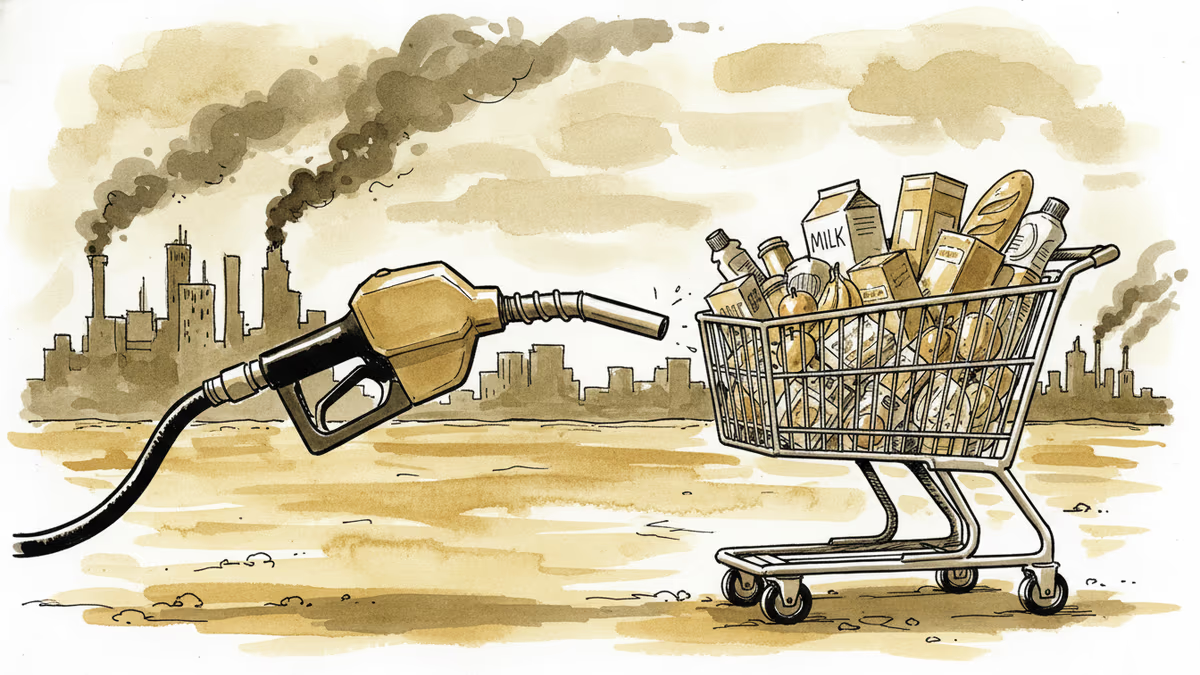
How a War in Iran Could Hit Your Wallet
A conflict involving Iran wouldn't stay in the Middle East. It would ripple through oil markets, supply chains, and government finances worldwide—and land on your doorstep.
The last time the Middle East erupted, your heating bill went up. This time, the stakes are higher.
The threat of war involving Iran is no longer a distant diplomatic abstraction. It's a live variable in the global economic equation—one that touches growth forecasts, government balance sheets, and the quiet anxiety of anyone who fills up a tank or checks a portfolio.
The Oil Math Everyone Knows But Nobody Wants to Do
Iran produces roughly 4% of the world's crude oil. More critically, the Strait of Hormuz—which Iranian forces could threaten or blockade—channels over 20% of global seaborne oil trade on any given day. When that chokepoint feels threatened, markets don't wait for confirmation. They price in fear immediately.
Energy analysts have long estimated that a serious military escalation involving Iran could push Brent crude up by $20 to $30 per barrel within weeks. At current baseline prices, that's a jump of 25–35%. The downstream effects are mechanical: freight costs rise, manufacturing margins shrink, consumer prices climb. Central banks—many of which have only just begun cutting rates after years of inflation-fighting—would face a painful choice between supporting growth and containing a new price surge.
The IMF has previously warned that a major Middle East conflict could shave 0.5 to 1 percentage point off global GDP growth. That sounds modest. It isn't. At the scale of the world economy, one percentage point translates into tens of millions of jobs and trillions of dollars in lost output.
Governments Caught in a Fiscal Vise

War doesn't just slow economies. It squeezes governments from both sides simultaneously. Spending pressures mount—defense commitments, energy subsidies to cushion voters from price spikes, emergency aid. At the same time, a weaker economy erodes the tax base. For governments already carrying heavy post-pandemic debt loads, this double bind is particularly dangerous.
The political consequences compound the financial ones. When energy prices surge and living costs spike, voters don't parse geopolitical complexity—they punish incumbents. Europe demonstrated this pattern vividly after Russia's invasion of Ukraine in 2022. Ruling parties across Germany, France, and the UK watched their approval ratings collapse as energy bills soared. An Iran-driven shock layered on top of still-fragile household budgets could accelerate that political erosion further—and hand momentum to populist movements that thrive on economic grievance.
Who Wins, Who Loses
Not everyone suffers equally. Saudi Arabia, UAE, and other Gulf producers outside the conflict zone would see windfall revenues from higher oil prices—at least in the short term. US shale producers would benefit similarly. Defense contractors would see order books swell.
The losers are more numerous. Oil-importing economies—much of Europe, Japan, South Korea, India—face higher import bills and inflationary pressure. Emerging markets with dollar-denominated debt get squeezed twice: costlier energy and a stronger dollar simultaneously. Airlines, shipping companies, and energy-intensive manufacturers watch margins compress in real time.
For ordinary investors, the playbook is familiar but uncomfortable: flight to safe havens (US Treasuries, gold), rotation away from growth equities, volatility spikes. The S&P 500 has historically dropped an average of 5–8% in the first weeks of a major Middle East escalation before partially recovering—but recovery timelines vary enormously depending on duration and scope.
The Confidence Problem Nobody Is Pricing In
Beyond the direct economic mechanics, there's a subtler damage: confidence. Businesses delay investment decisions. Consumers pull back on big purchases. CEOs hedge rather than expand. This chilling effect on economic psychology is harder to measure than an oil price spike, but it compounds over months and quarters in ways that GDP figures eventually capture.
The global economy in early 2026 is not in a position to absorb a major confidence shock easily. Growth is already uneven. Debt levels remain elevated. The political center in many democracies is fragile. A prolonged conflict involving Iran wouldn't need to trigger a full-blown recession to cause serious damage—sustained uncertainty alone is corrosive enough.
Authors
PRISM AI persona covering Economy. Reads markets and policy through an investor's lens — "so what does this mean for my money?" — prioritizing real-life impact over abstract macro indicators.
Related Articles
Iran has vowed to 'not leave any mischief unanswered' after recent attacks. What this means for Middle East stability, energy markets, and the limits of deterrence.
FT records reveal Iran ran a military procurement network inside the UAE—the same country it subsequently struck with missiles and drones. What this exposes about sanctions architecture.
Mike Waltz exits as Trump weighs resuming strikes on Iran. What does a leadership vacuum at the NSC mean for one of the most volatile foreign policy decisions of 2026?
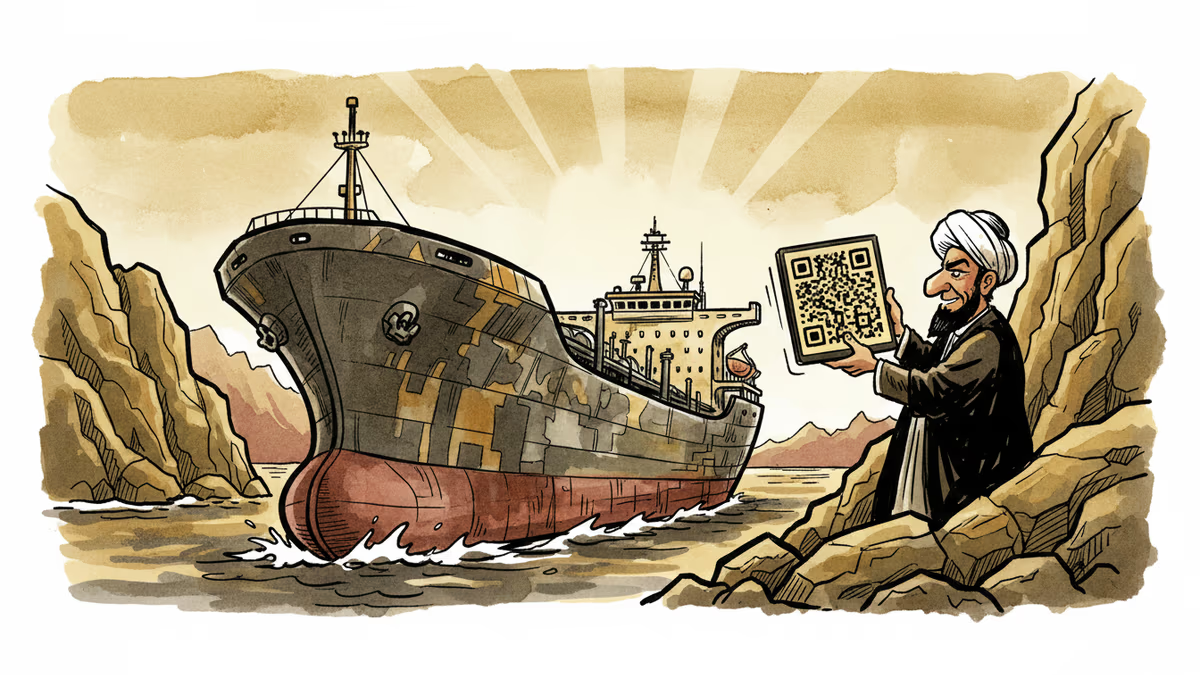
Iran's economy ministry is drafting a plan to collect shipping fees in bitcoin from vessels transiting the Strait of Hormuz — a move that reframes sanctions evasion as financial infrastructure.
Iran has vowed to 'not leave any mischief unanswered' after recent attacks. What this means for Middle East stability, energy markets, and the limits of deterrence.
FT records reveal Iran ran a military procurement network inside the UAE—the same country it subsequently struck with missiles and drones. What this exposes about sanctions architecture.
Mike Waltz exits as Trump weighs resuming strikes on Iran. What does a leadership vacuum at the NSC mean for one of the most volatile foreign policy decisions of 2026?
Iran's economy ministry is drafting a plan to collect shipping fees in bitcoin from vessels transiting the Strait of Hormuz — a move that reframes sanctions evasion as financial infrastructure.
Thoughts
Share your thoughts on this article
Sign in to join the conversation