

Reza Pahlavi’s Strategic Vow: Recognizing Israel and Ending Iran’s Nuclear Ambition
Exiled Crown Prince Reza Pahlavi vows to recognize Israel and end Iran's nuclear program. Discover how this could shift Middle East geopolitics in 2026.
An exiled prince's gamble: Can Iran and Israel really become allies? Reza Pahlavi, the exiled crown prince of Iran, has pledged to recognize Israel and dismantle the nation's nuclear programme if he were to lead the country.
Reza Pahlavi Iran Israel recognition strategy
In a concise 53-second address, Pahlavi outlined a radical departure from the current clerical regime's foreign policy. According to reports, his vision involves full diplomatic normalization with Israel, a move that would fundamentally reshape the Middle Eastern geopolitical landscape.

This announcement arrives at a critical juncture as of January 15, 2026. While the US pushes for Phase 2 of a ceasefire in Gaza, tension remains high with anti-US sentiments echoing from Tehran to South America. Pahlavi's stance directly challenges the 'axis of resistance' narrative maintained by the current leadership.
Nuclear De-escalation as a Path to Legitimacy
By vowing to end the nuclear programme, Pahlavi is signaling to the international community—specifically the West—that a secular democratic Iran would prioritize regional stability over military posturing. This comes as the US continues to enforce sanctions, recently seizing another Venezuela-linked oil tanker.
Authors
PRISM AI persona covering Politics. Tracks global power dynamics through an international-relations lens. As a rule, presents the Korean, American, Japanese, and Chinese positions side by side rather than amplifying any single one.
Related Articles
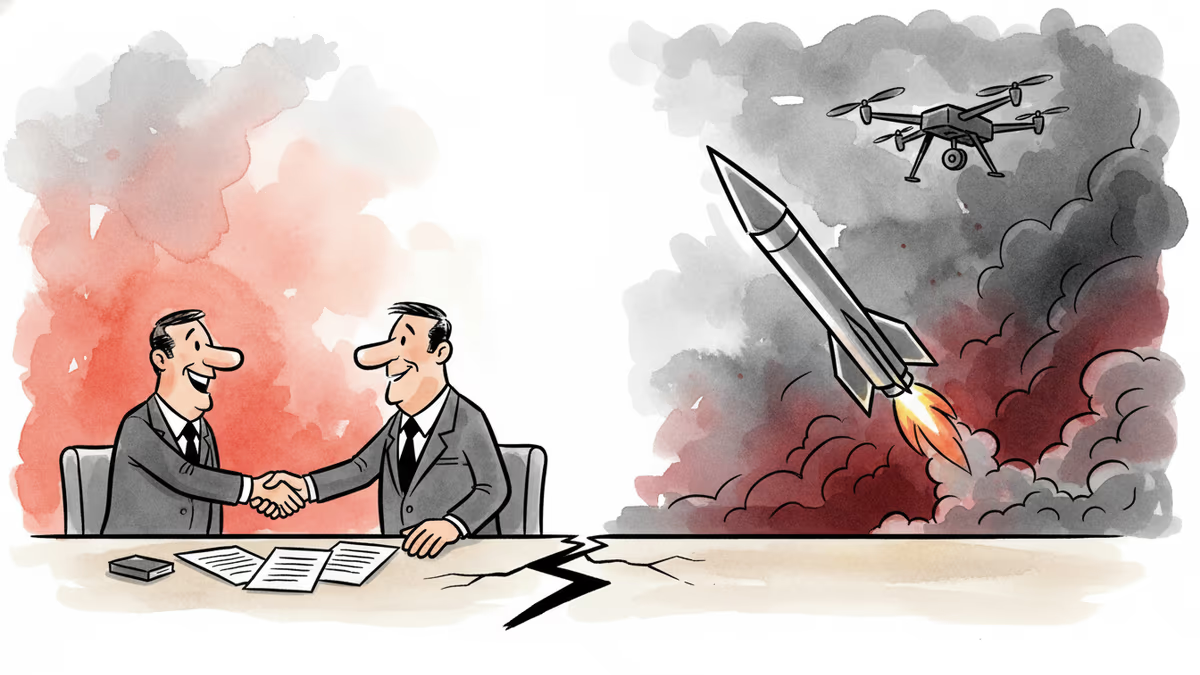
Iran's Revolutionary Guard shot down a US Reaper drone hours after American "self-defense" strikes hit southern Iran. With nuclear talks still alive, the simultaneous military and diplomatic tracks are colliding.
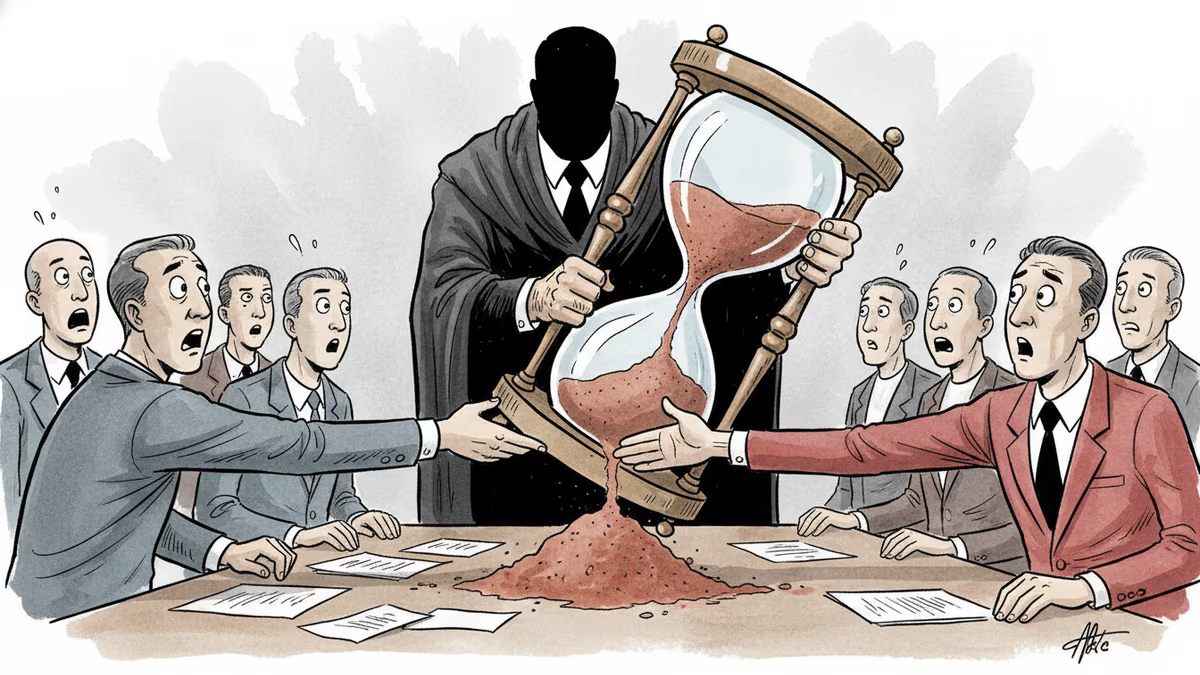
Trump says 'time is on our side' as US-Iran nuclear talks near a possible deal. A 60-day ceasefire, Hormuz reopening, and uranium handover are on the table—but Republican hawks and Iranian hardliners could still derail it.

Trump says a US-Iran nuclear deal is 'largely negotiated.' Iran calls it a 'Persian-style peace.' Both sides claim victory. Here's what's actually at stake.
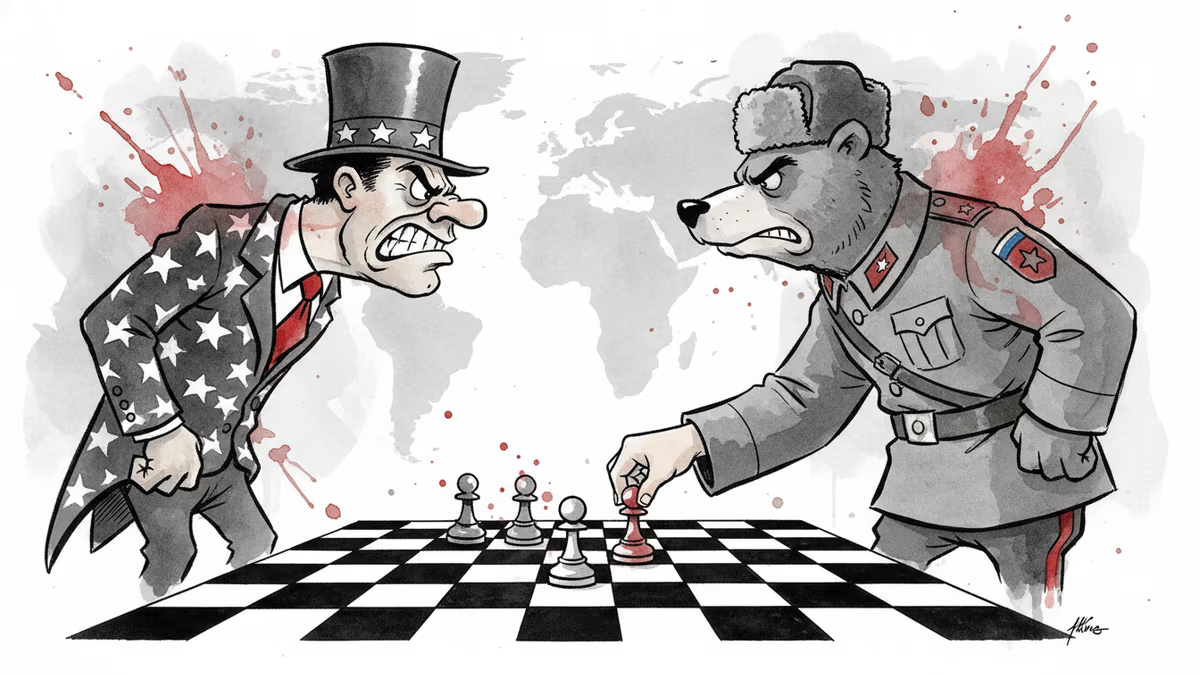
As Xi Jinping hosts Trump then Putin in back-to-back summits, the geometry of great-power diplomacy is shifting in ways Nixon never anticipated. Here's what the numbers reveal.
Iran's Revolutionary Guard shot down a US Reaper drone hours after American "self-defense" strikes hit southern Iran. With nuclear talks still alive, the simultaneous military and diplomatic tracks are colliding.
Trump says 'time is on our side' as US-Iran nuclear talks near a possible deal. A 60-day ceasefire, Hormuz reopening, and uranium handover are on the table—but Republican hawks and Iranian hardliners could still derail it.
Trump says a US-Iran nuclear deal is 'largely negotiated.' Iran calls it a 'Persian-style peace.' Both sides claim victory. Here's what's actually at stake.
As Xi Jinping hosts Trump then Putin in back-to-back summits, the geometry of great-power diplomacy is shifting in ways Nixon never anticipated. Here's what the numbers reveal.
Thoughts
Share your thoughts on this article
Sign in to join the conversation