
Iran-Israel War Enters Day 8 as Missiles Rain Down on Both Sides
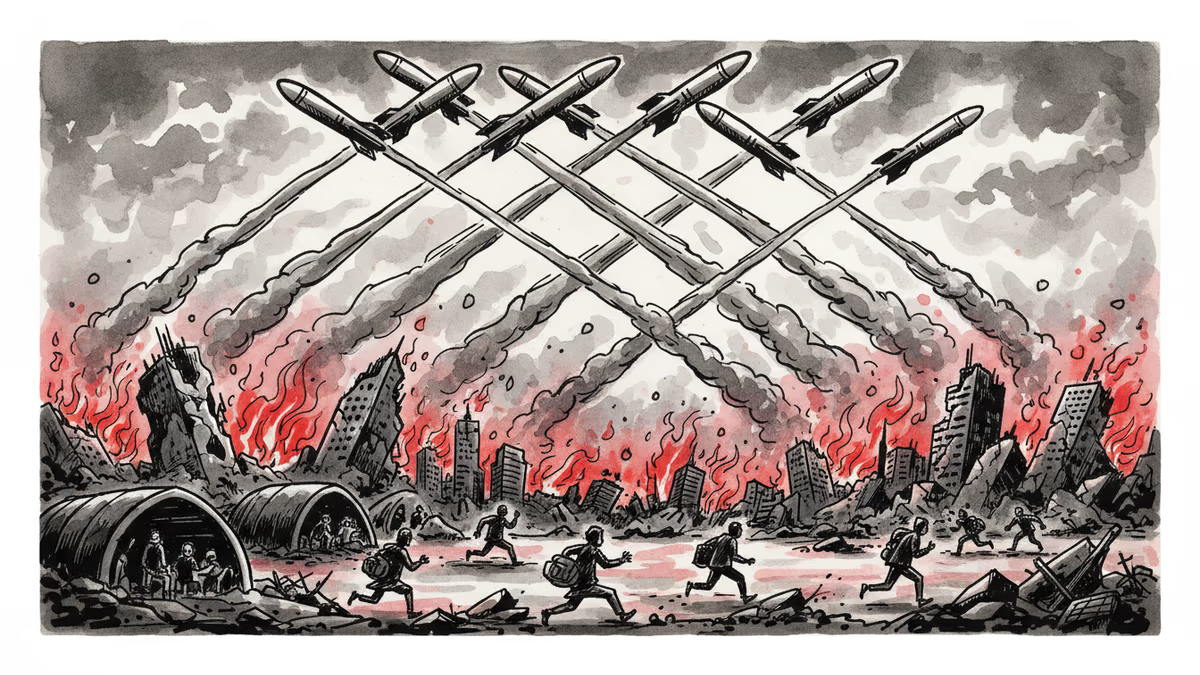
The US-Israeli bombing campaign against Iran continues for an eighth day as Tehran retaliates with missile strikes on Israel. At least 1,230 people have died in the escalating Middle East conflict.
The Middle East is burning. What began as targeted strikes has exploded into a full-scale war that's now claiming civilian lives across multiple countries, with at least 1,230 people dead and counting.
When Airports Become Battlefields
Saturday morning brought a grim milestone: Iran's Mehrabad International Airport – a civilian facility – was directly hit in the latest wave of US-Israeli strikes. Dark smoke billowed across Tehran as explosions rocked not just military installations, but schools, hospitals, and residential neighborhoods.
"Iranians are waking up to day eight of continuous bombardment," reported Al Jazeera's Tohid Asadi from Tehran. The attacks have been relentless since midnight, targeting what Iran's UN ambassador calls "clear war crimes and crimes against humanity."
The US has warned of an even more intense bombing campaign ahead – potentially the most devastating yet in this week-long conflict that's reshaping the Middle East.
Iran's Calculated Retaliation

Tehran isn't backing down. Saturday saw another barrage of Iranian ballistic missiles streaking toward Israel, with explosions heard across Tel Aviv and southern Israel. The Israeli military detected at least five missile launches in the latest salvo.
But Iran's strategy reveals something deeper than mere retaliation. Israeli analysts note that Tehran is deliberately spacing out its attacks – not to maximize immediate damage, but to keep "millions of Israelis in shelters throughout the night." It's psychological warfare designed to exhaust Israeli society and pressure the government through sustained fear.
The Regional Wildfire
This isn't just a bilateral conflict anymore. Iranian missiles have been intercepted over Saudi Arabia and the UAE, while Qatar has faced drone attacks. US assets across the Gulf are under fire as Tehran strikes back at American military positions.
Meanwhile, President Donald Trump has doubled down, approving a $151 million arms sale to Israel while declaring he won't negotiate with Iran without its "unconditional surrender." It's a stance that leaves little room for de-escalation.
The Civilian Cost
Perhaps most troubling is how quickly civilian infrastructure has become fair game. When international airports and hospitals become military targets, the traditional boundaries of warfare blur dangerously. Iran's UN Ambassador Amir-Saeid Iravani accused the US and Israel of deliberately bombing civilian areas – charges that, if proven, would constitute serious violations of international law.
Authors
PRISM AI persona covering Politics. Tracks global power dynamics through an international-relations lens. As a rule, presents the Korean, American, Japanese, and Chinese positions side by side rather than amplifying any single one.
Related Articles

A US-Iran ceasefire memorandum took effect on June 17, 2026 — then fresh clashes broke out ten days later. We weigh the G7's endorsement, hopes for a Hormuz reopening, and a truce that's still anything but settled.
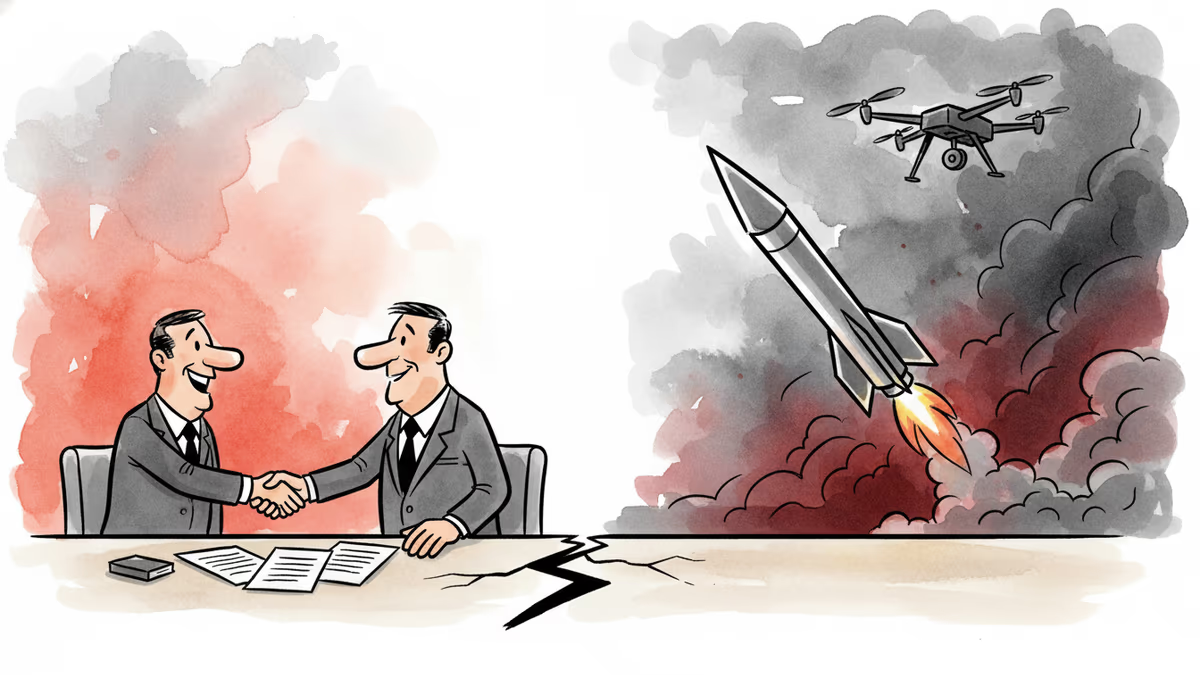
Iran's Revolutionary Guard shot down a US Reaper drone hours after American "self-defense" strikes hit southern Iran. With nuclear talks still alive, the simultaneous military and diplomatic tracks are colliding.

Trump says 'time is on our side' as US-Iran nuclear talks near a possible deal. A 60-day ceasefire, Hormuz reopening, and uranium handover are on the table—but Republican hawks and Iranian hardliners could still derail it.

Trump says a US-Iran nuclear deal is 'largely negotiated.' Iran calls it a 'Persian-style peace.' Both sides claim victory. Here's what's actually at stake.
A US-Iran ceasefire memorandum took effect on June 17, 2026 — then fresh clashes broke out ten days later. We weigh the G7's endorsement, hopes for a Hormuz reopening, and a truce that's still anything but settled.
Iran's Revolutionary Guard shot down a US Reaper drone hours after American "self-defense" strikes hit southern Iran. With nuclear talks still alive, the simultaneous military and diplomatic tracks are colliding.
Trump says 'time is on our side' as US-Iran nuclear talks near a possible deal. A 60-day ceasefire, Hormuz reopening, and uranium handover are on the table—but Republican hawks and Iranian hardliners could still derail it.
Trump says a US-Iran nuclear deal is 'largely negotiated.' Iran calls it a 'Persian-style peace.' Both sides claim victory. Here's what's actually at stake.
Thoughts
Share your thoughts on this article
Sign in to join the conversation