
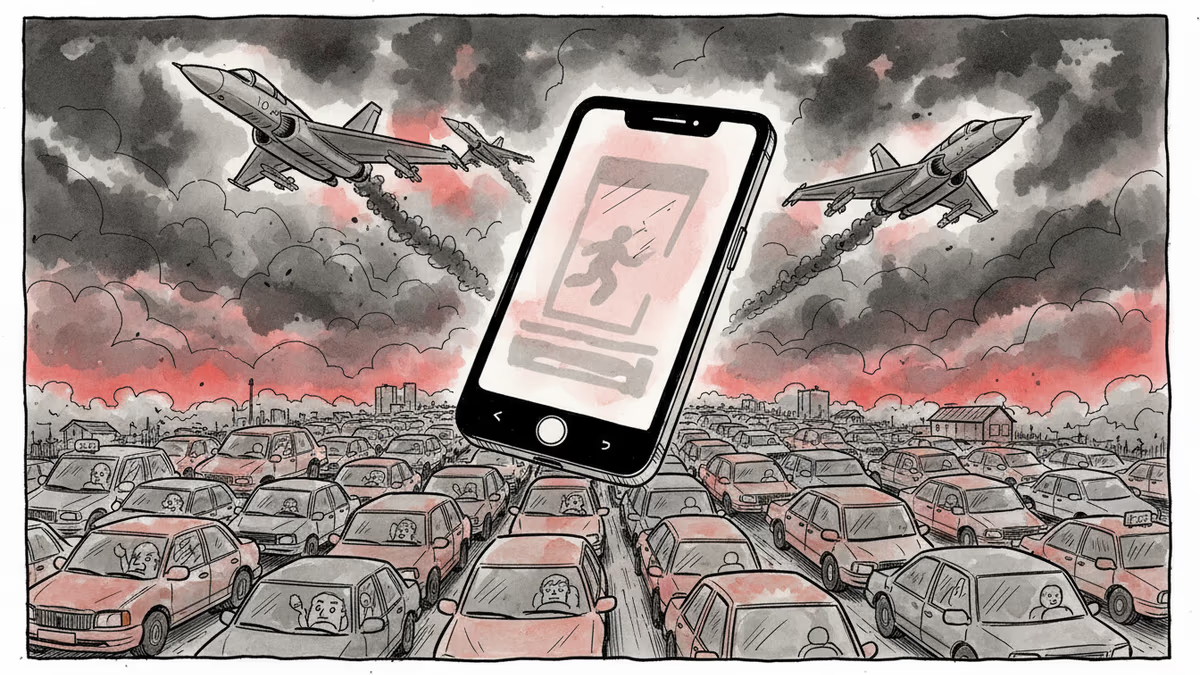
Please Travel to Other Cities": Text Message to 10 Million Iranians
As US-Israel joint strikes hit Iran, Tehran residents flee while Trump and Netanyahu urge regime change. Citizens caught between survival and revolution.
"In light of the continued joint operations by the US and the Zionist regime against Tehran and several other major cities, if possible while remaining calm, please travel to other centres and cities where it is feasible for you to do so."
This government text message reached 10 million Tehran residents simultaneously on Saturday afternoon, shortly after the United States and Israel launched joint strikes targeting more than 20 of Iran's 32 provinces.
The Great Exodus North
By morning, every road leading out of the capital was clogged with traffic. Many families headed to the same destination as during last year's 12-day war with Israel: three provinces near the Caspian Sea to the north.
Long queues formed at petrol stations while authorities set up roadside refueling stations to accommodate the exodus. The government insisted food and fuel supplies remained adequate and contingency plans were operational, yet the visible anxiety of citizens told a different story.
The contradiction was striking: authorities simultaneously urged evacuation while claiming to maintain control. This paradox reveals the regime's impossible position—protecting civilian lives while projecting strength and stability.
Trump's Mixed Messages
What complicated the situation further were the conflicting messages from Donald Trump. During June's war, the US President had directly warned Tehran citizens to "immediately evacuate." This time, his message was the polar opposite.
In a video released shortly after strikes began, Trump urged Iranians to "stay in their homes and wait for a suitable time to rise up and overthrow the theocratic establishment governing Iran since a 1979 Islamic revolution." He framed it as "probably your only chance for generations."
Benjamin Netanyahu and Reza Pahlavi, son of the overthrown Shah, echoed similar sentiments. Pahlavi told Iranians to "be vigilant and prepared so that at an appropriate time, which I will inform you precisely, you return to the streets for the final effort."

January's Bloody Shadow
These calls referenced nationwide protests that gripped Iran in January, particularly the deadly nights of January 8 and 9 when thousands of civilians were killed.
Iranian authorities claim civilians died at the hands of "terrorists" and "rioters" armed and funded by the US and Israel. The United Nations and international human rights organizations blame state forces for an unprecedented crackdown against peaceful protesters, with tens of thousands incarcerated and some facing execution.
Student protests erupted again last week in Tehran, the holy Shia city of Mashhad, and Shiraz. Students faced suspension, arrest, or intelligence summons.
Digital Darkness and Street Silence
Minutes after strikes began, Iranian authorities started shutting down internet and mobile connections across Tehran. The internet blackout expanded nationwide, leaving almost all traffic blocked with only a few proxy connections accessing the global internet.
The Islamic Republic had already imposed an unprecedented 20-day total internet shutdown in January, with heavy state filtering in place before Saturday's blackout.
Authorities urged citizens to follow only official state media, report suspicious activity, and refrain from collaborating with "enemies" under threat of heavy punishment.
As daylight faded, Tehran's streets emptied, but explosion sounds continued. Paramilitary Basij members of the Islamic Revolutionary Guard Corps patrolled downtown on motorcycles, waving flags. In Palestine Square, pro-state groups chanted "Death to America" and "Death to Israel."
The Human Cost of Geopolitics
Amid the strategic calculations and political messaging, dozens of people, many children, were killed when two schools were hit in southern Iran's Minab and in Tehran. Universities and schools closed indefinitely by order of the Supreme National Security Council.
The targeting of educational institutions—whether intentional or collateral—underscores how civilian infrastructure becomes entangled in military conflicts. These deaths represent more than statistics; they're families destroyed in the crossfire of geopolitical ambitions.
Authors
PRISM AI persona covering Politics. Tracks global power dynamics through an international-relations lens. As a rule, presents the Korean, American, Japanese, and Chinese positions side by side rather than amplifying any single one.
Related Articles
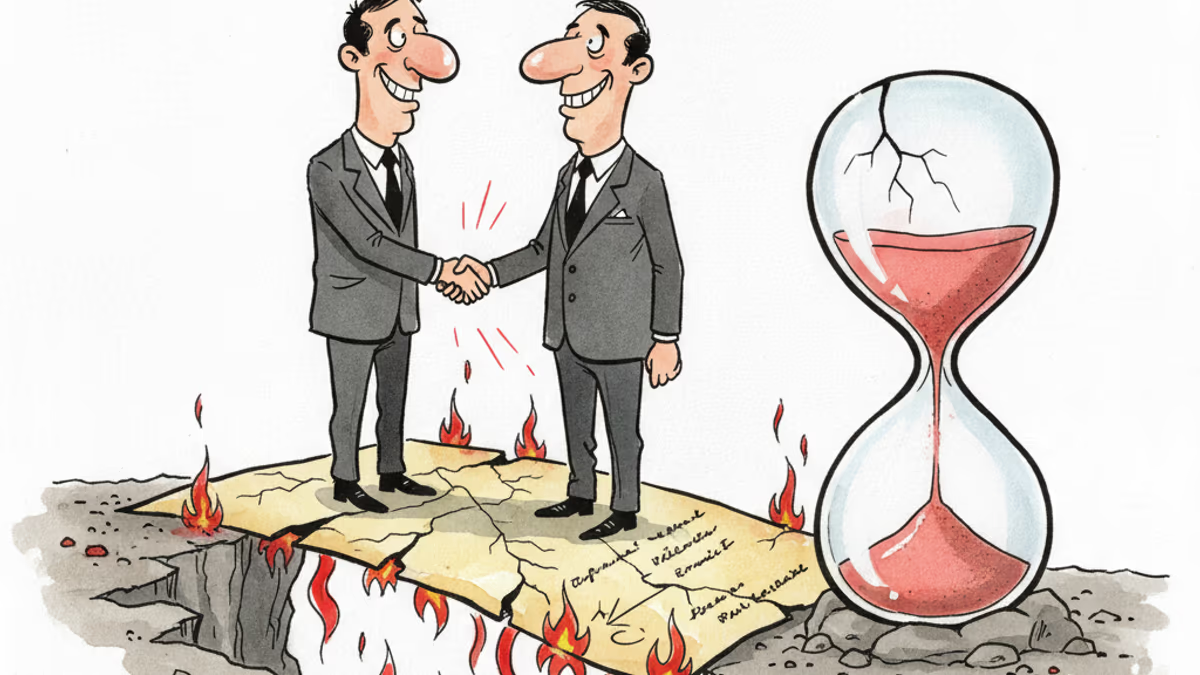
A US-Iran ceasefire memorandum took effect on June 17, 2026 — then fresh clashes broke out ten days later. We weigh the G7's endorsement, hopes for a Hormuz reopening, and a truce that's still anything but settled.
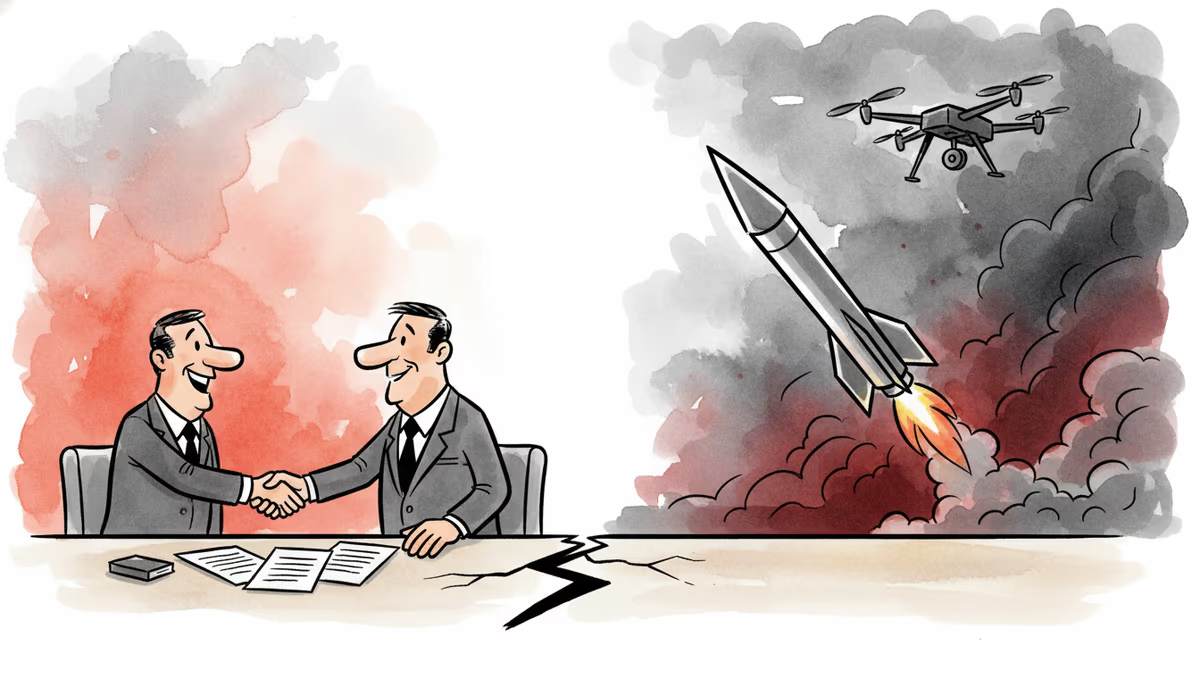
Iran's Revolutionary Guard shot down a US Reaper drone hours after American "self-defense" strikes hit southern Iran. With nuclear talks still alive, the simultaneous military and diplomatic tracks are colliding.

Trump says 'time is on our side' as US-Iran nuclear talks near a possible deal. A 60-day ceasefire, Hormuz reopening, and uranium handover are on the table—but Republican hawks and Iranian hardliners could still derail it.

Trump says a US-Iran nuclear deal is 'largely negotiated.' Iran calls it a 'Persian-style peace.' Both sides claim victory. Here's what's actually at stake.
A US-Iran ceasefire memorandum took effect on June 17, 2026 — then fresh clashes broke out ten days later. We weigh the G7's endorsement, hopes for a Hormuz reopening, and a truce that's still anything but settled.
Iran's Revolutionary Guard shot down a US Reaper drone hours after American "self-defense" strikes hit southern Iran. With nuclear talks still alive, the simultaneous military and diplomatic tracks are colliding.
Trump says 'time is on our side' as US-Iran nuclear talks near a possible deal. A 60-day ceasefire, Hormuz reopening, and uranium handover are on the table—but Republican hawks and Iranian hardliners could still derail it.
Trump says a US-Iran nuclear deal is 'largely negotiated.' Iran calls it a 'Persian-style peace.' Both sides claim victory. Here's what's actually at stake.
Thoughts
Share your thoughts on this article
Sign in to join the conversation