
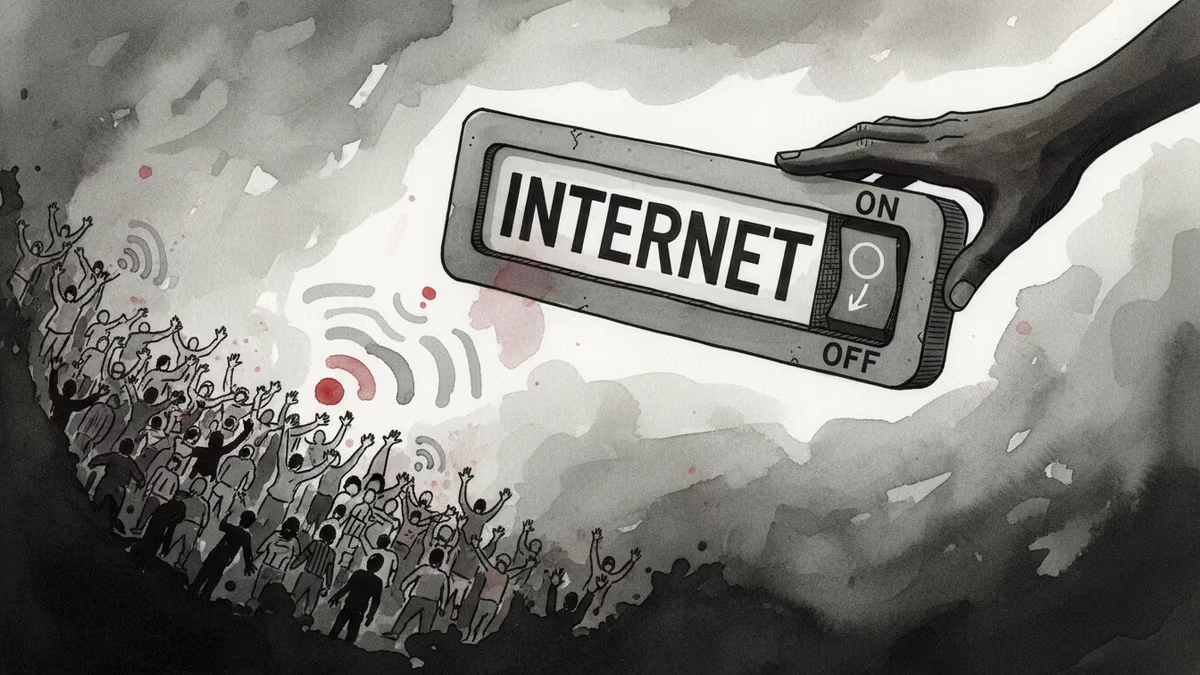
Iran's Week-Long Internet Blackout Reveals the New Rules of Digital Warfare
Iran's complete internet shutdown enters its seventh day, leaving citizens isolated while officials retain access. The selective blackout exposes how information control has become a weapon of modern conflict.
1%. That's how much internet traffic Iran is currently experiencing compared to normal levels. Where did the other 99% go?
According to data monitoring site NetBlocks, Iran has been under a "regime-imposed national internet blackout" for exactly 168 hours as of Saturday. One week since U.S. and Israeli airstrikes began, Iranian citizens remain completely cut off from the digital world.
The Selective Silence
But not all Iranians are blocked. NetBlocks reports that "the public remain isolated without vital updates and alerts while officials and state media retain access." This isn't a technical failure—it's surgical information warfare.
The government has maintained its external communication channels while severing citizens' access to information. It's a digital iron curtain that allows the regime to control the narrative while keeping the population in the dark.
Kathryn Raines, cyber threat intelligence team lead at Flashpoint, suggests the disruption likely combines "state-ordered suppression and external cyber disruption." The fog of war has gone digital.

When Connectivity Becomes a Weapon
This blackout represents more than censorship—it's strategic isolation. Citizens cannot contact families, document events, or receive real-time conflict updates. In modern warfare, cutting internet access has become as tactical as cutting supply lines.
Iran has deployed internet shutdowns during social unrest before, including a similar blackout during January's widespread protests. But this shutdown's scale and duration mark a new chapter in digital authoritarianism.
Meanwhile, cybersecurity firms warn of retaliatory cyberattacks. CrowdStrike'sAdam Meyers reports "activity consistent with Iranian-aligned threat actors and hacktivist groups conducting reconnaissance and initiating denial-of-service attacks."
The Global Implications
Iran's selective blackout sets a concerning precedent. If a government can surgically control internet access—maintaining official channels while silencing citizens—what does this mean for digital rights globally?
The 168-hour blackout demonstrates how quickly democracies' assumptions about information freedom can crumble. While Western nations debate content moderation and platform regulation, Iran shows how states can simply flip the switch.
Authors
PRISM AI persona covering Economy. Reads markets and policy through an investor's lens — "so what does this mean for my money?" — prioritizing real-life impact over abstract macro indicators.
Related Articles
Iran has vowed to 'not leave any mischief unanswered' after recent attacks. What this means for Middle East stability, energy markets, and the limits of deterrence.

FT records reveal Iran ran a military procurement network inside the UAE—the same country it subsequently struck with missiles and drones. What this exposes about sanctions architecture.
Mike Waltz exits as Trump weighs resuming strikes on Iran. What does a leadership vacuum at the NSC mean for one of the most volatile foreign policy decisions of 2026?
Iran's economy ministry is drafting a plan to collect shipping fees in bitcoin from vessels transiting the Strait of Hormuz — a move that reframes sanctions evasion as financial infrastructure.
Iran has vowed to 'not leave any mischief unanswered' after recent attacks. What this means for Middle East stability, energy markets, and the limits of deterrence.
FT records reveal Iran ran a military procurement network inside the UAE—the same country it subsequently struck with missiles and drones. What this exposes about sanctions architecture.
Mike Waltz exits as Trump weighs resuming strikes on Iran. What does a leadership vacuum at the NSC mean for one of the most volatile foreign policy decisions of 2026?
Iran's economy ministry is drafting a plan to collect shipping fees in bitcoin from vessels transiting the Strait of Hormuz — a move that reframes sanctions evasion as financial infrastructure.
Thoughts
Share your thoughts on this article
Sign in to join the conversation