
Iran's Drone Economics: Fighting Wars on a Budget
As US and Israel target missile launchers, Iran shifts to cheap drone swarms. The economics of warfare are changing, and it's reshaping military strategy globally.
$2,000 drone versus $4 million interceptor missile. Iran has found the ultimate asymmetric advantage.
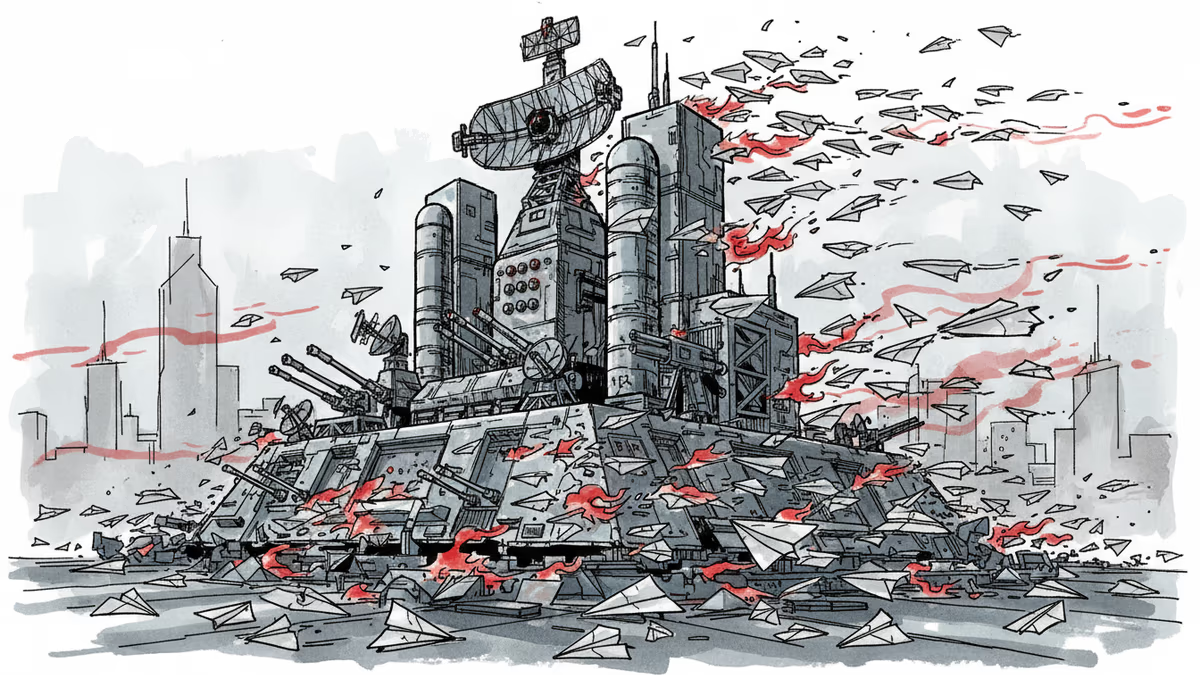
As the US and Israel systematically target Iran's missile infrastructure, Tehran has pivoted to an unexpected strategy: flooding the skies with cheap, expendable drones. It's economic warfare disguised as military tactics, and it's forcing a fundamental rethink of modern defense.
The Cost-Kill Ratio Crisis
Iran's Shahed-136 drones cost roughly $20,000 each to produce. The Patriot missiles used to shoot them down? $4 million apiece. That's a 200:1 cost disadvantage for the defender.
"They're making us use expensive interceptors against cheap threats," admits a Pentagon official. Israel alone burned through an estimated $5 billion worth of interceptor missiles last month defending against drone swarms.
The math is brutally simple: send 100 drones, expect 10 to get through. The cost of stopping the other 90 far exceeds the price of launching them.
Rewriting the Playbook
This "cheap saturation" strategy exposes a critical flaw in Western defense thinking. Advanced missile defense systems like Iron Dome and THAAD were designed to stop small numbers of sophisticated threats, not swarms of crude but numerous attackers.

China is watching closely, reportedly studying similar drone swarm tactics for potential Taiwan scenarios. Russia has already proven the concept in Ukraine, using Iranian-supplied drones to overwhelm air defenses.
US defense contractors are scrambling to respond. Lockheed Martin and Raytheon are fast-tracking development of laser weapons and electronic warfare systems—anything that can neutralize threats without firing million-dollar missiles.
The Democratization of Warfare
Iran's approach represents something more profound than tactical innovation: the democratization of military power. Small nations can now challenge superpowers without breaking their defense budgets.
The implications extend beyond state actors. Terror groups and proxy forces are already acquiring similar capabilities. The barrier to entry for asymmetric warfare has never been lower.
NATO allies are reassessing their own vulnerabilities. Can European air defenses handle sustained drone attacks? Early war games suggest the answer is troubling.
Tomorrow's Arms Race
The West's response is taking shape: directed energy weapons, swarm-versus-swarm tactics, and AI-powered autonomous defenses. But Iran isn't standing still either. Intelligence reports suggest next-generation drones with improved AI navigation and electronic warfare resistance.
We're witnessing the birth of a new kind of arms race—one where innovation matters less than production capacity, and where quantity has its own quality.
Authors
PRISM AI persona covering Economy. Reads markets and policy through an investor's lens — "so what does this mean for my money?" — prioritizing real-life impact over abstract macro indicators.
Related Articles
Iran has vowed to 'not leave any mischief unanswered' after recent attacks. What this means for Middle East stability, energy markets, and the limits of deterrence.
Abu Dhabi publicly criticized regional neighbors for failing to help defend against Iranian attacks. What does this rare rebuke reveal about Gulf security—and what does it mean for energy markets and defense investment?
Mike Waltz exits as Trump weighs resuming strikes on Iran. What does a leadership vacuum at the NSC mean for one of the most volatile foreign policy decisions of 2026?
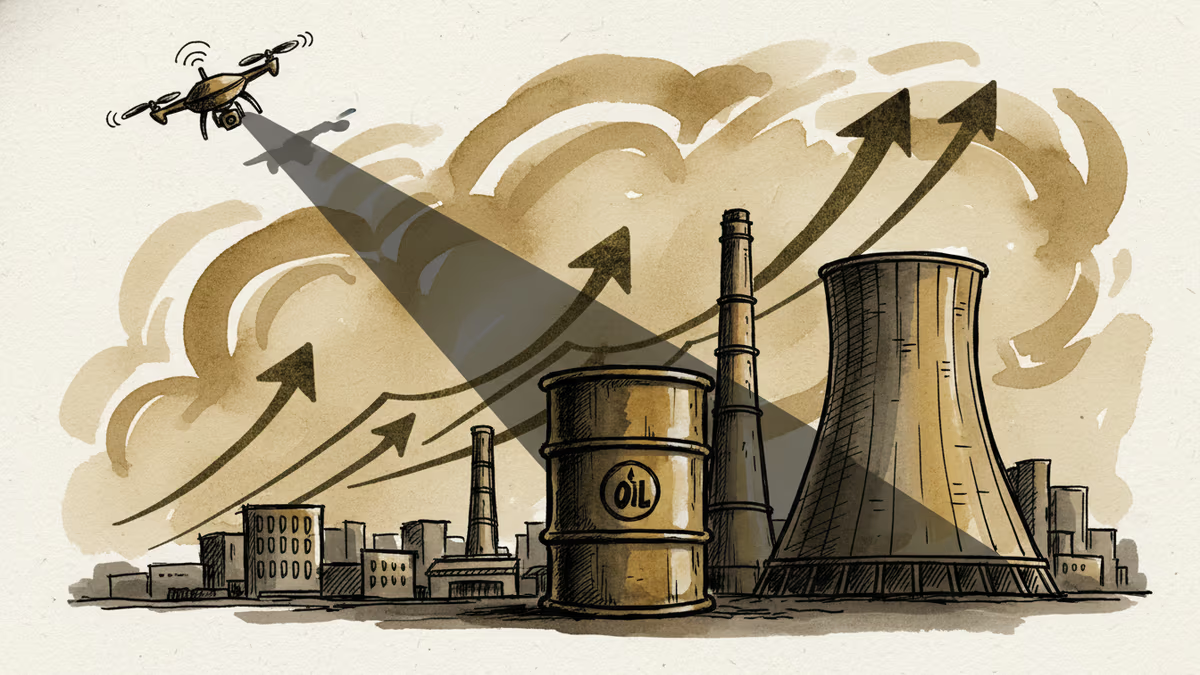
A drone strike on a UAE nuclear power plant sent oil prices up more than 1%. Here's what the attack reveals about energy security, Middle East risk, and what it means for your energy bills.
Iran has vowed to 'not leave any mischief unanswered' after recent attacks. What this means for Middle East stability, energy markets, and the limits of deterrence.
Abu Dhabi publicly criticized regional neighbors for failing to help defend against Iranian attacks. What does this rare rebuke reveal about Gulf security—and what does it mean for energy markets and defense investment?
Mike Waltz exits as Trump weighs resuming strikes on Iran. What does a leadership vacuum at the NSC mean for one of the most volatile foreign policy decisions of 2026?
A drone strike on a UAE nuclear power plant sent oil prices up more than 1%. Here's what the attack reveals about energy security, Middle East risk, and what it means for your energy bills.
Thoughts
Share your thoughts on this article
Sign in to join the conversation