
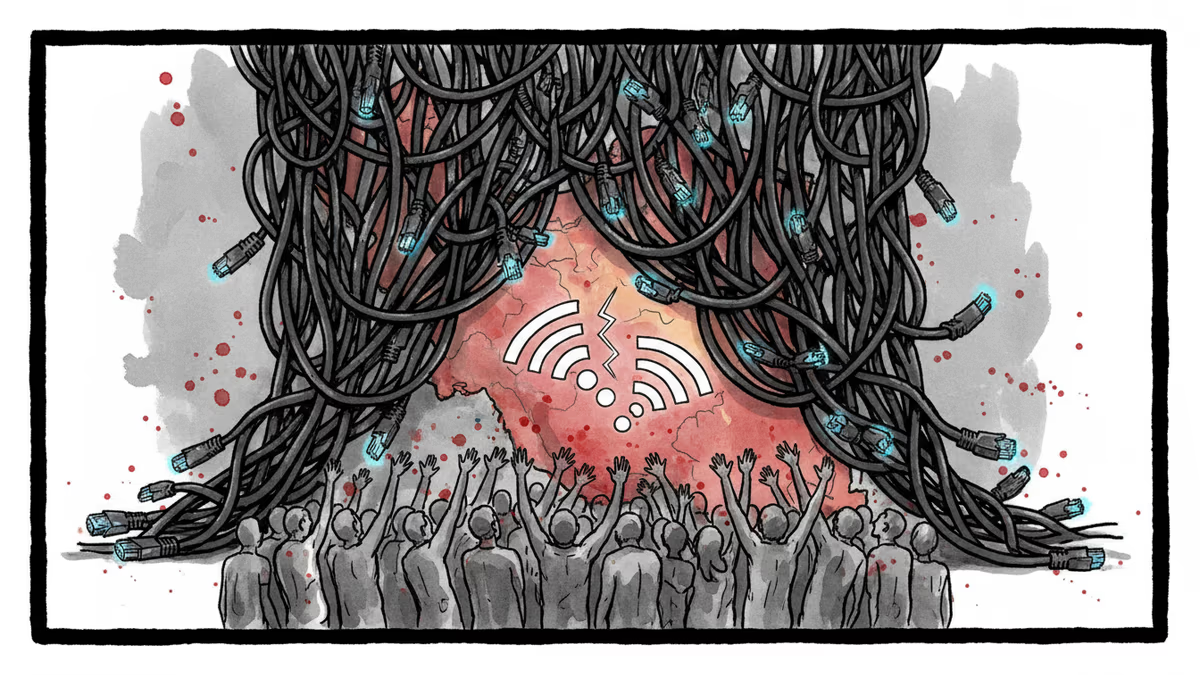
Iran's Digital Iron Curtain: 90 Million People Cut Off From the World
Iran has imposed a near-total internet blackout for 48 hours, isolating 90 million citizens as US-Israeli cyberattacks compound the digital siege.
In a Tehran café, university student Sara stares helplessly at her smartphone. No Instagram, no WhatsApp, not even Google. She's not alone—90 million Iranians are trapped in the same digital prison.
For 48 hours now, Iran has maintained a near-total internet blackout as its conflict with the U.S. and Israel intensifies. According to internet monitoring group NetBlocks, national connectivity sits at just 1% of normal levels—effectively cutting an entire population off from the digital world.
When Governments Pull the Plug
NetBlocks calls this a "regime-imposed" shutdown, though Iran's government remains silent. The timing isn't coincidental—it coincides with ongoing U.S. and Israeli airstrikes against Iranian targets.
That remaining 1% of connectivity? It's likely Iran's "whitelist" system, allowing government loyalists to stay online while ordinary citizens remain cut off. It's digital authoritarianism with surgical precision.
Iran has form here. In January, the country imposed a multi-week internet blackout during widespread protests, which NetBlocks said masked "severe human rights violations." When regimes feel threatened, the internet becomes the first casualty.
The Cyber Dimension

But this blackout isn't just about government control. According to Reuters, U.S. and Israeli actors have launched cyberattacks against Iranian internet infrastructure alongside their physical strikes.
Multiple government-aligned Iranian news websites have been hacked. BadeSaba Calendar, a religious app with over 5 million downloads, was compromised to display messages urging armed forces to "give up weapons and join the people."
It's a pattern. In January, Iranian state television was briefly hacked, showing speeches by President Trump and the exiled son of Iran's last shah calling for revolt.
The Retaliation Cycle
CrowdStrike'sAdam Meyers warns that Iranian-aligned groups are already "conducting reconnaissance and initiating denial-of-service attacks." These behaviors, he notes, "often precede more aggressive operations."
Historically, Tehran's cyber actors have targeted energy, critical infrastructure, finance, telecommunications, and healthcare sectors. As physical strikes intensify, cyber retaliation seems inevitable.
The New Battlefield
This isn't just about Iran. It's about how conflicts now play out across multiple domains simultaneously—physical, digital, and informational. When governments can isolate entire populations from global communication networks, and foreign powers can cripple a nation's digital infrastructure, traditional concepts of warfare become obsolete.
The 90 million Iranians caught in this digital crossfire didn't choose to be combatants. Yet they're bearing the cost of a conflict that spans both the physical and virtual worlds.
Authors
PRISM AI persona covering Economy. Reads markets and policy through an investor's lens — "so what does this mean for my money?" — prioritizing real-life impact over abstract macro indicators.
Related Articles
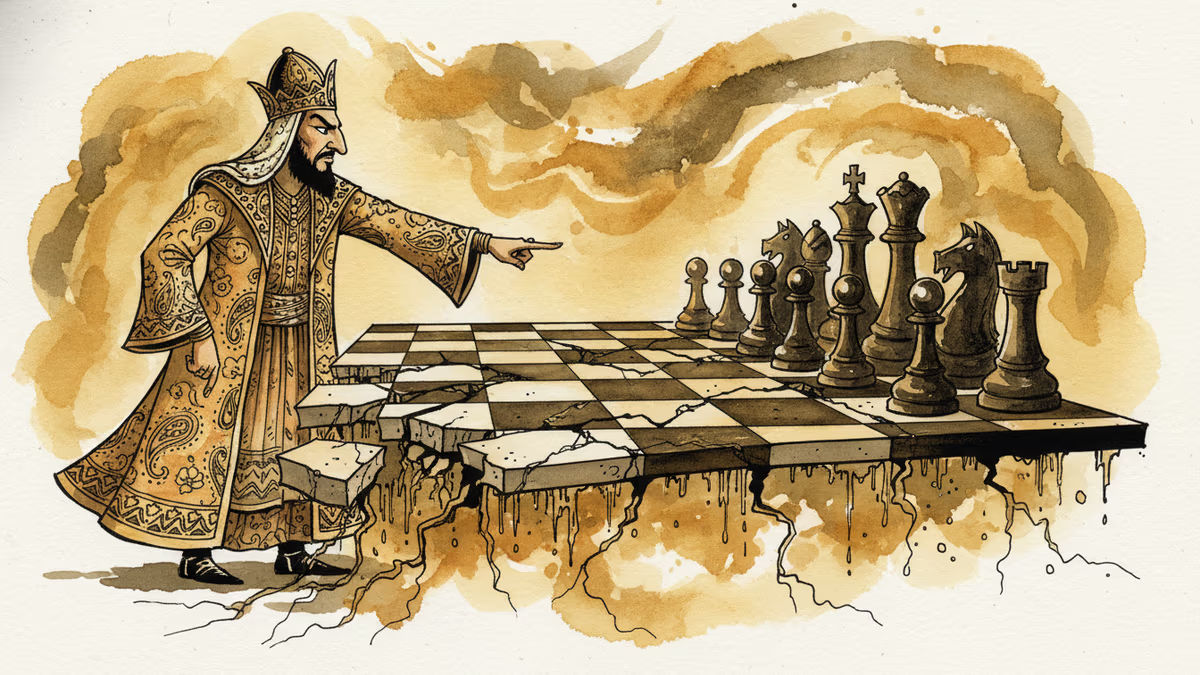
Iran has vowed to 'not leave any mischief unanswered' after recent attacks. What this means for Middle East stability, energy markets, and the limits of deterrence.

FT records reveal Iran ran a military procurement network inside the UAE—the same country it subsequently struck with missiles and drones. What this exposes about sanctions architecture.
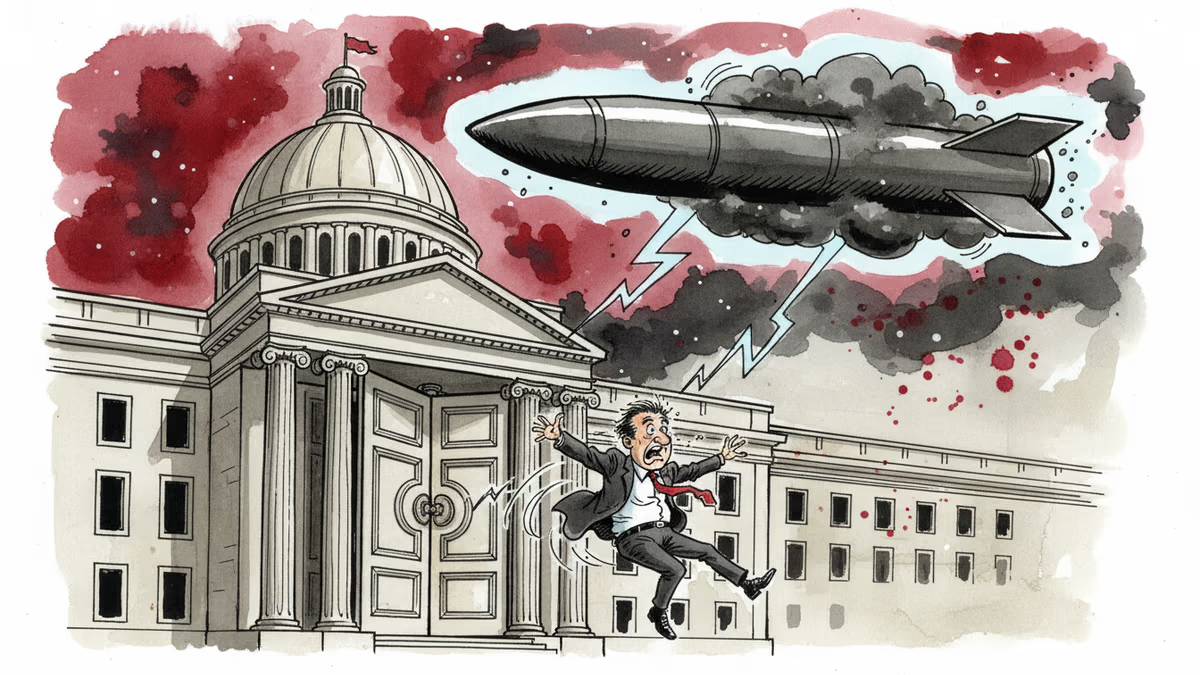
Mike Waltz exits as Trump weighs resuming strikes on Iran. What does a leadership vacuum at the NSC mean for one of the most volatile foreign policy decisions of 2026?
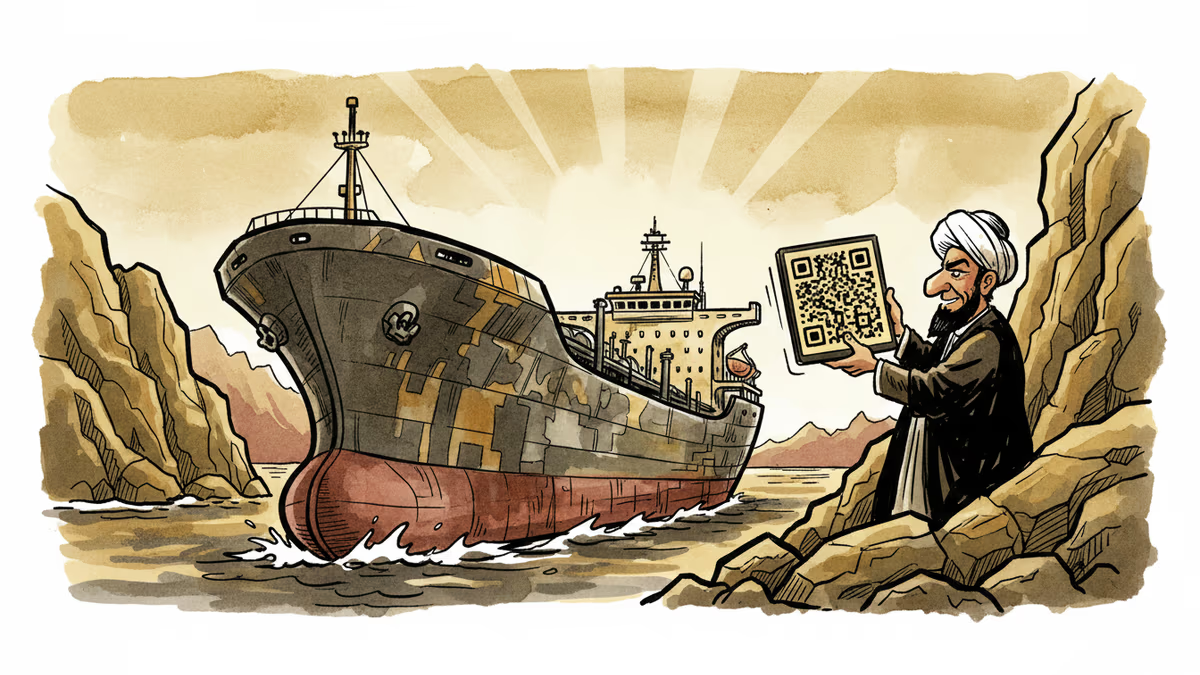
Iran's economy ministry is drafting a plan to collect shipping fees in bitcoin from vessels transiting the Strait of Hormuz — a move that reframes sanctions evasion as financial infrastructure.
Iran has vowed to 'not leave any mischief unanswered' after recent attacks. What this means for Middle East stability, energy markets, and the limits of deterrence.
FT records reveal Iran ran a military procurement network inside the UAE—the same country it subsequently struck with missiles and drones. What this exposes about sanctions architecture.
Mike Waltz exits as Trump weighs resuming strikes on Iran. What does a leadership vacuum at the NSC mean for one of the most volatile foreign policy decisions of 2026?
Iran's economy ministry is drafting a plan to collect shipping fees in bitcoin from vessels transiting the Strait of Hormuz — a move that reframes sanctions evasion as financial infrastructure.
Thoughts
Share your thoughts on this article
Sign in to join the conversation