
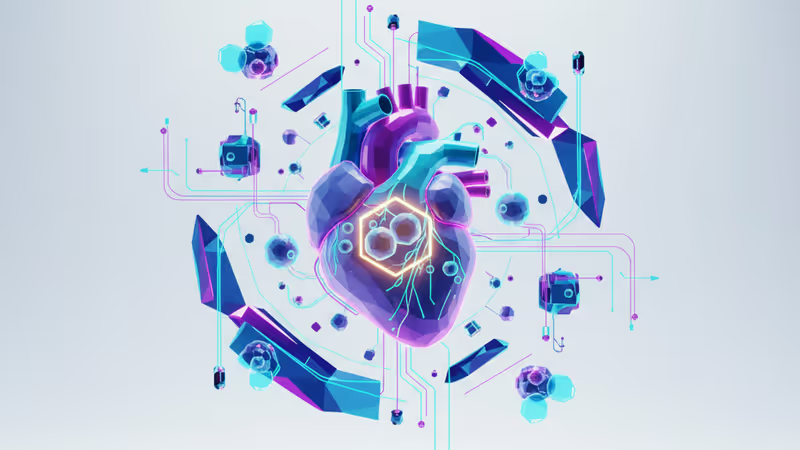
iPS Cell Heart Therapy 2026: The New Frontier of Regenerative Medicine
Explore the breakthrough in iPS cell heart therapy by Heartseed and the latest cancer survival statistics as of January 2026.
A heartbeat restored by lab-grown cells. Heartseed, a startup originating from Keio University, has successfully improved cardiac function in patients using iPS cell-derived myocardial spheres. This isn't just a clinical milestone; it's a fundamental shift from managing heart failure to actively regenerating damaged tissue.
Breakthrough in iPS Cell Heart Therapy 2026
The latest results, announced on December 16, prove that regenerative medicine is moving into a practical stage. By transplanting clusters of heart muscle cells created from induced pluripotent stem cells, researchers observed significant recovery in heart contraction power. This follows the September 29 update on iPS cell retinal transplants, suggesting a broader application of stem cell therapy across various medical fields.

Precision Data and Global Tech Context
On January 15, the first official 5-year survival rate data for cancer was released, highlighting the growing power of medical analytics. As AI becomes a staple in exam prep and professional data analysis, its integration into healthcare is accelerating the path toward personalized longevity.
The geopolitical climate is also shifting. With South Korean President Lee Jae-myung emphasizing tech sovereignty and the Dow Jones nearing 50,000 points, the market's appetite for high-tech biotech remains strong. President Biden's announcement of a 'Peace Council' for Gaza on January 16 may further stabilize global investment environments.
Authors
Related Articles
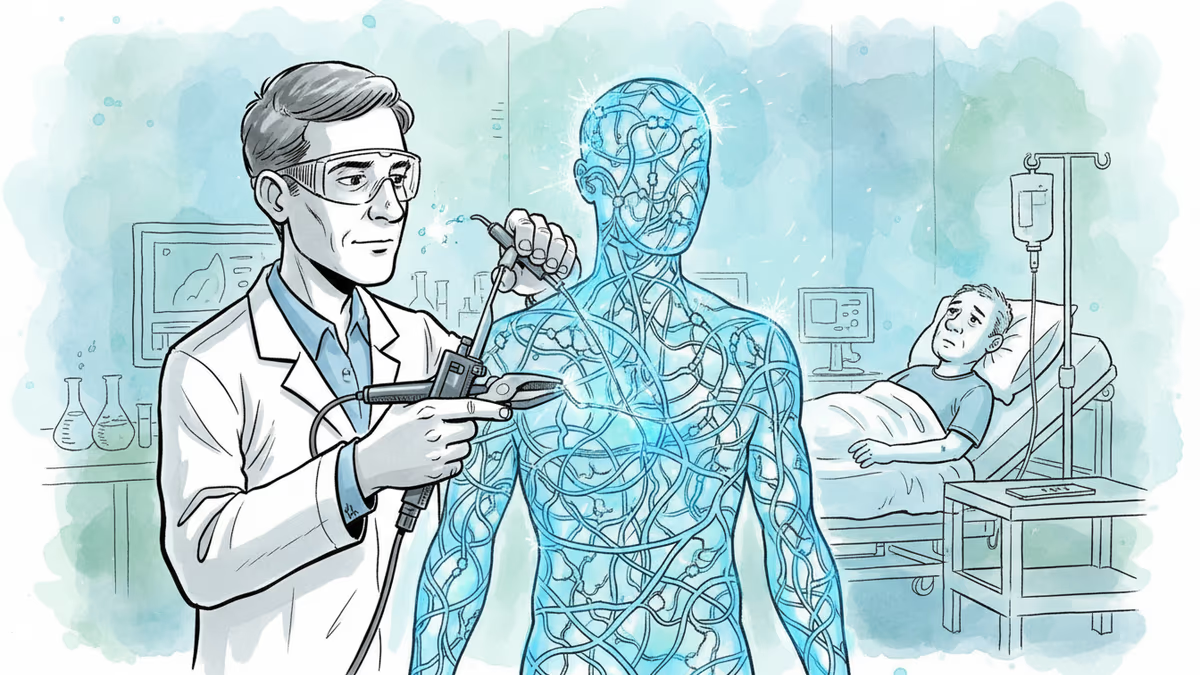
CAR T cell therapy, proven in blood cancers, is now in hundreds of clinical trials for MS, lupus, and other autoimmune conditions. What the science shows—and what it doesn't yet.
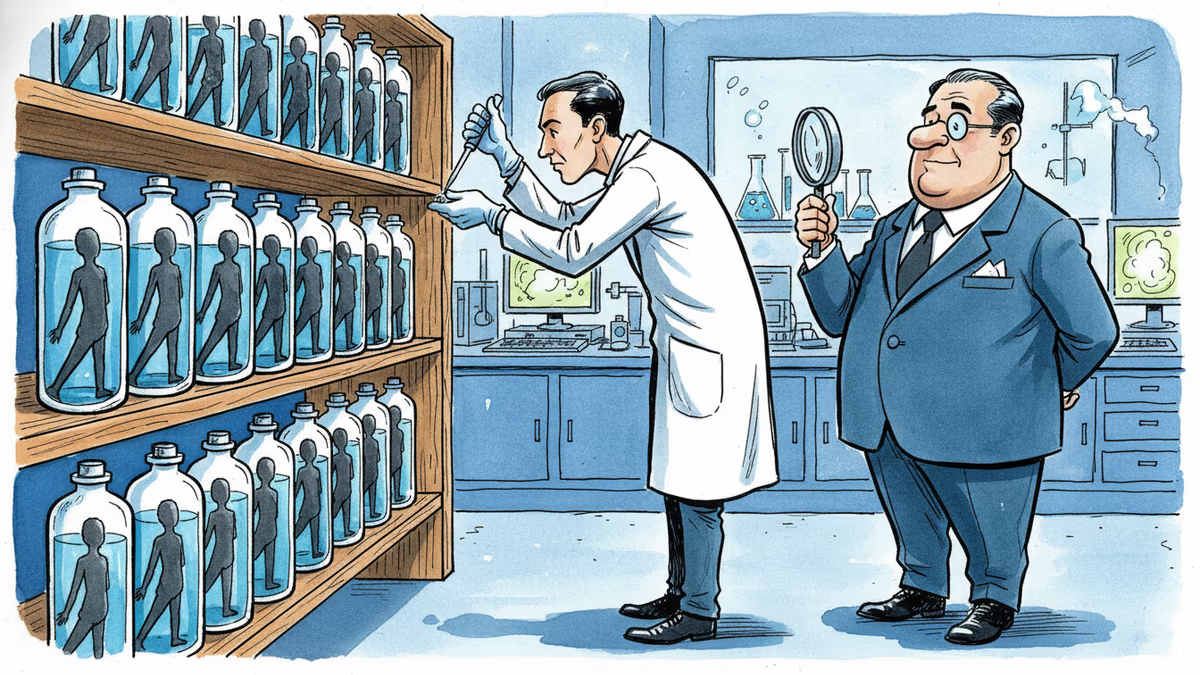
R3 Bio wants to grow human bodies without brains as biological backups. The science is speculative. The ethics are explosive. And the legal framework doesn't exist yet.
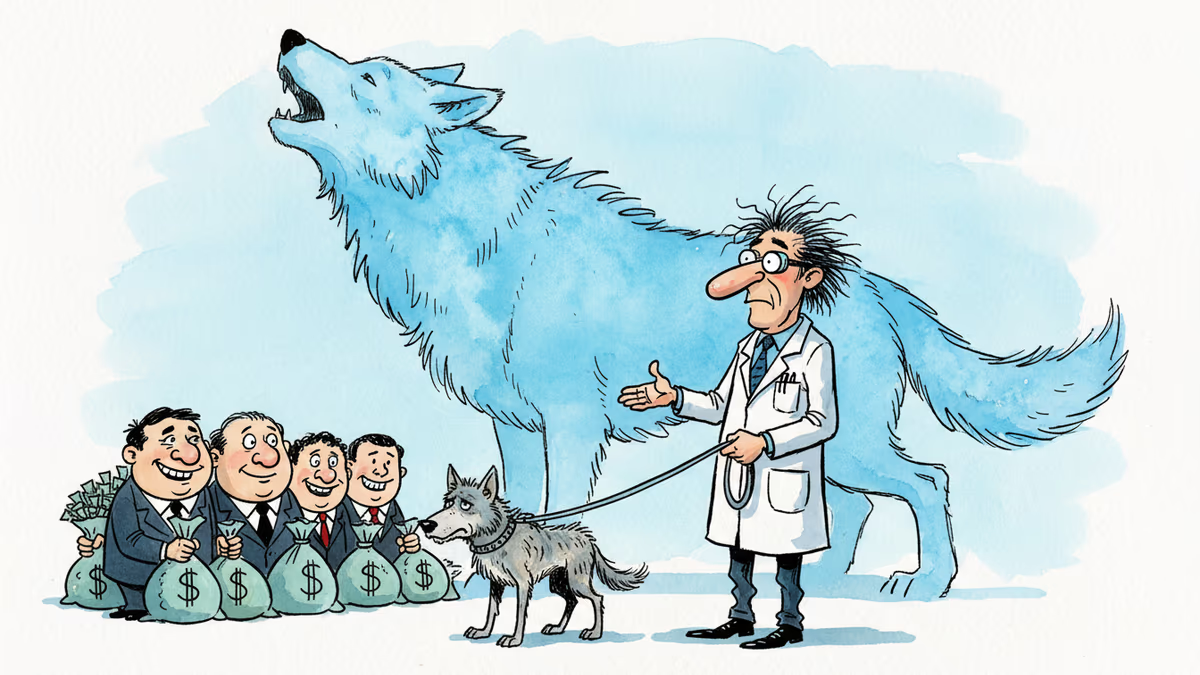
Colossal Biosciences raised hundreds of millions to resurrect woolly mammoths and dire wolves. What they're actually doing is more complicated—and more interesting.
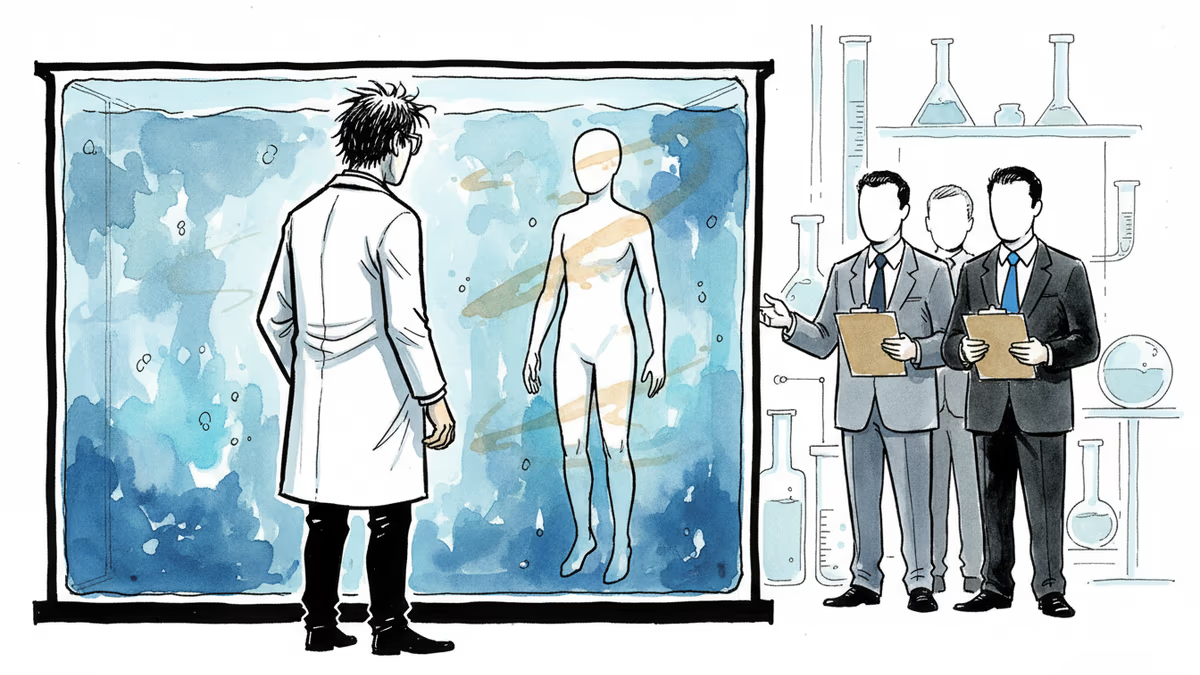
California startup R3 Bio quietly pitched investors on 'brainless human clones' as backup bodies—beyond its public story of nonsentient organ sacks for drug testing. A deep dive into biotech's most ethically charged frontier.
CAR T cell therapy, proven in blood cancers, is now in hundreds of clinical trials for MS, lupus, and other autoimmune conditions. What the science shows—and what it doesn't yet.
R3 Bio wants to grow human bodies without brains as biological backups. The science is speculative. The ethics are explosive. And the legal framework doesn't exist yet.
Colossal Biosciences raised hundreds of millions to resurrect woolly mammoths and dire wolves. What they're actually doing is more complicated—and more interesting.
California startup R3 Bio quietly pitched investors on 'brainless human clones' as backup bodies—beyond its public story of nonsentient organ sacks for drug testing. A deep dive into biotech's most ethically charged frontier.
Thoughts
Share your thoughts on this article
Sign in to join the conversation