
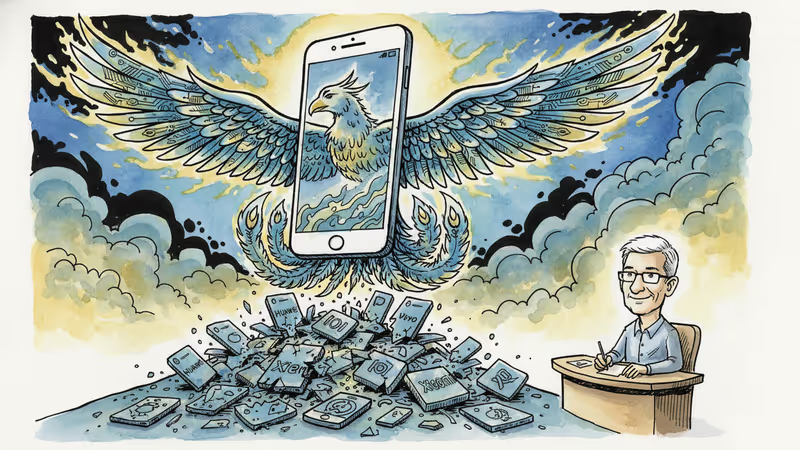
Apple's China Comeback: How Brand Beat Tech in $860 Billion Market
After 18 months of decline, Apple surged 38% in China while local rivals offered superior tech. The surprising strategy behind the iPhone maker's resurrection.
Eighteen months of consecutive decline. Then suddenly, a 38% surge. Apple's dramatic comeback in China has caught everyone off guard, especially since it happened while local rivals were showcasing objectively superior technology.
While Huawei stunned the industry with its $2,800 trifold smartphone and Xiaomi boasted better cameras and AI capabilities, Chinese consumers still flocked to the iPhone 17. The twist? Apple Intelligence isn't even available in mainland China yet.
"It's a good story if you're Apple. It's the same old story if you're not Apple," says Gerrit Schneemann, senior analyst at Counterpoint Research. That "same old story" is becoming increasingly frustrating for Chinese tech giants who thought superior specs would finally break Apple's grip.
The Power of Strategic Simplicity
Apple's winning formula wasn't about matching the competition's flashy features. Instead, the company released a baseline iPhone 17 that represented a much bigger upgrade from its predecessor than usual, incorporating features traditionally reserved for Pro models.
This wasn't just product strategy—it was psychological warfare. While competitors focused on folding screens and AI capabilities, Apple understood that Chinese consumers still prioritized brand power and design over marginal technical improvements.
The timing couldn't have been better. Many Chinese iPhone users were entering their natural upgrade cycle after three to four years with the iPhone 13 series, according to Arthur Guo, research manager at IDC Beijing.

Government Subsidy Meets Corporate Strategy
Apple's masterstroke came in pricing. The iPhone 17 launched at exactly 5,999 RMB (about $860)—just one yuan under the 6,000 RMB threshold for China's massive electronics subsidy program.
Beijing spent $43 billion in 2025 subsidizing domestic purchases of electronics, appliances, and cars, offering up to 15% discounts on qualifying smartphones. Apple's precise pricing ensured price-sensitive buyers could benefit from government policy while purchasing an American brand.
This wasn't coincidence—it was calculated positioning that turned Chinese economic stimulus into Apple's competitive advantage.
The Competition Paradox
Here's what makes Apple's success particularly striking: Chinese brands aren't failing. Xiaomi, Vivo, and Oppo all recorded significant growth, especially in their premium Pro/Pro Max variants. The market isn't zero-sum—it's expanding.
The exception was Huawei, Apple's most formidable high-end competitor, which suffered from a late November flagship launch and initial supply shortages. Huawei's temporary absence almost certainly contributed to Apple's record quarter.
Meanwhile, Apple's 69% US market share hit a record high, suggesting the company's momentum extends far beyond China. As the smartphone industry faces a looming memory chip shortage, Apple appears positioned for a smoother 2026 than its rivals.
The answer may reshape how we think about competition in the global tech economy.
Authors
Related Articles
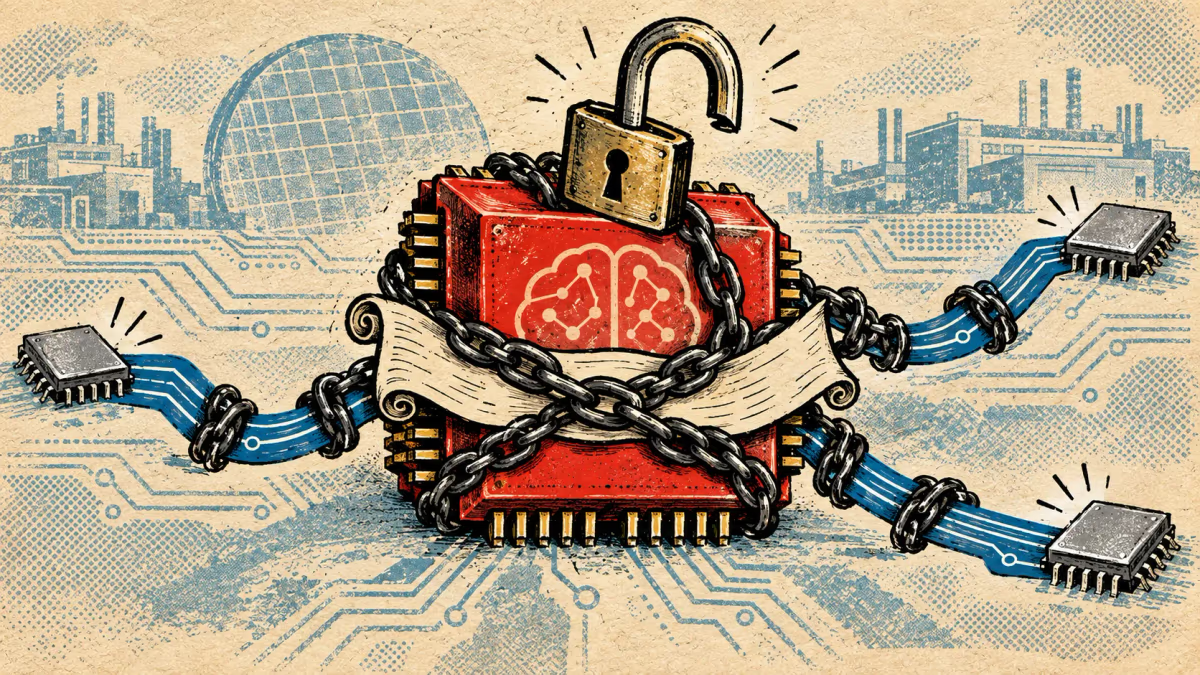
Huawei's CANN is open source under a license barring software for non-Ascend chips. Inside China's second CUDA, and the two links still outside it: pre-training compute and 5nm capacity.
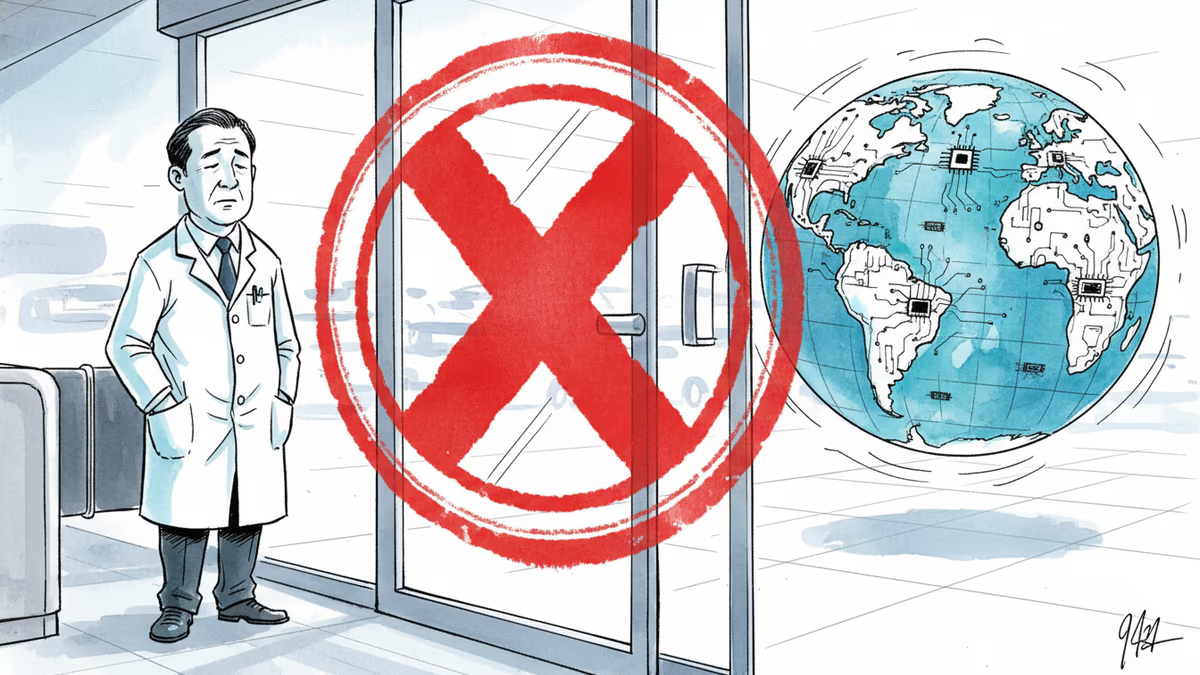
China is restricting AI researchers and startup founders from traveling abroad as the U.S.-China AI performance gap narrows to just 2.7%. What Beijing's talent lockdown means for the global AI race.
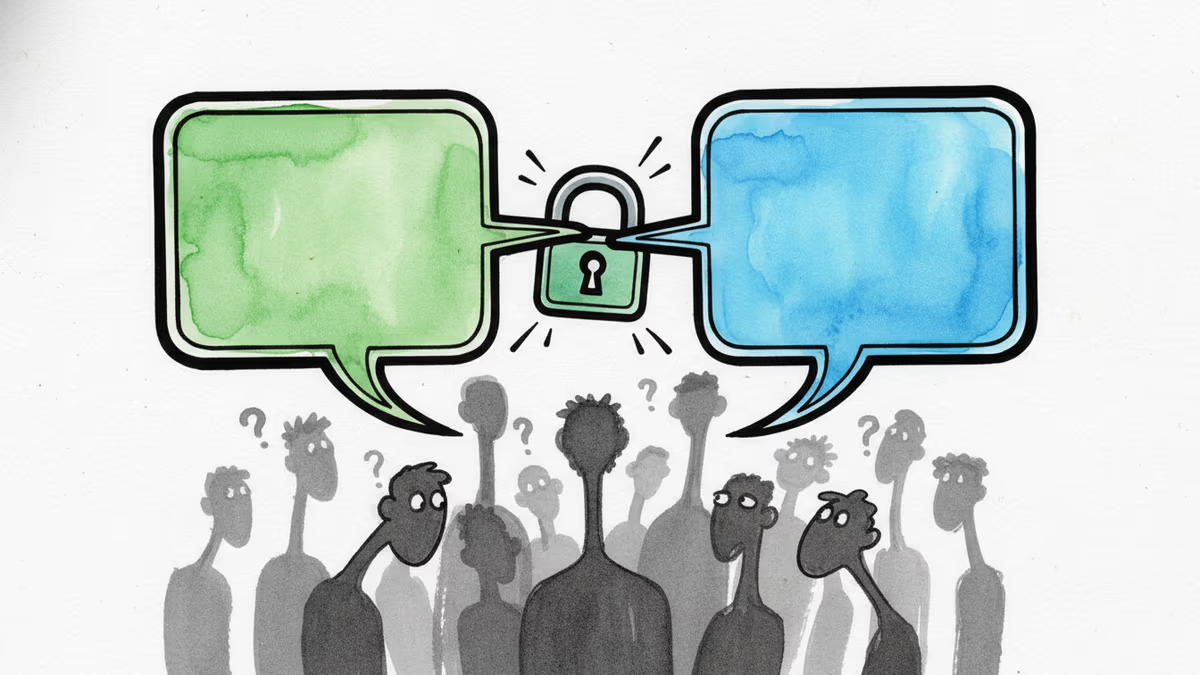
After 15 years of fragmented mobile messaging, Apple and Google are rolling out end-to-end encrypted RCS messaging between iPhones and Android devices. Here's what changed, why it took so long, and what it means for your privacy.
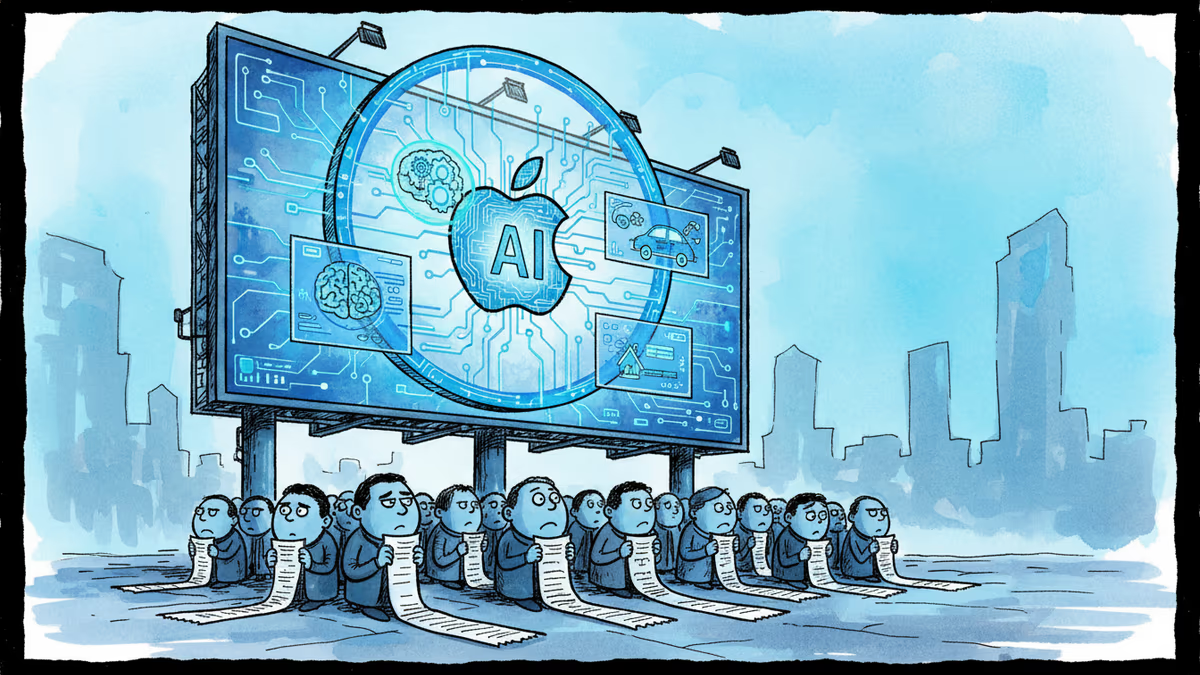
Apple agreed to pay $250 million to settle claims it misled iPhone 16 buyers about Apple Intelligence features. What this means for consumers, Big Tech marketing, and the AI industry.
Huawei's CANN is open source under a license barring software for non-Ascend chips. Inside China's second CUDA, and the two links still outside it: pre-training compute and 5nm capacity.
China is restricting AI researchers and startup founders from traveling abroad as the U.S.-China AI performance gap narrows to just 2.7%. What Beijing's talent lockdown means for the global AI race.
After 15 years of fragmented mobile messaging, Apple and Google are rolling out end-to-end encrypted RCS messaging between iPhones and Android devices. Here's what changed, why it took so long, and what it means for your privacy.
Apple agreed to pay $250 million to settle claims it misled iPhone 16 buyers about Apple Intelligence features. What this means for consumers, Big Tech marketing, and the AI industry.
Thoughts
Share your thoughts on this article
Sign in to join the conversation