
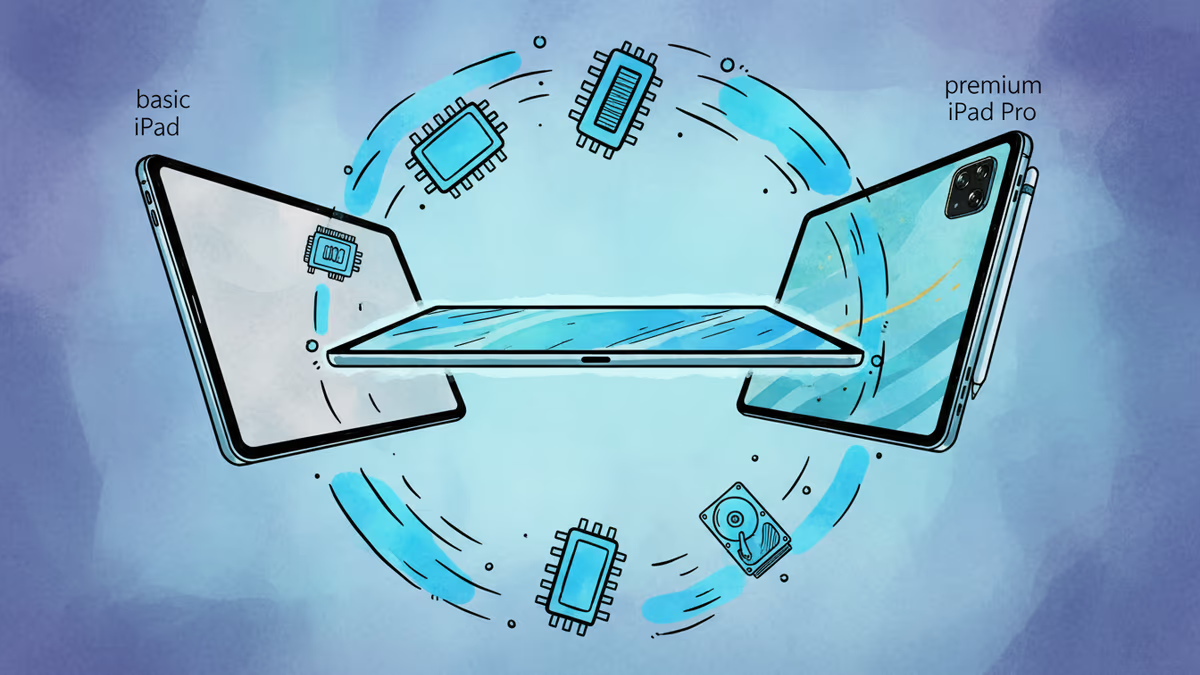
iPad Air's Quiet Upgrade Reveals Apple's Bigger Strategy
Apple's new iPad Air gets M4 chip and 12GB RAM in a seemingly minor update. But this quiet evolution hints at Apple's tablet ambitions and market positioning dilemmas.
$599. That's where the new iPad Air starts, same as last year. Same design too. But crack it open and you'll find Apple's M4 chip paired with 12GB of RAM—a 50% jump from the previous 8GB.
It's the kind of quiet upgrade that might seem boring at first glance. But this understated evolution reveals something bigger about Apple's tablet strategy and the tricky middle ground the iPad Air occupies.
The RAM Bump That Actually Matters
Twelve gigabytes isn't just a number on a spec sheet. It's Apple acknowledging that iPadOS 26's multi-window multitasking features need serious memory to work properly. The company is finally treating the iPad Air like a real computer, not just a bigger iPhone.
But here's the puzzling part: while Apple doubled down on RAM, they kept the base model at 128GB of storage. Want 256GB? That'll be an extra $100. It's a curious decision that forces users into an upgrade math problem right from the start.
The Middle Child Problem
The iPad Air has always lived in an awkward spot. It's pricier than the regular iPad but less capable than the iPad Pro. This positioning worked when tablets were simpler, but now? With the regular iPad handling casual tasks and the Pro targeting professionals, what's the Air's purpose?

Apple seems to be betting that most users want "Pro-ish" performance without Pro pricing. The M4 chip in a $599 device certainly supports that theory. But is there really a market for "almost flagship" in 2026?
The Pencil Compatibility Maze
Then there's the Apple Pencil situation—a perfect example of Apple's ecosystem complexity. The M2-and-later iPad Airs only work with the Apple Pencil Pro, ditching compatibility with the second-generation Pencil.
For existing users, this creates an expensive domino effect: new tablet means new stylus. It's either brilliant ecosystem lock-in or customer-unfriendly design, depending on your perspective.
Samsung's Opening
Samsung and other Android tablet makers are watching this measured update with interest. While Apple plays it safe with incremental improvements, competitors have room to be bold with features, pricing, or ecosystem integration.
The tablet market isn't growing like it used to, making every positioning decision crucial. Apple's conservative approach might preserve margins, but does it inspire upgrades?
The real question isn't whether the iPad Air is better than its predecessor—it obviously is. It's whether Apple's middle-ground strategy can survive in a market that increasingly rewards the extremes.
Authors
Related Articles
After 15 years of fragmented mobile messaging, Apple and Google are rolling out end-to-end encrypted RCS messaging between iPhones and Android devices. Here's what changed, why it took so long, and what it means for your privacy.
Apple agreed to pay $250 million to settle claims it misled iPhone 16 buyers about Apple Intelligence features. What this means for consumers, Big Tech marketing, and the AI industry.
Apple quietly removed the entry-level $599 Mac Mini, raising the starting price to $799 — just one day after Tim Cook warned of chip supply constraints on the earnings call.
Apple names John Ternus, its hardware engineering chief, as the next CEO. The shift from operator to product person signals where Apple thinks its next decade of growth will come from — and raises real questions about what comes next.
After 15 years of fragmented mobile messaging, Apple and Google are rolling out end-to-end encrypted RCS messaging between iPhones and Android devices. Here's what changed, why it took so long, and what it means for your privacy.
Apple agreed to pay $250 million to settle claims it misled iPhone 16 buyers about Apple Intelligence features. What this means for consumers, Big Tech marketing, and the AI industry.
Apple quietly removed the entry-level $599 Mac Mini, raising the starting price to $799 — just one day after Tim Cook warned of chip supply constraints on the earnings call.
Apple names John Ternus, its hardware engineering chief, as the next CEO. The shift from operator to product person signals where Apple thinks its next decade of growth will come from — and raises real questions about what comes next.
Thoughts
Share your thoughts on this article
Sign in to join the conversation