
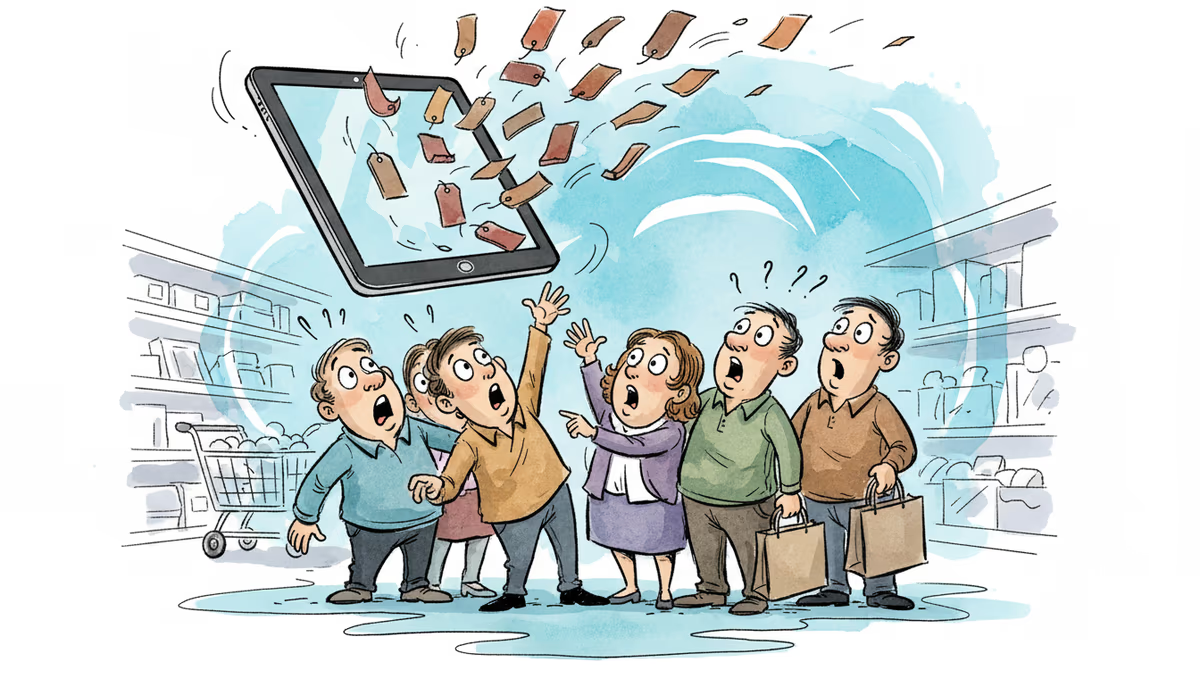
iPad Air M4 Gets Pre-Launch Discounts: What Apple Isn't Telling You
Apple's new iPad Air M4 is already discounted before its March 11th launch. While performance jumps 30%, early discounts reveal deeper market dynamics at play.
$40 Off Before It Even Ships
Apple announced its new iPad Air M4 this week, and retailers are already slashing prices before the March 11th launch. Amazon, Best Buy, and Walmart are offering the 128GB Wi-Fi model for $559 instead of the $599 MSRP—a $40 discount that's unusually aggressive for a brand-new Apple product.
This isn't typical Apple behavior. The company built its reputation on premium pricing that holds steady, sometimes for years. When retailers start discounting before launch day, it signals something deeper is happening in the tablet market.
Performance Gains Meet Familiar Design
The new iPad Air packs Apple's M4 chip, delivering 30% faster performance than its predecessor and twice the speed of the 2020 M1 model. RAM bumps from 8GB to 12GB, promising smoother multitasking for demanding apps and workflows.
But strip away the spec sheet, and you'll find a device that looks virtually identical to what came before. The standout addition is Apple's N1 wireless networking chip, enabling Wi-Fi 7 and Bluetooth 6 connectivity, plus Thread support for smart home integration.

Battery life remains unchanged on paper, and the device maintains compatibility with existing accessories like the Apple Pencil USB-C, Apple Pencil Pro, and Magic Keyboard. For many users, the question becomes: is this upgrade worth it?
Retailers Signal Market Reality
The discount strategy extends across configurations. The 256GB Wi-Fi model drops $50 to $649 at Amazon and Walmart, while the 13-inch variant starts at $749 (down from $799). Best Buy goes further, offering the 128GB LTE model for $709.
This coordinated pricing suggests retailers recognize consumer hesitation around tablet upgrades. Unlike smartphones, tablets often last 4-5 years, making the upgrade cycle less predictable and price sensitivity higher.
The Bigger Picture: Apple's Pricing Evolution
These pre-launch discounts reflect a shifting dynamic in Apple's ecosystem. The company faces increasing pressure from budget Android tablets and changing consumer priorities post-pandemic. While Apple maintains premium positioning, retailers are clearly betting that price flexibility will drive adoption.
For consumers, this creates an interesting calculus: buy the discounted M4 model now, or wait for potentially deeper cuts on the M2 version as inventory clears?
Authors
Related Articles
After 15 years of fragmented mobile messaging, Apple and Google are rolling out end-to-end encrypted RCS messaging between iPhones and Android devices. Here's what changed, why it took so long, and what it means for your privacy.
Apple agreed to pay $250 million to settle claims it misled iPhone 16 buyers about Apple Intelligence features. What this means for consumers, Big Tech marketing, and the AI industry.
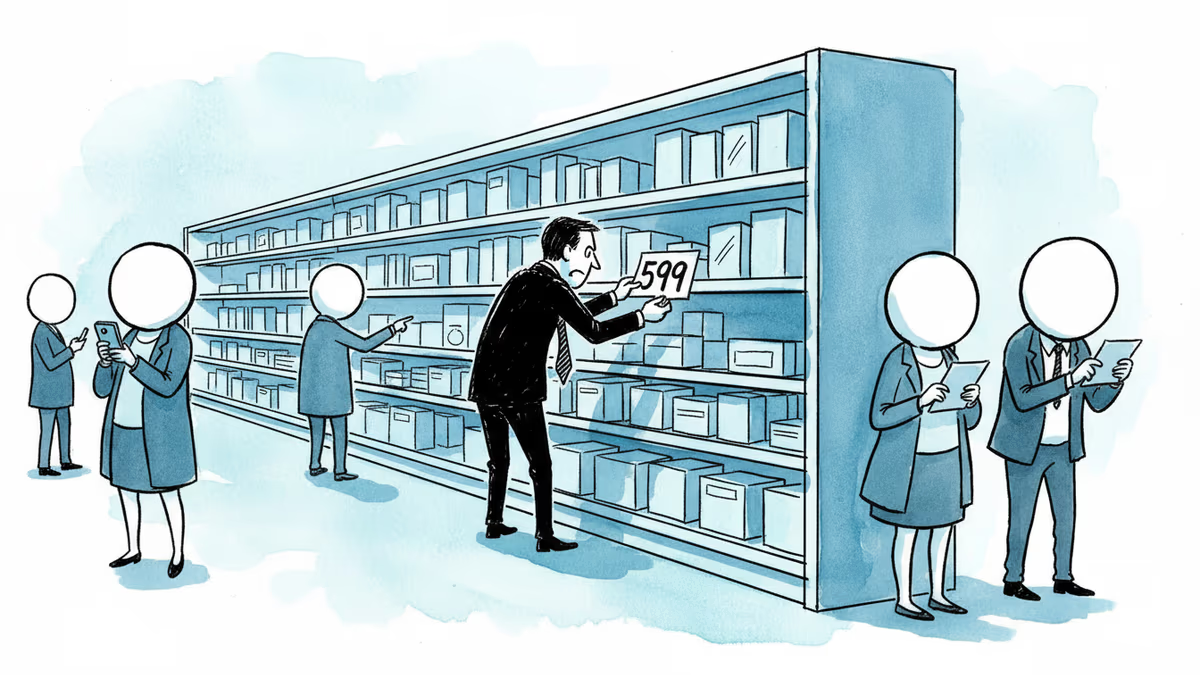
Apple quietly removed the entry-level $599 Mac Mini, raising the starting price to $799 — just one day after Tim Cook warned of chip supply constraints on the earnings call.
Apple names John Ternus, its hardware engineering chief, as the next CEO. The shift from operator to product person signals where Apple thinks its next decade of growth will come from — and raises real questions about what comes next.
After 15 years of fragmented mobile messaging, Apple and Google are rolling out end-to-end encrypted RCS messaging between iPhones and Android devices. Here's what changed, why it took so long, and what it means for your privacy.
Apple agreed to pay $250 million to settle claims it misled iPhone 16 buyers about Apple Intelligence features. What this means for consumers, Big Tech marketing, and the AI industry.
Apple quietly removed the entry-level $599 Mac Mini, raising the starting price to $799 — just one day after Tim Cook warned of chip supply constraints on the earnings call.
Apple names John Ternus, its hardware engineering chief, as the next CEO. The shift from operator to product person signals where Apple thinks its next decade of growth will come from — and raises real questions about what comes next.
Thoughts
Share your thoughts on this article
Sign in to join the conversation