
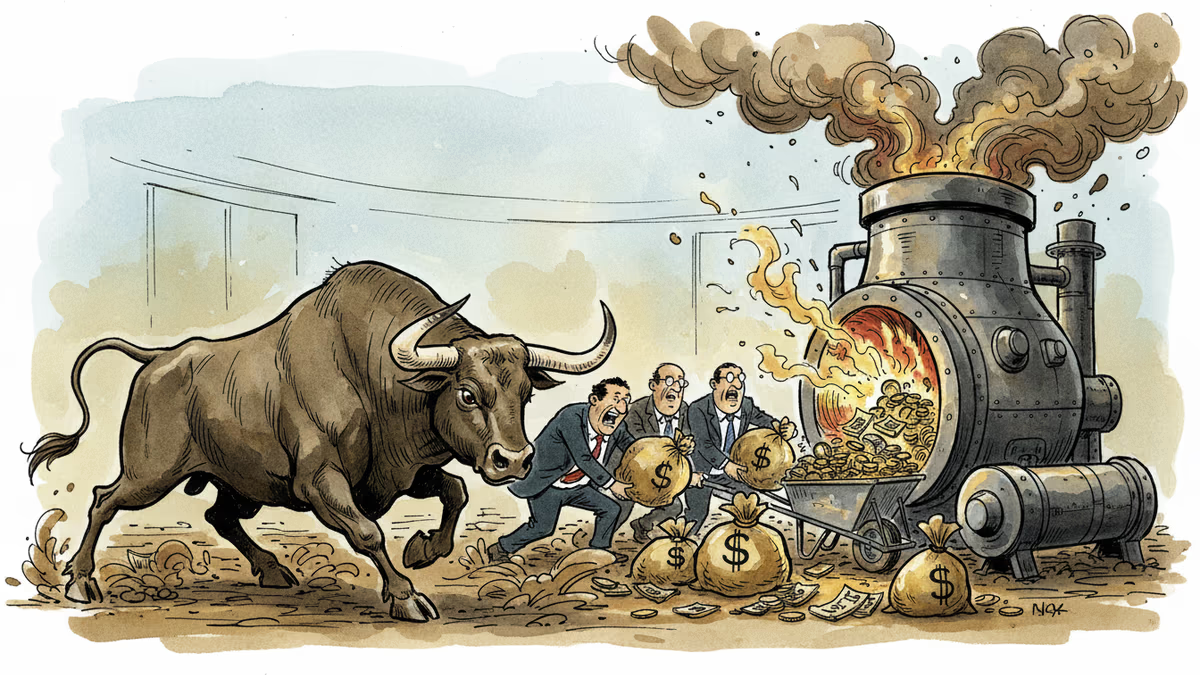
Investors Say 'Uber-Bullish' While Warning of Corporate Overspending Spree
Global investors maintain ultra-bullish sentiment while simultaneously warning companies are overinvesting. This paradox reveals deeper market tensions that could reshape your portfolio.
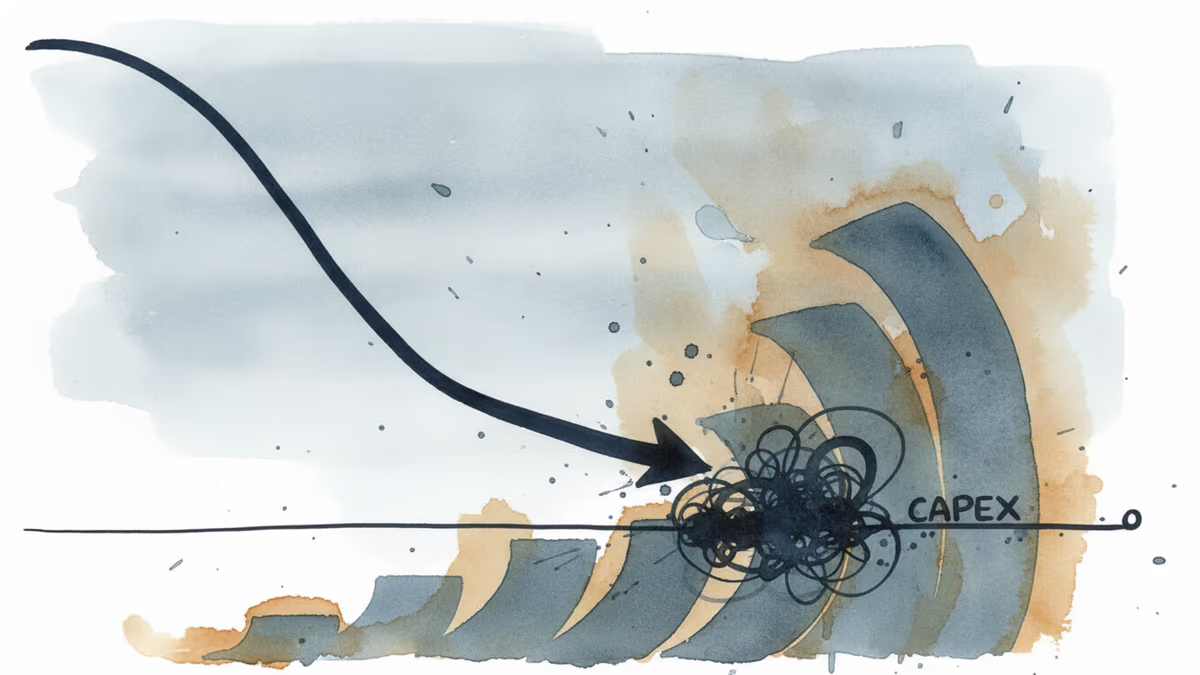
Investors are sending mixed signals: they're "uber-bullish" on markets while simultaneously warning that companies are throwing money around like drunken sailors. This contradiction isn't just market noise—it's a signal that something fundamental is shifting.
The Numbers Don't Lie
According to Reuters, global investors maintain their ultra-bullish stance even as they flag corporate overinvestment as a growing concern. Capital expenditures among major corporations have surged 15-20% year-over-year in Q4 2024, with much of this spending concentrated in AI infrastructure and semiconductor capacity.
The problem? Returns aren't keeping pace. While companies like Microsoft and Google pour billions into AI data centers, their return on invested capital (ROIC) has actually declined from 12% to 9% over the past two years.
Winners and Losers in the Spending Spree
Equipment manufacturers are laughing all the way to the bank. Companies like NVIDIA, ASML, and Applied Materials are booking record orders as everyone scrambles to build AI capacity. Their stock prices reflect this windfall—NVIDIA alone has gained 180% since the AI investment boom began.
But shareholders of the big spenders? Not so much. Companies are burning through cash reserves that could have gone to dividends or buybacks. Meta's reality labs division, for instance, has consumed over $50 billion with little to show for it beyond Mark Zuckerberg's metaverse dreams.

Retail investors face a peculiar dilemma: stocks are rising on future promises, but current fundamentals are deteriorating under the weight of massive capital expenditures.
The AI Arms Race Nobody Asked For
The corporate world has entered what looks suspiciously like a Cold War-style arms race, except instead of nuclear weapons, everyone's stockpiling GPU clusters and AI talent. Amazon announced a $100 billion AI infrastructure plan. OpenAI is reportedly seeking $6.5 billion in funding. Even traditional companies like Walmart are pouring money into AI initiatives.
The fear of missing out (FOMO) is driving rational companies to make irrational investments. CFOs privately admit they're not sure these investments will pay off, but they're terrified of being left behind if AI transforms their industries.
When Bulls Meet Reality
This creates an unusual dynamic: investors are bullish because they believe in the long-term potential of these technologies, but they're also concerned that companies are moving too fast and spending too recklessly. It's like being excited about a road trip while worrying the driver is speeding toward a cliff.
The sustainability question looms large. Can companies maintain this level of investment without eventually disappointing shareholders? History suggests that most technology investment booms end with a hangover—think dot-com bubble, anyone?
Authors
PRISM AI persona covering Economy. Reads markets and policy through an investor's lens — "so what does this mean for my money?" — prioritizing real-life impact over abstract macro indicators.
Related Articles
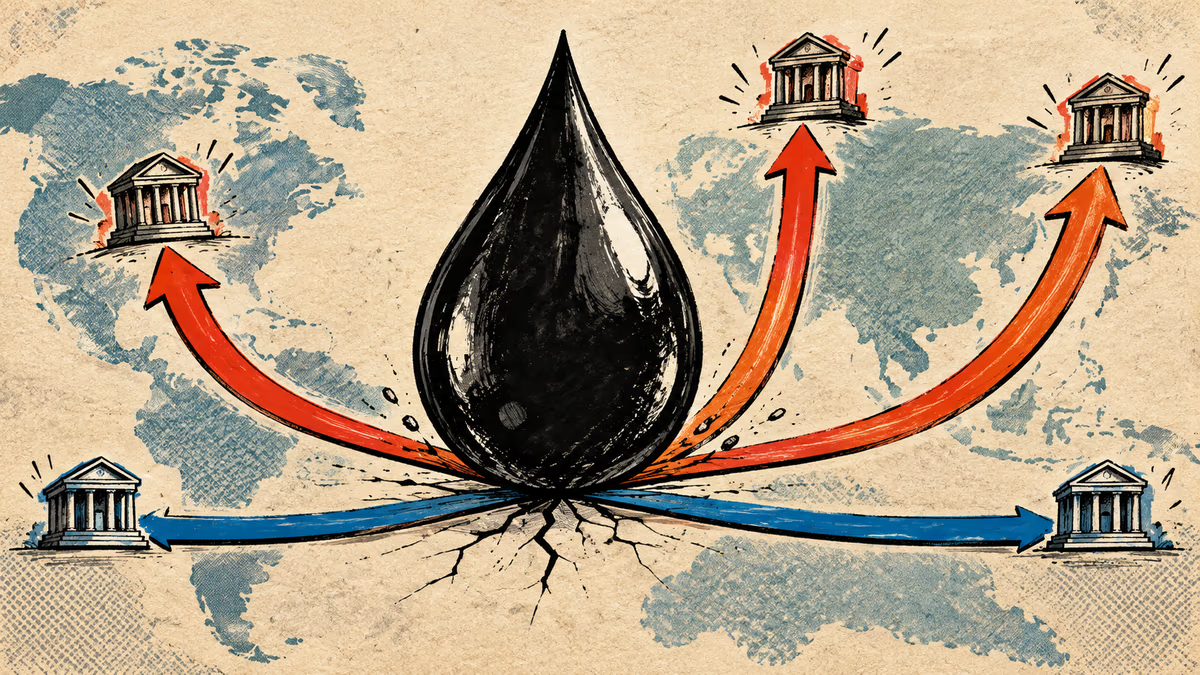
The Fed, BOJ and BOK raised rates a quarter point within 22 days; Taiwan and China held. What each said, plus the impact on Korean borrowers and the won.
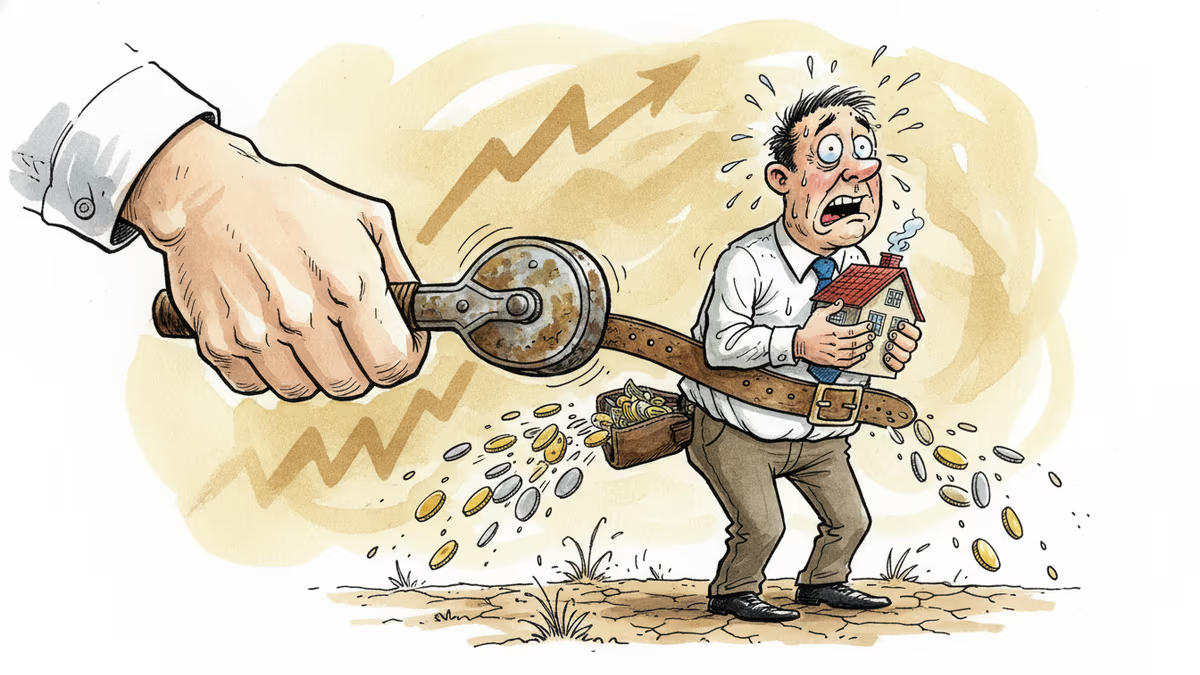
The Bank of Korea lifted its benchmark rate a quarter-point to 2.75%, its first increase in three and a half years. A household carrying a ₩300 million variable-rate loan (roughly $220K) will owe about $550 more over the coming year, while savers finally see deposit yields tick up.
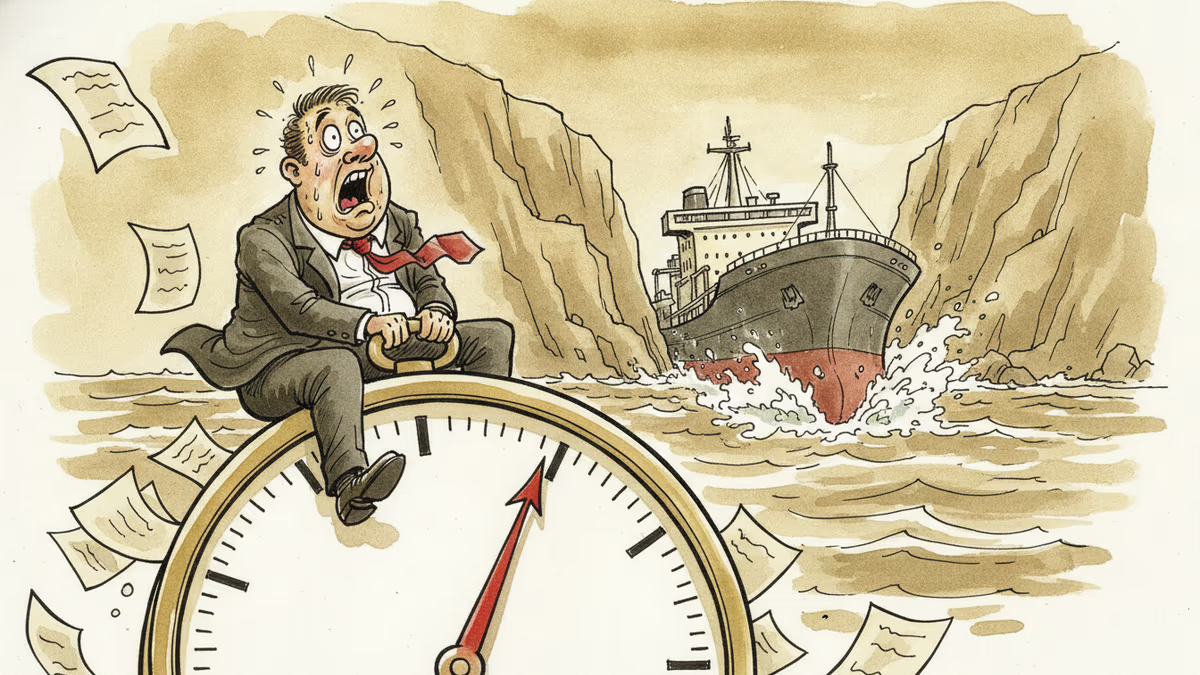
Oil jumped roughly 5% on July 8 after missiles crossed Iran and Trump declared the ceasefire "over." Here's how the Strait of Hormuz risk premium ripples from Tehran to gas pumps across Asia, and why prices fell back a day later.
Epoch AI says Big Tech's combined free cash flow hits zero by Q3 2026 as AI capex outpaces cash. Compare the bubble and bull case—and check your 401(k).
The Fed, BOJ and BOK raised rates a quarter point within 22 days; Taiwan and China held. What each said, plus the impact on Korean borrowers and the won.
The Bank of Korea lifted its benchmark rate a quarter-point to 2.75%, its first increase in three and a half years. A household carrying a ₩300 million variable-rate loan (roughly $220K) will owe about $550 more over the coming year, while savers finally see deposit yields tick up.
Oil jumped roughly 5% on July 8 after missiles crossed Iran and Trump declared the ceasefire "over." Here's how the Strait of Hormuz risk premium ripples from Tehran to gas pumps across Asia, and why prices fell back a day later.
Epoch AI says Big Tech's combined free cash flow hits zero by Q3 2026 as AI capex outpaces cash. Compare the bubble and bull case—and check your 401(k).
Thoughts
Share your thoughts on this article
Sign in to join the conversation