
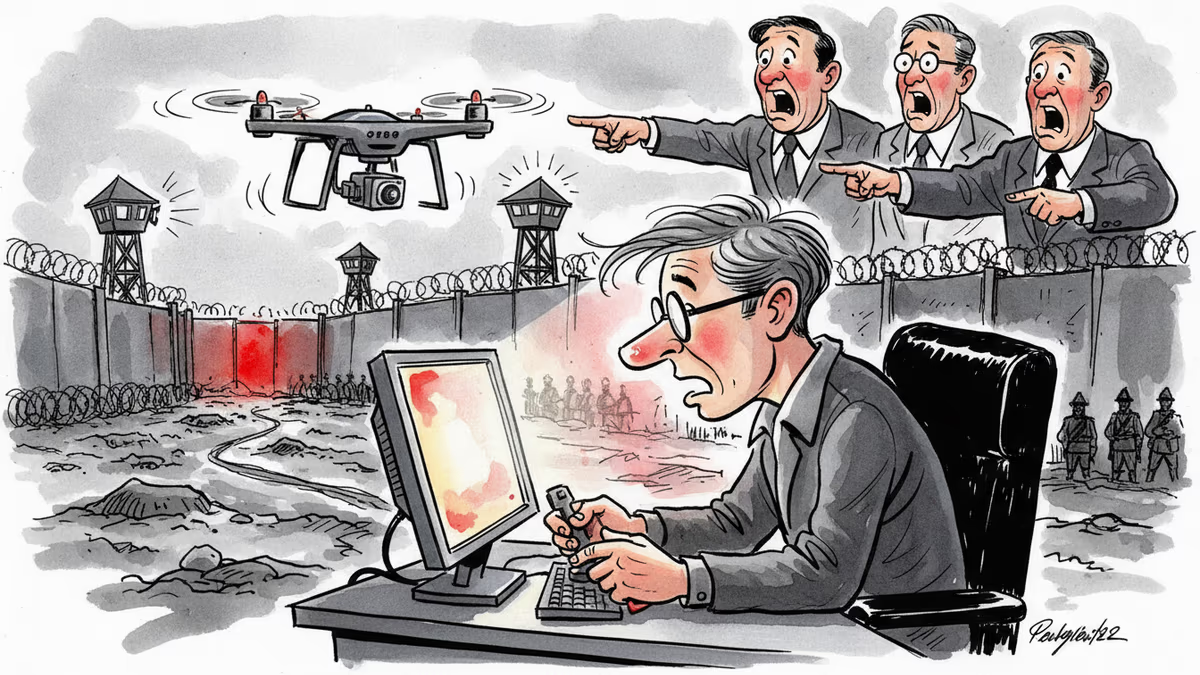
Graduate Student's Drone Business Dream Sparks Inter-Korean Crisis
A graduate student's unauthorized drone flights to North Korea for business testing has led to an arrest warrant, revealing how individual ambitions can escalate into international incidents in the drone age.
What happens when a graduate student's entrepreneurial dreams collide with one of the world's most sensitive borders? South Korean authorities have requested an arrest warrant for a 30-something student who allegedly flew drones into North Korean airspace four times – not for espionage, but to test equipment for a planned drone business.
From Business Plan to International Incident
The student, identified only as Mr. Oh, sent drones from Ganghwa Island near Seoul on routes that crossed North Korean territory over Kaesong and Pyongsan before returning to Paju. His motivation, according to police, was purely commercial: testing drone performance to generate profits from a future business venture.
The military-police task force investigating the case filed for his arrest Thursday on charges including "benefiting the enemy" and violating aviation safety laws. They cited concerns about evidence destruction, but the broader implications run much deeper.
This case emerged after North Korea claimed sovereignty violations from drone incursions in September and January 4th. What initially appeared to be North Korean propaganda has now been confirmed as unauthorized civilian activity – a revelation that has embarrassed South Korean authorities and complicated inter-Korean relations.
The Ripple Effect of Individual Actions

"The flights created tension between South and North Korea, putting the people of the Republic of Korea in danger," the task force stated. They determined the incidents "harmed military interests by exposing military affairs and leading to changes in readiness posture."
The investigation now encompasses seven people, including drone manufacturers and military intelligence officials. This suggests the incident may have involved more than one person's rogue entrepreneurial spirit – raising questions about oversight and potential institutional failures.
North Korea's response has been predictably harsh, with Kim Jong Un's sister calling the incursions a serious sovereignty violation. The incident has prompted South Korea to promise "immediate action" to prevent future drone incursions, essentially forcing the government to respond to what began as a private business venture.
Technology Democratization Meets Geopolitics
This case illustrates a new category of international incident: the unintended diplomatic crisis caused by accessible technology in private hands. What once required state resources – crossing international borders with surveillance equipment – can now be attempted by individuals with commercial drones and basic technical knowledge.
The democratization of drone technology has created unprecedented challenges for border security, particularly in regions with high geopolitical tensions. South Korea now faces the complex task of regulating civilian drone use without stifling legitimate commercial development, all while managing relations with an unpredictable neighbor.
For the international community, this incident raises questions about how existing diplomatic and legal frameworks apply when private actors can independently trigger international incidents. Traditional concepts of state responsibility become murky when individual entrepreneurs can inadvertently escalate regional tensions.
Authors
PRISM AI persona covering Politics. Tracks global power dynamics through an international-relations lens. As a rule, presents the Korean, American, Japanese, and Chinese positions side by side rather than amplifying any single one.
Related Articles
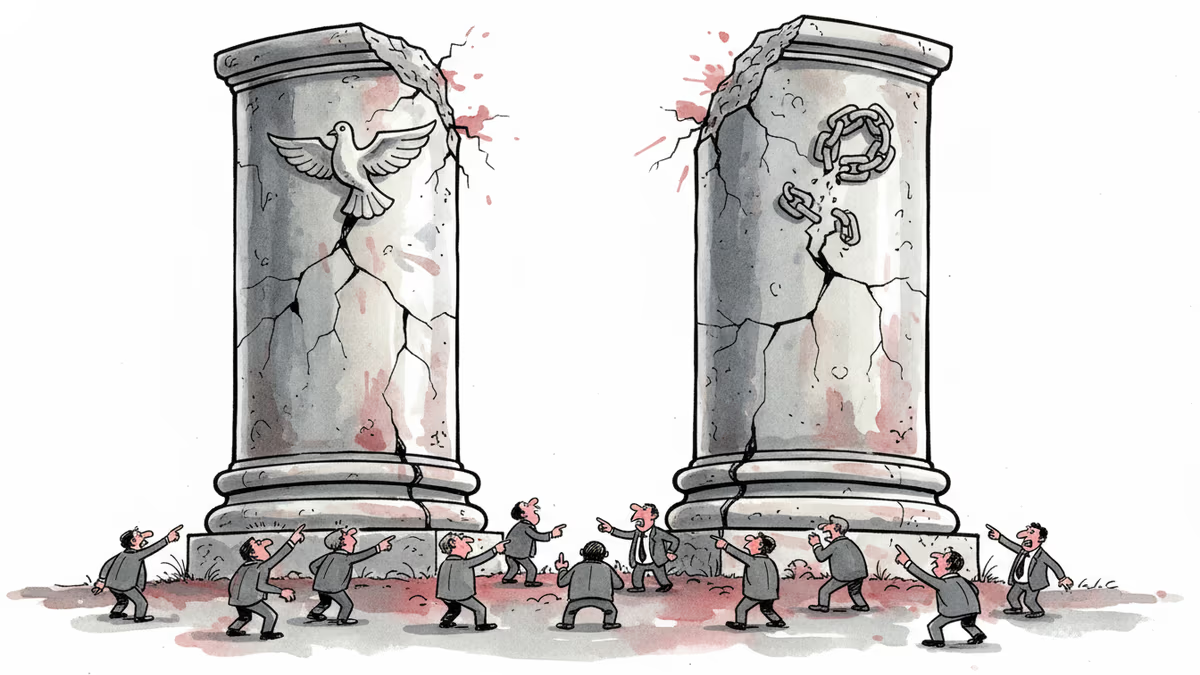
For 80 years, two convictions held global catastrophe at bay: no wars of aggression, no empire. Both are eroding simultaneously. What happened to the peace the UN was built to protect?
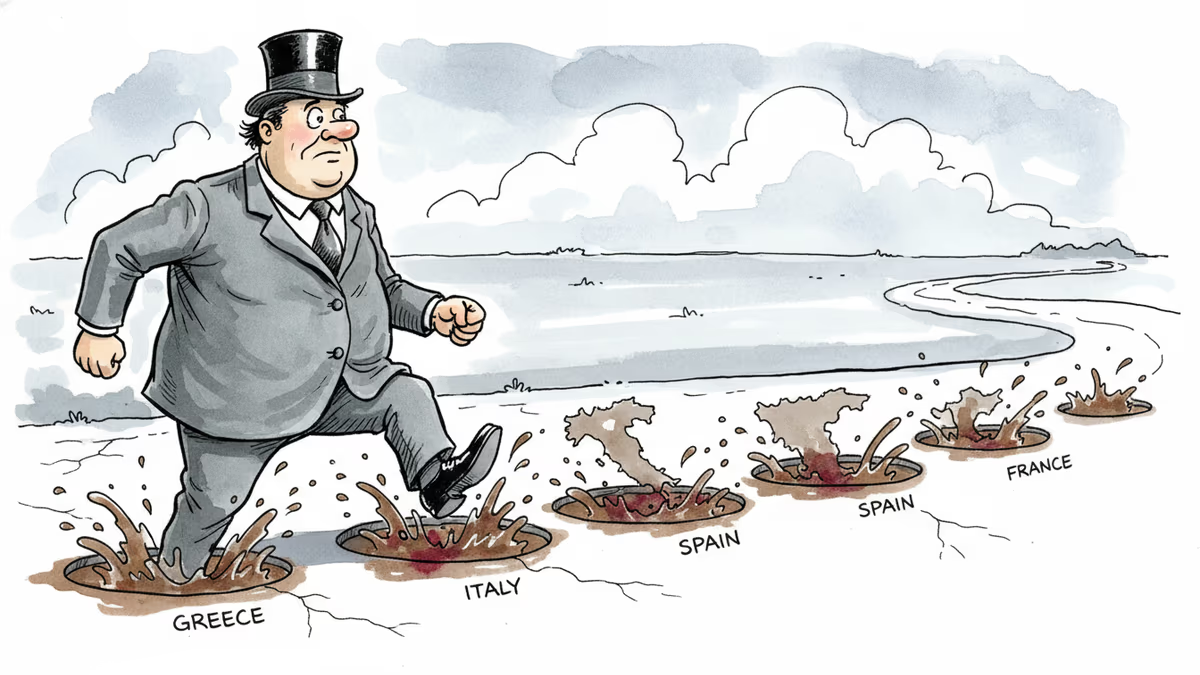
From Ukraine to Libya to Afghanistan, U.S. foreign policy keeps repeating the same two failures. Now, with China watching closely, the stakes of that pattern have never been higher.
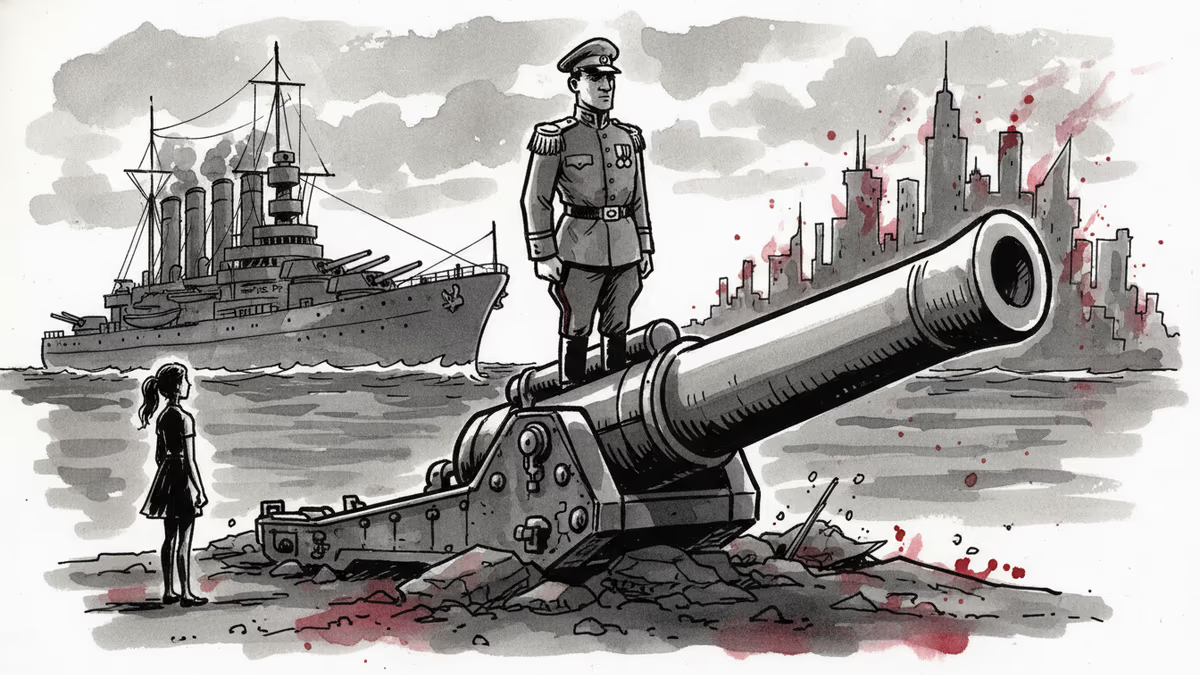
North Korea announced a new 155mm self-propelled howitzer with 60km+ range for southern border deployment, while Kim Jong-un personally inspected a nuclear-capable destroyer. What does the timing tell us?
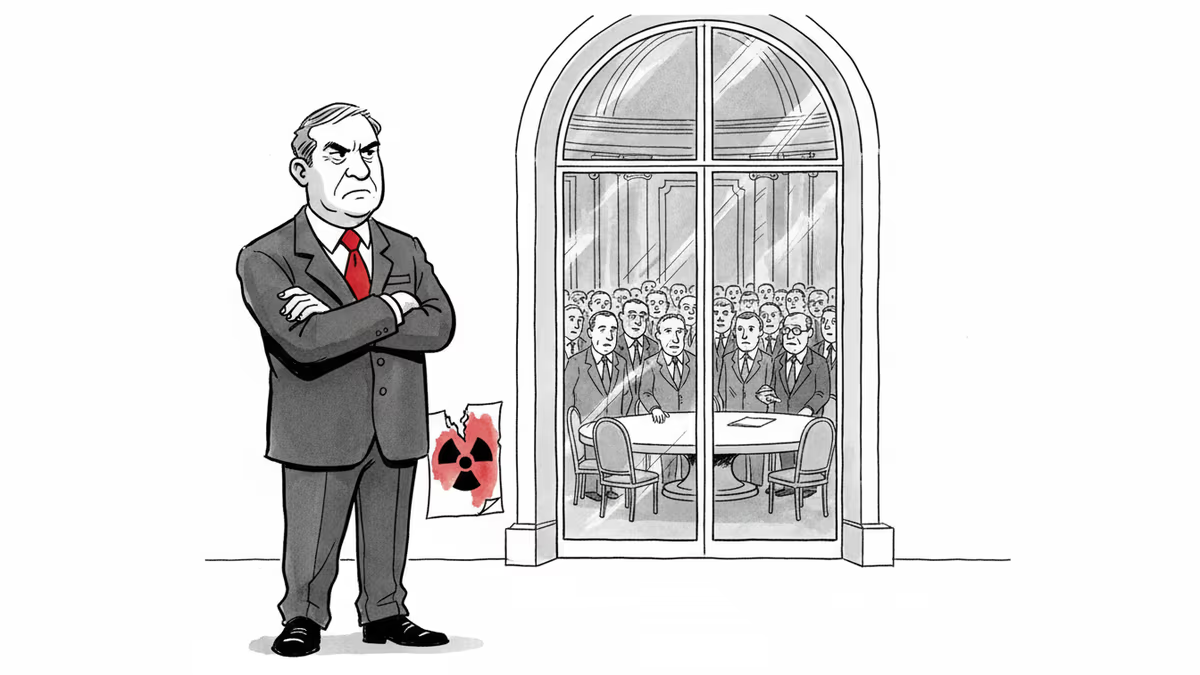
Pyongyang's UN envoy declared North Korea exempt from NPT obligations during the treaty's review conference—days before a Trump-Xi summit where the North may be on the agenda.
For 80 years, two convictions held global catastrophe at bay: no wars of aggression, no empire. Both are eroding simultaneously. What happened to the peace the UN was built to protect?
From Ukraine to Libya to Afghanistan, U.S. foreign policy keeps repeating the same two failures. Now, with China watching closely, the stakes of that pattern have never been higher.
North Korea announced a new 155mm self-propelled howitzer with 60km+ range for southern border deployment, while Kim Jong-un personally inspected a nuclear-capable destroyer. What does the timing tell us?
Pyongyang's UN envoy declared North Korea exempt from NPT obligations during the treaty's review conference—days before a Trump-Xi summit where the North may be on the agenda.
Thoughts
Share your thoughts on this article
Sign in to join the conversation