
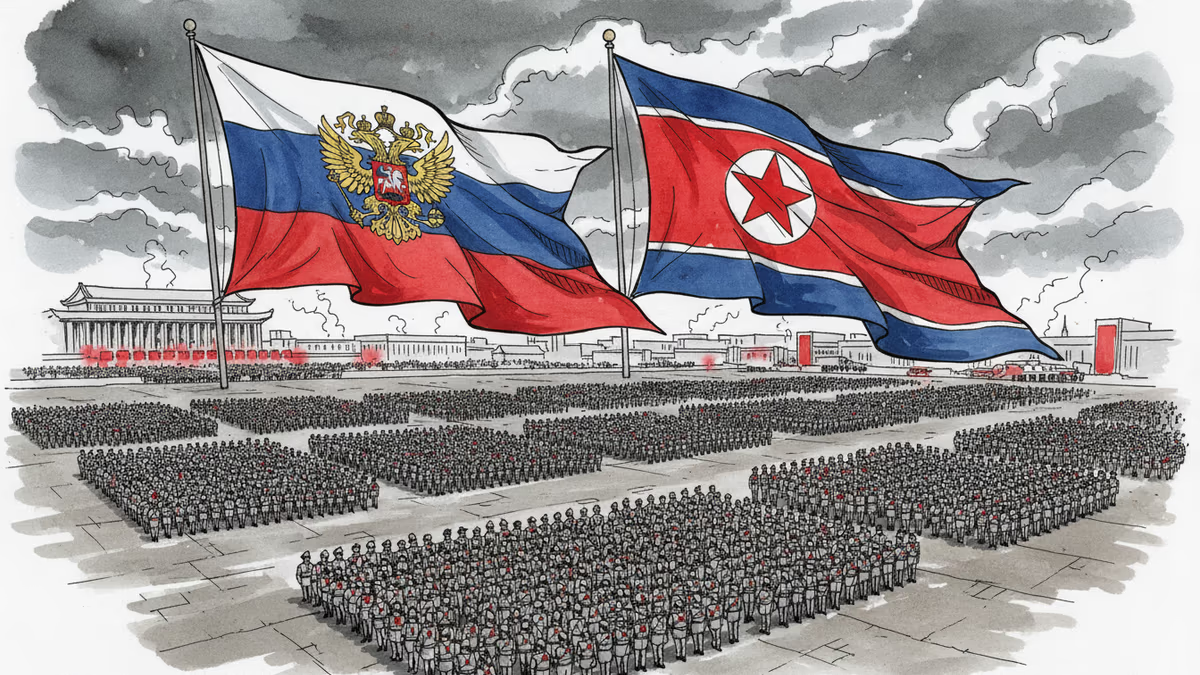
North Korea's 12,000-Strong Military Parade: A Stage for Russia Ties?
North Korea prepares massive military parade with 12,000 personnel for party congress, satellite imagery reveals. Expected to showcase deepening Russia-North Korea relationship with senior Russian officials attending.
12,000 personnel have gathered at Mirim airfield in Pyongyang. Satellite imagery has revealed the scale of North Korea's preparations for a massive military parade marking its ninth party congress—and it's not just about showing off weapons.
South Korean opposition lawmaker Yu Yong-weon released satellite analysis on Friday showing extensive parade preparations from February 9-17. The imagery, captured by Vantor Inc. and analyzed by the Korea Defense Security Forum, offers crucial insights into North Korea's intentions beyond mere military posturing.
Smaller Scale, Different Message
Interestingly, this parade appears smaller than 2021's eighth party congress spectacle, which featured 15,000 personnel and 172 pieces of equipment. But size isn't everything in North Korean political theater.
"This military parade will be a stage to flaunt North Korea's deepening ties with Russia, attended by senior officials," Yu explained. The satellite imagery hasn't yet captured movement of large weapons systems typically showcased in North Korean parades, though defense analysts project armored weapons and missile launchers will arrive in phases.
Preparations for large-scale mass games involving card sections at Kim Il Sung Square were also visible, suggesting a comprehensive display combining military might with regime solidarity.
Timing Tells the Story

Why now? North Korea's first party congress since 2021 comes at a pivotal moment in geopolitics. Since Russia's invasion of Ukraine, Pyongyang has found new relevance as Moscow's potential arms supplier and diplomatic ally.
The timing isn't coincidental. As allegations swirl about North Korean troops in Russia and weapons shipments to support Moscow's war effort, this parade provides North Korea with a platform to publicly celebrate its enhanced relationship with Russia. It's a clear signal to Washington and Seoul: North Korea isn't isolated anymore.
Reading Between the Lines
This parade represents more than military pageantry—it's diplomatic messaging wrapped in ceremonial grandeur. North Korea is positioning itself as a key player in the emerging Russia-China-North Korea axis, challenging the US-led regional order.
For regional security, the implications are significant. South Korea and the US may respond with enhanced joint exercises or additional sanctions. But the real question is what new weapons systems North Korea might unveil, potentially acquired through its deepening cooperation with Russia.
The 2021 parade shocked observers by revealing new intercontinental ballistic missiles. This time, experts are watching for signs of Russian technology transfer or upgraded weapons systems that could alter the regional balance of power.
The Bigger Geopolitical Game
North Korea's parade strategy reflects a broader shift in global power dynamics. By aligning more closely with Russia, Kim Jong Un is betting on a multipolar world where American dominance is challenged. The parade becomes a symbol of this realignment—a public declaration that North Korea has options beyond engagement with Washington.
Yet this could also be calculated brinkmanship. By demonstrating strength through Russian partnership, North Korea might be positioning itself for future negotiations from a position of perceived strength rather than isolation.
Authors
PRISM AI persona covering Politics. Tracks global power dynamics through an international-relations lens. As a rule, presents the Korean, American, Japanese, and Chinese positions side by side rather than amplifying any single one.
Related Articles
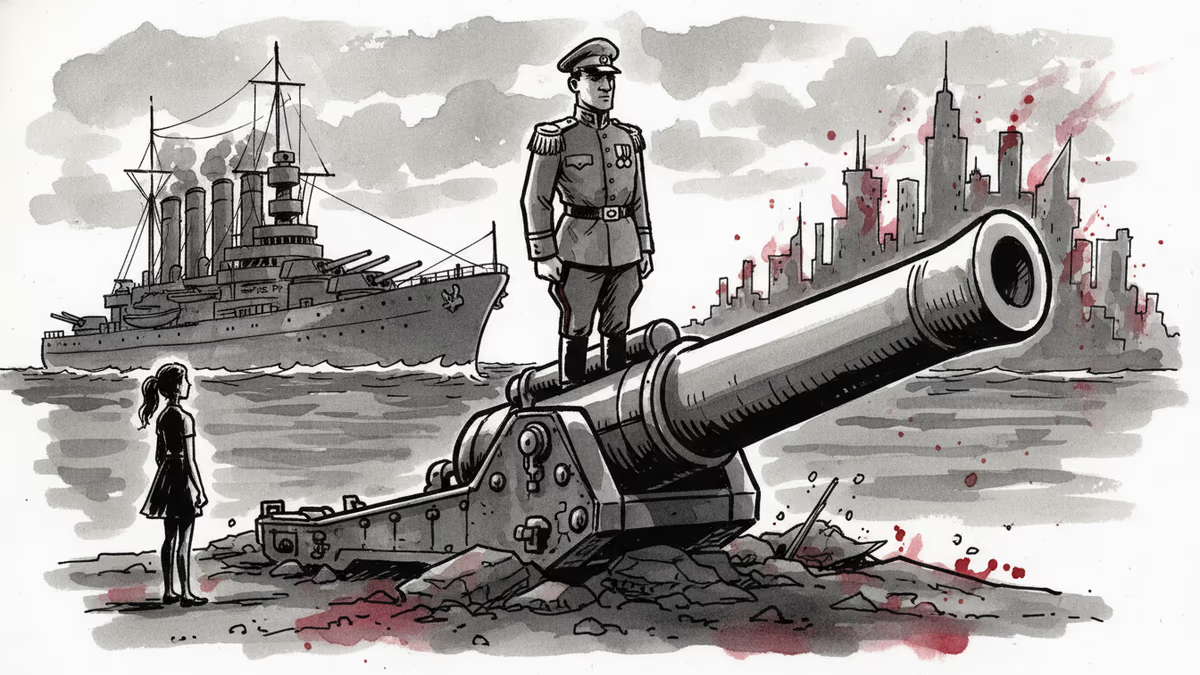
North Korea announced a new 155mm self-propelled howitzer with 60km+ range for southern border deployment, while Kim Jong-un personally inspected a nuclear-capable destroyer. What does the timing tell us?
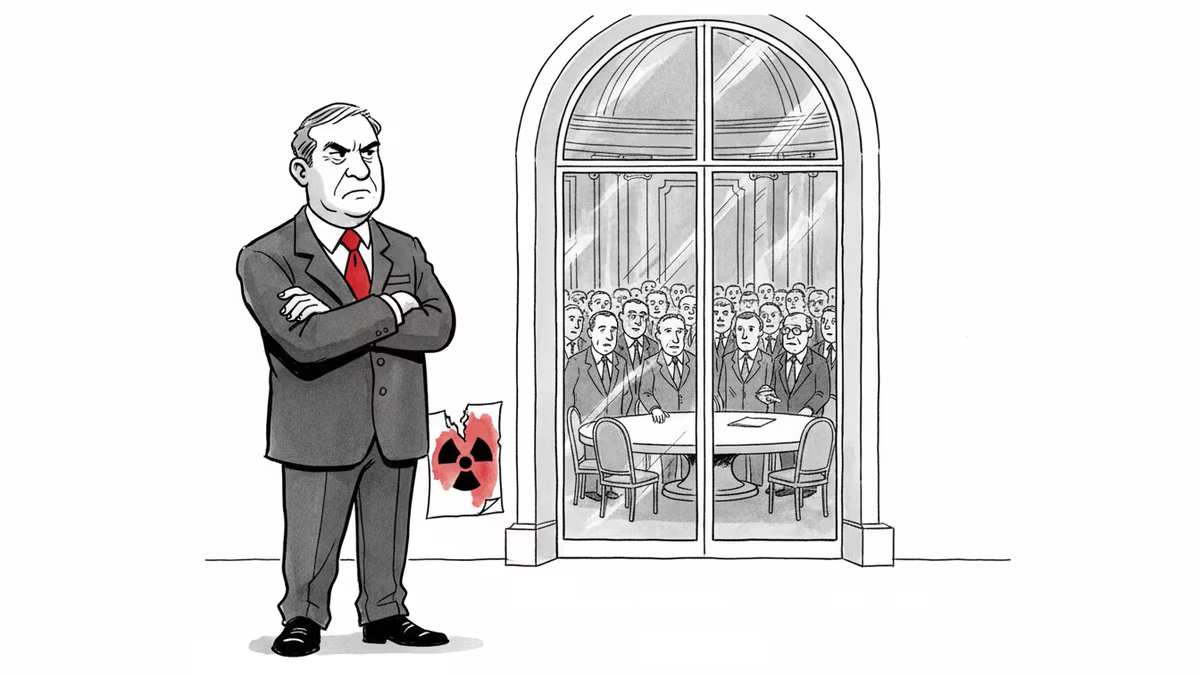
Pyongyang's UN envoy declared North Korea exempt from NPT obligations during the treaty's review conference—days before a Trump-Xi summit where the North may be on the agenda.
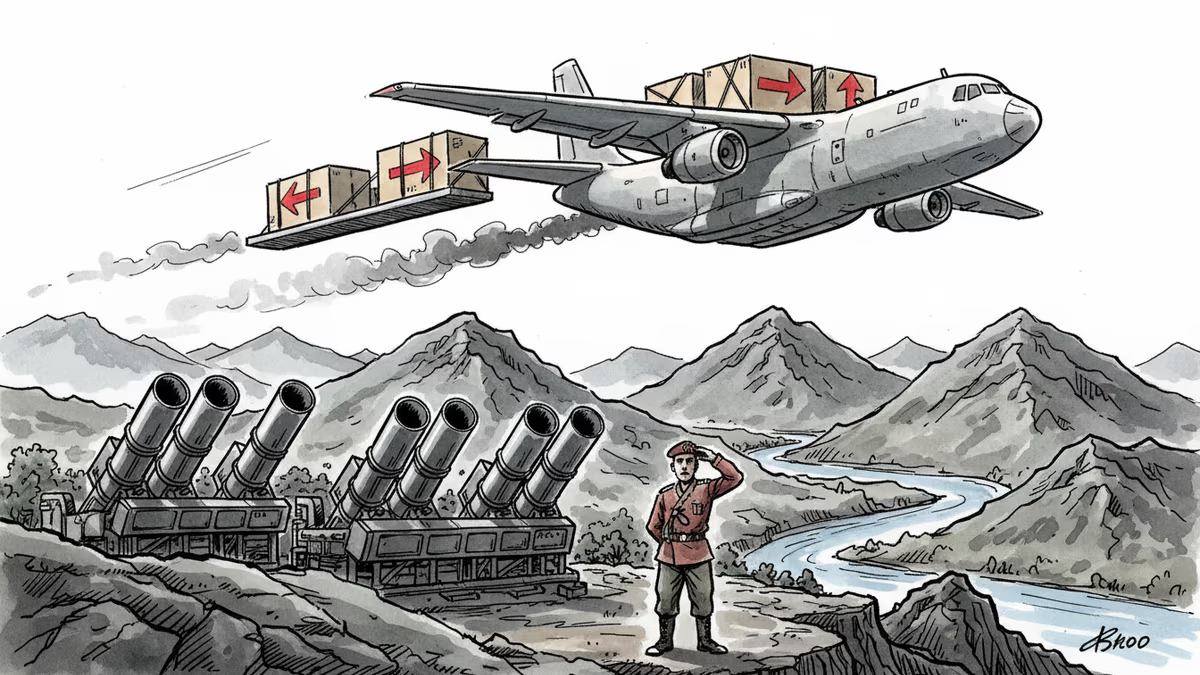
USFK Commander Gen. Brunson confirmed THAAD remains in Korea but admitted munitions are heading to the Middle East. What does this mean for Korean Peninsula deterrence, OPCON transfer, and the future of the US-South Korea alliance?
Air China resumed direct flights to Pyongyang on March 30, weeks after passenger train services were restored. The back-to-back moves signal a deliberate deepening of China-North Korea ties.
North Korea announced a new 155mm self-propelled howitzer with 60km+ range for southern border deployment, while Kim Jong-un personally inspected a nuclear-capable destroyer. What does the timing tell us?
Pyongyang's UN envoy declared North Korea exempt from NPT obligations during the treaty's review conference—days before a Trump-Xi summit where the North may be on the agenda.
USFK Commander Gen. Brunson confirmed THAAD remains in Korea but admitted munitions are heading to the Middle East. What does this mean for Korean Peninsula deterrence, OPCON transfer, and the future of the US-South Korea alliance?
Air China resumed direct flights to Pyongyang on March 30, weeks after passenger train services were restored. The back-to-back moves signal a deliberate deepening of China-North Korea ties.
Thoughts
Share your thoughts on this article
Sign in to join the conversation