

ChatGPT Go GPT-5.2 Global Release: High-End AI Just Got Affordable
OpenAI launches ChatGPT Go worldwide on Jan 16, 2026. Powered by GPT-5.2 Instant, it features higher usage limits and longer memory at a more affordable price point.
High-end AI doesn't have to break the bank anymore. OpenAI just officially rolled out ChatGPT Go worldwide on January 16, 2026, bringing the power of the GPT-5.2 Instant model to a global audience with a focus on efficiency and value.
ChatGPT Go GPT-5.2 Feature Breakdown
The new service is built around the GPT-5.2 Instant model, which prioritizes speed without sacrificing the sophisticated reasoning of the GPT-5 series. Users can expect higher usage limits and significantly faster response times, making it an ideal choice for developers and businesses that need high-volume AI interactions.

Longer Memory for Seamless Workflows
One of the standout upgrades is the longer memory capacity. Unlike previous entry-level versions, ChatGPT Go retains context over much longer conversations. According to reports from Reuters, this global launch aims to capture the mid-tier market by offering more affordable subscription options while maintaining enterprise-grade reliability.
| Feature | Standard Model | ChatGPT Go (GPT-5.2 Instant) |
|---|---|---|
| Latency | Standard | Ultra-Low |
| Usage Limit | Moderate | Increased |
| Memory Window | Standard | Expanded |
Authors
Related Articles

OpenAI has reorganized for the second time in a month, merging ChatGPT and Codex into a single agentic platform under president Greg Brockman's unified product leadership.

After two weeks of witnesses calling him a liar, OpenAI CEO Sam Altman testified in his own defense, claiming Elon Musk tried to kill the company twice.

Sam Nelson, 19, died after following ChatGPT's advice to mix Kratom and Xanax. His parents are suing OpenAI for wrongful death, raising urgent questions about AI trust, liability, and design.
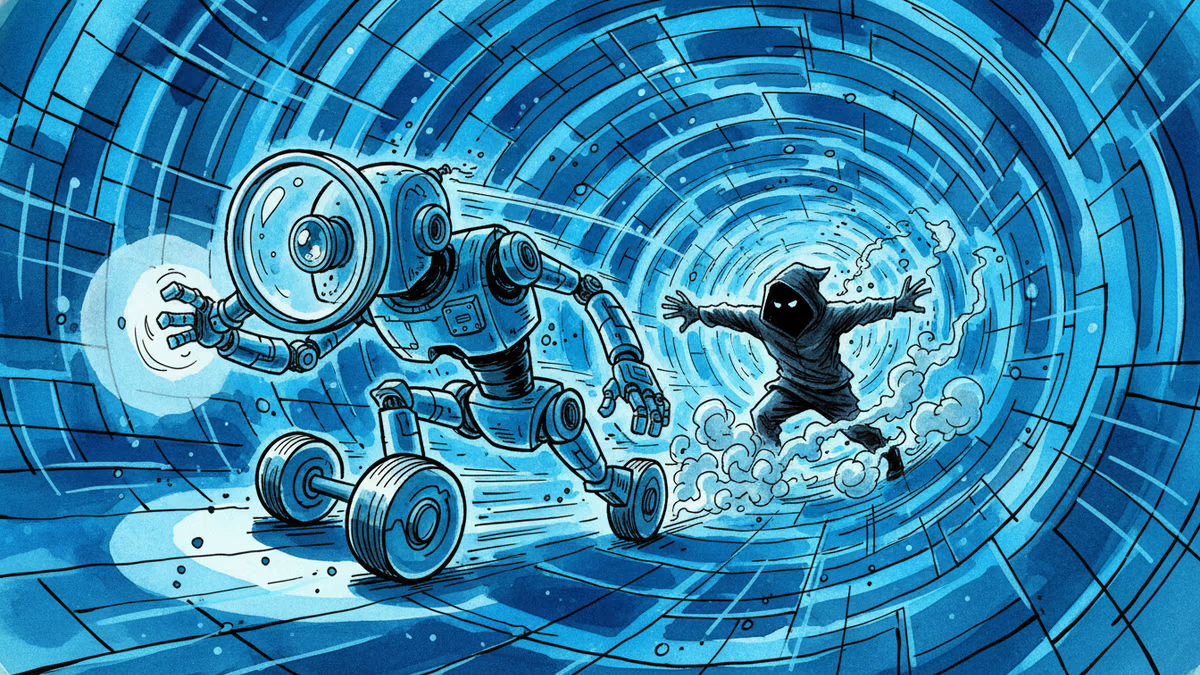
OpenAI's new Daybreak initiative uses the Codex AI agent to find and patch security vulnerabilities before attackers do—putting it in direct competition with Anthropic's secretive Claude Mythos.
OpenAI has reorganized for the second time in a month, merging ChatGPT and Codex into a single agentic platform under president Greg Brockman's unified product leadership.
After two weeks of witnesses calling him a liar, OpenAI CEO Sam Altman testified in his own defense, claiming Elon Musk tried to kill the company twice.
Sam Nelson, 19, died after following ChatGPT's advice to mix Kratom and Xanax. His parents are suing OpenAI for wrongful death, raising urgent questions about AI trust, liability, and design.
OpenAI's new Daybreak initiative uses the Codex AI agent to find and patch security vulnerabilities before attackers do—putting it in direct competition with Anthropic's secretive Claude Mythos.
Thoughts
Share your thoughts on this article
Sign in to join the conversation